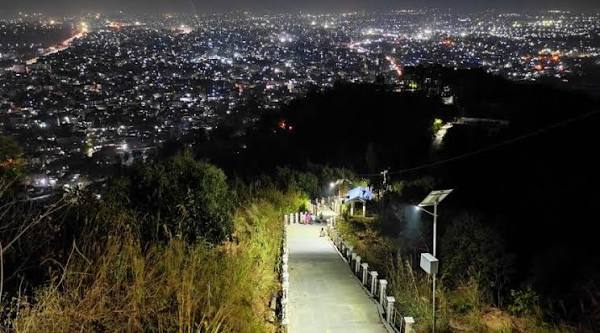
Located around the eastern side of Imphal Valley, the district provides an opportunity to experience Manipur's religious traditions, ancient customs, cultural institutions, and scenic hill landscapes.
History
Imphal East district came into existence on 18 June 1996, when the former Imphal district was divided into Imphal East and Imphal West. Its headquarters are at Porompat.
The region has much older historical and cultural roots. Sites such as Kaina, Sekta, Andro, and the Govindajee Temple reflect different periods of Manipur's religious, archaeological, and social history.
The district also preserves important memories of the Second World War through its war cemeteries and other historical sites.
Geography
Imphal East lies in the central-eastern part of Manipur, around the Imphal Valley. The district includes valley areas as well as surrounding hillocks and uplands.
The district administration places the general elevation around 790 metres above sea level, with Mount Nungsikon in the Khundrakpam hills reaching about 1,168 metres.
Its landscape includes agricultural fields, rivers, wetlands, hills, villages, and urban areas around Imphal.
Culture and Traditions
Imphal East is deeply connected with Meitei culture and traditions. Vaishnavite practices exist alongside older indigenous traditions such as Sanamahism.
Classical Manipuri dance, traditional music, handloom weaving, pottery, bamboo and cane crafts, religious rituals, and village traditions form important parts of the region's cultural identity. The district administration also highlights Ras Lila as a major expression of Manipur's classical cultural heritage.
Andro is particularly notable for preserving traditional cultural practices and heritage.
Architecture
Imphal East features a mixture of historic temples, traditional village structures, archaeological remains, museums, memorials, and modern buildings.
The Shree Shree Govindajee Temple is particularly notable for its twin golden domes, paved courtyard, and large congregation hall. The present temple was originally built in 1846 during the reign of Maharaja Nara Singh.
Famous Places
Shree Shree Govindajee Temple
The Govindajee Temple is one of Manipur's most important Vaishnavite religious centres. Located within the former royal complex, the temple is dedicated to Radha and Krishna and is known for its distinctive twin-domed architecture and devotional traditions.
Andro Village
Andro is an important cultural village east of Imphal. It is known for traditional customs, indigenous heritage, museums, temples, and community-led conservation efforts.
Mutua Bahadur Museum
Located in Andro, the Mutua Bahadur Museum is a cultural complex containing artefacts from Manipur and other parts of Northeast India. Its collections include pottery, manuscripts, coins, jewellery, wood carvings, basketry, and traditional objects, along with replicas of houses representing different communities.
Santhei Natural Park
Santhei Natural Park is a popular nature destination at Andro. Developed around an artificial water body, the park combines natural scenery with the cultural environment of the village and has become a popular recreational attraction.
Panam Ningthou Temple
Panam Ningthou Temple in Andro is associated with an ancient ritual fire that, according to local tradition, has been kept burning for centuries. The temple is an important part of Andro's religious and cultural heritage.
Kaina
Kaina is a sacred hillock associated with the history of the Govindajee tradition. According to local tradition, the sacred jackfruit tree from Kaina was used to create the image of Shree Shree Govindajee during the reign of Maharaja Bhagyachandra.
Sekta Archaeological Living Museum
Sekta is an important archaeological site located near the Iril River. Excavations uncovered evidence relating to secondary burial practices and provided insights into the social and cultural history of ancient communities in Manipur.
Sanamahi Kiyong Temple
Located in the Nongmaijing Hills, Sanamahi Kiyong Temple is dedicated to Lainingthou Sanamahi, an ancient Meitei deity. It is an important centre for followers of Sanamahism and offers scenic hilltop surroundings.
Imphal War Cemeteries
The war cemeteries at Hatta Golapati and Kaboleikai commemorate soldiers who died during the Second World War. They are maintained by the Commonwealth War Graves Commission and provide a quiet historical experience.
Hanuman Thakur Temple
The Hanuman Thakur Temple at Mahabali is located near the Imphal River amid the Mahabali forest area. It is an important religious landmark in the Imphal region.
Marjing Polo Complex
The Marjing Polo Complex at Heingang is connected with the traditional worship of Ibudhou Marjing, a deity associated with polo in Meitei tradition. The complex forms part of Manipur's distinctive polo heritage.
MAASI Complex
The Manipur Adventure and Allied Sports Institute promotes adventure activities and training. Its large complex provides opportunities connected with trekking, jungle exploration, mountaineering, and rock climbing.
Famous Dishes
Eromba
Eromba is a traditional Manipuri dish prepared with vegetables, chillies, and often fermented fish. It is known for its strong and distinctive flavour.
Chamthong
Chamthong, also known as Kangshoi, is a traditional vegetable stew prepared with seasonal vegetables and herbs.
Singju
Singju is a fresh and spicy Manipuri salad made with vegetables, herbs, and other regional ingredients.
Paknam
Paknam is a traditional Manipuri savoury preparation made with ingredients such as gram flour, vegetables, and herbs.
Ngari-Based Dishes
Ngari, a fermented fish product, is an important ingredient in traditional Manipuri cuisine and is used in several local preparations.
Famous Personalities
Maharaja Bhagyachandra
Maharaja Bhagyachandra was one of Manipur's important rulers and is strongly associated with the development of Ras Lila and Vaishnavite traditions in the kingdom. Kaina is also associated with his reign.
Maharaja Nara Singh
Maharaja Nara Singh ruled Manipur during the period when the present Govindajee Temple was originally built in 1846. His reign forms an important part of the history of the temple and royal complex.
Local Artists and Craftspeople
Andro and other parts of Imphal East are home to artisans preserving traditional pottery, weaving, wood carving, basketry, metalwork, and other forms of Manipuri craftsmanship.
Festivals
Yaoshang
Yaoshang is one of Manipur's best-known festivals, featuring sports, music, dance, cultural activities, and colourful community celebrations.
Ras Lila
Ras Lila is an important classical dance tradition of Manipur based on the devotional relationship between Radha and Krishna. Performances are particularly associated with Vaishnavite temples such as Govindajee Temple.
Lai Haraoba
Lai Haraoba represents the indigenous cultural traditions of the Meitei community through rituals, music, dance, and traditional performances.
Ningol Chakouba
Ningol Chakouba is an important Meitei family festival centred around gatherings involving married daughters and their parental families.
Diwali
Diwali is observed particularly within Vaishnavite communities, with temple activities, prayers, lamps, and family celebrations.
Things to Do
- Visit the historic Govindajee Temple.
- Explore the cultural heritage of Andro.
- Visit the Mutua Bahadur Museum.
- Relax at Santhei Natural Park.
- Visit Kaina and learn about its religious traditions.
- Explore the Sekta archaeological site.
- Visit Sanamahi Kiyong Temple.
- Pay respects at the Imphal War Cemeteries.
- Discover Manipur's polo heritage at Marjing.
- Experience traditional Manipuri food.
- Explore local handloom and handicraft products.
- Try adventure activities around the MAASI complex where available.
Where to Eat, Shop, and Stay
Where to Eat
Imphal East has restaurants and local eateries serving Manipuri and northeastern cuisine. Visitors should try Eromba, Singju, Chamthong, traditional fish preparations, and rice-based meals.
Where to Shop
Local markets offer Manipuri handloom, traditional clothing, bamboo and cane crafts, pottery, handicrafts, and local food products. Andro is particularly interesting for travellers looking for traditional cultural products.
Where to Stay
Because Imphal East surrounds and adjoins the wider Imphal urban area, travellers can choose from accommodation in the district as well as hotels across Imphal. The district administration also notes tourist accommodation facilities at Kaina.
What is it Famous For?
Imphal East is famous for its Govindajee Temple, Andro cultural heritage, Mutua Bahadur Museum, Kaina, Sekta archaeological site, Sanamahi traditions, war cemeteries, and Manipuri cultural heritage.
The district is particularly important for understanding the religious, archaeological, and cultural history of the Imphal Valley.
Best Time to Visit
The best time to visit Imphal East is generally from October to April, when the weather is more comfortable for sightseeing, temple visits, cultural exploration, and outdoor activities.
The post-monsoon landscape can be especially attractive around Andro and the surrounding hills.
How to Reach
By Air
The nearest airport is Imphal International Airport, which provides access to Manipur from major Indian cities. From the airport, Imphal East's attractions can be reached by road.
By Train
Rail access to the wider Imphal region has been developing, while Jiribam has historically served as an important railhead for Manipur. Travellers should check current train connectivity before planning a rail journey.
By Road
Road travel is the main way to explore Imphal East. The district is connected with Imphal and surrounding parts of Manipur through major roads, including routes toward Yairipok, Ukhrul, and other eastern areas.
Nearby Places
Imphal West
Imphal West contains several of Manipur's major attractions, including Kangla, Ima Keithel, museums, and other historic landmarks.
Bishnupur
Bishnupur is known for Loktak Lake, Keibul Lamjao National Park, Moirang, and historic religious sites.
Thoubal
Thoubal offers rivers, agricultural landscapes, temples, gardens, and access to eastern Manipur.
Ukhrul
Ukhrul is known for its scenic hills, forests, Tangkhul culture, and natural beauty.
Senapati
Senapati offers forested hills, indigenous communities, and scenic landscapes in northern Manipur.
Best Duration for a Trip
A 2-day trip is suitable for exploring the major temples, museums, Andro, and historical attractions.
A 3-day itinerary allows more time for Kaina, Sekta, Santhei Natural Park, Sanamahi Kiyong Temple, Marjing, and other cultural experiences.
Travel Tips
- Check current local travel conditions before travelling to Manipur.
- Confirm opening hours for museums, temples, and heritage sites.
- Dress respectfully when visiting religious places.
- Ask permission before photographing people or traditional ceremonies.
- Carry comfortable footwear for hill and outdoor attractions.
- Carry rain protection during the wetter months.
- Try local Manipuri cuisine from established eateries.
- Keep extra time for road travel between attractions.
- Respect archaeological sites and do not remove artefacts or materials.
- Plan ahead if attending major festivals or cultural events.
Why Visit
Imphal East is ideal for travellers who want to understand Manipur's history and living culture rather than simply visit scenic locations. Its temples, archaeological sites, museums, traditional villages, war cemeteries, nature parks, and indigenous religious traditions provide a broad picture of the region.
The district is particularly rewarding for visitors interested in heritage, culture, spirituality, archaeology, photography, and local traditions.
Conclusion
Imphal East brings together many layers of Manipur's identity—from the golden domes of Govindajee Temple and the ancient traditions of Andro to the archaeological remains of Sekta and the peaceful landscapes of Santhei Natural Park.
Its combination of religious heritage, indigenous traditions, archaeology, war history, nature, and cultural institutions makes Imphal East an important destination for anyone exploring Manipur.
"Travel is the only thing you buy that makes you richer."