The city also preserves important chapters of India's freedom struggle and the history of the Punjab region. Founded by Guru Ram Das in the 16th century, Amritsar has developed into a major pilgrimage, cultural and tourism centre.
History
Amritsar was founded around 1574 AD by Guru Ram Das, the fourth Sikh Guru. The settlement was initially known as Ramdaspur and grew around the sacred pool that eventually became the Amrit Sarovar. Guru Arjan Dev later completed the sarovar and established Harmandir Sahib at its centre.
During the 18th century, Amritsar was influenced by several Sikh misls. The city later came under the control of Maharaja Ranjit Singh, who consolidated Sikh power in Punjab and contributed significantly to the development of Amritsar. He strengthened Gobindgarh Fort, developed Ram Bagh and supported the embellishment of Harmandir Sahib.
The British period brought major changes to the city's administration and architecture. Amritsar subsequently became an important centre in India's freedom movement, with the Jallianwala Bagh massacre of 1919 becoming one of the most significant events associated with the city's modern history.
Geography
Amritsar lies in the Majha region of Punjab, in the northwestern part of India near the international border with Pakistan. The district covers about 2,683 square kilometres and is predominantly characterized by fertile plains and agricultural land.
Its location has historically made Amritsar an important commercial, cultural and transport centre. The city is also well connected with other major cities of Punjab and northern India.
Culture and Traditions
Amritsar is deeply associated with Punjabi and Sikh culture. Gurdwaras, temples, mosques, historic buildings, markets, museums and traditional neighbourhoods collectively reflect the city's composite cultural heritage.
Punjabi music, bhangra and giddha, traditional clothing, community meals, religious gatherings and festive celebrations are prominent elements of local life.
The tradition of langar, particularly at Harmandir Sahib, represents the principle of serving food to visitors without discrimination. The Golden Temple complex maintains a large communal kitchen serving devotees and visitors throughout the day.
Architecture
Amritsar has a distinctive architectural landscape combining Sikh, Hindu, Mughal, Indo-British and traditional Punjabi influences.
Golden Temple
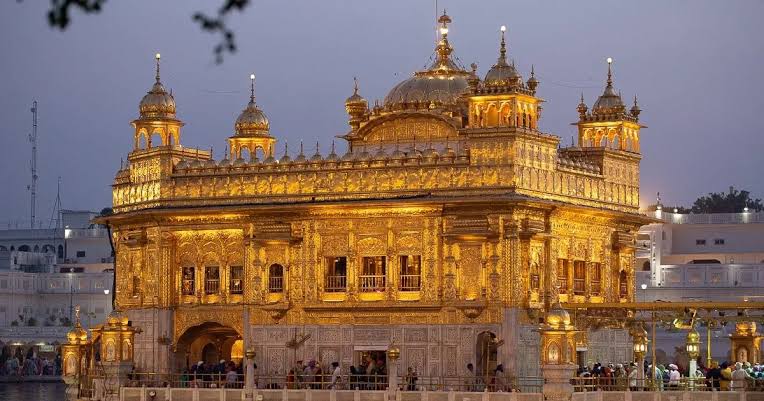
Harmandir Sahib combines a sacred sarovar, marble work, gilded architectural elements and intricate decorative details. Its four entrances symbolically emphasize accessibility to people from different backgrounds.
Khalsa College
Khalsa College is one of Amritsar's notable examples of Indo-British architecture. The building was designed by architect Ram Singh, whose work incorporated traditional decorative elements with colonial-era architectural ideas.
Heritage Streets and Havelis
The old city contains traditional buildings, havelis, gateways, bazaars and wooden architectural details that can be explored through the city's heritage walks.
Famous Places
Golden Temple
Sri Harmandir Sahib, popularly known as the Golden Temple, is the central religious shrine of Sikhism. The temple stands in the middle of the Amrit Sarovar and attracts visitors from around the world. The complex also includes the Akal Takht, historic ber trees, museums and the famous Guru Ka Langar.
Jallianwala Bagh
Jallianwala Bagh is a national memorial associated with the tragic events of 13 April 1919, when British troops fired on a gathering of people. The site preserves historic features including sections of the bullet-marked wall and the Martyrs' Well.
Wagah Border
The Attari-Wagah border is known for its ceremonial Beating Retreat and flag-lowering ceremony. The daily event attracts visitors who come to observe the military ceremony and the atmosphere surrounding the international border.
Durgiana Temple
Durgiana Temple is an important Hindu temple whose architecture echoes several visual elements of the Golden Temple, including its position within a sacred water tank and central dome.
Gobindgarh Fort
Gobindgarh Fort is a historic fortified complex in the heart of Amritsar. It is closely associated with the military history of Punjab and the era of Maharaja Ranjit Singh.
Maharaja Ranjit Singh Museum
Located in Ram Bagh, the Maharaja Ranjit Singh Museum presents aspects of the life and era of the Sikh ruler. The surrounding garden and historic summer palace add to the heritage character of the attraction.
Ram Bagh
Ram Bagh is a historic garden associated with Maharaja Ranjit Singh. Its summer palace has been converted into a museum, while the garden preserves an important part of Amritsar's royal-era heritage.
Partition Museum
The Partition Museum documents personal stories, memories and historical experiences connected with the Partition of India in 1947. It offers visitors an opportunity to understand the human dimension of one of the major events in the subcontinent's modern history.
Pul Kanjari
Pul Kanjari is a heritage site associated with Maharaja Ranjit Singh. The complex includes historic structures and religious sites and is located near the India-Pakistan border.
Ram Tirath
Ram Tirath is a religious and archaeological site associated with traditions surrounding Maharishi Valmiki and the Ramayana. The site contains an ancient tank and temples and hosts a traditional fair.
Jama Masjid Khairuddin
Located in Hall Bazaar, Jama Masjid Khairuddin is a historic mosque dating to the 19th century. It is also associated with the history of India's freedom movement.
Heritage Walk
Amritsar's heritage walk introduces visitors to historic streets, gateways, religious structures, traditional buildings and old-city architecture. Stops include Town Hall, Gurdwara Saragarhi, Qila Ahluwalia, Jalebiwala Chowk and several traditional sites.
Famous Dishes
Amritsari Kulcha
Amritsari Kulcha is one of the city's signature foods. This crisp, stuffed tandoori bread is commonly served with spicy chickpeas, chutney and onions.
Amritsari Fish
Amritsari fish is a popular Punjabi preparation featuring spiced, batter-coated fish fried until crisp. It is commonly served with chutneys and lemon.
Chole Bhature
Chole bhature is a popular North Indian combination of spicy chickpeas and fried bread and is widely enjoyed in Amritsar's food markets.
Lassi
Thick Punjabi lassi is a classic Amritsar refreshment. It is traditionally made from yogurt and may be served sweet or salted.
Makki di Roti and Sarson da Saag
This iconic Punjabi combination pairs cornmeal flatbread with mustard greens. It is particularly associated with the winter food culture of Punjab.
Pinni
Pinni is a traditional Punjabi sweet made using ingredients such as wheat flour, ghee, sugar and nuts. It is especially popular during colder months and festive occasions.
Amritsari Papad and Wadi
Papad and wadi are traditional Punjabi food products commonly found in Amritsar's markets and grocery shops.
Famous Personalities
Guru Ram Das
Guru Ram Das, the fourth Sikh Guru, founded the settlement that developed into Amritsar. The city's name and spiritual identity remain closely connected with his work.
Guru Arjan Dev
Guru Arjan Dev, the fifth Sikh Guru, completed the Amrit Sarovar and established Harmandir Sahib at its centre. He also oversaw the installation of the Adi Granth at the shrine in 1604.
Maharaja Ranjit Singh
Maharaja Ranjit Singh played a major role in the history and development of Amritsar. His period saw important construction, fortification and architectural contributions to the city.
Jassa Singh Ramgarhia
Jassa Singh Ramgarhia was an influential Sikh leader associated with the Ramgarhia Misl. He played an important role in the fortification and political history of Amritsar during the misl period.
Jassa Singh Ahluwalia
Jassa Singh Ahluwalia was another prominent Sikh leader associated with the Ahluwalia Misl and the 18th-century history of Amritsar.
Festivals
Baisakhi
Baisakhi is one of Punjab's most important festivals and holds special significance in Sikh history. Amritsar celebrates the occasion with religious gatherings, prayers, processions and cultural activities.
Gurpurabs
Gurpurabs commemorate important events associated with the Sikh Gurus. Harmandir Sahib becomes a major centre of prayer, kirtan, illumination and devotional activity during these occasions.
Diwali and Bandi Chhor Divas
Amritsar is particularly vibrant during Diwali and Bandi Chhor Divas. The Golden Temple complex is illuminated, creating one of the city's most recognizable festive scenes.
Hola Mohalla
Hola Mohalla is associated with martial traditions, demonstrations of physical skill, religious gatherings and community celebrations in Sikh communities across Punjab.
Ram Tirath Fair
A traditional fair is held at Ram Tirath, attracting pilgrims and visitors to the religious site west of Amritsar.
Things to Do
- Visit Sri Harmandir Sahib during the early morning or evening.
- Experience the atmosphere of the Golden Temple complex.
- Participate respectfully in the Guru Ka Langar.
- Walk through Jallianwala Bagh.
- Explore the Partition Museum.
- Attend the Wagah-Attari border ceremony.
- Explore Gobindgarh Fort.
- Visit the Maharaja Ranjit Singh Museum and Ram Bagh.
- Walk through Amritsar's historic lanes and bazaars.
- Take a heritage walk through the old city.
- Visit Durgiana Temple.
- Shop for Punjabi textiles, phulkari and traditional food products.
- Explore local street-food markets.
- Try Amritsari kulcha, lassi and Amritsari fish.
- Visit during Baisakhi or a major Gurpurab for a festive cultural experience.
Where to Eat, Shop, and Stay
Where to Eat
Amritsar is one of Punjab's best-known food destinations. The areas around Heritage Street, Hall Bazaar and the Golden Temple have numerous eateries serving Punjabi classics, snacks, sweets and street food.
Where to Shop
Hall Bazaar, Guru Bazaar and the old-city markets are popular places for shopping. Visitors can look for phulkari textiles, Punjabi juttis, shawls, handicrafts, traditional food products and religious souvenirs.
Where to Stay
The Golden Temple area offers convenient access to many major attractions. The city also has accommodation ranging from budget guesthouses and hotels to upscale properties, making it possible to choose a base according to budget and itinerary.
What is it Famous For?
Amritsar is famous primarily for the Golden Temple, Sikh heritage, Jallianwala Bagh, Punjabi cuisine, Wagah-Attari border ceremony, historic forts and vibrant markets. It is also an important centre of Punjabi culture, architecture and religious tourism.
Best Time to Visit
October to March is generally a comfortable period for sightseeing in Amritsar, with cooler weather suitable for exploring the city's heritage attractions and markets.
April can be particularly interesting for visitors who want to experience Baisakhi celebrations, while major Sikh festivals bring their own distinctive atmosphere.
Summer can be hot, so travellers visiting between April and June should plan outdoor sightseeing around the cooler parts of the day.
How to Reach
By Air
Sri Guru Ram Dass Jee International Airport is the city's main airport and provides air connectivity to Amritsar. The airport is approximately 13 km from the Golden Temple area.
By Train
Amritsar Junction is the city's principal railway station. It is located approximately 2 km from the Golden Temple and is well connected with major cities across northern India.
By Road
Amritsar is well connected by road with Delhi, Chandigarh, Jalandhar, Ludhiana, Pathankot and other Punjab cities. Buses, taxis and private vehicles provide convenient access to the city.
Nearby Places
Attari
Attari is the Indian town associated with the Attari-Wagah border crossing. It can be combined with a visit to the border ceremony.
Tarn Taran
Tarn Taran is an important Sikh pilgrimage destination located southeast of Amritsar. The town is known for Sri Darbar Sahib Tarn Taran and its historic religious heritage.
Kartarpur
Kartarpur in Punjab is associated with Sikh heritage and can be included in a wider Punjab pilgrimage itinerary.
Jalandhar
Jalandhar is one of Punjab's major cities and offers shopping, food, sports-related attractions and access to other destinations in the Doaba region.
Kapurthala
Kapurthala is known for its palaces, gardens and distinctive architectural heritage, making it an interesting addition to a Punjab heritage itinerary.
Pathankot
Pathankot lies farther northeast and serves as a gateway toward destinations in Himachal Pradesh and Jammu and Kashmir.
Best Duration for a Trip
2 days is suitable for the major highlights, including the Golden Temple, Jallianwala Bagh, Partition Museum, heritage areas and local food.
3–4 days allows a more relaxed visit with Gobindgarh Fort, Ram Bagh, Durgiana Temple, museums, markets and the Attari-Wagah border.
4–5 days is suitable for travellers who want to combine Amritsar with nearby destinations such as Tarn Taran and other Punjab heritage sites.
Travel Tips
- Dress respectfully when visiting religious sites.
- Cover your head and remove your shoes before entering the Golden Temple.
- Follow photography restrictions at religious and memorial sites.
- Visit the Golden Temple early in the morning for a quieter experience.
- Keep some cash for street-food stalls and small shops.
- Try local food from established and hygienic eateries.
- Leave enough time for security checks at major attractions.
- Check the current schedule before travelling to the Attari-Wagah border ceremony.
- Keep water with you during summer.
- Use licensed taxis or established transport services for longer excursions.
- Avoid littering around heritage and religious sites.
- Respect the solemn atmosphere at Jallianwala Bagh and other memorials.
Why Visit
Amritsar brings together religion, history, architecture, food and Punjabi culture in a single destination. The Golden Temple provides the city's spiritual centre, while Jallianwala Bagh and the Partition Museum preserve important chapters of India's modern history.
Beyond its monuments, Amritsar is experienced through its food, bazaars, music, hospitality, traditional crafts and historic streets. It is therefore a destination that can appeal equally to heritage travellers, pilgrims, food lovers, photographers and cultural explorers.
Conclusion
Amritsar is one of Punjab's defining destinations, shaped by centuries of Sikh history, the legacy of Maharaja Ranjit Singh, India's freedom movement and the vibrant culture of the Majha region.
From the serene waters of the Amrit Sarovar and the architecture of the Golden Temple to the historic Jallianwala Bagh, bustling bazaars and famous Punjabi food, the city offers a rich combination of experiences. A visit to Amritsar is not simply a sightseeing trip but an opportunity to encounter an important part of Punjab's spiritual, cultural and historical landscape.
"Travel is the only thing you buy that makes you richer."