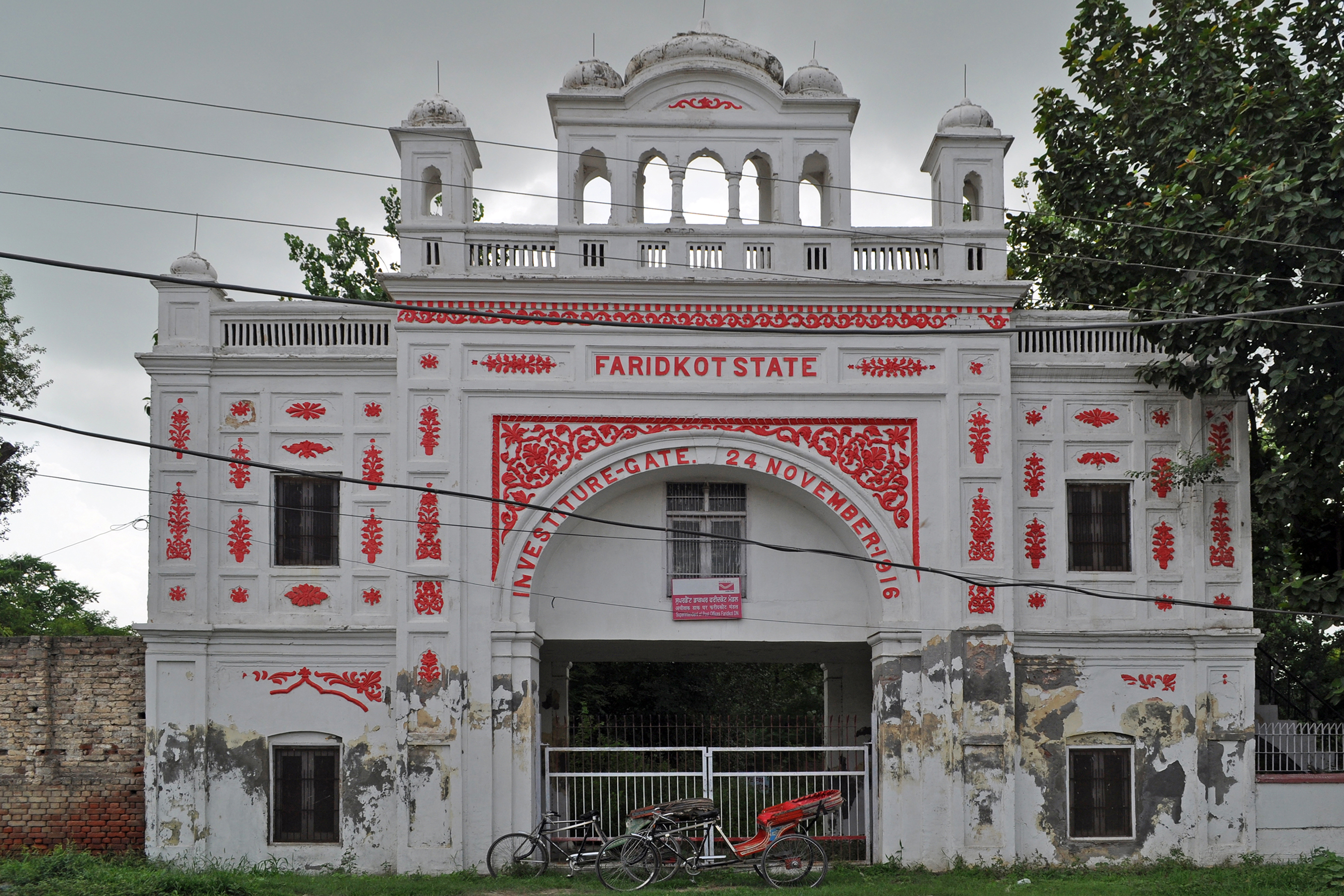
The city takes its name from the revered Sufi saint Baba Farid, whose association with the area is central to its cultural identity. Historic landmarks such as Qila Mubarak, Raj Mahal, Darbar Ganj and Tilla Baba Farid make Faridkot an interesting destination for travellers exploring Punjab beyond its larger tourist cities.
History
Faridkot's history reaches back to the 13th century, when Raja Mokalsi, grandson of Raja Manj, established the settlement and built a fort. According to the district's historical account, Baba Farid was among those involved in the construction work and was later allowed to leave after people witnessed what they regarded as his spiritual powers. The settlement subsequently came to be known as Faridkot in his honour.
The town later developed as the capital of the Faridkot princely state. Several buildings constructed during the princely period, including palaces, gates, courts and administrative structures, remain important parts of the city's heritage.
Faridkot also participated in the political and social changes of the colonial period. Its historic buildings and monuments preserve traces of the princely-state era as well as the later British administration.
Geography
Faridkot lies in southwestern Punjab within the Malwa plains. The district covers approximately 1,475.70 square kilometres and is characterized mainly by flat agricultural terrain.
Agriculture is an important part of the local economy, with cultivated fields and villages surrounding the urban centres. The district's location also places it within easy reach of other important Malwa destinations such as Bathinda, Moga, Ferozepur and Muktsar Sahib.
Culture and Traditions
Faridkot reflects the cultural character of Malwa Punjab, combining Punjabi folk traditions with Sikh, Sufi and princely heritage.
Bhangra, giddha, Punjabi folk music, religious gatherings and seasonal fairs remain important elements of local culture. The annual Baba Farid festival adds a distinctive Sufi dimension to the city's cultural calendar.
The city's old neighbourhoods, markets, religious institutions and historic buildings provide glimpses into the evolution of Faridkot from a medieval settlement to a princely capital and modern district headquarters.
Architecture
Faridkot has an unusually rich collection of palaces, forts, gates, clock towers, institutional buildings and religious structures.
Qila Mubarak
Qila Mubarak is one of Faridkot's most important historic complexes. Originally built by Raja Mokalsi, it was later expanded and refurbished by successive rulers. The complex includes the royal palace, Tosha Khana, Modi Khana and treasury, along with a garden and a collection of vintage royal cars.
Raj Mahal
Raj Mahal was constructed during the reign of Maharaja Bikram Singh between 1885 and 1889, under the supervision of the royal family. It represents the architectural character of Faridkot's princely period.
Darbar Ganj
Darbar Ganj is a distinctive Gothic Revival structure built as accommodation for foreign visitors during the Faridkot princely period. The crown-shaped building is surrounded by a large garden and is now used as the Circuit House and Faridkot Commissioner's Office.
Clock Tower
The historic Victoria Clock Tower, locally known as Ghanta Ghar, stands in the heart of Faridkot. It is one of the recognizable landmarks of the old city.
Famous Places
Qila Mubarak
Qila Mubarak is the centerpiece of Faridkot's royal heritage. Its fortified walls, palace complex, garden and historic collections provide an insight into the city's princely past.
Gurdwara Sri Tilla Baba Farid
Tilla Baba Farid is associated with Baba Farid's traditional retreat and meditation. According to local tradition, the saint spent forty days meditating at the site in the 13th century. The shrine is an important destination for visitors interested in Faridkot's Sufi and religious heritage.
Raj Mahal
Raj Mahal is one of Faridkot's principal royal-era structures. Its architecture represents the city's transformation into an important princely-state centre during the late 19th century.
Darbar Ganj
This historic mansion combines Gothic Revival architecture with the landscaping of the former royal Parade Garden. Its unusual crown-like form makes it one of the more distinctive buildings in Faridkot.
Gurdwara Godri Sahib
Gurdwara Godri Sahib is a historic Sikh shrine located on Kotkapura Road, around 4–5 km from Faridkot. It forms part of the district's network of religious and heritage sites.
Gurdwara Guru Ki Dhab
Gurdwara Guru Ki Dhab is associated with Guru Gobind Singh. The site was traditionally known as Doda Tal before its association with the Sikh Guru.
Gurdwara Godavarisar Patshahi Dasvin
Located at Dhilwan Kalan, this gurdwara is associated with Guru Gobind Singh and represents another important element of Faridkot's Sikh heritage.
Brijindra College
Government Brijindra College was established in 1942 in memory of Raja Brij Inder Singh. The institution is another example of Faridkot's educational and architectural heritage.
Old Court Complex
The Old Court Complex was inaugurated in 1934 during the British period and reflects the administrative architecture of the former princely state and colonial era.
Old Jail
The Old Jail is another historic structure in Faridkot. The district administration records that Giani Zail Singh was imprisoned here from 1938 to 1943 during the Praja Mandal movement.
Jaito City Jail Cell
Jaitu's historic jail cell is associated with the Jaito Morcha of the Sikh Gurdwara Reform Movement. The district's tourism records note the association of Jawaharlal Nehru with the Jaito episode.
Historical Gates
Faridkot contains several historic gateways, including the Investiture Gate and Jawaharlal Nehru Gate, which preserve elements of the city's princely and colonial-era urban landscape.
Faridkot District Library
The District Library is located at the Baba Farid Cultural Centre on Kotkapura Road. It adds an educational and cultural dimension to the city's heritage landscape.
Famous Dishes
Atta Chicken
Atta Chicken is a distinctive local preparation associated with Kotkapura in Faridkot district. Chicken is coated with a dough covering and cooked in a traditional style, giving the dish its characteristic preparation and flavour.
Dodha Burfi
Dodha Burfi is a famous Punjabi sweet made with ingredients such as wheat, milk, sugar and nuts. The district tourism portal identifies it among Faridkot's notable local food specialties.
Roasted Burfi
Roasted Burfi is another sweet associated with the district's local cuisine. Its roasted preparation gives it a distinctive flavour and texture.
Sarson da Saag and Makki di Roti
This classic Punjabi winter combination pairs mustard greens with cornmeal flatbread. It is a familiar part of the agricultural food culture of Punjab.
Lassi
Traditional Punjabi lassi is a thick yogurt-based drink and a refreshing accompaniment to local meals, particularly during warmer months.
Pinni
Pinni is a traditional Punjabi sweet prepared using flour, ghee, sugar and nuts and is particularly popular during winter and festive occasions.
Famous Personalities
Baba Farid
Sheikh Fariduddin Masud, popularly known as Baba Farid, was a major Sufi saint associated with the Chishti tradition. His traditional connection with the settlement is central to the city's name and identity.
Maharaja Bikram Singh
Maharaja Bikram Singh was one of the prominent rulers of the Faridkot princely state. The construction of Raj Mahal during his reign represents an important period in the city's architectural development.
Giani Zail Singh
Giani Zail Singh, who later became President of India, was associated with Faridkot's political history. The district's Old Jail records his imprisonment there from 1938 to 1943 during the Praja Mandal movement.
Raja Harinder Singh Brar
Raja Harinder Singh Brar was one of the last rulers of the Faridkot princely state. Several administrative and institutional structures in the city date from the period of his rule.
Festivals
Baba Farid Agman Purab
The Baba Farid Agman Purab is Faridkot's signature religious and cultural festival. Held annually in September, the fair generally continues for about a week and commemorates the arrival and legacy of Baba Farid.
Baisakhi
Baisakhi is an important agricultural and Sikh festival celebrated throughout Punjab. Religious gatherings, fairs, music and community meals are common features.
Gurpurabs
Gurpurabs are celebrated at gurdwaras throughout Faridkot with prayers, kirtan, processions and langar.
Diwali and Bandi Chhor Divas
Diwali and Bandi Chhor Divas bring illumination, prayers and community gatherings to gurdwaras and homes across the district.
Hola Mohalla
Hola Mohalla is associated with Sikh martial traditions, demonstrations of physical skills and religious gatherings.
Things to Do
- Explore the historic Qila Mubarak.
- Visit Gurdwara Sri Tilla Baba Farid.
- Discover the architecture of Raj Mahal.
- Photograph the distinctive Darbar Ganj.
- Visit the historic Clock Tower.
- Explore Faridkot's old gates and colonial-era buildings.
- Visit Gurdwara Godri Sahib and other historic Sikh shrines.
- Explore Brijindra College and the old institutional architecture.
- Discover the history of the Old Jail and Old Court Complex.
- Try local specialties such as Atta Chicken and Dodha Burfi.
- Walk through traditional markets and old-city areas.
- Visit during the Baba Farid Agman Purab.
- Explore nearby Jaitu and other destinations in the district.
- Combine Faridkot with a wider Malwa heritage itinerary.
Where to Eat, Shop, and Stay
Where to Eat
Faridkot has local restaurants, dhabas, sweet shops and eateries serving Punjabi and North Indian food. Travellers should look for local specialties such as Atta Chicken, Dodha Burfi and Roasted Burfi, which are specifically highlighted by the district tourism portal.
Where to Shop
The city markets offer Punjabi clothing, footwear, textiles, sweets, household products and religious items. Local Punjabi food products and traditional sweets also make convenient souvenirs.
Where to Stay
Faridkot city is the most practical base for exploring the district. The city has hotels and guesthouses, while larger accommodation choices can also be found in nearby major cities if required.
What is it Famous For?
Faridkot is famous for Baba Farid, Qila Mubarak, royal-era architecture, Sikh heritage, the Baba Farid Agman Purab and distinctive local foods such as Atta Chicken and Dodha Burfi. Its concentration of historic palaces, gates, institutional buildings and religious sites gives the city a strong heritage identity.
Best Time to Visit
October to March is generally the most comfortable period for exploring Faridkot's historic buildings, religious sites and markets.
September is especially interesting for visitors who want to experience the Baba Farid Agman Purab, when the city hosts its major annual fair and associated cultural activities.
Summer can be hot, so outdoor sightseeing between May and June is better planned for mornings and evenings.
How to Reach
By Air
The nearest major international airport is Sri Guru Ram Dass Jee International Airport, Amritsar. Faridkot can then be reached by road. The district administration identifies Amritsar as the nearest international airport for its major tourist attractions.
By Train
Faridkot railway station provides direct rail connectivity with several major cities. The district headquarters lie on the Firozpur–Bathinda–Delhi railway line, making train travel a practical option for visitors.
By Road
Faridkot is connected by road with Amritsar, Ferozepur, Moga, Bathinda, Muktsar Sahib and other Punjab cities. The district administration places Faridkot at approximately 130 km from Amritsar.
Nearby Places
Kotkapura
Kotkapura is an important town in Faridkot district and is associated with local markets, religious sites and the region's agricultural economy. It is also associated with the local specialty Atta Chicken.
Jaitu
Jaitu is historically significant because of the Jaito Morcha and its connection with the Sikh Gurdwara Reform Movement. Its historic jail cell is one of the district's documented heritage attractions.
Muktsar Sahib
Sri Muktsar Sahib lies southwest of Faridkot and is an important Sikh pilgrimage destination associated with the Battle of Muktsar and the Forty Muktas.
Bathinda
Bathinda lies southeast of Faridkot and is known for Qila Mubarak, Takht Sri Damdama Sahib and other historic attractions.
Ferozepur
Ferozepur lies west of Faridkot and is known for its military and freedom-movement history, memorials and border-region heritage.
Moga
Moga lies northeast of Faridkot and provides another opportunity to experience the agricultural and commercial character of Punjab's Malwa region.
Best Duration for a Trip
1 day is sufficient for a focused visit covering Qila Mubarak, Tilla Baba Farid, Raj Mahal, Darbar Ganj and the city's central heritage area.
2 days allows additional time for historic Sikh sites, old institutional buildings, local food and nearby Kotkapura or Jaitu.
3 days is suitable for combining Faridkot with Bathinda, Muktsar Sahib or other Malwa destinations.
Travel Tips
- Wear respectful clothing when visiting gurdwaras and religious sites.
- Cover your head and remove footwear before entering gurdwaras.
- Carry some cash for smaller shops and local eateries.
- Visit historic monuments during daylight hours.
- Check local opening arrangements before visiting heritage buildings.
- Try Faridkot's documented local specialties and traditional Punjabi sweets.
- September can be particularly busy during the Baba Farid festival.
- Keep water with you during the hotter months.
- Ask permission before photographing people or religious ceremonies.
- Respect the atmosphere at religious and historic sites.
- Avoid littering around monuments and public spaces.
- Combine Faridkot with nearby Malwa destinations for a broader itinerary.
Why Visit
Faridkot is particularly interesting for travellers who enjoy history, architecture, religious heritage and regional food. Unlike destinations dominated by one major attraction, Faridkot presents a collection of forts, palaces, gates, gurdwaras, old administrative buildings and Sufi heritage sites.
Its connection with Baba Farid gives the city a distinctive spiritual identity, while its princely architecture preserves another important chapter of Punjab's history.
Conclusion
Faridkot is a heritage-rich destination where Sufi traditions, Sikh history and princely-era architecture come together. From Qila Mubarak and Raj Mahal to Tilla Baba Farid and Darbar Ganj, the city's historic landmarks reveal different layers of its past.
The annual Baba Farid Agman Purab, traditional Punjabi food and nearby destinations such as Jaitu and Kotkapura add further reasons to explore the district. For travellers discovering the Malwa region, Faridkot offers a distinctive combination of history, spirituality, architecture and local culture.
"Travel is the only thing you buy that makes you richer."