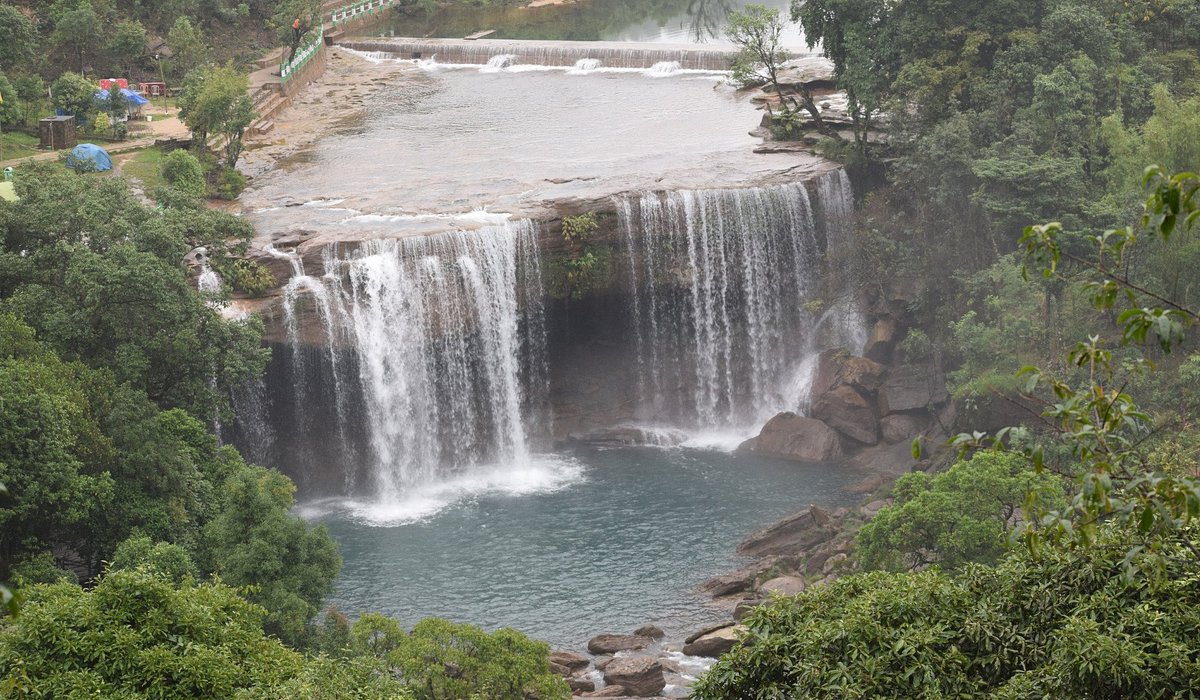
Where Hills, Waterfalls and Jaintia Heritage Come Together
West Jaintia Hills is a scenic district of Meghalaya with its headquarters at Jowai. The region combines green hills, waterfalls, rivers, monoliths, sacred landscapes and the distinctive cultural traditions of the Jaintia or Pnar people. It is a destination for travellers interested in nature, history, culture and peaceful hill landscapes.
History
West Jaintia Hills District came into existence on 31 July 2012 following the bifurcation of the former Jaintia Hills District into East and West Jaintia Hills. Jowai serves as the district headquarters and is an important centre for government offices, educational institutions, hospitals and other services.
The district covers about 1,693 square kilometres and includes Amlarem Civil Sub-Division along with the Amlarem, Laskein and Thadlaskein Community and Rural Development Blocks.
Geography
West Jaintia Hills lies in the northeastern part of Meghalaya. The district shares boundaries with Assam to the north and east, Bangladesh and East Jaintia Hills to the south, and East Khasi Hills to the west.
Its landscape includes green hills, valleys, waterfalls, rivers, agricultural areas and natural viewpoints. Places such as Krangshuri, Tyrshi Falls, Syntu Ksiar and the Umngot River add to the region's scenic appeal.
Culture and Traditions
West Jaintia Hills is home to the Jaintias or Pnars, along with communities such as Wars, Bhois and Biates. Jaintia society is traditionally matrilineal, with family identity passing through the mother. Traditionally, the youngest daughter has an important role in inheriting property and caring for family members.
Pnar culture is strongly connected with music, dance, festivals, traditional clothing and local craftsmanship. Instruments such as the Duitara, Sarong, Ka Nakra, Padiah, Katasa, Marynken and Tangmuri are associated with local musical traditions.
Traditional Dance
Laho Dance is an important cultural expression in which men and women participate in a traditional group performance. Another traditional performance is Shad Pliang, also known as the plate dance.
Traditional Crafts
Jaintia communities are known for weaving and craftsmanship, including cane mats, stools, baskets, carpets, silk products, jewellery, musical instruments and pineapple-fibre articles.
Architecture and Heritage
The cultural heritage of West Jaintia Hills can be seen in its traditional practices, historic sites and megalithic structures. The Nartiang Monoliths are particularly important, representing the historical legacy of the former Jaintia Kingdom.
Traditional pottery is also part of the local heritage. Artisans create earthen containers, tea pots and drinking vessels used in everyday life.
Famous Places
Nartiang Monoliths
Nartiang is famous for its remarkable collection of monoliths. The district administration describes these structures as being associated with the reigns of the former Jaintia kings, making the site an important historical attraction.
Ialong Park
Located around 8 km from Jowai, Ialong Park is known for its scenic setting and sacred grove. It provides visitors with an opportunity to experience the natural environment around Jowai.
Krangshuri Falls
Krangshuri is one of the well-known waterfall destinations of the Jaintia Hills. The waterfall is surrounded by lush greenery and creates an attractive natural setting for photography and sightseeing.
Tyrshi Falls
Tyrshi Falls is another scenic attraction associated with West Jaintia Hills. Its cascading water and surrounding green landscape make it a popular nature destination.
Syntu Ksiar
Syntu Ksiar is a scenic location around Jowai associated with the natural and cultural landscape of the region. The nearby Syntu Ksiar Suspension Bridge adds to its appeal.
Shnongpdeng and Umngot River
Shnongpdeng is known for boating and the clear waters of the Umngot River. It is one of the region's popular destinations for enjoying the river landscape and outdoor experiences.
Famous Dishes
Jadoh
Jadoh is a traditional rice-based dish associated with the Jaintia and wider Meghalaya food culture. It is traditionally prepared with meat and is an important part of the region's cuisine.
Tungtoh or Tungrymbai
Tungtoh or Tungrymbai is a traditional fermented-bean preparation known for its distinctive flavour and is commonly associated with Jaintia cuisine.
Tpusein
Tpusein is a steamed rice bread traditionally enjoyed with tea and forms part of the local food traditions.
Kwai
Kwai, made with areca nut and betel leaf, has an important social role in local traditions and hospitality.
Famous Personalities
The official district sources consulted for this description do not provide a dedicated list of famous personalities from West Jaintia Hills. For a CMS entry, it is better to avoid adding unverified names.
Festivals
Behdeinkhlam
Behdeinkhlam is described by the district administration as the most important festival of the Jaintias. It is celebrated after sowing and is held at places including Jowai, Ialong, Mukhla, Thadmuthlong and Chyrmang, generally during July and August.
Chad Sukra
Chad Sukra is a festival of dances held annually in Jowai and several villages of West Jaintia Hills. It takes place around April or May before the sowing season.
Things to Do
- Explore the historic Nartiang Monoliths.
- Visit the scenic Krangshuri Falls and Tyrshi Falls.
- Explore Ialong Park and its natural surroundings.
- Visit Syntu Ksiar and its suspension bridge.
- Enjoy boating and river experiences around Shnongpdeng and the Umngot River.
- Experience local Jaintia culture, festivals, music, dance and traditional crafts.
- Try traditional Jaintia dishes and local food.
Where to Eat, Shop, and Stay
Eat
Jowai is the main urban centre of the district and is a practical place to look for local food and everyday dining options. Travellers can explore local cuisine including traditional rice, meat and fermented preparations.
Shop
Local handicrafts and traditional products can include woven items, cane products, jewellery, textiles and pottery. These crafts reflect the artistic traditions of the Jaintia communities.
Stay
Jowai is the principal base for exploring West Jaintia Hills. Travellers should check current accommodation availability before planning their trip, particularly during popular festival periods.
What is West Jaintia Hills Famous For?
West Jaintia Hills is particularly known for its Jaintia/Pnar culture, Nartiang Monoliths, waterfalls, scenic landscapes, Jowai, traditional festivals and distinctive local crafts and cuisine. The combination of natural beauty and cultural heritage makes the region an important part of Meghalaya's Jaintia Hills tourism circuit.
Best Time to Visit
For outdoor sightseeing, waterfall visits and exploring the natural landscape, travellers should consider the weather conditions before planning their trip. Meghalaya experiences significant rainfall, and monsoon conditions can affect outdoor activities and road travel.
Festival periods can also be considered by travellers who specifically want to experience Jaintia cultural traditions, particularly the Behdeinkhlam celebrations.
How to Reach
By Road
Jowai is the main access point for West Jaintia Hills and is connected by road with other parts of Meghalaya and the neighbouring region.
By Air
Travellers can use Shillong Airport or Lokpriya Gopinath Bordoloi International Airport, Guwahati, depending on flight availability, and continue the journey by road.
By Rail
Travellers arriving by train generally need to continue their journey by road from the nearest suitable railway connection.
Nearby Places
Dawki and Shnongpdeng
The Dawki-Shnongpdeng area is known for the Umngot River, boating and scenic river landscapes and can be included in a wider Jaintia Hills itinerary.
East Jaintia Hills
East Jaintia Hills lies directly south of West Jaintia Hills and can be explored as part of a broader Jaintia Hills journey.
Shillong
Shillong, the capital of Meghalaya, can be combined with a West Jaintia Hills trip for travellers planning a larger Meghalaya itinerary.
Best Duration for a Trip
2 to 3 days can be considered for a focused West Jaintia Hills trip covering Jowai, selected waterfalls, Nartiang, Ialong and nearby scenic attractions. Travellers wanting to combine Shnongpdeng, Dawki and other parts of Meghalaya should plan additional time.
Travel Tips
- Carry comfortable footwear for waterfalls, viewpoints and outdoor locations.
- Keep rain protection with you because Meghalaya weather can change quickly.
- Respect local customs, cultural traditions and sacred places.
- Ask permission before photographing people during cultural events.
- Keep natural areas clean and avoid leaving plastic or other waste behind.
- Check local road and weather conditions before travelling to remote attractions.
- During festival periods, plan accommodation and transportation in advance.
Why Visit West Jaintia Hills?
West Jaintia Hills offers a combination of natural beauty, historic heritage and living cultural traditions. From the monoliths of Nartiang and the waterfalls around the hills to the cultural traditions of the Pnar people and the river landscapes of Shnongpdeng, the district provides varied experiences for travellers exploring Meghalaya beyond its major urban destinations.
Conclusion
West Jaintia Hills is a destination where Meghalaya's natural landscapes and Jaintia heritage come together. With Jowai, Nartiang Monoliths, Ialong Park, Krangshuri Falls, Tyrshi Falls, Syntu Ksiar and Shnongpdeng, the district offers a mixture of history, culture, nature and outdoor experiences. Its distinctive traditions, festivals, crafts and cuisine make it a memorable part of the Jaintia Hills region.
"Travel is the only thing you buy that makes you richer."