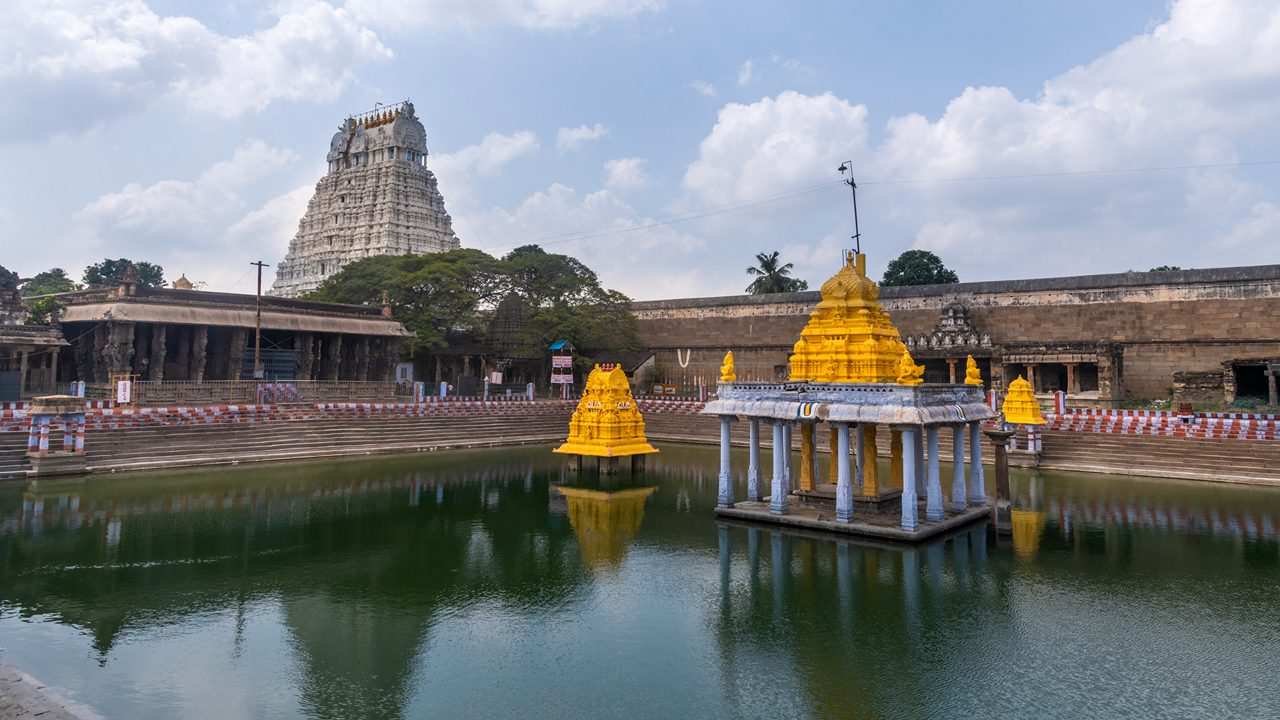
Where Temples, Silk and Ancient Learning Come Together
Kanchipuram is one of Tamil Nadu's most celebrated heritage cities, renowned for its magnificent temples, ancient traditions and world-famous silk sarees. Often called the City of Thousand Temples, Kanchipuram has been an important centre of religion, learning, art and architecture for centuries.
The city is particularly famous for its magnificent Ekambareswarar Temple, Kamakshi Amman Temple, Kailasanathar Temple and Varadaraja Perumal Temple. Alongside its spiritual heritage, Kanchipuram is also known around the world for its traditional Kanchipuram silk sarees, woven by skilled artisans using distinctive techniques.
For travellers, Kanchipuram offers a fascinating combination of ancient temples, stone sculptures, traditional weaving, religious traditions and the architectural legacy of the Pallavas, Cholas and Vijayanagara rulers.
History
Kanchipuram has a history extending back many centuries and has played an important role in the political, religious and cultural history of South India. Ancient Tamil literary works and historical accounts refer to the city as an important settlement and centre of learning.
The Pallava Capital
From around the 3rd to 9th centuries CE, Kanchi was an important capital of the Pallavas. The Pallavas developed the city with fortifications, roads and impressive temples, establishing a strong architectural tradition that can still be seen today.
Chola and Vijayanagara Periods
The Cholas ruled Kanchipuram from approximately the 10th to 13th centuries, followed by the Vijayanagara rulers from the 14th to 17th centuries. Several major temple additions and architectural features seen in Kanchipuram today reflect these periods.
A Centre of Learning
Kanchipuram was historically an important centre of learning and religious thought. The city attracted scholars and pilgrims associated with Hinduism, Buddhism and Jainism, contributing to its reputation as an important intellectual and spiritual centre.
Geography
Kanchipuram is located in northern Tamil Nadu, around 75 kilometres from Chennai. The historic city lies on the banks of the Vegavathi River and forms part of the culturally rich northern Tamil region.
River and Plains
The city's surroundings consist largely of plains, with the Vegavathi River forming an important geographical feature of historic Kanchipuram.
Gateway from Chennai
Its location close to Chennai makes Kanchipuram an accessible destination for short heritage trips as well as longer Tamil Nadu itineraries.
Culture and Traditions
Kanchipuram's culture is closely connected with its temples, religious traditions, classical arts and handloom industry. Temple festivals, devotional practices and traditional craftsmanship remain important parts of the city's identity.
Temple Culture
Religious life forms an important part of Kanchipuram's cultural landscape. Major Shiva, Vishnu, Shakti and Murugan temples attract devotees throughout the year.
Silk Weaving Tradition
The city is equally famous for its Kanchipuram silk sarees. Traditional weaving is an important part of the local economy and cultural identity, with distinctive borders, pallus, zari work and temple-inspired motifs.
Religious Diversity
Kanchipuram also reflects a history of cultural and religious coexistence. The city contains Hindu temples as well as historic Muslim heritage, while its broader history includes Buddhist and Jain associations.
Architecture
Kanchipuram is one of the finest destinations in Tamil Nadu for understanding the evolution of South Indian temple architecture. Pallava, Chola and Vijayanagara influences can be seen across the city's monuments.
Pallava Architecture
The Kailasanathar Temple is one of the most important examples of Pallava architecture in Kanchipuram. Built during the reign of Pallava ruler Rajasimha, the temple is particularly noted for its sculptural details and vimana.
Vijayanagara Influence
The enormous gopuram and pillared halls of temples such as Ekambareswarar and Varadaraja Perumal demonstrate the architectural contributions of the Vijayanagara period.
Temple Sculpture
Stone pillars, sculpted figures, mandapams, gopurams and detailed religious imagery are among the architectural features that make Kanchipuram particularly important for heritage travellers.
Famous Places
Ekambareswarar Temple
The Ekambareswarar Temple is one of the five major Pancha Bhoota Sthalams dedicated to Shiva and represents the element of Earth. Its towering gopuram, large temple complex, thousand-pillared hall and sacred mango tree make it one of Kanchipuram's defining landmarks.
Kamakshi Amman Temple
The Kamakshi Amman Temple is an important Shakti shrine located in the heart of Kanchipuram. The temple is dedicated to Goddess Kamakshi and is distinguished by its sacred traditions and golden gopuram.
Kailasanathar Temple
The Kailasanathar Temple is one of the oldest surviving structural temples in Kanchipuram. Built in the 7th century under Pallava ruler Rajasimha, it is particularly admired for its early Dravidian architectural style and stone sculptures.
Varadaraja Perumal Temple
The Varadaraja Perumal Temple is one of the important Vaishnavite temples of Kanchipuram and one of the 108 Divya Desams. Its large complex contains numerous mandapams, sculptures and architectural features developed over several historical periods.
Vaikunta Perumal Temple
The Vaikunta Perumal Temple is another important Divya Desam associated with Kanchipuram. Built during the Pallava period, its distinctive three-tiered design makes it especially significant for architecture enthusiasts.
Kumarakottam Murugan Temple
The Kumarakottam Murugan Temple is dedicated to Lord Murugan and is situated in the heart of Kanchipuram. It forms part of the city's important network of historic temples.
Ulagalanda Perumal Temple
The Ulagalanda Perumal Temple is dedicated to Lord Vishnu in his Vamana-Trivikrama form. A unique feature of this complex is the presence of multiple Divya Desam shrines within the same temple complex.
Kanchi Mutt
The Kanchi Kamakoti Peetham, commonly known as Kanchi Mutt, is an important spiritual institution associated with the religious heritage of Kanchipuram.
Famous Dishes
Kanchipuram Idli
Kanchipuram Idli is one of the city's best-known traditional food specialities. This distinctive idli is traditionally prepared with fermented rice and urad dal batter and seasoned with ingredients such as pepper and cumin.
Traditional South Indian Meals
Visitors can enjoy traditional Tamil meals featuring rice, sambar, rasam, vegetables, curd, poriyal and a variety of accompaniments. Vegetarian food is particularly easy to find around the city's temple areas.
Temple-Style Food
Because of Kanchipuram's strong temple culture, traditional vegetarian preparations and simple South Indian dishes form an important part of the local food experience.
Famous Personalities
C. N. Annadurai
C. N. Annadurai, popularly known as Arignar Anna, was born in Kanchipuram and became an influential political leader, writer and former Chief Minister of Tamil Nadu. His ancestral home has been preserved as Arignar Anna Illam.
Mahendravarman I
Mahendravarman I, the Pallava ruler, was an important historical figure associated with Kanchipuram. He was known as a scholar, musician and patron of the arts during the Pallava period.
Adi Shankara
Adi Shankara has a strong traditional association with Kanchipuram through the city's spiritual history and the Kanchi Kamakoti tradition. The city remains an important centre for Advaita-related religious traditions.
Ramanuja
Ramanuja, the celebrated Sri Vaishnavite philosopher and theologian, is strongly associated with the wider Kanchipuram region and its Vaishnavite temple traditions.
Festivals
Varadaraja Perumal Brahmotsavam
The annual Varadaraja Perumal Brahmotsavam is one of the major religious celebrations in Kanchipuram. The festival includes important events such as Garuda Seva and the chariot festival.
Ekambareswarar Brahmotsavam
The Ekambareswarar Temple Brahmotsavam is traditionally celebrated over several days and includes religious ceremonies and processions.
Vaikunta Ekadasi
Vaikunta Ekadasi is an important festival at Vaikunta Perumal Temple and other Vaishnavite temples, attracting devotees for special worship and religious observances.
Temple Festivals
Because Kanchipuram has a large number of historic temples, religious festivals take place throughout the year. Visitors planning a festival-focused trip should check the temple calendar for the relevant year.
Kanchipuram Tourism Festival
The district administration has also recorded tourism festival celebrations during the month of October, providing an opportunity to experience local culture and heritage.
Things to Do
Explore the Historic Temples
Spend time exploring Kanchipuram's major temples, especially Ekambareswarar, Kamakshi Amman, Kailasanathar and Varadaraja Perumal.
Study Pallava Architecture
Visit Kailasanathar and Vaikunta Perumal temples to appreciate the architectural innovations and sculptural traditions of the Pallava period.
Shop for Kanchipuram Silk
Explore local silk shops and weaving establishments to see the craftsmanship behind the city's famous sarees. When purchasing, look for authentic products carrying appropriate GI-related certification and information.
Visit Arignar Anna Illam
Explore the memorial associated with C. N. Annadurai to learn about his life and contribution to Tamil Nadu's political and social history.
Visit Kanchi Mutt
Travellers interested in Indian philosophy and spiritual traditions can explore the area around the Kanchi Kamakoti Peetham and learn about Kanchipuram's religious heritage.
Explore Local Craftsmanship
Take time to understand the traditional handloom culture that makes Kanchipuram silk famous. The weaving tradition is an essential part of the city's identity.
Where to Eat, Shop, and Stay
Where to Eat
Kanchipuram has numerous restaurants and local eateries serving traditional South Indian vegetarian meals, tiffin dishes and regional specialities such as Kanchipuram idli. Temple areas and the central town offer convenient choices for visitors.
Where to Shop
The city is best known for its Kanchipuram silk sarees. Visitors can explore authorised silk shops, handloom establishments and cooperative outlets. Authentic Kanchipuram silk sarees have been recognised as a Geographical Indication since 2005–06.
Where to Stay
Accommodation is available around the central Kanchipuram area, making it convenient to visit the major temples. Travellers can choose from budget hotels, guesthouses and more comfortable accommodation depending on their requirements.
What is Kanchipuram Famous For?
Kanchipuram is most famous for its ancient temples, Pallava architecture and Kanchipuram silk sarees. The city's major landmarks include Ekambareswarar Temple, Kamakshi Amman Temple, Kailasanathar Temple and Varadaraja Perumal Temple. Its silk weaving tradition has also earned Kanchipuram international recognition, with Kanchipuram silk sarees receiving Geographical Indication status.
Best Time to Visit
The period from October to March is generally more comfortable for sightseeing, temple visits and exploring the city on foot.
Travellers interested in religious celebrations can plan around major temple festivals. However, festival dates vary each year according to the religious calendar, so it is advisable to verify dates and temple schedules before travelling.
How to Reach
By Air
The nearest major airport is Chennai International Airport at Meenambakkam, approximately a two-hour drive from Kanchipuram according to the district administration.
By Train
Kanchipuram can be reached by rail from Chennai Central and Arakkonam. Rail services also connect the city with the wider Chennai suburban network.
By Road
Kanchipuram is approximately 75 kilometres from Chennai and is well connected by road. Bus services connect Kanchipuram with Chennai, Bengaluru, Puducherry, Tirupati, Tiruvannamalai and other destinations.
Nearby Places
Sriperumbudur
Located on the route between Chennai and Kanchipuram, Sriperumbudur is associated with the life of Sri Ramanuja and is an important pilgrimage destination.
Uthiramerur
Uthiramerur is known for its historic temples and important Chola-era inscriptions, making it an interesting destination for travellers interested in South Indian history.
Mamallapuram
Mamallapuram is a major Pallava heritage destination known for its rock-cut monuments, temples and sculptures. It provides an excellent continuation of a Pallava-focused heritage itinerary.
Thiruvannamalai
Thiruvannamalai is a major spiritual destination in Tamil Nadu, famous for the Arunachaleswarar Temple and Arunachala Hill.
Vellore
Vellore offers another layer of Tamil Nadu's historical heritage, particularly through the impressive Vellore Fort and its associated monuments.
Best Duration for a Trip
2 days is ideal for experiencing the major attractions of Kanchipuram, while 3 days allows enough time for a more relaxed temple and heritage itinerary.
- Day 1: Ekambareswarar Temple, Kamakshi Amman Temple, Kumarakottam Murugan Temple and local silk shopping.
- Day 2: Kailasanathar Temple, Varadaraja Perumal Temple, Vaikunta Perumal Temple and Arignar Anna Illam.
- Day 3: Take a nearby heritage excursion to Uthiramerur, Sriperumbudur or another destination around the Kanchipuram region.
Travel Tips
- Wear comfortable footwear because exploring the major temples can involve considerable walking.
- Dress modestly when visiting temples and religious institutions.
- Check temple timings before visiting, as many temples close for several hours between morning and evening sessions.
- Carry water and sun protection, particularly when travelling during warmer months.
- Plan temple visits early in the day to avoid excessive heat and larger crowds.
- When buying silk sarees, ask about authenticity, GI-related identification and the product's weaving details.
- Photography restrictions may apply inside certain temples, so follow local instructions.
- If travelling during major festivals, expect larger crowds and plan accommodation and transport in advance.
Why Visit Kanchipuram?
Kanchipuram is an ideal destination for travellers who want to experience South India's temple architecture, spiritual traditions, history and handloom craftsmanship in one place. Few cities combine centuries-old Pallava monuments, grand Vijayanagara-era temple additions and a living silk-weaving tradition as closely as Kanchipuram.
Whether you are interested in architecture, religion, photography, history, shopping or traditional Indian craftsmanship, Kanchipuram offers an experience that goes well beyond a conventional temple visit.
Conclusion
Kanchipuram is a city where history remains part of everyday life. Its towering gopurams, ancient stone temples, devotional traditions and renowned silk sarees tell the story of a place that has remained culturally important for centuries. From the grandeur of Ekambareswarar and Varadaraja Perumal to the intricate artistry of Kailasanathar and the craftsmanship of Kanchipuram's silk weavers, the city offers a rich introduction to Tamil Nadu's architectural and cultural heritage.
For travellers seeking a destination that combines temples, history, spirituality, architecture and traditional craftsmanship, Kanchipuram deserves a prominent place on the Tamil Nadu travel itinerary.
"Travel is the only thing you buy that makes you richer."