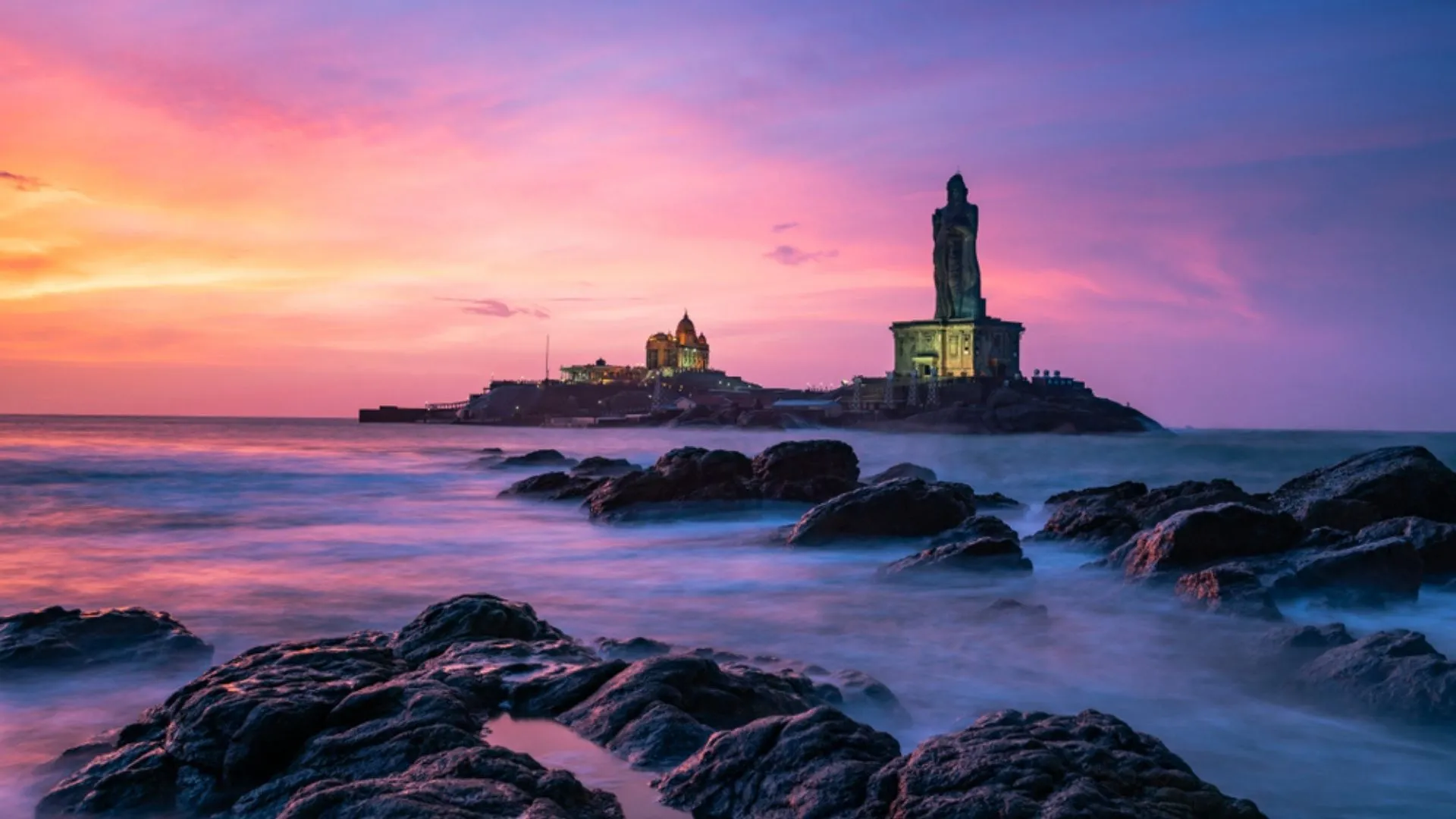
Where Three Seas Meet
Kanyakumari is one of India's most distinctive coastal destinations, located at the southernmost tip of the Indian peninsula. The city is famous for the meeting of the Arabian Sea, Bay of Bengal and Indian Ocean, along with spectacular sunrise and sunset views. Its landscape combines the sea, beaches, temples, memorials and nearby Western Ghats, making it a destination where nature, spirituality and history come together.
From the iconic Vivekananda Rock Memorial and Thiruvalluvar Statue to the revered Kumari Amman Temple and historic memorials, Kanyakumari offers a compact but memorable travel experience. The wider region also opens the way to heritage attractions such as Padmanabhapuram Palace, Suchindram and Chitharal.
History
Kanyakumari and the surrounding region have a long history dating back thousands of years. Archaeological discoveries in the district, including Neolithic and early historic remains, indicate the presence of ancient settlements and cultures.
Ancient Connections
The region was historically associated with Nanjil Nadu and came under the influence of several South Indian dynasties, including the Pandyas and Cholas. Later, the area became part of the historic Travancore kingdom.
From Travancore to Tamil Nadu
Until 1956, the present-day Kanniyakumari district was part of the erstwhile Travancore. The movement for merging the Tamil-speaking southern parts of Travancore with the Madras State played an important role in the region's modern history. In 1956, the present Kanniyakumari district was formed as part of Tamil Nadu, with Nagercoil as its headquarters.
Geography
Kanyakumari lies at the southernmost tip of the Indian peninsula. The district has the sea on three sides, while the Western Ghats rise towards the north. This creates an unusual combination of coastline, fertile plains, hills, forests and agricultural landscapes.
The Meeting of Three Seas
The most famous geographical feature is the meeting point of the Arabian Sea, Bay of Bengal and Indian Ocean. This unique location is one of the defining experiences of a visit to Kanyakumari.
Coastal and Green Landscapes
The wider district is known for paddy fields, coconut groves, rubber plantations, forests and mountain landscapes. Its varied geography also supports beaches, waterfalls, dams and scenic countryside.
Culture and Traditions
Kanyakumari's culture reflects its position at the meeting point of different historical and regional influences. Tamil traditions are strongly visible, while the area's long association with Travancore has also shaped its architecture, food and cultural practices.
Temple Traditions
Religious traditions form an important part of local life. The Kumari Amman Temple, Suchindram's Thanumalayan Temple and several other historic temples attract devotees throughout the year.
Coastal Heritage
The sea remains closely connected with everyday life, local traditions and food. Fishing communities, coastal villages and seafood-based cuisine contribute to the distinctive character of the region.
Architecture
Kanyakumari and its surrounding region offer a fascinating mix of temple architecture, royal heritage, colonial-era memorials and modern monuments.
Padmanabhapuram Palace
Padmanabhapuram Palace is an important example of traditional Kerala-style royal architecture and is one of the region's most significant heritage attractions.
Temple Architecture
The Kumari Amman Temple and Thanumalayan Swamy Temple at Suchindram showcase the region's rich South Indian temple traditions, sculpture and religious architecture.
Vivekananda Rock Memorial
The Vivekananda Rock Memorial is a landmark of modern Indian architecture built on an offshore rock. The memorial commemorates Swami Vivekananda's meditation at the site in December 1892.
Famous Places
Vivekananda Rock Memorial
Located on a rocky island just offshore, the Vivekananda Rock Memorial is one of Kanyakumari's most recognised landmarks. It commemorates Swami Vivekananda's visit and meditation at the sacred rock in 1892.
Thiruvalluvar Statue
The monumental Thiruvalluvar Statue stands beside Vivekananda Rock and honours the celebrated Tamil poet and philosopher Thiruvalluvar. Together, the two landmarks form one of Kanyakumari's most memorable seascapes.
Kumari Amman Temple
The Kumari Amman Temple is dedicated to Goddess Kanniyakumari and is closely connected with the identity and name of the region. It is an important pilgrimage destination on the seafront.
Gandhi Mandapam
Gandhi Mandapam is a memorial associated with Mahatma Gandhi. The site commemorates his connection with Kanyakumari and forms part of the city's important historical landmarks.
Vattakottai Fort
Vattakottai Fort is a coastal fort surrounded by sea and scenic landscapes. Its location makes it an interesting combination of military heritage and coastal scenery.
Suchindram
Located near Kanyakumari, Suchindram is famous for the historic Thanumalayan Swamy Temple, which is dedicated to the combined form of Shiva, Vishnu and Brahma.
Padmanabhapuram Palace
The historic Padmanabhapuram Palace provides an opportunity to explore the royal heritage and traditional architecture of the former Travancore region.
Famous Dishes
Nanjil Nadu Cuisine
The local food tradition is strongly influenced by the historic Nanjil Nadu region. Rice, coconut, vegetables, spices and seafood feature prominently in the cuisine.
Seafood
Being a coastal destination, Kanyakumari is known for fresh seafood preparations. Fish and other seafood are commonly prepared with local spices and coconut-based flavours.
Traditional South Indian Meals
Visitors can also enjoy traditional rice-based meals served with sambar, vegetables, curries, chutneys and other regional accompaniments. Local food festivals have also highlighted the distinctive Nanjil Nadu food tradition.
Famous Personalities
K. Kamarajar
K. Kamarajar, popularly known as Perunthalaivar Kamarajar, was a major political leader and former Chief Minister of Tamil Nadu. His memorial at Kanyakumari commemorates his contribution to Tamil Nadu's public life and education.
Marshall Nesamony
A. Nesamony, popularly associated with the title Marshall Nesamony, played a major role in the movement for the merger of the Tamil-speaking areas of southern Travancore with Tamil Nadu.
Swami Vivekananda
Although not a native of Kanyakumari, Swami Vivekananda has a strong connection with the city. His meditation at the sacred rock in 1892 became an important part of Kanyakumari's modern spiritual identity.
Festivals
Kumari Thiruvizha
Kumari Thiruvizha is a cultural celebration held in Kanyakumari and features cultural activities that attract residents and visitors.
Navaratri
Navaratri is celebrated with special religious observances, particularly at the Devi Kanniyakumari Temple.
Vaikasi Visagam
Vaikasi Visagam is another important religious festival observed in the region, with celebrations traditionally extending over several days.
Mandaikadu Festival
The Mandaikadu Kodai Festival is a major regional religious gathering associated with the Mandaikadu Temple. The festival includes processions, rituals and large gatherings of devotees.
Pongal
Pongal is celebrated across the region as an important Tamil harvest festival, bringing together family traditions, food, cultural activities and community celebrations.
Things to Do
Watch the Sunrise
Begin the day at the Kanyakumari seafront and experience the famous sunrise over the sea. The sunrise viewpoint is one of the city's signature experiences.
Visit Vivekananda Rock
Take a boat trip to the Vivekananda Rock Memorial and explore the memorial complex while enjoying panoramic views of the surrounding waters.
See the Thiruvalluvar Statue
Admire the monumental statue of Thiruvalluvar and the dramatic coastal setting around the monument.
Explore the Temples
Visit the Kumari Amman Temple and take a short trip to Suchindram to experience the area's religious and architectural heritage.
Explore Coastal Forts and Beaches
Visit Vattakottai Fort and explore nearby beaches for a quieter side of the region beyond the main tourist centre.
Take a Heritage Day Trip
Extend your trip to Padmanabhapuram Palace, Chitharal and Mathoor Aqueduct to experience the wider heritage and landscape of Kanniyakumari district.
Where to Eat, Shop, and Stay
Where to Eat
Kanyakumari has restaurants and local eateries serving South Indian meals, vegetarian dishes, seafood and regional Nanjil Nadu-inspired food. The areas around the main tourist zone and town centre are convenient for travellers.
Where to Shop
Visitors can look for local handicrafts, souvenirs, seashell-based decorative items, traditional products and other small keepsakes associated with the coastal destination.
Where to Stay
Accommodation is available around the main Kanyakumari tourist area, with options ranging from budget stays to comfortable hotels. Staying close to the seafront is convenient for visitors who want easy access to sunrise viewpoints and major attractions.
What is Kanyakumari Famous For?
Kanyakumari is best known for the meeting of the Arabian Sea, Bay of Bengal and Indian Ocean, spectacular sunrise and sunset views, the Vivekananda Rock Memorial, Thiruvalluvar Statue and Kumari Amman Temple. The wider region is also famous for Padmanabhapuram Palace, Suchindram, coastal forts, beaches and its distinctive combination of Tamil and Travancore heritage.
Best Time to Visit
The cooler and relatively pleasant months from October to March are generally comfortable for sightseeing and exploring the coastal attractions. The winter season is particularly suitable for combining sunrise viewing, sightseeing and nearby day trips.
Visitors should also consider local festival calendars if they want to experience major temple celebrations. Festival dates vary according to the Tamil calendar.
How to Reach
By Air
The nearest major airport is Thiruvananthapuram International Airport, approximately 110 km from Kanyakumari. Tuticorin Airport is another option, located around 105 km away.
By Train
Kanyakumari Railway Station and Nagercoil Junction provide rail connectivity. Trains connect the region with several major cities across India.
By Road
Kanyakumari is well connected by road with major cities in Tamil Nadu and neighbouring Kerala. National and state highways provide access to the city, while regular bus services connect Kanyakumari with Nagercoil and other towns.
Nearby Places
Nagercoil
The district headquarters and an important regional city, Nagercoil is a convenient base for exploring many attractions around Kanniyakumari.
Suchindram
Located close to Kanyakumari, Suchindram is famous for the historic Thanumalayan Swamy Temple and its distinctive temple architecture.
Padmanabhapuram
Padmanabhapuram is home to the historic Padmanabhapuram Palace and offers a deeper look into the former Travancore royal heritage.
Mathoor Aqueduct
The Mathoor Aqueduct is a striking engineering landmark surrounded by green landscapes and is one of the region's popular sightseeing attractions.
Thirparappu Waterfalls
Located in the Western Ghats region, Thirparappu Waterfalls offers a refreshing contrast to Kanyakumari's coastal scenery.
Muttom Beach
Muttom is known for its rocky coastline and dramatic waves, making it an attractive coastal excursion from the Kanyakumari region.
Best Duration for a Trip
2 to 3 days is ideal for a first visit to Kanyakumari.
- Day 1: Kanyakumari seafront, Kumari Amman Temple, Gandhi Mandapam, sunrise and sunset.
- Day 2: Vivekananda Rock Memorial, Thiruvalluvar Statue, Kamarajar Memorial and Vattakottai Fort.
- Day 3: Suchindram, Padmanabhapuram Palace, Mathoor Aqueduct or Thirparappu Waterfalls.
Travel Tips
- Start early if sunrise viewing is an important part of your itinerary.
- Carry sunscreen, sunglasses, a hat and drinking water because coastal areas can become sunny and warm.
- Wear comfortable footwear for temple visits and sightseeing.
- Dress respectfully when visiting temples and other religious sites.
- Keep some flexibility in your schedule for boat services and weather conditions.
- Check the latest timings and operational status of major attractions before travelling.
- Use Kanyakumari as the base for nearby heritage and nature excursions rather than limiting the trip to the seafront.
Why Visit Kanyakumari?
Kanyakumari offers a rare combination of sea, spirituality, history and culture in one destination. Few places provide the experience of standing at India's southern tip while watching the changing colours of the sea and sky. Add its temples, memorials, historic architecture, beaches and nearby Western Ghats attractions, and Kanyakumari becomes an ideal destination for travellers looking for both iconic sights and meaningful cultural experiences.
Conclusion
Kanyakumari is much more than a place to watch the sunrise. It is a destination shaped by the sea, ancient traditions, spiritual journeys, political history and the cultural meeting of Tamil and Travancore influences. From the sacred Kumari Amman Temple and Vivekananda Rock Memorial to Vattakottai Fort, Padmanabhapuram Palace and the region's scenic landscapes, a visit to Kanyakumari offers a memorable journey to one of India's most distinctive corners.
"Travel is the only thing you buy that makes you richer."