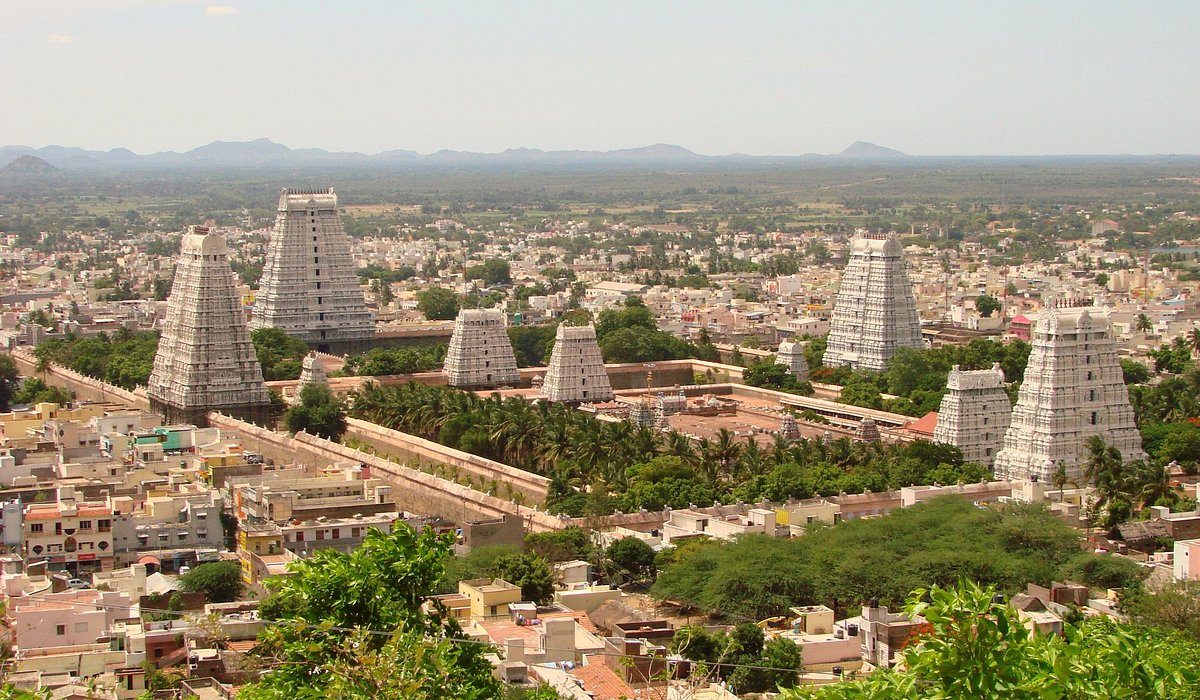
Where the Sacred Arunachala Hill Meets Ancient Tamil Heritage
Tiruvannamalai is one of Tamil Nadu's most revered spiritual destinations and an important centre of Saiva tradition. The city is dominated by the sacred Arunachala Hill and the magnificent Annamalaiyar Temple, making it a major destination for pilgrims, spiritual seekers, heritage travellers and visitors interested in Tamil culture. The city is especially known for Girivalam, the traditional circumambulation of Arunachala Hill, and the spectacular Karthigai Deepam festival.
Beyond its spiritual identity, Tiruvannamalai offers ancient architecture, historic monuments, peaceful ashrams, hill landscapes and nearby attractions such as Sathanur Dam and Jawadhu Hills. Its combination of religion, history, nature and living traditions makes it a distinctive destination in Tamil Nadu.
History
Tiruvannamalai has a long history extending across several periods of South Indian civilisation. Archaeological evidence in the wider district includes prehistoric tools, Neolithic remains and megalithic burial sites, showing that the region has been inhabited for thousands of years.
During the Sangam period, the region formed part of the larger historical areas known as Thondaimandalam and Nadunadu. The area subsequently came under the influence of several South Indian dynasties and ruling houses, including the Cholas, Pandyas, Sambuvarayars, Hoysalas and Vijayanagara rulers.
The Annamalaiyar Temple developed over centuries, with contributions from different ruling dynasties. Inscriptions and architectural elements preserve evidence of these historical periods. The Sambuvarayars also played an important role in the region, with Padavedu serving as their headquarters during part of their rule.
In the modern administrative period, Tiruvannamalai district was formed from the erstwhile North Arcot district on 30 September 1989. It was initially named Tiruvannamalai Sambuvarayar District and was renamed Tiruvannamalai District in 1997.
Geography
Tiruvannamalai lies in northern Tamil Nadu and forms part of a landscape influenced by the Eastern Ghats, with the Arunachala Hill forming the most recognisable geographical feature of the city.
Arunachala Hill rises to around 800 metres (2,669 feet) and is surrounded by a roughly 14-kilometre road used for Girivalam. The hill's distinctive presence defines the city's landscape and its religious traditions.
The wider district includes agricultural plains, hills, forests, rivers and reservoirs. The Jawadhu Hills form an important hill region in the district, while the Thenpennaiyar River supports major irrigation infrastructure such as Sathanur Dam.
Culture and Traditions
Saiva Spiritual Tradition
Tiruvannamalai is deeply associated with Saiva tradition and is regarded as one of the important sacred centres of Tamil Nadu. Annamalaiyar Temple is associated with Lord Shiva in the form of fire, giving the city a strong connection with the concept of Agni.
Girivalam
Girivalam is one of the most important traditions of Tiruvannamalai. Devotees walk around Arunachala Hill along a route of approximately 14 kilometres. The practice becomes especially prominent on full moon days and during major festivals.
Spiritual and Ashram Culture
The city has also become internationally known for its spiritual atmosphere and ashrams. The legacy of Ramana Maharshi is closely associated with Arunachala, attracting visitors interested in meditation, self-inquiry and spiritual literature.
Traditional Tamil Culture
Temple festivals, devotional music, processions, traditional rituals and Tamil religious literature remain important parts of local cultural life. The region also has a strong connection with Tamil devotional poets and scholars.
Architecture
Annamalaiyar Temple Architecture
The Annamalaiyar Temple is a magnificent example of South Indian Dravidian architecture. The temple complex developed over many centuries, with contributions from Cholas, Pandyas, Sambuvarayars, Hoysalas, Vijayanagara rulers, Nayaks and later patrons.
The enormous complex covers around 25 acres and contains numerous shrines, sculptures, inscriptions, water tanks, mandapams and towering gopurams. Its eastern Rajagopuram is one of the most prominent architectural landmarks of the city.
Historic Inscriptions and Sculptures
The temple contains hundreds of stone inscriptions along with numerous sculptures, bronze images, paintings and architectural elements. These provide valuable evidence of the religious, social and political history associated with the temple.
Temple Streets and Sacred Landscape
The streets surrounding the temple and the Girivalam route form an important part of the city's traditional urban landscape. Temples, shrines, ashrams and devotional establishments are closely integrated with the surrounding Arunachala landscape.
Famous Places
Annamalaiyar Temple
The Annamalaiyar Temple is the central landmark of Tiruvannamalai and one of the city's most important pilgrimage destinations. Dedicated to Lord Shiva, the temple stands at the foot of Arunachala Hill and is known for its enormous Dravidian architecture, towering gopurams, sculptures, inscriptions and long religious history.
Arunachala Hill
Arunachala Hill is the defining natural and spiritual landmark of Tiruvannamalai. The hill is regarded as sacred by devotees, and its surrounding route is used for Girivalam. Visitors can also explore the hill's association with meditation traditions and spiritual teachers.
Ramana Maharshi Ashram
Sri Ramanasramam is associated with Ramana Maharshi, who spent much of his life at Arunachala. The ashram and nearby hill locations connected with him attract visitors interested in his teachings, meditation and spiritual writings.
Adi Annamalai Temple
Located along the Girivalam route, the Adi Annamalai Temple is another important religious site associated with the sacred Arunachala landscape. It adds another layer to the spiritual and architectural experience of travelling around the hill.
Sathanur Dam
Sathanur Dam is built across the Thenpennaiyar River and is located around 30 kilometres from Tiruvannamalai. The area includes gardens, a children's park, a crocodile farm and other visitor facilities, making it a popular excursion outside the city.
Jawadhu Hills
The Jawadhu Hills are an extension of the Eastern Ghats and offer a contrasting natural landscape of hills, valleys and forested areas. The region is also home to tribal communities and attractions such as Beemanmadavu waterfalls.
Famous Dishes
South Indian Breakfast
Idli, dosa, vada, pongal and varieties of traditional breakfast dishes are widely available across Tiruvannamalai. These are commonly served with sambar, chutneys and other South Indian accompaniments.
Traditional Tamil Meals
A traditional Tamil meal with rice, sambar, rasam, vegetables, curd and other accompaniments is a good way to experience everyday regional cuisine. Vegetarian meals are particularly common around pilgrimage areas.
Tamil-Style Biryani
Biryani is also available in Tiruvannamalai, reflecting the broader culinary traditions of Tamil Nadu. Local restaurants and eateries offer different preparations using rice, spices, vegetables or meat.
Jangiri and Traditional Sweets
Visitors can also try Tamil-style sweets such as jangiri, laddu and other traditional preparations available at sweet shops and local eateries.
Filter Coffee
A cup of traditional South Indian filter coffee is a simple addition to the Tiruvannamalai food experience, especially after a morning temple visit or while exploring the city's markets.
Famous Personalities
Ramana Maharshi
Ramana Maharshi is one of the personalities most closely associated with Tiruvannamalai. He lived at Arunachala for much of his life and became internationally known for his teachings on self-inquiry and spiritual awareness.
Arunagirinathar
Arunagirinathar, the celebrated Tamil devotional poet associated with Murugan worship, was born in the Tiruvannamalai region. His literary and devotional legacy remains an important part of Tamil religious culture.
Appayya Dikshitar
Appayya Dikshitar, a renowned scholar and theologian, is also associated with the wider Tiruvannamalai region. His contributions form part of the area's long intellectual and religious tradition.
Saiva Ellappa Navalar
Saiva Ellappa Navalar is another scholar associated with the region and its Tamil Saiva literary heritage. His association reflects the area's long-standing connection with devotional scholarship.
Festivals
Karthigai Deepam
Karthigai Deepam is the most famous festival associated with Tiruvannamalai. The festival is celebrated during the Tamil month of Karthigai and includes a major ten-day Brahmotsavam at Annamalaiyar Temple. The lighting of the Maha Deepam on Arunachala Hill is the defining event, drawing large numbers of devotees to the city.
Girivalam on Full Moon Days
Full moon days are particularly significant in Tiruvannamalai. Large numbers of devotees undertake Girivalam around Arunachala Hill, creating a distinctive spiritual atmosphere throughout the city.
Temple Processions and Religious Celebrations
Annamalaiyar Temple observes numerous religious events and processions throughout the year. Chariot festivals, temple rituals and other celebrations form an important part of the city's living cultural traditions.
Things to Do
- Visit Annamalaiyar Temple: Explore one of Tamil Nadu's most important historic temple complexes.
- Walk the Girivalam Route: Experience the traditional 14-kilometre circumambulation route around Arunachala Hill.
- Explore Ramana Maharshi's Legacy: Visit Sri Ramanasramam and locations associated with his life and teachings.
- Watch the Sunrise or Sunset: Enjoy views of Arunachala Hill and the surrounding landscape.
- Visit Adi Annamalai Temple: Include this important temple while exploring the Girivalam route.
- Take a Trip to Sathanur Dam: Spend time around the reservoir, gardens and visitor attractions.
- Explore Jawadhu Hills: Discover the hill landscape, forests and waterfalls around the region.
- Explore Local Markets: Shop for devotional items, traditional products, books, handicrafts and local food.
- Try Local Tamil Cuisine: Enjoy traditional South Indian breakfasts, meals, snacks and filter coffee.
Where to Eat, Shop, and Stay
Where to Eat
The areas around the temple and central Tiruvannamalai offer numerous vegetarian restaurants, South Indian eateries, cafes, sweet shops and small local food establishments. Visitors can easily find idli, dosa, pongal, meals, snacks and filter coffee.
Where to Shop
The streets around Annamalaiyar Temple are useful for shopping for religious souvenirs, devotional books, prayer items, traditional products, clothing and locally available handicrafts. Visitors should also explore local markets for everyday Tamil Nadu snacks and products.
Where to Stay
Tiruvannamalai offers a range of accommodation options, including hotels, guesthouses, budget stays and ashram-associated accommodation. Staying near the temple or Girivalam route can be convenient for visitors whose itinerary focuses on pilgrimage and early-morning or evening temple visits.
What is Tiruvannamalai Famous For?
Tiruvannamalai is primarily famous for its sacred Arunachala Hill, magnificent Annamalaiyar Temple, traditional Girivalam pilgrimage, and the spectacular Karthigai Deepam festival.
The city is also known for its association with Ramana Maharshi, ancient Tamil Saiva traditions, Dravidian temple architecture and nearby natural attractions such as Sathanur Dam and Jawadhu Hills.
Best Time to Visit
October to February
The cooler months are generally more comfortable for exploring Tiruvannamalai, walking around the temple area and visiting nearby attractions. The period also coincides with the broader festival season in Tamil Nadu.
Karthigai Deepam Season
Travellers who specifically want to experience Karthigai Deepam can plan their trip around the festival period. However, this is also an exceptionally busy time, so accommodation and transport should be planned well in advance.
Full Moon Days
Full moon days are particularly significant because of Girivalam. Visitors should expect substantially larger crowds around these dates, especially when a full moon coincides with a major festival.
How to Reach
By Air
The nearest major international airport is Chennai International Airport, approximately 189 kilometres from Tiruvannamalai according to the district administration. From Chennai, travellers can continue by road.
By Train
Tiruvannamalai has its own railway station and is connected by rail with destinations in Tamil Nadu. Travellers can check the latest railway timetable before planning their journey.
By Road
Tiruvannamalai is well connected by road with major towns and cities in Tamil Nadu. Regular bus services and private transport make road travel a convenient option for many visitors.
Nearby Places
Sathanur Dam
Located around 30 kilometres from Tiruvannamalai, Sathanur Dam is a convenient day-trip destination featuring a reservoir, gardens and visitor attractions.
Jawadhu Hills
The Jawadhu Hills offer a peaceful escape into the Eastern Ghats, with forest landscapes, hill scenery and waterfalls in the surrounding region.
Padavedu
Padavedu is an important historical and religious area associated with the Sambuvarayar period and contains notable temples and heritage sites.
Arni
Arni is known for its historical associations, temples and traditional silk-weaving heritage. It can be included as part of a wider exploration of the Tiruvannamalai region.
Vandavasi
Vandavasi has historical importance and can be explored by travellers interested in the broader heritage of northern Tamil Nadu.
Thiruvannamalai Region's Heritage Sites
The wider district contains additional heritage attractions such as Mamandur cave temples, Tirumalai Jain heritage sites, Devikapuram and other historic temple locations.
Best Duration for a Trip
2 to 3 days is a comfortable duration for experiencing the main attractions of Tiruvannamalai.
A two-day trip can cover Annamalaiyar Temple, Arunachala Hill, Girivalam, Ramana Maharshi-related sites and the main local markets. A three-day itinerary allows additional time for Sathanur Dam, Jawadhu Hills or nearby heritage attractions.
If visiting during Karthigai Deepam or a major full moon period, consider allowing additional time because of large crowds and increased travel activity.
Travel Tips
- Plan around crowds: Full moon days and Karthigai Deepam can be exceptionally busy.
- Start Girivalam early: Early morning or evening can be more comfortable than walking during the hottest part of the day.
- Wear comfortable footwear: Walking is an important part of experiencing the city and its pilgrimage routes.
- Dress respectfully: Wear appropriate clothing when visiting temples and religious institutions.
- Carry drinking water: This is particularly important when undertaking the full Girivalam route.
- Book accommodation early: Advance booking is advisable during festivals and full moon periods.
- Check temple timings: Temple access and timings may change during festivals and special occasions.
- Respect local traditions: Follow instructions at temples, ashrams and other religious places.
- Protect the environment: Avoid littering around Arunachala Hill, water bodies and hill areas.
- Plan nearby excursions: Sathanur Dam and Jawadhu Hills require additional travel time, so include them deliberately in your itinerary.
Why Visit Tiruvannamalai?
Tiruvannamalai offers a rare combination of spirituality, history, architecture, culture and nature within one destination. The monumental Annamalaiyar Temple and sacred Arunachala Hill form the heart of the city, while Girivalam and Karthigai Deepam provide opportunities to experience living Tamil religious traditions.
Beyond pilgrimage, travellers can explore the legacy of Ramana Maharshi, discover ancient inscriptions and temple architecture, visit Sathanur Dam and experience the landscapes of the Jawadhu Hills. This combination makes Tiruvannamalai suitable for spiritual travellers, heritage enthusiasts, culture lovers and visitors looking for a slower travel experience.
Conclusion
Tiruvannamalai is much more than a temple town. It is a destination where Arunachala Hill, centuries-old temple architecture, Tamil devotional traditions, spiritual communities and natural landscapes come together.
Whether you visit to see the magnificent Annamalaiyar Temple, undertake Girivalam, experience Karthigai Deepam, explore the legacy of Ramana Maharshi or discover the surrounding hills and heritage sites, Tiruvannamalai offers a deeply distinctive travel experience rooted in the history and culture of Tamil Nadu.
"Travel is the only thing you buy that makes you richer."