Thrissur – Kerala's Cultural Capital Where Festivals, Faith and Art Come Alive
Thrissur is widely known as the Cultural Capital of Kerala and the land of Poorams. Located in central Kerala, the city is a vibrant centre of temples, traditional arts, music, literature, festivals and heritage. At the heart of the city stands the ancient Vadakkumnathan Temple, surrounded by the famous Thekkinkadu Maidan and the distinctive Swaraj Round.
Thrissur offers a fascinating mix of history and living culture. The legacy of the Cochin royal family can be seen at Shakthan Thampuran Palace, while Kerala's artistic traditions continue through institutions such as Kerala Kalamandalam, Kerala Sahitya Akademi and Kerala Sangeetha Nataka Akademi. The city is also famous for spectacular celebrations such as Thrissur Pooram and Pulikkali.
Beyond the city, the wider district offers waterfalls, dams, beaches, wildlife areas, pilgrimage centres and heritage destinations. From the roaring waters of Athirappilly to the spiritual atmosphere of Guruvayur, Thrissur provides a varied travel experience for visitors interested in culture, history, food, nature and festivals.
History
Thrissur has a long and important history shaped by trade, religion, royal dynasties and cultural exchange. The region was connected with overseas trade from ancient times, while Kodungallur, in the wider Thrissur region, developed as an important centre of commerce and cultural interaction.
The history of the district between the 9th and 12th centuries is closely connected with the Kulasekharas of Mahodayapuram. From the 12th century onwards, the Perumpadappu Swarupam, the ruling dynasty associated with the Cochin kingdom, became increasingly important in the region.
During the medieval period, the area witnessed conflicts involving the Zamorins of Calicut and later came under the influence of European powers including the Portuguese, Dutch and British. The campaigns of Hyder Ali and Tipu Sultan also affected the region.
The modern development of Thrissur town is closely associated with Raja Rama Varma, popularly known as Sakthan Thampuran. He became ruler of Cochin in 1790 and played a major role in strengthening royal authority and developing Thrissur as an organised urban centre.
Sakthan Thampuran reorganised the town and is widely regarded as the architect of modern Thrissur. The large open area around Vadakkumnathan Temple, the development of roads and the establishment of the famous Swaraj Round are closely associated with his period.
Thrissur also played a role in Kerala's nationalist and social reform movements. The city and surrounding areas participated in the Civil Disobedience Movement, while the Guruvayur Satyagraha became an important episode in the struggle for temple entry and social equality.
After independence, Cochin became part of the Indian Union. In 1956, the formation of Kerala brought together Travancore-Cochin and Malabar territories, with Thrissur continuing as one of the state's major cultural and administrative centres.
Geography
Thrissur is located in central Kerala. The district covers approximately 3,032 square kilometres and extends from the Arabian Sea in the west towards the Western Ghats in the east.
The district is bordered by Palakkad and Malappuram to the north and Ernakulam and Idukki to the south. Its varied landscape includes coastal areas, plains, forests, hills, rivers, waterfalls, dams and agricultural land.
Thrissur city itself is built on elevated ground around the Vadakkumnathan Temple. The city has a distinctive circular road pattern around the temple, with the famous Swaraj Round forming one of its defining urban features.
The eastern part of the district gradually rises towards the Western Ghats and contains forested landscapes and major natural attractions such as Athirappilly, Vazhachal and Chimmony. The western side includes coastal and backwater areas such as Snehatheeram and Enamavu.
Culture and Traditions
Thrissur has one of the richest cultural identities in Kerala. Its traditions have been shaped by Hindu, Christian and Muslim communities as well as historical influences from Arab and European traders and colonial powers.
The city is particularly known for traditional percussion, temple arts, classical dance, folk performances, elephant processions and religious festivals. Kerala's major cultural institutions have also helped make Thrissur an important centre for literature, theatre, music and performing arts.
Pulikkali
Pulikkali, also known as Kaduvakali, is one of Thrissur's most recognisable folk traditions. Performers paint their bodies with tiger-like patterns and dance to traditional percussion during the Onam season. The colourful procession attracts large crowds to the city.
Chenda Melam
Chenda Melam is the powerful traditional percussion ensemble that forms an essential part of many Kerala temple festivals. The rhythmic sound of chendas, cymbals and other percussion instruments is particularly prominent during Thrissur Pooram.
Kudamattom
Kudamattom is one of the most visually distinctive traditions of Thrissur Pooram. Decorated elephants stand opposite each other while performers seated on the elephants rapidly change colourful parasols in a carefully coordinated display.
Kathakali
Kathakali is Kerala's classical dance-drama tradition and remains an important part of the state's cultural identity. Thrissur's cultural institutions and performance venues provide opportunities to experience this highly expressive art form.
Traditional Temple Arts
Thrissur's temples are important centres for traditional music, percussion, dance and ritual arts. Festivals throughout the district bring these traditions into public spaces, allowing visitors to experience Kerala's living cultural heritage.
Architecture
Thrissur's architecture reflects Kerala's temple traditions, Cochin royal heritage and later European influences. Traditional wooden structures, sloping roofs, mural paintings, palaces and temple complexes are among the most important architectural features.
Vadakkumnathan Temple
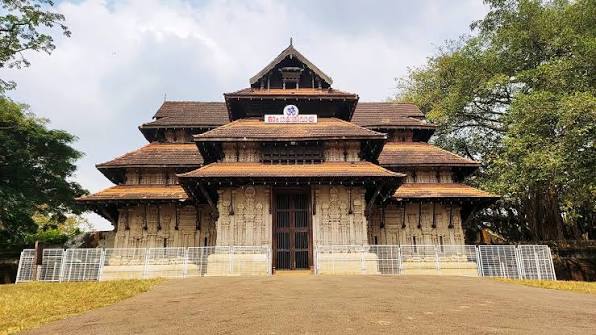
Vadakkumnathan Temple is a classic example of traditional Kerala temple architecture. The complex includes monumental entrances, traditional structures, a Koothambalam and beautiful mural paintings depicting episodes from Hindu mythology. The temple stands at the centre of Thrissur's historic urban landscape.
Shakthan Thampuran Palace
Shakthan Thampuran Palace, formerly known as Vadakkekara Palace, was reconstructed in 1795 in the Kerala-Dutch architectural style. The palace combines a traditional Kerala Nalukettu with features such as high roofs, thick walls, spacious rooms and polished Italian marble floors.
Kerala Kalamandalam
Kerala Kalamandalam is an important cultural institution dedicated to the preservation and teaching of Kerala's classical performing arts. Its traditional setting and connection with Kathakali, Mohiniyattam, Kutiyattam and other art forms make it an important cultural destination.
Guruvayur Temple
Guruvayur Sree Krishna Temple is one of Kerala's most important pilgrimage centres. The temple follows traditional Kerala architectural principles and is renowned for its religious traditions, rituals and devotional atmosphere.
Kodungallur Temple
Sree Kurumba Bhagavathy Temple at Kodungallur is an important historic temple associated with the famous Kodungallur Bharani festival. The temple and its surrounding traditions reflect the ancient religious heritage of the region.
Famous Places
Vadakkumnathan Temple
Vadakkumnathan Temple is the spiritual and cultural centre of Thrissur city. Dedicated primarily to Lord Shiva, the ancient temple is surrounded by the vast Thekkinkadu Maidan and serves as the main venue for the world-famous Thrissur Pooram.
Thekkinkadu Maidan
Thekkinkadu Maidan surrounds Vadakkumnathan Temple and is one of the most recognisable open spaces in Thrissur. The large ground becomes the centre of the city during Thrissur Pooram and other major events.
Shakthan Thampuran Palace
Shakthan Thampuran Palace is one of the city's most important heritage attractions. The former royal residence has been converted into a museum where visitors can learn about the history and culture of the Cochin royal period.
Thrissur Zoo and Museum
The Thrissur Zoo and Museum complex is one of the city's popular attractions. The green campus provides space for animal exhibits as well as museums and collections connected with Kerala's natural and cultural heritage.
Kerala Kalamandalam
Kerala Kalamandalam at Cheruthuruthy is one of India's leading centres for the preservation and teaching of Kerala's traditional performing arts. Visitors can learn about Kathakali, Mohiniyattam, Kutiyattam and traditional percussion.
Athirappilly Waterfalls
Athirappilly is Kerala's most famous waterfall and one of the major natural attractions of Thrissur district. The Chalakudy River plunges dramatically through a forested landscape, creating an impressive setting for sightseeing and photography.
Vazhachal Waterfalls
Vazhachal Waterfalls is located further upstream along the Chalakudy River and is surrounded by dense greenery. The combination of flowing water, rocks and forest makes it a popular nature destination.
Thumboormuzhy
Thumboormuzhy is a scenic destination along the Chalakudy River. It is known for its river landscape, butterfly garden, hanging bridge and peaceful natural surroundings.
Guruvayur Sree Krishna Temple
Guruvayur is one of Kerala's most important pilgrimage destinations and is dedicated to Lord Krishna. The temple attracts devotees throughout the year and has a strong place in Kerala's religious and cultural traditions.
Punnathur Kotta
Punnathur Kotta is located about 2 km from Guruvayur Temple and is known as an elephant sanctuary associated with the Guruvayur Devaswom. The historic palace complex provides a distinctive experience for visitors interested in temple traditions and elephants.
Kodungallur
Kodungallur is an ancient cultural and trading centre in the wider Thrissur region. Its temples, historic connections and links with the Muziris heritage area make it important for travellers interested in Kerala's ancient maritime history.
Vaidyaratnam Ayurveda Museum
The Vaidyaratnam Ayurveda Museum at Thaikkattussery near Ollur presents the history and traditions of Ayurveda. Exhibits and displays introduce visitors to the development of this traditional system of medicine.
Snehatheeram Beach
Snehatheeram Beach is a peaceful coastal destination in Thrissur district. Its sandy shoreline, gardens and relaxed atmosphere make it a pleasant place for an evening visit and sunset.
Chimmony Wildlife Sanctuary
Chimmony Wildlife Sanctuary is located in the eastern part of Thrissur district and protects forested landscapes at the foothills of the Western Ghats. It is suited to travellers interested in forests, wildlife and nature experiences.
Famous Dishes
Kerala Sadya
Sadya is Kerala's traditional vegetarian feast and is served on a banana leaf. It includes rice, avial, thoran, sambar, olan, pachadi, pickles and other preparations, followed by traditional desserts such as payasam. It is particularly popular during festivals and celebrations.
Unniyappam
Unniyappam is a small, sweet, deep-fried snack made from rice, jaggery, banana and coconut. It has a crisp exterior and soft interior and is closely associated with Kerala's temple and festive food traditions.
Chatti Pathiri
Chatti Pathiri is a layered Malabar-style delicacy made with thin pastry-like layers and either sweet or savoury fillings. The dish reflects the diverse culinary influences found across Kerala.
Appam and Stew
Appam is a soft, fermented rice pancake with delicate crisp edges. It is traditionally served with a mildly spiced vegetable, chicken or mutton stew and is one of Kerala's most popular meal combinations.
Puttu and Kadala Curry
Puttu is a steamed rice-and-coconut preparation commonly eaten for breakfast. It is traditionally paired with kadala curry, a spiced black chickpea dish, creating a filling and distinctly Kerala-style meal.
Kappa and Fish Curry
Boiled tapioca, known as kappa, served with spicy Kerala fish curry is a popular combination. The earthy texture of tapioca pairs well with the tangy and aromatic fish curry.
Karimeen Pollichathu
Karimeen Pollichathu is a classic Kerala fish preparation made using pearl spot. The fish is marinated with spices and cooked, traditionally wrapped in a banana leaf, giving it a distinctive aroma and flavour.
Banana Chips
Kerala banana chips are made from thin slices of raw banana fried until crisp. They are a popular snack and an easy local food item to buy from markets and shops in Thrissur.
Palada Pradhaman
Palada Pradhaman is a traditional Kerala dessert prepared with rice ada, milk and sugar. It is especially associated with festive meals and traditional Sadya.
Famous Personalities
Sakthan Thampuran
Sakthan Thampuran, also known as Raja Rama Varma, was the ruler of Cochin from 1790 to 1805 and is regarded as the architect of modern Thrissur. He reorganised the town, strengthened royal administration and played a major role in developing the city around Vadakkumnathan Temple.
Kuriakose Elias Chavara
Kuriakose Elias Chavara was a 19th-century Catholic priest, educator and social reformer who played an important role in the development of education and social institutions in Kerala. He was born in Kainakary but spent a significant part of his religious life in the Thrissur region, including at Mannanam and Koonammavu.
Vallathol Narayana Menon
Vallathol Narayana Menon was one of the great Malayalam poets and a major figure in Kerala's cultural renaissance. He founded Kerala Kalamandalam at Cheruthuruthy in the Thrissur region, helping preserve and promote Kerala's classical performing arts.
Kerala Kalamandalam's Cultural Legacy
The legacy of Vallathol and the artists associated with Kerala Kalamandalam has made the Thrissur region an important centre for Kathakali, Mohiniyattam, Kutiyattam and traditional percussion. The institution continues to influence generations of performers and cultural practitioners.
Panampilly Govinda Menon
Panampilly Govinda Menon was an important political leader from Kerala who served as Chief Minister of Travancore-Cochin and later held important positions in public life. He was born in Chalakudy in the present-day Thrissur district.
Festivals
Thrissur Pooram
Thrissur Pooram is the city's most famous festival and one of Kerala's largest and best-known temple festivals. Held at Vadakkumnathan Temple during the Malayalam month of Medam, the festival brings together decorated elephants, traditional percussion ensembles, colourful parasols, processions and spectacular fireworks.
Pulikkali
Pulikkali is one of the most colourful celebrations associated with Thrissur. Held during the Onam season, trained performers paint their bodies like tigers and dance through the city accompanied by traditional percussion. The event attracts thousands of spectators.
Arattupuzha Pooram
Arattupuzha Pooram is one of Kerala's historic Pooram festivals and is celebrated at the Arattupuzha Sree Ayyappan Temple in Thrissur district. Traditional processions, elephants and percussion form an important part of the celebration.
Kodungallur Bharani
Kodungallur Bharani is a famous annual festival held at the Sree Kurumba Bhagavathy Temple in Kodungallur. The celebration is known for its distinctive rituals and the dramatic presence of oracle performers, or velichappads, who dance in a trance-like state.
Guruvayur Ekadasi
Guruvayur Ekadasi is an important religious celebration at Guruvayur Temple. Devotees gather in large numbers for prayers, rituals and temple observances during the festival.
Buon Natale
Buon Natale is a colourful Christmas procession organised in Thrissur by the Catholic community. The event brings together decorated floats, performers and large numbers of Santa Claus figures and has become a distinctive part of the city's festive calendar.
Onam
Onam is celebrated throughout Thrissur with floral decorations, traditional meals, cultural programmes and folk performances. The city's Pulikkali celebrations are one of the most distinctive public expressions of the festival.
Things to Do
- Visit the historic Vadakkumnathan Temple and explore the heritage of the surrounding area.
- Walk around Thekkinkadu Maidan and the famous Swaraj Round.
- Explore the royal history of Thrissur at Shakthan Thampuran Palace.
- Visit the Thrissur Zoo and Museum complex.
- Experience traditional performing arts at Kerala Kalamandalam.
- Visit Athirappilly and Vazhachal Waterfalls.
- Explore the natural surroundings of Thumboormuzhy.
- Visit Guruvayur Temple and experience its spiritual atmosphere.
- Explore Punnathur Kotta near Guruvayur.
- Discover the history and culture of Kodungallur.
- Visit the Vaidyaratnam Ayurveda Museum.
- Enjoy an evening at Snehatheeram Beach.
- Explore the forests and natural landscapes around Chimmony.
- Try traditional Kerala food, including Sadya, unniyappam and local snacks.
- Shop for traditional textiles, handicrafts, jewellery, spices and local food products.
- Plan a visit during Thrissur Pooram or Pulikkali for a memorable cultural experience.
Where to Eat, Shop, and Stay
Where to Eat
Thrissur city has a wide range of restaurants, traditional Kerala eateries, vegetarian hotels, cafés and local food establishments. The areas around Swaraj Round, MG Road, Round North, Round South and East Fort Road are convenient for exploring the city's food scene.
Visitors should try traditional Kerala dishes such as Sadya, appam and stew, puttu and kadala curry, kappa and fish curry, unniyappam and other local snacks. Thrissur's diverse cultural history also means that vegetarian, seafood, Malabar and Christian-influenced dishes can be found across the city.
Where to Shop
Swaraj Round and the central Thrissur market areas offer a mixture of traditional shops and modern retail stores. Visitors can shop for Kerala textiles, jewellery, handicrafts, spices, banana chips, sweets and other local products.
Thrissur Pooram-related souvenirs, traditional percussion-themed products, handicrafts and Kerala-style decorative items can also be found in local shops, particularly around festival periods.
Where to Stay
Thrissur city centre is the most convenient area for first-time visitors because it provides easy access to Vadakkumnathan Temple, Shakthan Thampuran Palace, markets, restaurants and transport facilities.
Thrissur Railway Station and Swaraj Round are practical areas for budget and mid-range accommodation. Travellers looking for quieter surroundings can consider hotels and resorts on the outskirts of the city.
For travellers primarily visiting Guruvayur, staying near the temple provides convenient access to the pilgrimage centre. Visitors planning to explore Athirappilly and the eastern forest areas can also consider accommodation closer to Chalakudy or the waterfall region.
What is Thrissur Famous For?
Thrissur is famous as the Cultural Capital of Kerala and the land of Poorams. The city is best known for Thrissur Pooram, Vadakkumnathan Temple, Pulikkali, Chenda Melam, decorated elephants and Kerala's traditional performing arts.
The wider district is also famous for Athirappilly Waterfalls, Guruvayur Temple, Shakthan Thampuran Palace, Kerala Kalamandalam, Kodungallur Bharani and Punnathur Kotta.
Thrissur is equally attractive for food lovers, with Kerala Sadya, unniyappam, chatti pathiri and a wide variety of traditional vegetarian and non-vegetarian dishes forming part of its culinary identity.
Best Time to Visit
The best time to visit Thrissur is generally from October to March, when the weather is more comfortable for sightseeing, heritage walks and excursions.
April and May can be especially exciting for travellers interested in traditional festivals because Thrissur Pooram is held during the Malayalam month of Medam, usually falling around April or May. Festival dates change each year according to the Malayalam calendar.
August and September are significant for Onam celebrations and Pulikkali. Visitors who want to experience the colourful tiger-dance performances should check the annual festival calendar before planning their trip.
The monsoon season from June to September brings heavy rainfall but also makes the waterfalls and forests around Athirappilly, Vazhachal and Thumboormuzhy especially lush and scenic. Travellers should check local weather and attraction conditions before planning outdoor activities during heavy rain.
How to Reach
By Air
Cochin International Airport is the nearest major airport for Thrissur and is approximately 50–60 km from the city depending on the route. The airport has extensive domestic and international connectivity.
By Train
Thrissur Railway Station is one of Kerala's major railway stations and lies close to the city centre. It has regular connections to important cities across Kerala and other parts of India.
By Road
Thrissur is well connected by road with Kochi, Kozhikode, Palakkad, Coimbatore and other major cities. National Highway routes provide access to the district, while KSRTC and private buses connect Thrissur with destinations throughout Kerala and neighbouring states.
Nearby Places
Guruvayur
Guruvayur is one of Kerala's most important pilgrimage destinations and is famous for the Sree Krishna Temple. The town can be easily combined with a Thrissur trip and is particularly significant for devotees and travellers interested in Kerala's temple traditions.
Athirappilly
Athirappilly is home to Kerala's most famous waterfall. The forested surroundings, powerful cascade and scenic river landscape make it one of the most popular excursions from Thrissur.
Vazhachal
Vazhachal lies further along the Chalakudy River and offers another beautiful waterfall and forest experience. It is commonly combined with Athirappilly in a single day trip.
Kodungallur
Kodungallur is an ancient settlement with deep connections to Kerala's maritime trade and religious history. Its temples and links with the wider Muziris heritage region make it valuable for history enthusiasts.
Chalakudy
Chalakudy is an important town and gateway to Athirappilly and Vazhachal. The Chalakudy River and surrounding landscapes provide opportunities for nature-focused excursions.
Peechi
Peechi is known for its dam, reservoir and forest landscape. The Peechi-Vazhani Wildlife Sanctuary and surrounding areas offer opportunities for nature lovers and visitors looking for a quieter escape.
Vazhani
Vazhani Dam is surrounded by hills and greenery and is part of the district's dam tourism circuit. It is a peaceful destination for sightseeing and short outings.
Munakkal Beach
Munakkal Beach near Azhikode is one of the coastal attractions in the Thrissur region. The beach offers a quieter seaside experience away from the busier tourist centres.
Best Duration for a Trip
3 days is a comfortable duration for exploring Thrissur city and experiencing its major cultural and heritage attractions.
A 2-day trip can cover Vadakkumnathan Temple, Thekkinkadu Maidan, Shakthan Thampuran Palace, Thrissur Zoo and Museum, local markets and selected cultural attractions.
A 4-day trip is better for travellers who want to add Guruvayur, Athirappilly, Vazhachal, Thumboormuzhy or other destinations in the wider district.
Travel Tips
- Dress respectfully when visiting temples and other religious sites.
- Check temple-specific visitor and dress regulations before entering major pilgrimage centres.
- Book accommodation early if visiting during Thrissur Pooram, Onam or other major festivals.
- Expect large crowds, traffic restrictions and limited parking around major festival venues.
- Carry comfortable footwear for temple visits, markets and heritage walks.
- Carry rain protection during the monsoon season.
- Check local weather and road conditions before travelling to Athirappilly and other waterfall destinations during heavy rain.
- Follow safety instructions near waterfalls, rivers and forest areas.
- Use authorised guides or permitted routes for wildlife and forest experiences.
- Respect elephants, performers and religious rituals during temple festivals and processions.
- Try local food from established restaurants and hygienic eateries.
- Carry some cash for small shops, markets and local transport.
- Keep public spaces, beaches, forests and heritage sites clean.
- Allow extra travel time during festivals because the city can become extremely busy.
- For a more relaxed experience, combine the city attractions with nearby nature destinations over several days.
Why Visit Thrissur?
Thrissur is worth visiting because it offers one of the strongest concentrations of Kerala's living cultural traditions. The city is not simply home to historic monuments; its festivals, percussion, temple rituals, folk arts, classical performances and public celebrations continue to shape everyday life.
The influence of Sakthan Thampuran, the grandeur of Vadakkumnathan Temple and the cultural institutions of the city give Thrissur a distinctive historical identity. At the same time, destinations such as Athirappilly, Vazhachal, Peechi and the coastal areas provide a completely different natural experience.
For travellers, this means a single trip can combine temple architecture, royal history, traditional art, wildlife, waterfalls, local markets and Kerala cuisine. Thrissur is especially rewarding for visitors who want to experience Kerala's culture rather than simply see its landmarks.
Conclusion
Thrissur is a city where Kerala's cultural traditions are not confined to museums or historical books but remain part of everyday life. The ancient Vadakkumnathan Temple, the royal legacy of Sakthan Thampuran, the rhythms of Chenda Melam and the colourful spectacle of Pulikkali all contribute to its unique character.
The legendary Thrissur Pooram remains the city's greatest cultural spectacle, bringing together decorated elephants, percussion, parasols, fireworks and thousands of spectators. Beyond the city, Athirappilly, Vazhachal, Guruvayur, Kodungallur and other destinations add natural, spiritual and historical dimensions to the journey.
Whether you visit for festivals, temples, architecture, traditional arts, food, history or waterfalls, Thrissur offers a memorable introduction to the cultural heart of Kerala. It is a destination where heritage is not merely preserved—it is celebrated, performed and lived.
"Travel is the only thing you buy that makes you richer."