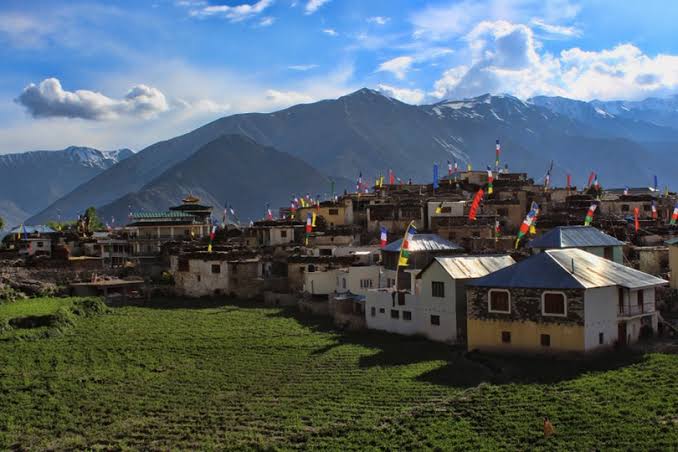
Kinnaur – Where Sacred Mountains, Apple Orchards and Ancient Himalayan Culture Meet
Kinnaur is one of the most spectacular and culturally distinctive regions of Himachal Pradesh. Located in the northeastern part of the state along the Tibetan border, the district is known for dramatic mountains, deep river valleys, apple orchards, traditional villages, ancient temples, Buddhist monasteries and the sacred Kinnaur Kailash mountain. The landscape changes from green forests and orchards to rugged high Himalayan terrain, giving Kinnaur a remarkable variety of scenery.
Travelling through Kinnaur is about more than mountain views. Visitors can explore the peaceful villages of Kalpa, Sangla and Chitkul, discover traditional Kinnauri architecture, taste local apples and dry fruits, visit Hindu temples and Buddhist monasteries, experience village festivals and enjoy trekking through some of the most beautiful landscapes in Himachal Pradesh.
History
Kinnaur has a long and complex history shaped by Himalayan kingdoms, trade routes, religious traditions and its location between India and Tibet. The early history of the region is partly preserved through legends and oral traditions, while later periods are connected with the former Bushahr princely state.
The region was historically known as part of the Bushahr State, whose headquarters was at Rampur. Kinnaur later became an independent district of Himachal Pradesh on 1 May 1960. citeturn0search0
Ancient Kinnaur
Ancient traditions describe the people of Kinnaur as Kinners, a mythical Himalayan community associated in local traditions with a land between humans and gods. Hindu mythology, Buddhist traditions and local beliefs have all influenced the cultural history of the region.
Bushahr State
For centuries, much of present-day Kinnaur formed part of the Bushahr princely state. The region's strategic location along mountain routes gave it importance in trade and politics.
Kamru and the Kinnaur Chiefs
Kamru was historically an important centre of power in the Sangla region. Kamru Fort and Kamru Temple remain reminders of the area's connection with the former ruling traditions of Bushahr.
Gurkha Invasion
During the early nineteenth century, the Bushahr State faced the threat of Gurkha expansion. The conflict eventually became part of the wider Gurkha War and the political changes that followed British intervention in the Himalayan hill states.
British Period
After the defeat of the Gurkhas, the political structure of the Himalayan hill states changed. Kinnaur remained connected with Bushahr while British influence expanded across the surrounding Himalayan region.
Kinnaur Becomes a District
Kinnaur was earlier known as Chini Tehsil of Mahasu district. On 1 May 1960, it was reorganized as a separate district, creating the administrative Kinnaur known today. citeturn0search0
Geography
Kinnaur lies in the northeastern corner of Himachal Pradesh and shares an international boundary with Tibet. The district is characterized by some of the most dramatic mountain landscapes in the state.
The Sutlej is the principal river of Kinnaur, while the Baspa and Spiti rivers and numerous smaller streams shape its valleys. The district includes high mountains, forests, orchards, agricultural terraces and remote villages. citeturn0search1
Sutlej Valley
The Sutlej cuts through deep mountain gorges and forms one of the major geographical features of Kinnaur. Roads through the Sutlej Valley provide spectacular views of cliffs, forests, villages and mountain slopes.
Sangla Valley
Sangla Valley follows the Baspa River and is famous for its green landscapes, apple orchards, traditional villages and dramatic mountain scenery. It is one of the most popular areas of Kinnaur for travellers.
Baspa River
The Baspa River flows through Sangla Valley before joining the Sutlej. Its riverbanks, forests and surrounding mountains create some of the most picturesque landscapes in Kinnaur.
Spiti Valley Connection
The eastern part of Kinnaur connects geographically and culturally with the high-altitude landscapes leading towards Spiti. The terrain becomes progressively drier and more rugged as travellers move towards the inner Himalayan region.
Kinnaur Kailash
Kinnaur Kailash is one of the most sacred mountain formations in the region. A naturally formed rock pillar is traditionally revered as a representation of Lord Shiva, giving the mountain immense religious significance.
Forests and Orchards
Kinnaur's lower and middle elevations contain forests of pine, deodar and other Himalayan vegetation, while orchards occupy many slopes around villages. Apples, chilgoza and other dry fruits are among the region's best-known agricultural products. citeturn0search1
Climate
Kinnaur has a wide range of climates because of its changing elevation. Lower valleys can be relatively mild, while higher areas experience cold winters and heavy snowfall. Some inner areas receive less monsoon rainfall and have a drier mountain climate.
Culture and Traditions
Kinnaur has one of the most distinctive cultural identities in Himachal Pradesh. Hinduism and Buddhism have traditionally existed alongside local beliefs, and many villages contain both religious and cultural influences.
Kinnauri People
The people of Kinnaur are culturally diverse, and traditions can vary between lower, middle and upper parts of the district. Clothing, architecture, language, religious practices and festivals can differ from one valley to another. citeturn0search4
Kinnauri Language
Kinnauri refers to a group of local dialects spoken across the district. Hindi is also widely understood, while different Kinnauri varieties remain important to local identity. citeturn0search4
Hindu and Buddhist Traditions
Kinnaur is notable for the coexistence of Hindu and Buddhist traditions. Temples dedicated to local deities stand alongside monasteries and Buddhist religious centres, creating a distinctive spiritual landscape.
Village Deities
Local deities play an important role in traditional Kinnauri village life. Temples are not only places of worship but can also be important centres for community decisions, festivals and social gatherings.
Traditional Clothing
Kinnauri woollen clothing, caps, shawls and traditional jewellery are important elements of local culture. Traditional dress is especially visible during festivals and religious ceremonies.
Kinnauri Cap
The traditional Kinnauri cap is one of the most recognizable symbols of the region. It is often worn with traditional clothing and has become a popular cultural souvenir for visitors.
Traditional Jewellery
Silver ornaments, necklaces and other traditional jewellery are worn during important occasions. Designs and styles can vary between communities and valleys.
Folk Music and Dance
Music and group dances are important parts of Kinnauri festivals. Traditional instruments, singing and dancing accompany religious celebrations and community gatherings.
Buddhist Monastic Traditions
Monasteries in Kinnaur preserve Tibetan Buddhist traditions through prayer, meditation, religious teaching and ceremonies. Monastic life remains an important part of the cultural landscape of upper Kinnaur.
Architecture
Kinnaur's architecture reflects the region's harsh mountain environment, religious traditions and historic connections with Tibet and the Himalayan kingdoms.
Kinnauri Traditional Houses
Traditional houses are designed to withstand cold mountain conditions and often combine stone, timber and other locally available materials. Many villages still preserve clusters of traditional homes.
Kinnauri Temple Architecture
Traditional temples often feature intricate woodwork, stone construction and distinctive multi-storey forms. Religious buildings frequently combine local Himalayan craftsmanship with influences from neighbouring regions.
Kamru Temple
Kamru Temple near Sangla is one of Kinnaur's best-known examples of traditional temple architecture. The temple is dedicated to Kamakshi Devi and stands within the historic village associated with the former ruling traditions of the region.
Kothi Temple
Kothi Temple near Kalpa is dedicated to Goddess Shuwang Chandika and is known for its elaborate traditional architecture and woodwork.
Nichar Temples
Villages around Nichar contain traditional temples dedicated to local deities. Their architecture reflects the distinctive craftsmanship found across lower Kinnaur.
Buddhist Monasteries
Monasteries in Kinnaur display Tibetan Buddhist architectural influences, prayer halls, religious paintings and traditional decorative elements.
Famous Places
Kalpa
Kalpa is one of Kinnaur's most scenic destinations and is famous for spectacular views of Kinnaur Kailash. Apple orchards, traditional homes and temples surround the village, creating a classic Himalayan landscape.
Reckong Peo
Reckong Peo is the administrative headquarters of Kinnaur. The town is an important base for exploring Kalpa and other parts of the district and offers impressive views towards Kinnaur Kailash.
Sangla
Sangla is one of the most popular destinations in Kinnaur. Situated beside the Baspa River, it is surrounded by forests, orchards, traditional villages and towering mountains.
Chitkul
Chitkul is a famous high-altitude village in the Baspa Valley and is widely known for its traditional houses, mountain scenery, river landscapes and remote location.
Rakcham
Rakcham is a beautiful village between Sangla and Chitkul. Its forests, meadows, river scenery and traditional surroundings make it a peaceful alternative to the more visited destinations.
Kamru Village
Kamru is a historic village above Sangla known for its traditional architecture and famous Kamru Temple. The village also offers beautiful views of the Baspa Valley.
Chitkul Village
Chitkul is known for its dramatic mountain setting and traditional Kinnauri architecture. The village provides an opportunity to experience a quieter side of Himalayan life.
Kothi Village
Kothi near Kalpa is known for its ancient temple, traditional houses and beautiful views of the surrounding mountains.
Roghi Village
Roghi is a traditional village near Kalpa surrounded by orchards and mountain landscapes. It provides an excellent opportunity to experience village life away from larger tourist centres.
Suicide Point, Roghi
The viewpoint near Roghi is known for its dramatic cliffside landscape and views over the valley. Visitors should remain well away from exposed edges and follow local safety advice.
Nako Lake
Nako Lake is a high-altitude lake located in the eastern part of the Kinnaur region. The lake is surrounded by a dry mountain landscape and is closely associated with the cultural and religious traditions of the area.
Nako Village
Nako is a historic high-altitude village with traditional houses, monasteries and a distinctive dry Himalayan landscape. It is an important stop for travellers exploring eastern Kinnaur.
Tabo and Spiti Route
The road from eastern Kinnaur towards Spiti provides access to some of the most dramatic high-altitude landscapes of Himachal Pradesh. Travellers should carefully check road and permit requirements before entering restricted areas.
Yulla Kanda
Yulla Kanda is a high-altitude sacred lake associated with Lord Krishna and is reached by a challenging trek. The remote setting and mountain scenery make it an important destination for experienced trekkers.
Bhabanagar
Bhabanagar lies in lower Kinnaur and provides a transition between the greener landscapes of the outer Himalayas and the higher valleys further east.
Famous Dishes
Kinnauri cuisine is adapted to the cold mountain climate and local agricultural resources. Buckwheat, barley, millet, pulses, vegetables and dairy products feature in traditional food, while Tibetan influences are particularly noticeable in higher areas. Himachal Tourism specifically notes the strong Tibetan influence on Kinnauri food and identifies thukpa and butter tea as important regional foods. citeturn0search9
Thukpa
Thukpa is a warm noodle soup with vegetables, spices and, in some preparations, meat. It is particularly suitable for Kinnaur's cold mountain climate and is widely associated with Himalayan and Tibetan food traditions.
Thang or Kinnauri Butter Tea
Thang is a salty butter tea traditionally prepared with tea leaves, salt and butter. It is an energy-rich drink associated with the cold conditions of Kinnaur and Spiti.
Chha Gosht
Chha Gosht is a Himachali-style meat curry prepared with yoghurt and aromatic spices. It can be found in regional restaurants and traditional food settings.
Siddu
Siddu is a steamed wheat-based bread made from fermented dough. It can be filled with ingredients such as walnuts or poppy seeds and is traditionally served with ghee, dal or chutney.
Aktori
Aktori is a traditional Himalayan preparation made from buckwheat flour and is associated particularly with the higher Himalayan regions. It is a simple local food worth trying when available.
Buckwheat Dishes
Buckwheat is an important traditional crop in parts of Kinnaur. It is used to prepare breads, pancakes and other local dishes suited to the region's high-altitude agricultural conditions.
Local Barley Food
Barley has traditionally been grown in the higher Himalayan areas and is used in different forms of local food. It remains an important crop in the traditional food culture of the region.
Apples of Kinnaur
Kinnaur apples are among the district's most famous agricultural products. The cool climate, high-altitude orchards and mountain conditions contribute to the distinctive quality of the fruit.
Chilgoza
Chilgoza pine nuts are a valuable forest product associated with the high Himalayan region. They are widely recognized as one of Kinnaur's premium local products.
Dry Fruits
Kinnaur produces walnuts, apricots and other dry fruits in addition to chilgoza. These products are popular with visitors looking for locally produced food souvenirs.
Famous Personalities
Padma Shri Vidya Stokes
Vidya Stokes is a prominent Himachal Pradesh political figure with roots in the wider Shimla and hill-state region. Her long public career has been connected with the development and politics of Himachal Pradesh.
Raja Kehri Singh
Raja Kehri Singh was an important ruler of the former Bushahr State, which historically included Kinnaur. The political history of Bushahr forms an important part of Kinnaur's historical background.
Raja Mahendra Singh
Raja Mahendra Singh was associated with the Bushahr State during the period following the Gurkha conflict. The political developments of his reign influenced the later history of the region.
Local Kinnauri Artists and Craftspeople
Kinnaur has a strong tradition of local craftspeople who preserve wood carving, weaving, jewellery, traditional clothing and religious art. Their work continues to contribute to the cultural identity of the region.
Kinnauri Lamas
Lamas have historically played an important role in Buddhist communities in Kinnaur. Monastic teachers and religious practitioners continue to preserve Buddhist teachings, ceremonies and cultural traditions in the region.
Festivals
Kinnaur Mahotsav
Kinnaur Mahotsav is one of the district's major cultural celebrations. It brings together traditional music, dance, local food, handicrafts and cultural performances and provides visitors with an opportunity to experience Kinnauri traditions.
Phulaich or Fullaich Festival
Phulaich, also known as Fullaich or the festival of flowers, is one of Kinnaur's most distinctive traditional festivals. Villagers collect flowers from the mountains and offer them to local deities before celebrations involving singing, dancing and feasting. citeturn0search5
Sazo Festival
Sazo is a traditional festival associated with local deities and seasonal customs. Religious ceremonies and community gatherings form an important part of the celebration.
Fulaich Celebrations in Kalpa
Kalpa and surrounding areas have strong traditions associated with Phulaich. The festival reflects the close relationship between Kinnauri communities, mountain landscapes and local deities.
Losar
Losar, the Tibetan Buddhist New Year, is celebrated in Buddhist communities of Kinnaur. Monasteries and villages hold religious ceremonies, prayers and cultural activities.
Saazo
Saazo is associated with seasonal religious traditions in Kinnaur. Local communities perform rituals and observe customs connected with their village deities.
Local Devta Festivals
Villages across Kinnaur celebrate annual festivals dedicated to their local deities. These celebrations can include traditional music, dancing, processions, community meals and religious ceremonies.
Things to Do
Explore Kalpa
Walk through Kalpa's traditional lanes, visit its temples and monasteries and enjoy views of Kinnaur Kailash. The village is especially beautiful when surrounded by apple orchards.
Visit Sangla Valley
Explore the Baspa River, orchards, forests and traditional villages of Sangla Valley. The valley is ideal for scenic drives, photography and peaceful mountain walks.
Visit Chitkul
Travel to Chitkul to experience one of the most scenic high-altitude villages in Kinnaur. The surrounding mountains, river and traditional houses create excellent photography opportunities.
Visit Kamru Temple
Climb through the traditional village of Kamru to visit its historic temple and enjoy views over the Sangla Valley.
Explore Kinnauri Villages
Villages such as Roghi, Kothi, Rakcham and Chitkul provide opportunities to experience traditional architecture, orchards, local customs and everyday Himalayan life.
Go Trekking
Kinnaur offers trekking routes ranging from village walks to challenging high-altitude journeys. Kinnaur Kailash, Yulla Kanda and routes around Sangla provide memorable experiences for experienced trekkers.
Kinnaur Kailash Trek
The Kinnaur Kailash pilgrimage is one of the region's most important trekking experiences. The route is physically demanding and conditions can change rapidly, so visitors should follow official arrangements and safety instructions.
Yulla Kanda Trek
The trek to Yulla Kanda leads to a remote high-altitude sacred lake. It is best suited to travellers with suitable trekking experience and preparation.
Enjoy Apple Orchards
Apple orchards are one of Kinnaur's defining landscapes. During the appropriate season, visitors can see orchards filled with fruit and purchase locally grown apples.
Taste Kinnauri Food
Try local dishes such as thukpa, siddu, traditional buckwheat preparations and Kinnauri butter tea while exploring villages and towns.
Buy Local Products
Visitors can purchase apples, chilgoza, walnuts, dried apricots, woollens, shawls, caps and traditional handicrafts as souvenirs.
Photography
Kinnaur is ideal for landscape photography, with opportunities ranging from snow-covered mountains and river valleys to orchards, monasteries, temples and traditional villages.
Bird Watching
The forests and high-altitude habitats of Kinnaur support a variety of Himalayan birds. Patient visitors may encounter pheasants, monals and other mountain species.
Where to Eat, Shop, and Stay
Where to Eat in Reckong Peo
Reckong Peo has restaurants and local eateries serving North Indian, Himachali and Tibetan-influenced food. It is a convenient place to stock up on food before travelling deeper into Kinnaur.
Where to Eat in Kalpa
Kalpa has small restaurants, cafes and hotel dining rooms where travellers can find local and North Indian dishes along with tea and simple mountain meals.
Where to Eat in Sangla
Sangla has local restaurants, homestays and hotel kitchens serving traditional and North Indian food. Tibetan-influenced dishes are also available in some places.
Where to Shop
Markets in Reckong Peo, Kalpa and Sangla offer apples, dry fruits, woollens, Kinnauri caps, shawls, handicrafts and religious souvenirs.
Local Kinnauri Products
Popular products include apples, chilgoza, walnuts, dried fruits, woollen items, traditional caps, shawls, handmade jewellery and wooden crafts.
Budget Stays
Budget accommodation is available through guesthouses, homestays and simple hotels in Reckong Peo, Kalpa and Sangla. Homestays can provide a more personal introduction to local culture.
Mid-Range Stays
Mid-range hotels and comfortable homestays are available in the main tourist areas. Kalpa and Sangla offer particularly attractive accommodation with mountain views.
Luxury Stays
Kinnaur has fewer large luxury hotels than destinations such as Shimla or Manali. However, premium mountain resorts and boutique properties can be found around Kalpa and Sangla.
What is Kinnaur Famous For?
Kinnaur is famous for its **Kinnaur Kailash mountain, Kalpa, Sangla Valley, Chitkul, apple orchards, Kinnauri culture, traditional architecture, Buddhist monasteries, Hindu temples and spectacular Himalayan landscapes**.
The region is also well known for **Kinnauri apples, chilgoza, walnuts, dry fruits, traditional woollens, Kinnauri caps, Phulaich festival, local deity traditions and Tibetan-influenced cuisine**.
Kinnaur's biggest attraction is the way its natural landscape and cultural traditions remain closely connected. Mountains, villages, orchards, temples and monasteries form part of one living Himalayan cultural landscape.
Best Time to Visit
April to June
Spring and early summer are excellent for exploring Kinnaur. Orchards become colourful, roads are generally more accessible and the valleys become greener as winter recedes.
July to September
Some parts of Kinnaur receive less monsoon rainfall than other areas of Himachal Pradesh, particularly towards the inner valleys. However, landslides can still affect roads, so travellers should check current conditions before travelling.
September to November
Autumn is one of the most beautiful periods in Kinnaur. Apple orchards are productive, mountain skies can be clear and the landscape develops rich autumn colours. The Phulaich festival also provides a special cultural experience during the season. citeturn0search5
December to March
Winter brings snow and very cold conditions to much of Kinnaur. Higher roads and villages may become difficult to access, while lower areas can still offer spectacular winter scenery.
Best Time for Apple Orchards
Late summer and early autumn are particularly rewarding for travellers interested in Kinnaur's apple-growing culture. Exact harvesting periods vary according to altitude, weather and local conditions.
Best Time for Trekking
Spring, early summer and autumn are generally the most suitable periods for trekking, although each route has its own conditions and requirements. High-altitude routes should always be checked against current weather and official advisories.
How to Reach
Kinnaur by Air
Kinnaur does not have a major commercial airport. Travellers commonly use Shimla Airport or Chandigarh Airport and continue the journey by road.
Kinnaur by Train
Kinnaur does not have a broad-gauge railway connection. Travellers arriving by train generally use Kalka or another suitable railway station before continuing towards Shimla and Kinnaur by road.
Kinnaur by Road
Road travel is the primary way to reach Kinnaur. The route from Shimla generally passes through Narkanda, Rampur, Jeori and along the Sutlej Valley before entering deeper Kinnaur.
Old Hindustan-Tibet Road
The historic Hindustan-Tibet Road follows the Sutlej through the Kinnaur landscape and has played an important role in connecting the region with the Himalayan frontier.
Travelling Around Kinnaur
Local buses, taxis and private vehicles are used to travel between Reckong Peo, Kalpa, Sangla, Chitkul and other villages. Mountain journeys can take longer than expected because of winding roads, road conditions and weather.
Nearby Places
Shimla
Shimla is the capital of Himachal Pradesh and a common starting point for Kinnaur road trips. Its colonial architecture, Mall Road and mountain setting make it worth exploring before or after a Kinnaur journey.
Narkanda
Narkanda is a scenic mountain town known for apple orchards, forests, snow and views of the Himalayan ranges. It is a popular stop on the road towards Kinnaur.
Rampur Bushahr
Rampur has strong historical connections with the former Bushahr State and is an important stop on the route towards Kinnaur.
Sarahan
Sarahan is known for the historic Bhimakali Temple and spectacular views of the surrounding mountains. It is an excellent cultural stop before entering Kinnaur.
Spiti Valley
The eastern side of Kinnaur connects with the route towards Spiti Valley. Travellers can continue towards high-altitude villages and Buddhist monasteries, subject to road conditions and applicable travel restrictions.
Nako
Nako is one of the most important eastern Kinnaur destinations and is known for its high-altitude lake, monastery and traditional village setting.
Tabo
Tabo lies beyond Kinnaur in Spiti and is famous for its ancient Buddhist monastery and high-altitude desert landscape.
Best Duration for a Trip
2 Days
Two days can provide a quick introduction to lower Kinnaur, particularly Kalpa and Reckong Peo. However, this is a fast itinerary and leaves little time for remote villages.
3 Days
Three days allow travellers to explore Kalpa, Reckong Peo and some nearby villages while enjoying mountain views and local food.
4 to 5 Days
Four to five days are ideal for exploring Kalpa, Sangla and Chitkul without rushing. This duration provides enough time for scenic drives, village walks, temples and orchards.
6 to 7 Days
A week is better for travellers who want to experience Kinnaur more deeply, including Sangla Valley, Chitkul, Kalpa, local villages, monasteries, temples and cultural experiences.
8 to 10 Days
A longer itinerary can combine Kinnaur with Nako and the Spiti route, subject to road conditions, permits and current travel advisories.
Travel Tips
Check Road Conditions
Kinnaur is a high mountain region where landslides, rockfall, snow and road closures can affect travel. Always check current road conditions before beginning a journey.
Allow Extra Travel Time
Distances in Kinnaur can be misleading because roads are mountainous and winding. Avoid planning too many destinations in a single day.
Carry Warm Clothing
Temperatures can fall significantly after sunset, even during warmer months. Warm layers are useful throughout the year, especially when travelling to higher villages.
Prepare for Limited Connectivity
Mobile connectivity and internet access can be inconsistent in remote parts of Kinnaur. Download maps and keep important travel information available offline.
Carry Essential Medicines
Remote mountain areas have fewer medical facilities than large cities. Travellers should carry essential personal medicines and basic first-aid supplies.
Respect Local Temples
Some Kinnauri temples have strict rules regarding entry, photography and access to sacred areas. Always follow instructions from temple authorities and local residents.
Respect Monasteries
Maintain silence where required, dress appropriately and ask before taking photographs inside monasteries or during religious ceremonies.
Be Careful at High Altitude
Some destinations in Kinnaur are located at significant elevations. Visitors should allow time to adjust, stay hydrated and avoid overexertion, particularly during trekking.
Check Permit Requirements
Parts of Kinnaur near the international border are designated protected areas and may have special entry requirements. The district administration provides current guidance on Inner Line Permit and protected-area rules. citeturn0search13
Foreign Traveller Requirements
Foreign visitors should check the latest protected-area and permit requirements before travelling to restricted parts of Kinnaur. Rules can differ depending on the specific village or route. citeturn0search13
Do Not Disturb Wildlife
Kinnaur contains important wildlife habitats. Visitors should never feed animals, disturb birds or enter protected areas without permission.
Protect the Environment
Avoid plastic waste, carry reusable bottles, do not litter in rivers or forests and respect fragile mountain ecosystems.
Buy Local Products
Buying apples, dry fruits, handicrafts, woollens and other locally produced goods helps support communities and traditional crafts.
Why Visit Kinnaur?
Kinnaur is worth visiting because it offers a side of Himachal Pradesh that feels very different from the state's more commercial hill stations. The region combines dramatic high mountains with ancient villages, apple orchards, temples, monasteries and living cultural traditions.
The journey itself is part of the experience. Roads follow the Sutlej through enormous mountain gorges before opening into the green Baspa Valley around Sangla. Further east, the landscape becomes drier and more rugged, creating an extraordinary transition between Himalayan forests and high-altitude terrain.
Kinnaur is also special because Hindu and Buddhist traditions have developed alongside one another for centuries. Local deities, monasteries, traditional architecture, festivals, clothing and food all contribute to a distinctive cultural identity.
For nature lovers, Kinnaur offers mountains, rivers, forests and orchards. For photographers, it offers some of the most dramatic landscapes in Himachal Pradesh. For adventure travellers, it provides trekking and high-altitude experiences. For cultural travellers, its villages, temples, monasteries and festivals provide a deeper connection with Himalayan life.
Conclusion
Kinnaur is a destination where the mountains are inseparable from the culture of the people who live among them. From the apple orchards and temples of Kalpa to the Baspa Valley of Sangla and the remote beauty of Chitkul, every part of the region offers a different view of Himalayan life.
The sacred Kinnaur Kailash, ancient temples, Buddhist monasteries, traditional villages, local festivals, Kinnauri food and spectacular mountain roads make Kinnaur much more than a scenic destination. It is a place to experience Himalayan nature, spirituality and culture together.
Whether you are planning a peaceful mountain holiday, a photography trip, a cultural journey or an adventurous Himalayan road trip, Kinnaur offers an unforgettable experience in one of India's most remarkable mountain regions.
"Travel is the only thing you buy that makes you richer."