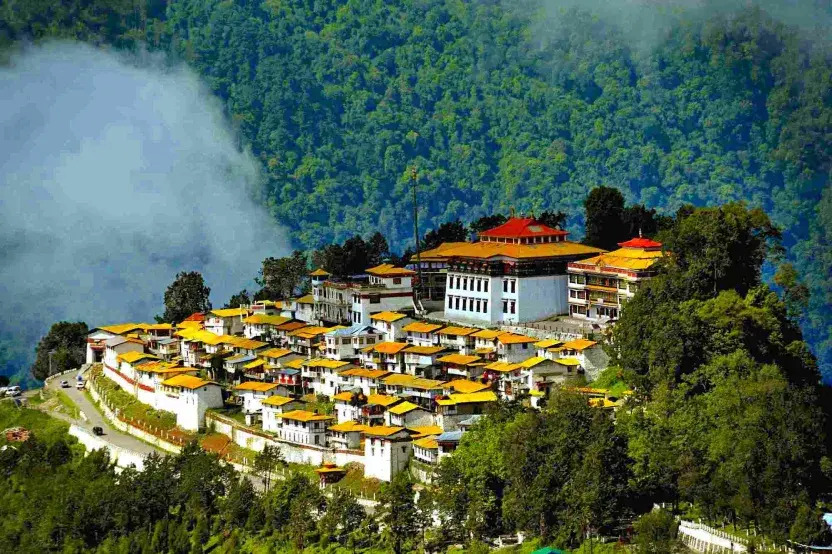
Tawang District, Arunachal Pradesh: A Complete Travel Guide
1. Introduction
Tawang is one of the most spectacular mountain destinations in Arunachal Pradesh and one of the most culturally significant regions of Northeast India. Located in the westernmost part of Arunachal Pradesh, the district is surrounded by the high Himalayas, alpine lakes, snow-covered passes, deep valleys and traditional Monpa settlements.
Best known for the magnificent Tawang Monastery, the district combines Buddhist spirituality, indigenous Monpa culture, dramatic Himalayan landscapes and important historical sites associated with the 1962 Sino-Indian War.
At an altitude of around 3,500 metres in the Tawang region, travelling here feels very different from visiting the lower valleys of Arunachal Pradesh. The journey itself is an important part of the experience, taking travellers through mountain roads, Sela Pass, alpine lakes, waterfalls and high-altitude landscapes.
Tawang is also strategically important because the district shares international boundaries with Tibet to the north and Bhutan to the southwest. Its combination of natural beauty, cultural heritage and history makes it one of the most important destinations to include in an Arunachal Pradesh travel itinerary.
2. History of Tawang
The history of Tawang is closely connected with the Monpa people and the development of Tibetan Buddhism in the region. The area was historically associated with the ancient Monyul region and developed strong cultural and religious connections with Tibet.
Tawang was formerly a sub-division of West Kameng district. It was officially separated from West Kameng and became a full-fledged district on 6 October 1984.
The first administrative centre in the area was established in 1951 under Major Bob Khathing, who played an important role in bringing the region into the administrative framework of independent India.
Origin of the Name Tawang
The name Tawang is traditionally explained through the Monpa words “Ta”, meaning horse, and “Wang”, meaning chosen or blessed.
According to the popular legend, Merak Lama Lodre Gyatso was searching for a suitable location to establish a monastery. After his prayers, his horse disappeared. He eventually found the horse standing on a hill, and the place was considered an auspicious sign for the establishment of the monastery.
The monastery was subsequently established in the late 17th century and became the spiritual centre of the region.
Tawang and the 1962 War
Tawang also occupies an important place in India's military history. The region witnessed significant events during the 1962 Sino-Indian War. Several memorials and historic locations in the district commemorate the soldiers who served and sacrificed their lives during the conflict.
3. Geography and Climate
Tawang is situated in the Eastern Himalayas in the westernmost part of Arunachal Pradesh. The district covers approximately 2,172 square kilometres and is among the smallest districts of Arunachal Pradesh by area.
| Geographical Feature | Details |
|---|---|
| Location | Western Arunachal Pradesh |
| District Headquarters | Tawang |
| Approximate Area | 2,172 sq. km |
| Major Community | Monpa |
| Major Rivers | Tawang-Chu and Nyamjang-Chu |
| Highest Peak | Gorichen / Gori Chen, approximately 22,500 ft |
| Landscape | High mountains, alpine valleys, lakes, waterfalls and forests |
The district is bounded by Tibet to the north, Bhutan to the southwest and the Sela ranges separate it from West Kameng district to the east.
Climate of Tawang
Tawang experiences a cold mountain climate. Temperatures can vary dramatically with altitude, and high-altitude passes can become extremely cold during winter.
- Spring: Cool and pleasant, with flowering plants and improving road conditions.
- Summer: Comfortable in Tawang town but still cold at higher elevations.
- Monsoon: Rainfall can affect mountain roads and travel conditions.
- Autumn: Clear skies and excellent mountain visibility are common.
- Winter: Heavy snowfall, frozen lakes and sub-zero temperatures occur in high-altitude areas.
4. Culture and Traditions
Tawang is predominantly associated with the Monpa community, whose culture is deeply connected with Tibetan Buddhism, mountain life and traditional agricultural practices.
Monpa culture can be seen in the region's monasteries, prayer flags, chortens, traditional houses, textiles, handicrafts, festivals and religious ceremonies.
Monpa Culture
The Monpas have traditionally followed Tibetan Buddhism, particularly the Gelugpa tradition. Buddhist philosophy plays an important role in community life, while older indigenous beliefs and practices have also influenced local traditions.
Prayer flags, mani walls, chortens and small roadside shrines are common throughout the landscape.
Traditional Lifestyle
Traditional livelihoods include terrace cultivation, animal husbandry, yak and cattle rearing, handicrafts and weaving. In recent years, tourism has also become an increasingly important part of the local economy.
Traditional Handicrafts
- Thangka paintings
- Handwoven woollen textiles
- Traditional Monpa jackets and shawls
- Wood carving
- Bamboo and cane products
- Hand-knotted carpets
- Traditional wooden bowls and furniture
- Monpa handmade paper
Visitors interested in local culture can explore handicraft centres, monasteries and village communities to understand how these traditions are preserved.
5. Architecture of Tawang
Tawang's architecture reflects its Himalayan environment and Buddhist heritage. Traditional houses commonly use stone, timber and other locally available materials, while monasteries and religious structures display strong Tibetan Buddhist architectural influences.
Tawang Monastery Architecture
Tawang Monastery is the finest example of the region's religious architecture. Built on a hill overlooking the Tawang-Chu valley, the monastery contains prayer halls, residential quarters, religious objects, manuscripts and a large gilded Buddha image.
Traditional Monpa Houses
Traditional Monpa homes are generally constructed to withstand the cold mountain climate. Many older houses use stone and timber extensively and may include family prayer spaces.
Chortens and Mani Walls
Chortens, prayer wheels, mani walls and colourful prayer flags are important visual elements throughout Tawang. These structures form part of the religious landscape and should be treated respectfully.
6. Famous Places and Tourist Attractions in Tawang
Tawang Monastery
Tawang Monastery, also known as Galden Namgey Lhatse, is the most famous attraction in the district. Founded in 1680–81 by Merak Lama Lodre Gyatso, it is regarded as the largest Buddhist monastery in India and one of the largest Buddhist monasteries in the world.
The monastery overlooks the Tawang-Chu valley and contains a magnificent gilded Buddha statue, religious manuscripts and numerous important Buddhist artefacts.
Urgelling Monastery
Urgelling Monastery is one of the most sacred religious sites in Tawang. It is traditionally regarded as the birthplace of the 6th Dalai Lama, Tsangyang Gyatso.
The monastery is especially important for travellers interested in Buddhist history and the spiritual heritage of the Tawang region.
Sela Pass
Sela Pass is one of the most iconic mountain passes on the route to Tawang. Located at an elevation of around 13,700 feet, the pass is surrounded by snow-covered mountains and high-altitude landscapes.
The nearby Sela Lake, often called Paradise Lake, is one of the most photographed landscapes on the journey to Tawang.
Sela Tunnel
Sela Tunnel is an important engineering project that provides an all-weather route beneath the high Sela Pass. Located below the pass, it has improved connectivity between the Dirang and Tawang sides of the mountain route.
Nuranang Falls
Nuranang Falls, also known as Jang Falls, is one of the most spectacular waterfalls in Arunachal Pradesh. The waterfall drops dramatically through a rocky mountain landscape near Jang.
The waterfall is particularly impressive during the wetter months when the volume of water increases.
Bum La Pass
Bum La Pass is a high-altitude border destination located near the India-Tibet border. Situated at around 15,200 feet, it is one of the most strategically important locations in the Tawang region.
The route is associated with the history of the 1962 war and also with the journey of the 14th Dalai Lama into India in 1959.
Entry to Bum La requires additional permission and security clearance, and access can be affected by weather and security conditions.
Sangetsar Lake / Madhuri Lake
Sangetsar Lake, popularly known as Madhuri Lake, is one of Tawang's most distinctive natural attractions. The lake was formed following a major earthquake and is surrounded by dramatic mountains and unusual dead tree trunks rising from the water.
P.T. Tso Lake
Pankang Teng Tso, commonly known as P.T. Tso, is a beautiful high-altitude lake located near Tawang. Rhododendron-covered landscapes surround the lake, while the water can freeze completely during winter.
Jaswantgarh War Memorial
Jaswantgarh is a memorial dedicated to Rifleman Jaswant Singh Rawat of the 4th Garhwal Rifles, who is remembered for his courage during the 1962 Sino-Indian War.
The memorial is located along the road between the Sela region and Tawang and is an important historical stop for travellers.
Tawang War Memorial
The Tawang War Memorial is a prominent 40-foot-high Buddhist-style memorial dedicated to Indian soldiers who lost their lives during the 1962 Sino-Indian War.
The memorial overlooks the Tawang-Chu valley and provides visitors with an opportunity to reflect on the region's military history.
Chakzam Iron Bridge
Chakzam is an ancient iron suspension bridge associated with the renowned Tibetan engineer Thangtong Gyalpo. The bridge crosses the Tawang-Chu River and represents an important example of historic Himalayan engineering.
Khinzemane
Khinzemane is another historically important area in the wider Tawang border region. Its significance is connected with the strategic history of the frontier and the 1962 conflict.
Gorsam Chorten
Gorsam Chorten at Zemithang is one of the important Buddhist heritage sites in the Tawang district. The large stupa is traditionally associated with Tibetan Buddhist architecture and is an important pilgrimage destination.
Thembang Heritage Village
Thembang is a historic fortified Monpa village in the wider Tawang-West Kameng travel circuit. Its traditional stone architecture, village layout and cultural heritage make it an excellent destination for travellers interested in Himalayan history and indigenous architecture.
Brahmadungchung Ani Gompa
Brahmadungchung Ani Gompa is one of the important nunneries in the region. The monastery complex provides insight into the religious life and traditions of Buddhist nuns in the Tawang area.
Tsachu Hot Spring
Tsachu Hot Spring near Thingbu is a natural attraction for travellers interested in combining mountain scenery with a traditional hot-spring experience.
7. Famous Food of Tawang
Tawang's cuisine reflects the food traditions of the Monpa community and the cold Himalayan environment. Warm soups, rice dishes, noodles, meat preparations and locally produced ingredients are particularly popular.
| Food | Description |
|---|---|
| Zan | A traditional Monpa staple prepared using millet, barley or buckwheat flour and generally eaten with vegetables or meat-based preparations. |
| Gyapa Khazi | A traditional spiced rice preparation associated with Monpa cuisine. |
| Momos | Steamed dumplings widely enjoyed throughout the region. |
| Thukpa | A warm noodle soup that is especially comforting in the cold mountain climate. |
| Churpa | A traditional cheese product associated with Himalayan food traditions. |
| Butter Tea | A traditional Himalayan beverage that is particularly suited to the cold climate. |
Visitors should also try locally prepared meals at traditional homestays where available, as these can offer a more authentic introduction to Monpa food culture.
8. Famous Personalities and Historical Figures
Tsangyang Gyatso – The 6th Dalai Lama
Tsangyang Gyatso, the 6th Dalai Lama, is one of the most important historical figures associated with Tawang. Urgelling Monastery is traditionally regarded as his birthplace.
He is also remembered for his distinctive literary contribution to Tibetan culture, particularly his spiritual and romantic poetry.
Merak Lama Lodre Gyatso
Merak Lama Lodre Gyatso was the monk who founded Tawang Monastery in the late 17th century. His role is central to the religious history of Tawang.
Major Bob Khathing
Major Bob Khathing was an important administrator and military officer associated with the early integration of the Tawang region into India's administrative framework. His contribution is remembered in the history of modern Tawang.
Rifleman Jaswant Singh Rawat
Rifleman Jaswant Singh Rawat of the 4th Garhwal Rifles is remembered for his bravery during the 1962 Sino-Indian War. Jaswantgarh near Tawang commemorates his service and sacrifice.
9. Festivals of Tawang
Festivals in Tawang are strongly connected with Tibetan Buddhist traditions and the cultural practices of the Monpa community.
Losar
Losar marks the Tibetan New Year and is one of the most important celebrations in the region. Families gather for prayers, traditional food, religious ceremonies and cultural activities.
Torgya Festival
Torgya is one of the most famous festivals celebrated at Tawang Monastery. Monks perform traditional masked dances known as Cham, accompanied by prayers and religious rituals.
The festival is traditionally associated with the removal of negative influences and the promotion of peace and prosperity.
Dungyur
Dungyur is a major monastic festival observed once every three years. It is associated with elaborate Buddhist rituals and religious performances.
Choekhor
Choekhor is a traditional agricultural and religious festival connected with prayers for fertility, prosperity and a successful agricultural season.
Other Buddhist Celebrations
- Ganden Ngamchoe
- Drukpa Tse-Ze
- Saka Dawa
- Monastic prayer ceremonies
| Festival | Main Feature |
|---|---|
| Losar | Tibetan New Year celebrations, prayers and traditional gatherings |
| Torgya | Monastic masked dances and religious rituals |
| Dungyur | Major three-yearly monastic celebration |
| Choekhor | Agricultural and religious traditions |
| Saka Dawa | Important Buddhist religious observance |
10. Things to Do in Tawang
Tawang offers a combination of sightseeing, cultural exploration, photography, history and high-altitude adventure.
- Visit the magnificent Tawang Monastery.
- Explore the spiritual heritage of Urgelling Monastery.
- Cross the spectacular Sela Pass.
- Visit Sela Lake and other alpine lakes.
- Explore Nuranang Falls near Jang.
- Visit Bum La Pass with the required permissions.
- Explore Sangetsar Lake or Madhuri Lake.
- Visit P.T. Tso Lake.
- Pay respects at Jaswantgarh War Memorial.
- Visit Tawang War Memorial.
- Explore historic Chakzam Bridge.
- Experience traditional Monpa food.
- Attend Torgya or Losar when your trip coincides with the festivals.
- Shop for traditional Monpa handicrafts and textiles.
- Explore villages and traditional Himalayan architecture.
- Enjoy landscape photography in the high mountains.
For Photography Lovers
Tawang is particularly rewarding for photographers. Snow-covered peaks, monasteries, prayer flags, high-altitude lakes, waterfalls, traditional villages and dramatic mountain roads provide excellent subjects throughout the year.
For Spiritual Travellers
The combination of Tawang Monastery, Urgelling Monastery, chortens, prayer wheels, monasteries and Buddhist festivals makes Tawang an important destination for spiritual and cultural tourism.
11. Where to Eat, Shop and Stay
Where to Eat
Tawang town has restaurants, cafés and local eateries serving Tibetan, Monpa, Indian and common North Indian dishes. Traditional local food is also available at selected homestays and local establishments.
In remote areas such as Zemithang, Thingbu and high-altitude tourist locations, food choices can be limited. Carrying basic snacks and water is therefore advisable.
Where to Stay
Tawang town has the widest range of accommodation options, including hotels, guesthouses, homestays and government-supported accommodation.
Homestays are particularly useful for travellers who want to experience local food and Monpa culture. For remote areas, accommodation should be arranged in advance.
Shopping in Tawang
Popular local products include:
- Traditional Monpa woollen items
- Handwoven shawls and jackets
- Carpets
- Thangka-style paintings
- Wooden handicrafts
- Bamboo and cane products
- Prayer flags and Buddhist handicraft items
Buying directly from local artisans and community-based sellers is a good way to support traditional craftsmanship.
12. What Is Tawang Famous For?
Tawang is famous for its Buddhist heritage, spectacular Himalayan scenery, high-altitude passes, alpine lakes and military history.
| Famous For | Why It Is Important |
|---|---|
| Tawang Monastery | One of the world's major Buddhist monasteries and the spiritual centre of the region |
| Monpa Culture | Distinctive indigenous culture, food, festivals, crafts and traditions |
| Sela Pass | High-altitude mountain pass and gateway to Tawang |
| Bum La Pass | Strategic border destination with major historical significance |
| Madhuri Lake | Unique high-altitude lake surrounded by dramatic mountains |
| Nuranang Falls | Spectacular waterfall near Jang |
| 1962 War Heritage | Memorials and historic locations associated with the Sino-Indian War |
| 6th Dalai Lama | Urgelling Monastery is traditionally regarded as his birthplace |
| Monpa Handicrafts | Traditional weaving, carpets, paintings and woodwork |
13. Best Time to Visit Tawang
The best time to visit Tawang depends on the kind of experience you want. For comfortable sightseeing and clearer roads, March to June and September to November are generally favourable. Winter is ideal for travellers specifically seeking snowfall and frozen landscapes, but conditions can be much more challenging.
| Season | What to Expect |
|---|---|
| March–June | Pleasant weather, improving road conditions and blooming mountain landscapes |
| July–August | Rain, possible landslides and difficult mountain-road conditions |
| September–November | Clear skies, excellent visibility and comfortable conditions for sightseeing |
| December–February | Snowfall, frozen lakes, very cold weather and possible road closures at high passes |
If snowfall is the primary reason for your visit, winter can be spectacular. However, travellers should be prepared for freezing temperatures, road restrictions and changing weather conditions.
14. How to Reach Tawang
By Road
Road travel is the most common way to reach Tawang. The traditional route from Assam passes through Bhalukpong, Bomdila, Dirang, Sela Pass, Jang and Tawang.
A road journey from Guwahati or Tezpur generally takes a full day or longer depending on weather, road conditions and stops. Because of the high altitude, a two-day journey with an overnight stay around Bomdila or Dirang is often more comfortable.
By Train
There is no railway station in Tawang. Travellers generally use Guwahati, Rangapara North or Bhalukpong as railway gateways and continue by road.
By Air
Travellers can use Guwahati's Lokpriya Gopinath Bordoloi International Airport or Tezpur Airport as major air gateways, followed by a road journey to Tawang.
Helicopter services may also operate between Tawang and selected locations in Assam or Arunachal Pradesh, subject to weather and operational conditions.
Permits
Indian visitors require an Inner Line Permit (ILP) to enter Arunachal Pradesh. Foreign nationals require the applicable Protected Area Permit (PAP) and must follow the current rules for restricted areas.
Additional permission is required for destinations such as Bum La Pass and certain high-altitude border areas.
15. Nearby Places to Visit
Tawang can be combined with several destinations in western Arunachal Pradesh to create a longer Himalayan road trip.
| Nearby Destination | Why Visit |
|---|---|
| Dirang | Mountain valley, hot springs, monasteries and scenic landscapes |
| Bomdila | Mountain town, monasteries and panoramic Himalayan views |
| Thembang | Historic fortified Monpa heritage village |
| Bhalukpong | Important entry point into Arunachal Pradesh and gateway to the mountains |
| West Kameng | Mountain landscapes, forests, monasteries and adventure destinations |
| Seppa | Important town and gateway in the wider West Kameng region |
16. Best Duration for a Tawang Trip
Tawang should not be treated as a destination that can be comfortably explored in only one day. The long mountain journey and high altitude make a multi-day itinerary much more practical.
| Duration | Suggested Experience |
|---|---|
| 3 Days | Basic Tawang town sightseeing and monastery visit |
| 4–5 Days | Tawang, monastery, Nuranang Falls, lakes and selected local attractions |
| 6–7 Days | Tawang, Sela Pass, Bum La, Madhuri Lake and surrounding attractions |
| 8–10 Days | Complete Tawang circuit with Dirang, Bomdila and heritage villages |
A longer itinerary is particularly useful during winter because weather and road conditions can cause delays.
17. Travel Tips for Tawang
- Obtain your Inner Line Permit before beginning your journey.
- Carry warm clothing even when travelling outside winter.
- Allow time for altitude acclimatization.
- Do not rush directly to the highest-altitude attractions after reaching Tawang.
- Check road and weather conditions before travelling to Sela Pass or Bum La.
- Carry medicines and a basic first-aid kit.
- Keep sufficient cash because remote areas may have limited banking facilities.
- Carry snacks and drinking water for long mountain drives.
- Use an experienced driver familiar with Himalayan roads.
- Carry suitable footwear for snow, ice and uneven terrain.
- Never walk on frozen lakes.
- Do not travel close to dangerous river channels or unstable slopes.
- Follow instructions from the Army, police and local authorities in restricted areas.
- Ask permission before photographing people, religious ceremonies or sensitive locations.
- Dress respectfully when visiting monasteries and religious sites.
- Remove shoes where required inside religious buildings.
- Do not touch religious objects without permission.
- Avoid single-use plastics and carry your waste back when necessary.
High-Altitude Safety
Tawang is a high-altitude destination and some attractions are located substantially higher than Tawang town. Travellers should allow their bodies time to adjust before visiting places such as Sela Pass, Bum La and other high-altitude locations.
People with serious medical conditions should seek appropriate medical advice before travelling to high-altitude areas. Anyone experiencing severe symptoms of altitude sickness should not continue climbing and should seek medical assistance.
Winter Travel
Winter travel can be spectacular but requires additional preparation. Snow chains, warm clothing, suitable shoes, emergency supplies and an experienced driver can become essential when roads are affected by snow or ice.
18. Why Visit Tawang?
Tawang offers an unusual combination of spirituality, history, indigenous culture and high-altitude Himalayan scenery.
- For Buddhist heritage: Tawang Monastery and Urgelling Monastery provide extraordinary cultural and spiritual experiences.
- For Himalayan landscapes: Snow-covered mountains, alpine lakes and high passes create spectacular scenery.
- For Monpa culture: Traditional food, architecture, festivals and handicrafts offer an authentic cultural experience.
- For history: War memorials and historic locations preserve important chapters of India's frontier history.
- For adventure: High-altitude roads, mountain passes and remote valleys appeal to adventure travellers.
- For photography: Monasteries, prayer flags, lakes, waterfalls and snow-covered peaks provide exceptional photographic opportunities.
- For peaceful travel: Away from the main town, the district offers quiet villages, valleys and spiritual landscapes.
19. Conclusion
Tawang is much more than a beautiful Himalayan destination. It is a place where Buddhism, Monpa culture, military history and dramatic mountain landscapes come together.
From the magnificent Tawang Monastery and sacred Urgelling Monastery to the frozen lakes of the high Himalayas, the spectacular Sela Pass, Nuranang Falls, Bum La and the historic war memorials, every part of the journey offers a different experience.
The long mountain journey is an important part of visiting Tawang, and the destination is best explored slowly rather than rushed. Travellers who allow enough time for acclimatization and remain flexible about weather and road conditions can enjoy a much more comfortable experience.
For anyone planning an Arunachal Pradesh travel itinerary, Tawang deserves a prominent place on the list. Its unique combination of spiritual heritage, indigenous Monpa traditions, spectacular Himalayan scenery and historical significance makes it one of the most memorable destinations in Northeast India.
"Travel is the only thing you buy that makes you richer."