Banaskantha Tourism: Discover North Gujarat’s Temples, Wildlife and Desert Landscapes
Banaskantha is a fascinating district in North Gujarat, known for its sacred temples, rugged landscapes, wildlife, traditional villages, and proximity to the Rajasthan border. From the revered Ambaji Temple and the hills of Aravalli to the wildlife of Balaram-Ambaji and the desert-like landscapes around the northern part of the district, Banaskantha offers a diverse travel experience.
History
Banaskantha has a long history shaped by ancient settlements, Rajput traditions, princely states, religious centres, and trade routes connecting Gujarat with Rajasthan. The region around Ambaji has been an important pilgrimage centre for centuries.
The district also includes areas historically associated with the Palanpur princely state, whose rulers contributed to the development of the region's towns, roads, architecture, and institutions.
Geography
Banaskantha lies in the northern part of Gujarat, bordering Rajasthan. The district includes plains, agricultural areas, the foothills of the Aravalli Range, forested landscapes, and dry regions that gradually transition toward the Rann and desert-like terrain.
The varied geography makes Banaskantha particularly interesting for travellers looking for both pilgrimage and nature-based experiences.
Culture and Traditions
The culture of Banaskantha reflects the traditions of North Gujarat, with strong influences from neighbouring Rajasthan. Traditional clothing, folk music, village fairs, handicrafts, religious gatherings, and agricultural traditions remain important parts of local life.
The district's religious identity is particularly strong, with Ambaji attracting devotees from Gujarat, Rajasthan, and other parts of India.
Architecture
Banaskantha's architecture ranges from ancient and medieval temples to royal buildings, traditional homes, stepwells, and historic structures.
The Ambaji Temple is the region's most important religious landmark, while Palanpur's heritage buildings reflect the city's former princely identity.
Famous Places
Ambaji Temple
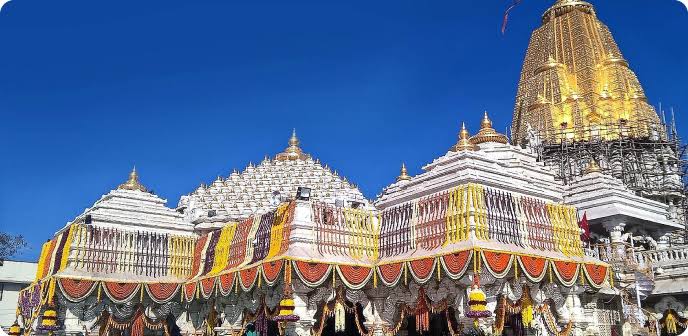
Ambaji is one of Gujarat's most important pilgrimage destinations and is dedicated to Goddess Amba. The temple is especially significant among devotees of Shakti and attracts large numbers of pilgrims throughout the year.
Gabbar Hill
Gabbar Hill near Ambaji is traditionally associated with Goddess Amba and is considered a sacred site. Pilgrims visit the hill for its religious importance as well as its elevated views of the surrounding landscape.
Balaram Palace
Balaram Palace is a heritage property near the Balaram-Ambaji region. Its architecture and forested surroundings provide a glimpse into the area's royal past.
Balaram-Ambaji Wildlife Sanctuary
This sanctuary protects forest and hilly landscapes of the Aravalli region. It is known for its biodiversity and offers opportunities to experience the natural side of Banaskantha.
Palanpur
Palanpur is one of the district's most important towns and was historically the capital of the Palanpur princely state. Its heritage, markets, mosques, temples, and old neighbourhoods make it an interesting cultural stop.
Jessore Sloth Bear Sanctuary
Located in the Aravalli landscape, Jessore is known particularly for its sloth bear habitat. The sanctuary is an appealing destination for wildlife and nature enthusiasts.
Danta
Danta is a historic town close to the Ambaji region and provides access to the surrounding hills, forests, villages, and pilgrimage attractions.
Suigam and the Northern Landscape
The northern parts of Banaskantha offer a very different landscape, with dry plains, salt-affected areas, villages, and open horizons. These areas provide an offbeat perspective on North Gujarat.
Famous Dishes
Bajra Rotla
Bajra rotla is a traditional millet-based flatbread widely enjoyed across North Gujarat. It is often served with vegetables, buttermilk, jaggery, or spicy chutneys.
Sev Tameta
This popular Gujarati dish combines tangy tomato gravy with crispy sev and is commonly served with rotli, bhakri, or other Gujarati breads.
Gujarati Kadhi
Gujarati kadhi is a mildly sweet and tangy yogurt-based preparation often enjoyed with rice or khichdi.
Khichdi-Kadhi
A comforting combination of soft khichdi and Gujarati kadhi, this is a simple traditional meal enjoyed across the region.
Fafda-Jalebi
Fafda with jalebi is a much-loved Gujarati snack combination, particularly popular during festive mornings and special occasions.
Famous Personalities
Maharaja Taley Muhammad Khan
Taley Muhammad Khan was a notable ruler of the Palanpur princely state and is associated with the region's royal history.
Dhananjayrao Gadgil
Dhananjayrao Gadgil, an Indian economist and public figure, had associations with Gujarat's institutional and economic history and is remembered for his contributions to Indian economic planning.
Swami Sachchidanand
Swami Sachchidanand was a prominent Gujarati spiritual thinker and writer whose work influenced social and religious thought in Gujarat.
Festivals
Bhadarvi Poonam
The Bhadarvi Poonam fair at Ambaji is one of Banaskantha's most significant religious events. Large numbers of devotees travel to Ambaji during this period, creating a vibrant atmosphere around the temple and pilgrimage routes.
Navratri
Navratri is celebrated with devotional activities, Garba, Dandiya, music, and community gatherings throughout Banaskantha.
Diwali
Diwali brings colourful decorations, lamps, traditional sweets, family gatherings, and festive markets to towns and villages across the district.
Janmashtami
Krishna Janmashtami is observed through temple celebrations, devotional singing, prayers, and cultural programmes.
Mahashivratri
Shiva temples across the district hold special prayers and religious ceremonies during Mahashivratri.
Things to Do
- Seek blessings at Ambaji Temple.
- Visit sacred Gabbar Hill.
- Explore the forests and landscapes around Balaram-Ambaji.
- Discover wildlife at Jessore Sloth Bear Sanctuary.
- Explore the heritage character of Palanpur.
- Visit traditional villages and experience North Gujarati culture.
- Enjoy local Gujarati and North Gujarat cuisine.
- Explore the Aravalli foothills and scenic countryside.
- Attend the Ambaji fair if your trip coincides with Bhadarvi Poonam.
- Photograph the dry landscapes and rural scenery of northern Banaskantha.
Where to Eat, Shop, and Stay
Where to Eat
Palanpur, Ambaji, and other major towns offer Gujarati restaurants, local eateries, snack shops, and roadside food stalls. Traditional thalis, rotla, kadhi, farsan, sweets, and local snacks are worth trying.
Where to Shop
Ambaji is known for pilgrimage-related shopping, religious souvenirs, handicrafts, textiles, and traditional items. Palanpur's markets are useful for exploring local food products, clothing, jewellery, and everyday Gujarati goods.
Where to Stay
Ambaji and Palanpur provide the widest range of accommodation in the district, including hotels, guesthouses, pilgrimage-oriented stays, and heritage-style properties. For a nature-focused trip, accommodation around the Balaram region can also be considered.
What is it Famous For?
Banaskantha is best known for Ambaji Temple, Gabbar Hill, Balaram-Ambaji Wildlife Sanctuary, Jessore Sloth Bear Sanctuary, Palanpur's royal heritage, and its distinctive North Gujarati culture.
The district is also known for its agricultural landscapes and its location near the Gujarat-Rajasthan border.
Best Time to Visit
The best time to visit Banaskantha is generally from October to March, when the weather is more comfortable for sightseeing, pilgrimage, wildlife excursions, and outdoor exploration.
The monsoon season can also make the forested and hilly areas greener, although travel conditions may vary.
How to Reach
By Air
The nearest major airports for travellers visiting Banaskantha include Ahmedabad Airport and Maharana Pratap Airport, Udaipur, depending on the destination within the district.
By Train
Palanpur Junction is a major railway station and an important rail gateway to North Gujarat. It has connections to Ahmedabad, Rajasthan, Delhi, Mumbai, and other parts of India.
By Road
Banaskantha is well connected by road with Ahmedabad, Mehsana, Patan, Rajasthan, and other parts of Gujarat. Buses, taxis, and private vehicles are convenient options for reaching Ambaji, Palanpur, and surrounding attractions.
Nearby Places
Mount Abu
Located across the Gujarat-Rajasthan border, Mount Abu is a popular hill station known for its cooler climate, lakes, viewpoints, and Dilwara Temples.
Patan
Patan is famous for its historic Rani ki Vav, Patola weaving tradition, and rich Solanki-era heritage.
Mehsana
Mehsana is a major North Gujarat city that can be combined with Banaskantha on a regional itinerary.
Modhera
Modhera is known for the spectacular Sun Temple, an important example of Solanki-era architecture.
Little Rann of Kutch
The Little Rann offers striking salt-flat landscapes and opportunities to see the distinctive wildlife of this semi-arid ecosystem.
Best Duration for a Trip
A 2 to 3-day trip is ideal for exploring Banaskantha's major attractions.
A longer itinerary of 3 to 4 days allows travellers to combine Ambaji, Palanpur, Balaram-Ambaji, Jessore, and nearby North Gujarat destinations.
Travel Tips
- Wear comfortable footwear when visiting temples and pilgrimage sites.
- Carry water and sun protection, particularly during warmer months.
- Dress respectfully at religious places.
- Wildlife visits should follow sanctuary rules and designated routes.
- Check temple and sanctuary timings before visiting.
- Keep extra travel time for forest and rural areas.
- Try authentic North Gujarati food during your trip.
- If visiting Ambaji during major festivals, book accommodation well in advance.
Why Visit
Banaskantha is ideal for travellers who want to experience a combination of pilgrimage, wildlife, heritage, rural culture, and dramatic landscapes. The district moves from sacred hills and temples around Ambaji to forests, royal heritage, and dry northern plains.
Its proximity to Rajasthan also gives Banaskantha a distinctive cultural flavour that makes it different from many destinations in central and southern Gujarat.
Conclusion
Banaskantha is a diverse North Gujarat destination where faith, history, wildlife, and rural traditions come together. The spiritual atmosphere of Ambaji, the forests of Balaram-Ambaji and Jessore, the royal heritage of Palanpur, and the region's distinctive cuisine make it worth exploring.
For travellers looking beyond Gujarat's most famous cities, Banaskantha offers a rewarding journey through the cultural and natural landscapes of the state's northern frontier.
"Travel is the only thing you buy that makes you richer."