Jamnagar Tourism: Explore Royal Heritage, Marine Life, Temples and Gujarat’s Coastal Beauty
Jamnagar is a historic coastal city in Gujarat, known for its royal heritage, temples, colorful markets, marine life and beautiful coastline. Often called the “Jewel of Kathiawar,” the city offers a mix of history, spirituality, nature, wildlife and traditional Gujarati culture.
Jamnagar is particularly famous for Lakhota Fort and Lake, Marine National Park, Pirotan Island, Bala Hanuman Temple and its connection with the former princely state of Nawanagar. It is also an important destination for travelers interested in Gujarat's coastal and maritime heritage.
History
Jamnagar was founded in 1540 by Jam Rawal, a Jadeja Rajput ruler, and became the capital of the princely state of Nawanagar.
The city developed as an important center of administration and trade in the Saurashtra region.
The rulers of Nawanagar were also known for their interest in cricket, architecture, education and urban development.
One of the most famous rulers was Jam Saheb Ranjitsinhji, after whom the Ranji Trophy cricket tournament is named.
The city's royal history can still be seen in its palaces, monuments, temples and historic neighborhoods.
Geography
Jamnagar lies in western Gujarat, close to the Arabian Sea.
The district has a diverse coastal landscape consisting of:
- Arabian Sea coastline
- Creeks
- Mudflats
- Mangroves
- Coral reefs
- Islands
- Salt marshes
- Agricultural land
Its coastal location gives Jamnagar an important role in marine conservation and makes it one of Gujarat's most interesting destinations for wildlife and nature lovers.
Culture and Traditions
Jamnagar has a strong Saurashtrian and Gujarati cultural identity.
Local traditions can be experienced through:
- Garba and Dandiya
- Temple festivals
- Gujarati cuisine
- Folk music
- Traditional markets
- Handicrafts
- Religious celebrations
- Coastal communities
The city also has a strong connection with Bandhani textile work, a traditional tie-dye craft associated with Gujarat.
Architecture
Jamnagar's architecture reflects its Rajput royal heritage and Gujarati religious traditions.
Historic palaces, forts, temples and old city structures can be found throughout the city.
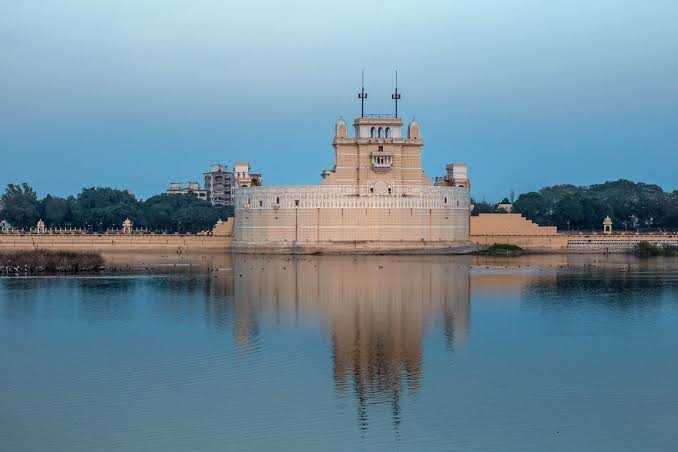
The Lakhota Fort, built in the middle of Lakhota Lake, is perhaps the city's most recognizable landmark.
The city's royal buildings also demonstrate the influence of traditional Indian architecture combined with European elements introduced during the princely period.
Famous Places
Lakhota Fort
Lakhota Fort is one of Jamnagar's most famous landmarks.
The fort stands on an island in Lakhota Lake and was historically constructed as a defensive structure.
Today, it is one of the city's best places to explore history and enjoy views of the surrounding lake.
Lakhota Lake
Lakhota Lake is located in the heart of Jamnagar and is a popular place for relaxing and observing birds.
The lake becomes particularly attractive during the cooler months when migratory birds visit the area.
Lakhota Museum
The museum inside Lakhota Fort contains historical objects, weapons and artifacts connected with the region's past.
Bala Hanuman Temple
The Bala Hanuman Temple is one of Jamnagar's most famous religious sites.
It is particularly known for its continuous chanting of “Shri Ram, Jai Ram, Jai Jai Ram,” which has been associated with the temple for decades.
Marine National Park
The Marine National Park in the Gulf of Kutch is one of Jamnagar's biggest attractions.
It protects a unique marine ecosystem containing coral reefs, mangroves, mudflats, sea grass, marine animals and numerous bird species.
It is an excellent destination for nature lovers and photographers.
Pirotan Island
Pirotan Island is part of the Marine National Park and is known for its marine ecosystem, coral formations and coastal wildlife.
Access is regulated and depends on permissions, tides and local conditions.
Khijadiya Bird Sanctuary
Khijadiya Bird Sanctuary is an important wetland and bird-watching destination near Jamnagar.
The sanctuary supports both resident and migratory birds and is particularly rewarding during the winter season.
Pratap Vilas Palace
Pratap Vilas Palace is an impressive royal-era building known for its architecture and landscaped surroundings.
The palace reflects Jamnagar's royal heritage.
Darbargadh Palace
Darbargadh represents the historic royal character of Jamnagar and is associated with the former rulers of Nawanagar.
Bhujiyo Kotho
Bhujiyo Kotho is a historic structure associated with the defensive heritage of the old city.
It is located near Lakhota Lake and forms part of Jamnagar's historic skyline.
Mota Ashapura Maa Temple
The temple is an important religious site dedicated to Ashapura Mata, who has a strong connection with the royal traditions of the region.
Famous Dishes
Gujarati Thali
A traditional Gujarati Thali includes rotli, vegetables, dal, kadhi, rice, farsan, pickles and sweets.
Kathiawadi Thali
Jamnagar's Saurashtrian location makes it a great place to try spicy and flavorful Kathiawadi cuisine.
Bajra Rotla
Bajra Rotla is a millet-based flatbread commonly served with vegetables, chutney, ghee or jaggery.
Sev Tameta
A tangy tomato preparation topped with crunchy sev, commonly enjoyed with rotli or other Gujarati breads.
Lasaniya Bataka
Spicy potatoes cooked with garlic and traditional spices are a popular Kathiawadi preparation.
Dabeli
Kutchi Dabeli, a spiced potato-filled bun topped with chutneys and peanuts, is widely enjoyed as a snack.
Fafda-Jalebi
Crispy fafda paired with sweet jalebi is a popular Gujarati favorite.
Ghughra
Sweet or savory ghughra is commonly enjoyed during festivals and special occasions.
Famous Personalities
Jam Saheb Ranjitsinhji
Maharaja Ranjitsinhji, popularly known as Ranji, was one of India's most famous early international cricketers.
He represented England in Test cricket and became one of the most influential figures associated with the sporting history of Nawanagar.
The Ranji Trophy is named in his honor.
Jam Saheb Digvijaysinhji
Jam Saheb Digvijaysinhji was an important ruler of Nawanagar and is remembered for his humanitarian work, including his role in providing refuge to Polish children during World War II.
Jam Rawal
Jam Rawal founded Jamnagar in the 16th century and established the Nawanagar state.
Festivals
Navratri
Navratri is celebrated with traditional Garba, Dandiya, music and colorful Gujarati clothing.
Janmashtami
Temples organize devotional programs, prayers and celebrations dedicated to Lord Krishna.
Mahashivratri
Shiva temples across Jamnagar hold special prayers and religious gatherings.
Diwali
Diwali is celebrated with lights, decorations, prayers, sweets and family gatherings.
Uttarayan
Jamnagar celebrates Uttarayan with kite flying, rooftop gatherings and traditional snacks.
Holi
Holi is celebrated with colors, music and community festivities.
Things to Do
- Explore Lakhota Fort
- Walk around Lakhota Lake
- Visit Lakhota Museum
- Visit Bala Hanuman Temple
- Explore Marine National Park
- Visit Khijadiya Bird Sanctuary
- Explore Jamnagar's royal heritage
- Visit historic palaces
- Try Kathiawadi cuisine
- Shop for Bandhani textiles
- Explore local markets
- Enjoy bird watching
- Experience coastal landscapes
- Take photographs around Lakhota Lake
- Explore nearby beaches and coastal areas
Where to Eat, Shop, and Stay
Where to Eat
Jamnagar has plenty of restaurants and local eateries offering Gujarati and Kathiawadi cuisine.
Try:
- Gujarati Thali
- Kathiawadi Thali
- Bajra Rotla
- Sev Tameta
- Lasaniya Bataka
- Dabeli
- Khaman
- Dhokla
- Fafda-Jalebi
Where to Shop
Jamnagar is known for traditional Gujarati products, particularly:
- Bandhani textiles
- Traditional clothing
- Jewelry
- Handicrafts
- Religious items
- Gujarati snacks
- Local souvenirs
Where to Stay
Jamnagar offers budget hotels, business hotels and mid-range accommodation.
Staying in the city is convenient for exploring Lakhota Lake, temples and local markets.
For wildlife-focused trips, travelers can also plan accommodation closer to the coastal areas depending on access and itinerary.
What is Jamnagar Famous For?
Jamnagar is particularly famous for:
- Lakhota Fort
- Lakhota Lake
- Marine National Park
- Pirotan Island
- Khijadiya Bird Sanctuary
- Bala Hanuman Temple
- Nawanagar royal heritage
- Jam Saheb Ranjitsinhji
- Bandhani textiles
- Kathiawadi cuisine
- Arabian Sea coastline
The city's biggest distinction is its combination of royal history and marine biodiversity.
Best Time to Visit
October to February
Winter is the best time to visit Jamnagar.
The weather is pleasant for sightseeing and particularly suitable for bird watching.
November to February
This period is especially good for visiting Khijadiya Bird Sanctuary because migratory birds can be seen in the wetlands.
October to March
The cooler months are also generally more comfortable for exploring the Marine National Park, subject to tides, permissions and local conditions.
Summer
Summers can be hot, particularly during the afternoon. Early morning and evening sightseeing is preferable.
How to Reach
By Air
Jamnagar Airport provides air connectivity with major Indian cities.
By Train
Jamnagar Railway Station connects the city with Ahmedabad, Rajkot, Mumbai and other parts of Gujarat and India.
By Road
Jamnagar is well connected by road with Rajkot, Dwarka, Porbandar, Ahmedabad and other parts of Saurashtra.
Nearby Places
Dwarka
Dwarka is one of India's most important Hindu pilgrimage destinations and is associated with Lord Krishna.
Porbandar
Porbandar is famous as the birthplace of Mahatma Gandhi and is also a historic coastal town.
Khijadiya
Khijadiya is close to Jamnagar and is particularly known for its bird sanctuary and wetlands.
Rajkot
Rajkot offers museums, cultural attractions, shopping and traditional Kathiawadi cuisine.
Dwarka Coast
The coastal region around Dwarka offers temples, beaches and Arabian Sea views.
Best Duration for a Trip
1 Day
A one-day trip can cover Lakhota Fort, Lakhota Lake, Bala Hanuman Temple and the main city attractions.
2 Days
Two days are ideal for exploring the city and adding Khijadiya Bird Sanctuary or nearby coastal attractions.
3 Days
Three days allow travelers to explore Jamnagar's heritage and include a Marine National Park experience, subject to access and tides.
4 Days
Four days can be used to combine Jamnagar with Dwarka or Porbandar.
Travel Tips
- Visit Lakhota Lake in the morning or evening for the best atmosphere.
- Carry binoculars if you are interested in bird watching.
- Check tide timings and access permissions before planning a Marine National Park trip.
- Marine National Park excursions can be highly dependent on tides and local conditions.
- Carry sun protection and sufficient water.
- Try local Kathiawadi food.
- Shop for authentic Bandhani products.
- Dress respectfully when visiting temples.
- Book accommodation in advance during festivals.
- Avoid disturbing birds or marine wildlife.
- Combine Jamnagar with Dwarka and Porbandar for a longer Saurashtra coastal itinerary.
Why Visit Jamnagar?
Jamnagar is an excellent destination for travelers who want something beyond Gujarat's usual heritage and pilgrimage circuits.
The city combines royal history with an extraordinary marine ecosystem. You can explore a historic fort in the morning, visit a centuries-old temple, shop for colorful Bandhani textiles and then discover coral reefs and coastal wildlife.
Its connection with Nawanagar's royal family and cricket history, along with the Marine National Park and Khijadiya wetlands, gives Jamnagar a character that is distinctly its own.
Conclusion
Jamnagar is a fascinating destination where royal Gujarat meets the Arabian Sea.
From Lakhota Fort and the legacy of the Nawanagar rulers to the coral reefs and marine life of the Gulf of Kutch, the city offers a diverse travel experience.
Whether you are interested in history, temples, wildlife, bird watching, architecture, food or coastal landscapes, Jamnagar has plenty to discover.
For travelers exploring Gujarat's western coast, Jamnagar is an ideal stop between the historic cities of Saurashtra and the pilgrimage destination of Dwarka.
"Travel is the only thing you buy that makes you richer."