Junagadh Tourism: Explore Ancient Forts, Girnar Hills, Temples and the Wild Side of Gujarat
Junagadh is one of the most historically and naturally fascinating cities in Gujarat. Located at the foot of the Girnar Hills, the city is known for its ancient forts, temples, caves, palaces and its close connection with Gir National Park and the Asiatic lion.
Junagadh brings together history, spirituality, architecture, wildlife and nature in one destination. From the massive Uparkot Fort and ancient Buddhist caves to the sacred Girnar pilgrimage and nearby Gir forests, the city is an excellent choice for travelers who want to experience a different side of Gujarat.
History
Junagadh has a history spanning thousands of years.
The city has been influenced by several dynasties and rulers, including the Mauryas, Chudasamas, Gujarat Sultanate and Babi dynasty.
The nearby Girnar Hills have been an important religious center for centuries, while the ancient Uparkot Fort reflects Junagadh's strategic importance.
During the princely era, Junagadh was ruled by the Babi Nawabs. Several palaces, gateways and other structures from this period remain part of the city's heritage.
Junagadh also became part of the political events surrounding India's independence and the integration of princely states into the Indian Union.
Geography
Junagadh is located in the Saurashtra region of Gujarat, near the foothills of the Girnar mountain range.
The area is surrounded by:
- Girnar Hills
- Forests
- Agricultural land
- Rocky landscapes
- Seasonal streams
- Grasslands
The nearby Gir forest ecosystem makes the region especially important for wildlife.
The landscape changes considerably during the monsoon, when the hills and surrounding countryside become greener.
Culture and Traditions
Junagadh has a diverse cultural identity influenced by Gujarati, Saurashtrian, Hindu, Jain and Islamic traditions.
The city's culture can be experienced through:
- Temple traditions
- Jain pilgrimage
- Gujarati festivals
- Garba and Dandiya
- Saurashtrian cuisine
- Folk music
- Religious fairs
- Traditional markets
The presence of ancient temples, mosques, palaces and historic neighborhoods reflects Junagadh's multicultural past.
Architecture
Junagadh is one of Gujarat's best destinations for travelers interested in historic architecture.
Its architectural heritage includes:
- Fortifications
- Ancient caves
- Buddhist rock-cut structures
- Hindu temples
- Jain temples
- Islamic monuments
- Palaces
- Historic gateways
The city's architecture reflects the many dynasties that ruled the region over centuries.
Famous Places
Uparkot Fort
Uparkot Fort is one of Junagadh's most important historic landmarks.
The ancient fort has massive walls, gateways, stepwells and historic structures and has played an important defensive role throughout the city's history.
Adi Kadi Vav
Located inside Uparkot Fort, Adi Kadi Vav is an impressive rock-cut stepwell.
Unlike conventional stepwells, it was carved directly into the rock, making it a fascinating example of traditional water architecture.
Navghan Kuvo
Navghan Kuvo is another historic water structure within Uparkot Fort.
It was carved deep into the rock and demonstrates the advanced methods used to provide water to people living inside the fortified city.
Buddhist Caves
Junagadh's ancient Buddhist caves are among its most interesting archaeological attractions.
These rock-cut structures contain chambers, pillars and carvings and provide evidence of the region's Buddhist heritage.
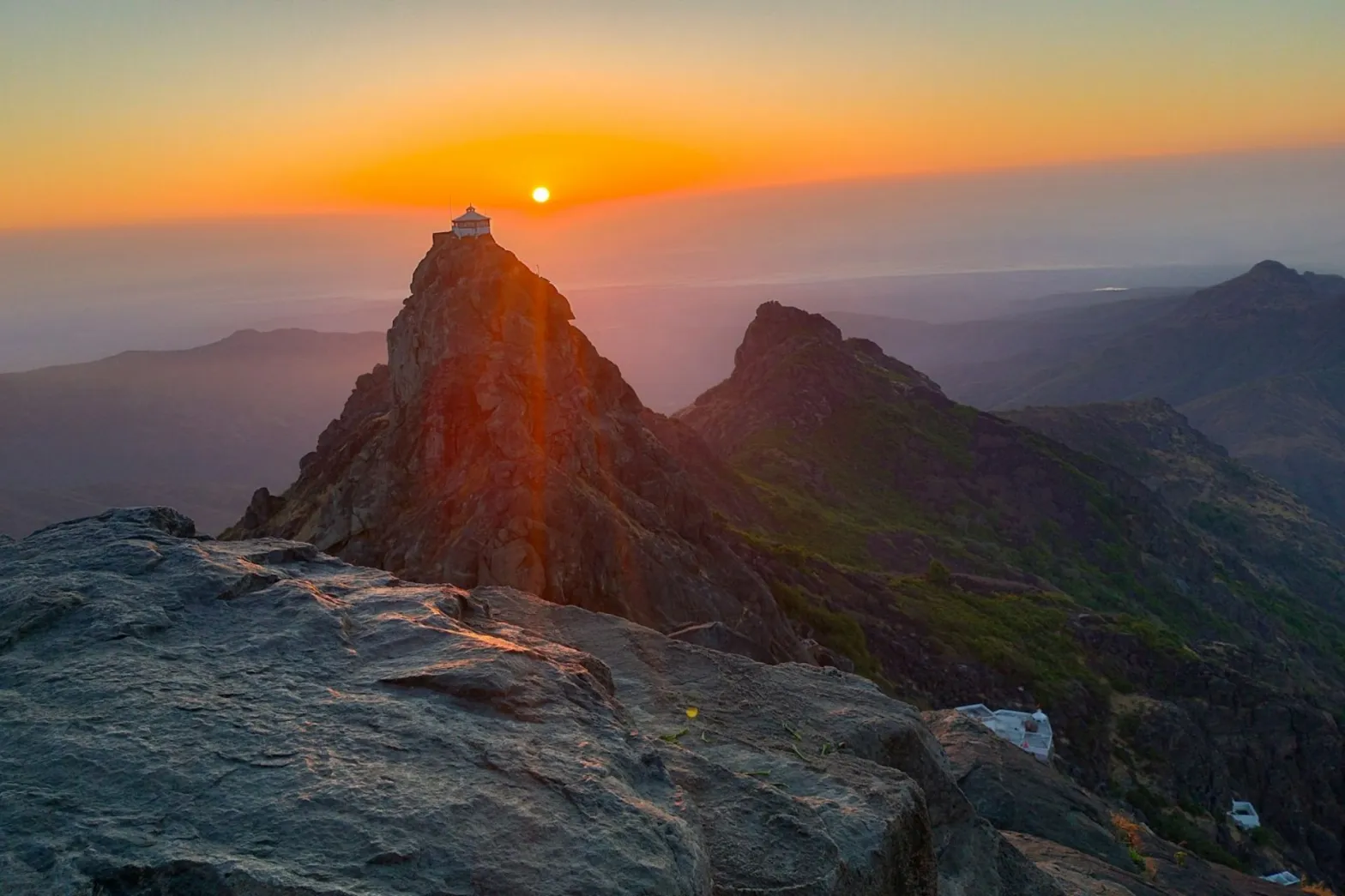
Girnar Hills
Girnar is the defining natural and spiritual landmark of Junagadh.
The mountain complex contains numerous Hindu and Jain temples and attracts pilgrims throughout the year.
Visitors can climb thousands of steps to reach the temple complexes or use the ropeway for part of the journey.
Girnar Ropeway
The Girnar Ropeway provides a convenient way to reach higher sections of the mountain.
It also offers spectacular aerial views of the surrounding hills and countryside.
Mahabat Maqbara
Mahabat Maqbara is one of Junagadh's most visually striking monuments.
The mausoleum is famous for its elaborate architecture, ornate balconies, domes and decorative details.
It represents the architectural style of the Nawabi period.
Bahauddin Maqbara
Located close to Mahabat Maqbara, Bahauddin Maqbara is another impressive historic mausoleum featuring intricate architectural details.
Darbar Hall Museum
The Darbar Hall Museum contains collections connected with the history of the Junagadh princely state.
Visitors can see royal objects, weapons, clothing and other historical artifacts.
Ashoka Rock Edicts
Near Junagadh are the famous Ashoka Rock Edicts, dating to the reign of Emperor Ashoka.
The inscriptions provide important historical evidence of the Mauryan period and are among the region's most significant archaeological attractions.
Damodar Kund
Damodar Kund is an important Hindu pilgrimage site near Girnar.
The sacred water tank is associated with Lord Krishna and local religious traditions.
Bhavnath Temple
Located near the base of Girnar, Bhavnath Temple is dedicated to Lord Shiva.
The area becomes particularly vibrant during the Bhavnath Fair, attracting sadhus, pilgrims and visitors.
Gir National Park
Gir National Park is one of the world's most important wildlife destinations because it is the last natural home of the Asiatic lion.
The park also supports leopards, deer, antelope, crocodiles and numerous bird species.
Sakkarbaug Zoological Garden
Sakkarbaug Zoological Garden in Junagadh is known for its conservation efforts, particularly involving Asiatic lions.
It is a popular attraction for families and wildlife enthusiasts.
Famous Dishes
Kathiawadi Thali
Junagadh is an excellent place to experience Kathiawadi cuisine, known for bold spices and distinctive flavors.
Bajra Rotla
Bajra Rotla is a traditional millet flatbread often served with vegetables, garlic chutney, ghee or jaggery.
Sev Tameta
This popular Kathiawadi preparation combines a tangy tomato gravy with crunchy sev.
Lasaniya Bataka
Lasaniya Bataka consists of potatoes cooked in a spicy garlic-based masala.
Ringan no Oro
Ringan no Oro is a smoky roasted eggplant preparation flavored with spices and herbs.
Khichdi-Kadhi
The combination of khichdi and kadhi is a simple and comforting Gujarati meal.
Fafda-Jalebi
Crispy fafda with sweet jalebi is a popular Gujarati snack combination.
Khaman and Dhokla
These steamed Gujarati snacks are widely available in Junagadh and make an easy breakfast or snack.
Famous Personalities
Narasinh Mehta
Narsinh Mehta, one of Gujarat's most celebrated medieval poets and saints, is strongly associated with Junagadh.
He is remembered for his devotional poetry dedicated to Lord Krishna and his message of devotion and social equality.
His famous devotional composition "Vaishnav Jan To" became widely known across India.
Rao Khengar
Rao Khengar was an important ruler of the Chudasama dynasty associated with Junagadh.
The Chudasama rulers played an important role in the history of the region.
Nawabs of Junagadh
The Babi Nawabs ruled Junagadh during the later princely period and contributed to the city's architectural and cultural heritage.
Festivals
Bhavnath Fair
The Bhavnath Fair is one of Junagadh's most famous religious events.
Held near Girnar during Mahashivratri, the fair attracts pilgrims, sadhus and visitors from across Gujarat.
Mahashivratri
Mahashivratri is particularly important around Bhavnath Temple and Girnar, with large religious gatherings and processions.
Girnar Parikrama
The Girnar Parikrama is a major pilgrimage tradition in which devotees walk around the Girnar mountain.
It attracts thousands of pilgrims and is one of the region's most distinctive religious experiences.
Navratri
Navratri is celebrated with traditional Garba, Dandiya, music and colorful clothing.
Janmashtami
Given Junagadh's association with Narsinh Mehta and Krishna devotion, Janmashtami is celebrated with devotional programs and temple activities.
Diwali
Diwali is celebrated with lights, prayers, sweets and family gatherings.
Things to Do
- Explore Uparkot Fort
- Visit the Buddhist caves
- See Ashoka's Rock Edicts
- Explore Mahabat Maqbara
- Visit Darbar Hall Museum
- Climb Girnar
- Ride the Girnar Ropeway
- Visit Bhavnath Temple
- Explore Damodar Kund
- Visit Sakkarbaug Zoological Garden
- Take a safari in Gir National Park
- Try authentic Kathiawadi food
- Explore local markets
- Photograph Junagadh's historic architecture
- Experience local festivals and religious fairs
Where to Eat, Shop, and Stay
Where to Eat
Junagadh has numerous local restaurants and food stalls serving Gujarati and Kathiawadi cuisine.
Try:
- Kathiawadi Thali
- Bajra Rotla
- Sev Tameta
- Lasaniya Bataka
- Ringan no Oro
- Khaman
- Dhokla
- Fafda-Jalebi
Where to Shop
Local markets offer:
- Traditional Gujarati clothing
- Handicrafts
- Religious souvenirs
- Textiles
- Jewelry
- Snacks
- Local products
Visitors can also shop for traditional Saurashtrian products and souvenirs around the main market areas.
Where to Stay
Junagadh has budget hotels, mid-range properties and comfortable accommodations.
The city is also a convenient base for travelers visiting Girnar and Gir National Park.
For wildlife trips, staying closer to the Gir forest area can reduce travel time for safaris.
What is Junagadh Famous For?
Junagadh is particularly famous for:
- Girnar Hills
- Gir National Park
- Asiatic lions
- Uparkot Fort
- Ashoka Rock Edicts
- Buddhist caves
- Mahabat Maqbara
- Girnar Ropeway
- Bhavnath Temple
- Narsinh Mehta
- Kathiawadi cuisine
- Chudasama and Nawabi heritage
Junagadh's greatest attraction is its combination of ancient history, sacred mountains and India's iconic Asiatic lion habitat.
Best Time to Visit
October to February
Winter is the best time to visit Junagadh.
The weather is comfortable for climbing Girnar, exploring forts and visiting outdoor attractions.
December to March
This period is particularly suitable for wildlife experiences in and around Gir, subject to park opening schedules.
Monsoon
The monsoon transforms Girnar and the surrounding countryside into a greener landscape and can be beautiful for nature lovers.
However, heavy rainfall may affect some outdoor activities.
Summer
Summer can be hot, but early-morning wildlife experiences can still be rewarding when conditions and park schedules permit.
How to Reach
By Air
The nearest major airports include Rajkot International Airport and Diu Airport, depending on the travel route.
By Train
Junagadh Junction is an important railway station with connections to Ahmedabad, Rajkot and other cities.
By Road
Junagadh is well connected by road with Rajkot, Ahmedabad, Somnath, Porbandar and other parts of Saurashtra.
Nearby Places
Gir National Park
Gir is the most important nearby wildlife destination and the natural home of the Asiatic lion.
Somnath
Somnath is famous for the Somnath Temple and its Arabian Sea coastline.
Diu
Diu offers beaches, Portuguese heritage, forts and a relaxed coastal atmosphere.
Porbandar
Porbandar is known as the birthplace of Mahatma Gandhi and is also a historic coastal town.
Sasan Gir
Sasan Gir is one of the main gateways for exploring the Gir forest and planning wildlife experiences.
Gondal
Gondal is known for its palaces, museums and royal heritage.
Best Duration for a Trip
1 Day
A one-day trip can cover Uparkot Fort, Mahabat Maqbara, Ashoka Rock Edicts and the main city attractions.
2 Days
Two days are ideal for combining the historic city with Girnar and Bhavnath.
3 Days
Three days allow visitors to explore Junagadh, Girnar and include a Gir wildlife experience.
4 Days
Four days are suitable for combining Junagadh, Gir, Somnath and nearby Saurashtra destinations.
Travel Tips
- Start the Girnar climb early in the morning, especially outside winter.
- Wear comfortable shoes and carry sufficient water.
- Check ropeway operating hours before planning your visit.
- Book wildlife safaris well in advance during peak season.
- Follow all forest rules during a Gir safari.
- Never attempt to approach or feed wildlife.
- Dress respectfully when visiting temples.
- Carry sun protection during summer.
- Keep extra time for religious fairs and festivals because crowds can be significant.
- Try authentic Kathiawadi food during your visit.
- Combine Junagadh with Gir and Somnath for a complete Saurashtra itinerary.
Why Visit Junagadh?
Junagadh is ideal for travelers who want history, spirituality, architecture and wildlife in one trip.
Few destinations offer the opportunity to explore ancient Buddhist caves and Ashokan inscriptions, climb a sacred mountain filled with temples, admire Nawabi architecture and then head toward the forests of Gir to look for the Asiatic lion.
The city also offers an authentic taste of Kathiawadi culture and cuisine, making it one of the most rewarding destinations in Gujarat for travelers interested in experiences beyond conventional sightseeing.
Conclusion
Junagadh is a city where ancient history, sacred landscapes and wildlife come together.
The historic Uparkot Fort, Ashoka Rock Edicts and Buddhist caves reveal the region's deep past, while Girnar and Bhavnath reflect its continuing spiritual importance. Nearby Gir National Park adds an unforgettable wildlife dimension to the journey.
With its heritage monuments, temples, mountains, festivals, Kathiawadi food and access to Asiatic lion country, Junagadh deserves a prominent place on any Gujarat travel itinerary.
"Travel is the only thing you buy that makes you richer."