Bankura, West Bengal: Where Terracotta Temples, Red Soil and Forest Hills Tell Bengal's Oldest Stories
Bankura is one of West Bengal's most fascinating destinations for travelers who want to experience heritage beyond the usual Kolkata circuit. Here, ancient terracotta temples, red-soil landscapes, forested hills, tribal traditions, handloom crafts and quiet rivers create a travel experience that feels distinctly different from urban Bengal.
The district brings together several remarkable destinations. Bishnupur preserves the architectural legacy of the Malla kings, Mukutmanipur combines a vast reservoir with hills and tribal culture, while Susunia, Biharinath and Jhilimili offer forests, hills and outdoor experiences.
Bankura is also famous for its Bankura Horse, Baluchari sarees, terracotta craftsmanship, Bishnupur Gharana, tribal folk traditions and traditional festivals. For travelers interested in history, art, culture and nature, Bankura is a destination where every route reveals another layer of Bengal.
Travel Snapshot of Bankura
| Travel Detail | Information |
|---|---|
| State | West Bengal |
| Region | Rarh / Western West Bengal |
| District Area | 6,882 sq. km |
| Population | 3,596,292 (2011 Census) |
| Male Population | 1,840,504 |
| Female Population | 1,755,788 |
| Population Density | 523 persons per sq. km |
| Sex Ratio | 954 females per 1,000 males |
| Literacy Rate | 70.95% |
| Subdivisions | 3 |
| Blocks | 22 |
| Gram Panchayats | 190 |
| Municipalities | 3 |
| Major Rivers | Damodar, Dwarakeswar, Kansabati, Kumari and Gandheswari |
| Major Attractions | Bishnupur, Mukutmanipur, Susunia, Biharinath, Jhilimili and Joyrambati |
History of Bankura
The history of Bankura stretches back to prehistoric times. The district administration records evidence of early human settlement at Dihar, where Chalcolithic communities were established along the northern bank of the Dwarakeswar around 1000 BC.
In ancient times, the region formed part of Rarh. Over subsequent centuries, different tribal and regional communities inhabited the area before the rise of the powerful Malla kingdom of Bishnupur.
From around the 7th century CE until the arrival of British rule, much of the history of present-day Bankura was closely connected with the rise and decline of the Hindu rulers of Bishnupur. The region around Bishnupur became known as Mallabhum.
The Malla Dynasty and Bishnupur
The Malla rulers transformed Bishnupur into a centre of temple building, music, painting and handicrafts. Under rulers such as Bir Hambir and Raghunath Singh, the kingdom entered an important cultural period.
The famous terracotta temples of Bishnupur were constructed during this period. The Shyam Rai, Jor Bangla and Kalachand temples, among others, demonstrate the artistic achievement of the Malla era.
British Period
Bishnupur was ceded to the British with the rest of Burdwan Chakla in 1760. The region subsequently experienced political and economic difficulties, including the effects of Maratha incursions and the famine of 1770.
In 1879, the district acquired a shape close to its present boundaries. In 1881, it came to be officially known as Bankura district, named after its headquarters.
| Period | Historical Development |
|---|---|
| c. 1000 BC | Chalcolithic settlement evidence at Dihar |
| Ancient Period | Region associated with Rarh |
| 7th Century onward | Rise of the Bishnupur/Malla political tradition |
| 17th–18th Century | Golden period of Bishnupur's temples, art and music |
| 1760 | Bishnupur ceded to the British |
| 1879 | District boundaries took their present broad shape |
| 1881 | Bankura district name formally adopted |
Geography of Bankura
Bankura lies in western West Bengal and forms a natural transition between the alluvial plains of Bengal and the Chota Nagpur Plateau. The eastern part is comparatively low and flat, while the western side becomes more undulating, rocky and forested.
The district is characterised by red soil, laterite landscapes, sal forests, hillocks, agricultural land and river valleys. This geographical diversity is one of the reasons Bankura offers such a wide variety of travel experiences.
Major Natural Features
- Susunia Hill
- Biharinath Hill
- Joypur Forest
- Jhilimili and Sutan Forest
- Mukutmanipur Reservoir
- Kansabati River
- Kumari River
- Dwarakeswar River
- Damodar River
Forest Landscape
Forests cover approximately 21.5% of Bankura's geographical area, according to the district administration. Sal and associated species form a major part of the forest vegetation, particularly across areas including Radhanagar, Sonamukhi, Patrasayer and Bishnupur.
Culture and Traditions of Bankura
Bankura's cultural identity is deeply rooted in its rural villages, tribal communities, temple traditions, folk music, handicrafts and handloom heritage.
Communities including Santhal, Bhumij and Munda have a strong cultural presence, particularly around Mukutmanipur and forest regions. Traditional dance, music and agricultural festivals remain important parts of community life.
Traditional Dance
Folk forms associated with Bankura include Pata, Dasai, Ranpa, Karam, Raibeshe and Jhumur. Performances are often accompanied by instruments such as Dhamsa, Madal and Kendra.
Terracotta and Dokra
Bankura is internationally recognised for its terracotta craftsmanship, especially the iconic Bankura Horse. Dokra, bell-metal, conch-shell and sandstone crafts are also part of the district's traditional craft economy.
Baluchari and Handloom
Baluchari sarees, silk and other handloom textiles are strongly associated with the Bishnupur area. Traditional motifs often draw from mythology, nature and historical themes.
Bankura Horse
The Bankura Horse is one of the most recognisable craft symbols of Bengal. Traditionally made from terracotta, its elongated neck, upright ears and stylised body have made it a popular decorative and cultural object.
Architecture of Bankura
Bankura's architectural identity is dominated by the extraordinary terracotta temple architecture of Bishnupur. Because suitable building stone was limited in Bengal, craftsmen developed sophisticated architectural forms using fired clay and laterite.
Rasmancha
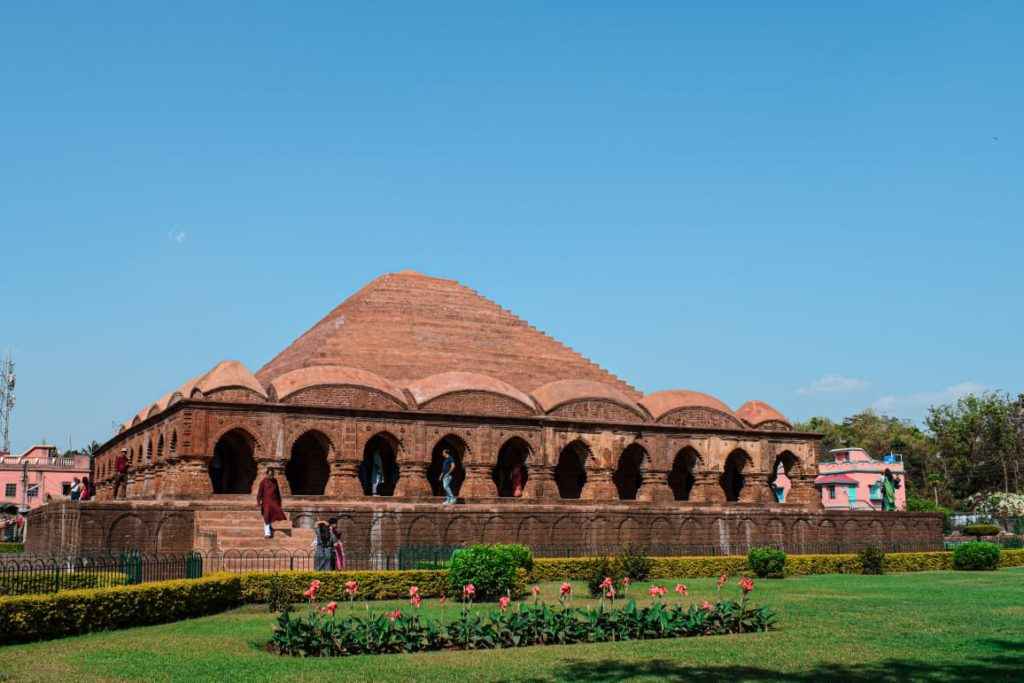
The Rasmancha is one of Bishnupur's most distinctive structures. Its unusual pyramidal form and surrounding arches make it an essential stop on a Bishnupur heritage tour.
Jor Bangla Temple
Built during the reign of Raghunath Singh, the Jor Bangla Temple is famous for its distinctive double-curved Bengali hut-like roof structure. Its terracotta panels depict scenes and figures drawn from mythology and everyday life.
Shyam Rai Temple
The Shyam Rai Temple is one of Bishnupur's finest examples of terracotta temple architecture. Its exterior panels display elaborate decorative and narrative scenes.
Madan Mohan Temple
The Madan Mohan Temple is another major landmark of Bishnupur. Built in the late 17th century, it is particularly important to the Vaishnava religious and cultural heritage of the town.
Sareswar and Saileswar Temples
Located at Dihar, around 8 km from Bishnupur, these twin temples are dedicated to Shiva and represent the laterite-stone Deul architectural tradition.
Famous Places to Visit in Bankura
Bishnupur
Bishnupur is the cultural and architectural jewel of Bankura. Its terracotta temples, Baluchari sarees, traditional music, pottery and historic Malla heritage make it one of West Bengal's most important heritage destinations.
Rasmancha
The historic Rasmancha is one of the most recognisable monuments of Bishnupur. Its unusual architecture makes it an important stop for anyone exploring the temple town.
Jor Bangla Temple
The Jor Bangla Temple combines Bengal's traditional hut-like roof forms with elaborate terracotta decoration. Its walls are particularly interesting for travelers who enjoy architectural details and storytelling through sculpture.
Shyam Rai Temple
The Shyam Rai Temple showcases the sophisticated terracotta artistry that made Bishnupur famous. Its panels offer a visual record of mythology, ornamentation and traditional life.
Madan Mohan Temple
The Madan Mohan Temple is an important Vaishnava shrine and one of the major monuments of Bishnupur's Malla-era heritage.
Mukutmanipur
Mukutmanipur is one of Bankura's best-known nature destinations. Located around the confluence of the Kansabati and Kumari rivers, it combines the vast reservoir, green hillocks, forests and tribal culture.
Susunia Hill
Susunia Hill rises to roughly 1,200 feet and is famous for its natural beauty, fossils, ancient rock inscription, forest landscape and the spring near the Narasimha shrine. It is also associated with trekking, photography and birdwatching.
Biharinath Hill
Biharinath Hill, at approximately 1,449 feet, is the highest hill in Bankura district according to the district tourism information. Forest, the Damodar landscape and the Biharinath Shiva temple make it suitable for both nature lovers and pilgrims.
Jhilimili
Jhilimili is a quiet forest destination surrounded by sal and other trees. The watchtower offers views over the surrounding landscape, while the road through the forest is one of the attractions itself.
Joypur Forest
Joypur Forest offers a classic Bankura forest experience with sal trees, village landscapes and a quieter atmosphere away from the major temple towns.
Joyrambati
Joyrambati is a major pilgrimage destination because Sri Sarada Devi, the spiritual consort of Sri Ramakrishna, was born here in 1853. The Matri Mandir, Puratan Bari, Nutan Bari and nearby sacred sites attract devotees throughout the year.
Dihar
Dihar is historically significant for its early settlement evidence and later temple heritage. The Sareswar and Saileswar temples provide an additional architectural stop near Bishnupur.
Famous Dishes to Try in Bankura
Bankura's food culture combines Bengali cuisine with rural and tribal traditions. Rice is a staple, while seasonal vegetables, fish, meat, local sweets and traditional festival foods add variety.
Charpa Pitha
Charpa Pitha is a distinctive traditional preparation associated with the tribal communities around Mukutmanipur. It is made with rice flour and minced meat, steamed in sal leaves.
Rice-Based Tribal Meals
Rice forms the foundation of many traditional meals in the district. In tribal areas, it may be accompanied by seasonal vegetables, meat preparations and locally available ingredients.
Posto Preparations
Posto, or poppy-seed-based dishes, are part of the wider Bengali food tradition and can be found in local meals alongside rice and vegetables.
Fish Curry
Traditional Bengali fish curry is a familiar part of the regional food landscape. Simple preparations using mustard, spices and seasonal fish are common.
Payesh
Payesh, a rice-and-milk dessert flavoured with sugar or jaggery, is traditionally prepared during celebrations and religious occasions.
Local Sweets
Travelers can also explore traditional Bengali sweets in Bankura and Bishnupur markets. Local sweet shops are useful stops during a heritage walk.
Famous Personalities of Bankura
Jamini Roy
Jamini Roy, one of India's most influential modern painters, was born in Beliatore in Bankura district in 1887. He developed a distinctive artistic language inspired by Bengali folk and village traditions and became one of the major figures of 20th-century Indian art.
Sri Sarada Devi
Sri Sarada Devi was born at Joyrambati in 1853. She became an important spiritual figure associated with the Ramakrishna tradition, and her birthplace is now a major pilgrimage centre.
Bir Hambir
Bir Hambir was an important Malla ruler of Bishnupur. According to the district's historical account, his encounter with Vaishnava scholar Srinivasa led to his conversion to Vaishnavism and the introduction of the worship of Madan Mohan at Bishnupur.
Raghunath Singh
Raghunath Singh was one of the significant Malla rulers during Bishnupur's cultural flowering. The temples associated with his reign include the Shyam Rai and Jor Bangla temples, important landmarks of the town's terracotta heritage.
Festivals of Bankura
Bishnupur Mela
Bishnupur Mela is one of the district's best-known cultural events. The fair features terracotta crafts, handmade products, traditional clothing, artworks, music and cultural performances connected with Bishnupur's heritage. Recent district records confirm the continuation of the annual event.
Mukutmanipur Loksanskriti Mela
The Mukutmanipur Loksanskriti Mela celebrates tribal and folk traditions through music, dance, cultural programmes and local handicrafts. It is traditionally associated with the winter season.
Tusu Festival
Tusu is a harvest festival celebrated around the end of Poush. Folk songs, community gatherings and rituals dedicated to Tusu make it an important part of rural and tribal cultural life.
Karam Festival
Karam is celebrated around the worship of a Karam tree branch and is associated with agricultural wellbeing, prosperity and community traditions.
Bandna / Saharai
Bandna or Saharai is a tribal festival celebrated around Kartik Amavasya. Animals and livestock receive special attention during the celebration.
Palash Utsab
Palash Utsab celebrates spring and the spectacular flowering of Palash trees. Mukutmanipur becomes particularly colourful as red-orange Palash flowers contrast with the blue reservoir and green landscape.
Ekteswar Gajan
Ekteswar Gajan is celebrated at the Ekteswar Shiva temple near the Dwarakeswar River. The event includes religious observances, a fair, local food, crafts and traditional activities.
Dharar Mela
Dharar Mela is held near Susunia at the foothills of the hill. It is associated with the Narasimha shrine, sacred spring water and local crafts and food.
Durga Puja
Durga Puja has distinctive local traditions in Bankura. Important examples include Maa Mrinmoyee of Bishnupur, Maa Ambika of Mukutmanipur and Jagaddhatri worship at Joyrambati.
Things to Do in Bankura
- Take a Bishnupur heritage walk: Explore the terracotta temples and historic gateways.
- Study terracotta art: Look closely at temple panels depicting mythology, animals, people and everyday scenes.
- Shop for Baluchari sarees: Explore traditional handloom products in Bishnupur.
- Buy a Bankura Horse: Take home one of the region's most iconic terracotta crafts.
- Visit Mukutmanipur: Enjoy reservoir views, hills and forest scenery.
- Trek around Susunia: Explore the hill, forests and archaeological heritage.
- Visit Biharinath: Combine nature, hill scenery and a Shiva temple visit.
- Explore Jhilimili: Take a peaceful forest drive and visit the viewpoint.
- Visit Joyrambati: Explore the sacred sites associated with Sarada Devi.
- Experience local festivals: Plan around Bishnupur Mela, Palash Utsab or Mukutmanipur Loksanskriti Mela.
- Try local food: Explore Bengali meals and traditional tribal preparations.
- Go photography: Bankura's red soil, terracotta, Palash flowers, forests and reservoir landscapes create varied photographic subjects.
Where to Eat, Shop, and Stay in Bankura
Where to Eat
Bankura town and Bishnupur have the widest range of restaurants and local eateries. Travelers can find Bengali meals, rice-and-fish dishes, vegetarian food, snacks and traditional sweets.
In Mukutmanipur and other tourist areas, restaurants and resort dining options are more closely connected with hotels and tourism properties.
Where to Shop
Bishnupur is the best-known shopping destination for traditional crafts. Look for:
- Bankura Horse terracotta pieces
- Other terracotta figurines and decorative objects
- Baluchari sarees
- Silk and handloom products
- Dokra and bell-metal crafts
- Traditional jewellery
- Local handicrafts
Where to Stay
| Area | Best For |
|---|---|
| Bankura Town | Budget hotels, transport convenience and general sightseeing |
| Bishnupur | Heritage-focused travelers and temple sightseeing |
| Mukutmanipur | Reservoir views, nature stays and weekend trips |
| Susunia Area | Nature, trekking and quiet stays |
| Jhilimili | Forest-oriented stays and peaceful retreats |
What is Bankura Famous For?
Bankura is famous for its terracotta heritage, Bishnupur temples, Bankura Horse, Baluchari sarees, tribal culture, forests and Mukutmanipur.
- Bishnupur Terracotta Temples
- Bankura Horse
- Baluchari Sarees
- Bishnupur Gharana
- Mukutmanipur Dam and Reservoir
- Susunia Hill
- Biharinath Hill
- Jhilimili Forest
- Tribal Folk Dance and Music
- Dokra and Terracotta Crafts
- Joyrambati and Sarada Devi Heritage
Best Time to Visit Bankura
The most comfortable period for exploring Bankura is generally October to March. Winter is especially suitable for heritage sightseeing, outdoor activities, forest trips and Mukutmanipur.
| Season | Travel Experience |
|---|---|
| October–November | Comfortable weather and post-monsoon greenery |
| December–February | Cool weather, ideal for heritage and nature trips |
| March–April | Palash blooms add strong colour to forest landscapes |
| May–June | Hotter weather; outdoor sightseeing can be tiring |
| July–September | Monsoon greenery; forests and hills become particularly lush |
Best overall: October to March.
For Palash: Late winter to spring can be particularly attractive around forest destinations such as Mukutmanipur and Susunia.
How to Reach Bankura
By Air
The nearest major airport listed by the district administration is Netaji Subhas Chandra Bose International Airport, Kolkata, approximately 212 km from Bankura.
From Kolkata Airport, travelers can continue by train, bus, taxi or private vehicle.
By Train
Bankura Junction is the principal railway station serving Bankura town. It is operated by South Eastern Railway and lies on the Adra–Midnapore route.
The rail distance from Kolkata is approximately 233 km, and regular trains connect Kolkata with Bankura. The fastest listed services can take around 3 hours 35 minutes, depending on the train.
By Road
Bankura has road connectivity with Kolkata, Asansol, Durgapur, Burdwan, Panagarh and other parts of West Bengal. Buses, taxis and private vehicles are practical options.
| Mode | Main Option |
|---|---|
| Air | Kolkata Airport – about 212 km |
| Rail | Bankura Junction |
| Road | Bus, taxi or private vehicle from Kolkata and nearby cities |
Nearby Places to Visit from Bankura
Bishnupur
Visit Bishnupur for its terracotta temples, Malla heritage, Baluchari sarees, traditional crafts and Bishnupur Gharana.
Mukutmanipur
Explore the large reservoir, hillocks, forests and tribal culture around the Kansabati-Kumari confluence.
Susunia
Ideal for hill landscapes, archaeology, trekking, photography, forests and the famous rock inscription.
Biharinath
Bankura's highest hill offers forest scenery, hill walking and the Biharinath Shiva temple.
Jhilimili
Travel through the forest road and enjoy the watchtower views and peaceful natural setting.
Joyrambati
Visit the birthplace and sacred heritage of Sri Sarada Devi and combine the trip with nearby Kamarpukur.
Joypur Forest
A quieter forest destination for travelers interested in sal forests, rural landscapes and nature photography.
Dihar
Explore early archaeological associations and the laterite Sareswar and Saileswar temples.
Best Duration for a Bankura Trip
Because Bankura district covers a large area and its attractions are spread across different directions, 3–4 days is a comfortable duration for a first trip.
| Duration | Suggested Experience |
|---|---|
| 1 Day | Bankura town + nearby heritage/nature attraction |
| 2 Days | Bishnupur heritage circuit + local crafts |
| 3 Days | Bishnupur + Mukutmanipur + nearby attractions |
| 4 Days | Bishnupur + Mukutmanipur + Susunia/Jhilimili |
| 5 Days | Heritage, forests, hills, pilgrimage and cultural experiences |
Recommended: 3–4 days for a balanced first-time Bankura itinerary.
Travel Tips for Bankura
- Start heritage sightseeing early: Bishnupur has several monuments and temples to cover.
- Wear comfortable footwear: Temple circuits involve walking across uneven surfaces.
- Carry sun protection: Summer afternoons can be hot, particularly around open laterite landscapes.
- Carry water: Keep drinking water with you during forest and hill excursions.
- Respect temples: Dress modestly and follow local rules around religious sites.
- Ask before photographing people: This is particularly important in tribal villages and cultural events.
- Buy authentic crafts: Look for established craft sellers and ask about the origin of terracotta and handloom products.
- Plan forest visits carefully: Follow local forest department instructions and avoid entering restricted areas.
- Do not walk through forests alone: The district administration specifically advises wildlife enthusiasts to contact the forest department or local authorities before exploring forest areas.
- Carry cash for rural areas: Small shops and remote destinations may not always offer reliable digital-payment facilities.
- Book during festivals: Bishnupur Mela and major holiday periods can increase demand for accommodation.
- Keep extra time for rural roads: Distances between attractions can take longer than expected.
Why Visit Bankura?
Bankura brings together several sides of Bengal in one district. It offers royal history in Bishnupur, tribal traditions around Mukutmanipur, forest landscapes in Jhilimili and Joypur, hill experiences at Susunia and Biharinath, and spiritual heritage at Joyrambati.
Top Reasons to Visit
- Explore some of eastern India's finest terracotta temple architecture.
- Discover the historic Malla kingdom of Bishnupur.
- Shop for Bankura Horse and terracotta crafts.
- See traditional Baluchari handloom.
- Relax beside the Mukutmanipur reservoir.
- Trek and explore the archaeological landscape of Susunia.
- Experience forests around Jhilimili and Joypur.
- Visit the sacred heritage of Joyrambati.
- Experience tribal dance, music and festivals.
- Explore a quieter, more rural side of West Bengal.
Conclusion
Bankura is a destination where Bengal's history is not confined to museums—it lives in terracotta walls, handwoven sarees, village festivals, forest roads and centuries-old temples.
A journey through Bishnupur reveals the artistic legacy of the Malla kings, while Mukutmanipur opens into a landscape of water, hills and tribal culture. Further journeys toward Susunia, Biharinath and Jhilimili reveal Bankura's quieter natural side.
For travelers looking for heritage, handicrafts, folk culture, spirituality, forests and offbeat West Bengal, Bankura offers a remarkably varied journey—and plenty of reasons to return.
"Travel is the only thing you buy that makes you richer."