Bardhaman, West Bengal: Where Royal Heritage, Sacred Temples and Bengal’s Sweetest Flavours Meet
Bardhaman, also known as Burdwan, is one of West Bengal’s historic urban centres, shaped by royal patronage, temples, colonial-era landmarks and the fertile plains of the Damodar region. Today, it serves as the headquarters of Purba Bardhaman district and makes an interesting stop for travellers looking for history, architecture, food and everyday Bengali culture.
From the imposing Curzon Gate and centuries-old Sarbamangala Temple to Krishnasayar, Golapbag and the famous Sitabhog and Mihidana, Bardhaman offers a compact mix of heritage and local experiences.
Travel Snapshot of Bardhaman
| Detail | Information |
|---|---|
| City | Bardhaman / Burdwan |
| State | West Bengal |
| District | Purba Bardhaman |
| Known For | Royal heritage, temples, Sitabhog, Mihidana, Curzon Gate and cultural traditions |
| Major River | Damodar |
| City Population | About 3.47 lakh, 2011 Census urban-agglomeration figure |
| Purba Bardhaman District Population | 4,835,532, 2011 Census |
| Nearest Major Railway Station | Bardhaman Junction |
| Nearest Major Airport | Netaji Subhas Chandra Bose International Airport, Kolkata |
| Best For | Heritage, temples, food, culture, short weekend trips |
| Ideal Duration | 1–2 days |
A Royal Welcome to Bardhaman: Bengal’s Heritage City of Temples and Sweet Traditions
Bardhaman is a city where the past remains visible in everyday life. Grand gateways, old temples, royal-era landmarks and traditional food tell the story of a place that once stood at the centre of the Bardhaman Raj.
For travellers, the city is easy to explore as a short heritage break. Spend your morning around its historic monuments, visit its temples and gardens during the day, and leave time for the unmistakable taste of Mihidana and Sitabhog.
History of Bardhaman
The history of Bardhaman stretches deep into Bengal’s past. The wider region formed part of historic Rarh Bengal and was influenced by several major kingdoms and dynasties before becoming part of the Mughal administrative system.
The history of the city became closely connected with the Bardhaman Raj. In 1689, Krishnaram Rai received a royal farman from Emperor Aurangzeb establishing his position as zamindar of Bardhaman. Later rulers expanded the estate and supported temples, tanks and other public works.
Under Kirti Chandra Rai, the Bardhaman estate expanded considerably and several important religious structures were built. The British acquired control of Bardhaman in 1760 after the changing political situation in Bengal.
The old Bardhaman district underwent several administrative changes over the centuries. On 7 April 2017, it was divided into Purba Bardhaman and Paschim Bardhaman. Bardhaman city remained the headquarters of Purba Bardhaman.
Historical Highlights
- 1689: Krishnaram Rai received the Mughal farman for Bardhaman.
- 1702: Sarbamangala Temple was built under Maharaja Kirtichand.
- 1760: Bardhaman came under East India Company control.
- 1903: The monumental gateway now known as Curzon Gate/Bijoy Toron was built.
- 2017: The old Bardhaman district was divided into Purba Bardhaman and Paschim Bardhaman.
Geography of Bardhaman
Bardhaman lies in the fertile plains of south-central West Bengal and is closely associated with the Damodar River. Its location has historically helped it develop as an agricultural, commercial and transport centre.
The wider Purba Bardhaman district contains fertile agricultural land, river systems, wetlands and patches of forest. Important rivers flowing through the district include the Damodar, Bhagirathi, Ajay, Khari and Gangur.
Geographical Numbers
| Indicator | Figure |
|---|---|
| Purba Bardhaman District Area | 5,432.69 sq km |
| District Population, 2011 | 4,835,532 |
| District Density, 2011 | 985 persons/sq km |
| District Literacy, 2011 | About 70.2% |
| Major River | Damodar |
Culture and Traditions of Bardhaman
Bardhaman reflects the layered cultural character of Bengal. Bengali Hindu traditions, Muslim heritage, Vaishnava and Shakta practices, folk traditions and modern urban life coexist across the city and surrounding district.
Music and dance have long been important to the cultural identity of Bardhaman. Traditional festivals such as Gajan bring folk performances, processions and fairs into the local calendar.
The wider district also preserves traditional crafts and village arts, including Dokra metal craft at Dariyapur and wooden dolls at Natungram.
Local Cultural Experiences
- Temple visits and traditional puja rituals
- Bengali folk music and dance
- Gajan and village fairs
- Dokra craftsmanship
- Traditional wooden dolls
- Tant and handloom traditions
Architecture of Bardhaman
Bardhaman’s architecture is a mixture of royal, religious and colonial-era influences. The city’s landmarks range from ornate temple structures to monumental gateways and historic public buildings.
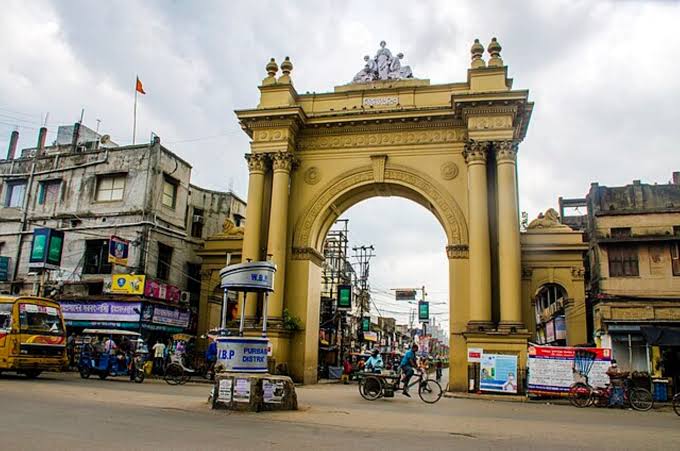
Curzon Gate / Bijoy Toron
Built in 1903 for the coronation of Maharaja Bijoy Chand Mahatab, the gateway stands at the intersection of GT Road and BC Road. Lord Curzon’s visit to Bardhaman in 1904 later gave the monument its popular name, Curzon Gate. After independence it was renamed Bijoy Toron.
Sarbamangala Temple
Built in 1702, the Sarbamangala Temple is one of Bardhaman’s most important religious landmarks. Its architectural form and long association with the Bardhaman Raj make it an important stop for heritage travellers.
Kankaleshwari Kali Temple
Located in Kanchannagar, this temple is known for its unusual stone image of Kali and its nine-peaked Navaratna temple structure.
108 Shiva Temple
The 108 Shiva Temple complex at Nawabhat contains a striking group of small Shiva temples arranged as a large architectural ensemble. It was built in 1788 during the reign of Maharaja Tilakchand.
Famous Places to Visit in Bardhaman
Curzon Gate / Bijoy Toron
This is one of Bardhaman’s most recognizable landmarks and an excellent starting point for a city heritage walk. Its monumental arches and royal history make it especially attractive for photography.
Sarbamangala Temple
One of the city’s oldest and most important temples, Sarbamangala is closely connected with the religious traditions of the former Bardhaman Raj. Major festivals can bring large numbers of devotees to the temple.
108 Shiva Temple, Nawabhat
The distinctive group of 108 Shiva shrines is one of the most interesting religious architectural sites around Bardhaman. The arrangement creates a memorable visual experience for visitors.
Kankaleshwari Kali Temple
Situated in Kanchannagar, this temple combines religious significance with distinctive architecture and a striking stone idol.
Golapbag
Known as the “Garden of Roses”, Golapbag was established by King Bijoy Chand Mahatab in 1884. Its gardens, trees and water bodies make it a pleasant place for a slower afternoon.
Krishnasayar Ecological Park
Krishnasayar began as a large artificial lake created in 1691. Today the area has been developed as a park and is associated with boating, leisure activities and cultural events.
Tomb of Sher Afghan
Located near Pir Beharam and the Rajbati area, the tomb commemorates Sher Afghan, the Afghan jagirdar of Bardhaman. The nearby history also connects the site with Kutubuddin Khan and the later life of Meherunnisa, who became Nur Jahan.
Chandni Park and Jaltungi
Jaltungi sits in the middle of a small lake at Dignagar. The historic structure was built around 1710 and has since been restored as part of the local heritage landscape.
Town Hall
The historic Town Hall dates from the late nineteenth century and forms part of Bardhaman’s civic heritage.
Damodar River and Krishak Setu
The Damodar forms an important part of Bardhaman’s geographical identity. The Krishak Setu area also provides a different perspective of the city and river landscape, particularly during the cooler months.
Famous Dishes to Try in Bardhaman
Mihidana
Bardhaman Mihidana is one of the city’s signature sweets. Its tiny, delicate fried grains are traditionally served as a sweet and are closely associated with Bardhaman’s food identity.
Bardhaman Mihidana has a registered Geographical Indication (GI), making its connection with the region formally recognized.
Sitabhog
Bardhaman Sitabhog is another iconic local sweet. Its distinctive appearance and sweet, soft texture have made it one of Bardhaman’s most recognizable culinary specialties.
Like Mihidana, Bardhaman Sitabhog is a registered GI product.
Bengali Meals
Beyond its famous sweets, travellers can enjoy traditional Bengali meals featuring rice, dal, vegetables, fish preparations, posto-based dishes and seasonal specialties.
What to Taste
- Mihidana
- Sitabhog
- Traditional Bengali fish curry
- Posto dishes
- Mishti and seasonal sweets
- Local snacks from traditional sweet shops
Famous Personalities Associated with Bardhaman
Krishnaram Rai
Krishnaram Rai was a major early figure in the history of the Bardhaman Raj. His 1689 Mughal farman marked an important stage in the rise of the Bardhaman estate.
Kirti Chandra Rai
Kirti Chandra expanded the Bardhaman estate and was associated with major temple-building and water-management works. The Sarbamangala Temple is among the prominent structures linked to his period.
Bijoy Chand Mahatab
Maharaja Bijoy Chand Mahatab was one of the best-known rulers of Bardhaman Raj. The Curzon Gate was constructed during his reign, and several public and cultural initiatives are associated with his period.
Kashiram Das
Kashiram Das, a celebrated Bengali poet and translator of the Mahabharata, was born in Singi near Katwa in the wider Purba Bardhaman region. His work remains an important part of Bengali literary heritage.
Mukundaram Chakraborty
The medieval Bengali poet Mukundaram Chakraborty, known for Chandimangal, was born at Damunya in the wider Bardhaman region.
Festivals of Bardhaman
Durga Puja
Durga Puja is one of the most important festivals in the region. The city’s historic temples and neighbourhood celebrations give the festival a strong cultural presence.
Gajan
Gajan is a popular folk festival associated particularly with the worship of Lord Shiva. Processions, rituals, performances and local fairs form part of the celebration.
Kali Puja
Kali Puja is widely celebrated across Bardhaman with temple rituals, household worship, lights and community festivities.
Poila Boishakh
The Bengali New Year brings cultural programmes, temple visits, shopping and festive food to Bardhaman.
Krishnasayar Fair and Cultural Events
Krishnasayar has hosted fairs displaying local handicrafts and cultural programmes, making it an interesting place to visit when events are scheduled.
Other Festivals
- Saraswati Puja
- Holi
- Ratha Yatra
- Janmashtami
- Eid celebrations
- Muharram
- Christmas
- Gajan of Dharmaraj
Things to Do in Bardhaman
- Photograph Curzon Gate: Begin your city exploration at the iconic Bijoy Toron.
- Visit Sarbamangala Temple: Explore one of the city’s most important historic temples.
- See the 108 Shiva Temples: Spend time observing the unusual temple arrangement.
- Explore Golapbag: Enjoy a relaxed walk among its greenery and historic landscape.
- Visit Krishnasayar: Combine sightseeing with a peaceful lakeside break.
- Explore Kanchannagar: Visit Kankaleshwari Kali Temple and experience the area’s heritage.
- Walk around the old city: Look for historic buildings, temples and traditional neighbourhoods.
- Taste local sweets: Do not leave without trying authentic Mihidana and Sitabhog.
- Shop for traditional crafts: Look for local handloom and regional craft products.
- Take a short excursion: Add Kalna or Chupi Char to a longer Purba Bardhaman itinerary.
Where to Eat, Shop, and Stay in Bardhaman
Where to Eat
Bardhaman has plenty of everyday Bengali eateries, sweet shops, casual restaurants and modern dining options. For a genuine local food experience, look for established sweet shops serving Mihidana and Sitabhog alongside traditional Bengali snacks.
Where to Shop
- Mihidana and Sitabhog from established sweet shops
- Bengali sweets and snacks
- Tant and handloom products
- Local handicrafts
- Dokra products from the wider district
- Traditional wooden dolls from Natungram when visiting the wider region
Where to Stay
Bardhaman offers hotels and guesthouses suitable for short business, family and leisure stays. For a heritage-focused trip, staying near the central city area makes it easier to combine Curzon Gate, Sarbamangala Temple, Golapbag and other city attractions.
What is Bardhaman Famous For?
- Bardhaman Mihidana
- Bardhaman Sitabhog
- Curzon Gate / Bijoy Toron
- Sarbamangala Temple
- 108 Shiva Temple
- Bardhaman Raj heritage
- Golapbag
- Krishnasayar
- Kankaleshwari Kali Temple
- Gajan and Bengali folk traditions
Best Time to Visit Bardhaman
The most comfortable period for exploring Bardhaman is generally from October to March. The cooler weather makes temple visits, heritage walks and nearby excursions more pleasant.
| Season | What to Expect | Travel Suitability |
|---|---|---|
| October–November | Post-monsoon greenery and festive atmosphere | Excellent |
| December–February | Cooler weather and comfortable sightseeing | Excellent |
| March–May | Increasing heat; cultural events may continue | Moderate |
| June–September | Monsoon showers and greener surroundings | Moderate |
How to Reach Bardhaman
By Train
Bardhaman Junction is one of the major railway stations in the region and is the most convenient option for many travellers. The city is connected to Kolkata and other important destinations through the Eastern Railway network.
By Air
The main airport for travellers from outside the region is Netaji Subhas Chandra Bose International Airport in Kolkata. Kazi Nazrul Islam Airport near Andal is another airport option for the wider Bardhaman region.
By Road
Bardhaman is well connected by road. Major routes including NH 19 and other national and state highways connect the city and district with Kolkata, Durgapur, Asansol and surrounding areas.
Approximate Road Distances from Bardhaman
| Destination | Approx. Distance |
|---|---|
| Kolkata | About 121 km |
| Bankura | About 93 km |
| Bolpur | About 90 km |
| Durgapur | About 65 km |
| Kalna | About 50 km |
Distances can vary depending on the exact starting point and route.
Nearby Places to Visit from Bardhaman
Kalna
Located around 50 km from Bardhaman, Kalna is famous for its 108 Shiva Temples and beautiful terracotta temples. It is an excellent addition for travellers interested in Bengal’s temple architecture.
Chupi Char, Purbasthali
Chupi Char is a scenic oxbow-lake destination near Purbasthali. The approximately 9-km-long water channel attracts more than 70 species of local and migratory birds, making it particularly interesting for birdwatchers.
Natungram
Natungram is known for its traditional wooden dolls. It can be combined with a wider Kalna and Purbasthali itinerary.
Bankura
Located roughly 93 km from Bardhaman according to the West Bengal Tourism distance chart, Bankura offers a contrasting landscape of terracotta heritage, forests and hills.
Bolpur and Santiniketan
Bolpur is another practical cultural excursion from Bardhaman, especially for travellers interested in the heritage of Santiniketan and the wider Birbhum region.
Best Duration for Bardhaman
1 day is enough for a focused city heritage tour covering Curzon Gate, Sarbamangala Temple, 108 Shiva Temple, Golapbag, Krishnasayar and local food.
2 days is better if you want a relaxed itinerary with shopping, food experiences and a nearby excursion such as Kalna or Chupi Char.
| Duration | Suggested Experience |
|---|---|
| 1 Day | Major city monuments + temples + local food |
| 2 Days | City sightseeing + food + shopping + nearby destination |
| 3 Days | Bardhaman + Kalna + Chupi Char/Natungram |
Travel Tips for Bardhaman
- Start heritage sightseeing early to avoid the strongest daytime heat.
- Keep some time for local sweet shops and try authentic Mihidana and Sitabhog.
- Wear comfortable footwear when visiting multiple temples and heritage sites.
- Dress respectfully when entering religious places.
- Check local temple timings before planning a detailed religious itinerary.
- Winter is particularly comfortable for walking and outdoor sightseeing.
- For Chupi Char and other nature destinations, carry water, sun protection and binoculars if you enjoy birdwatching.
- Use the railway network for convenient travel between Bardhaman and major cities.
- Combine Bardhaman with Kalna or Purbasthali for a richer Purba Bardhaman trip.
- Respect local customs and avoid littering around temples, lakes and heritage sites.
Why Visit Bardhaman?
Bardhaman is worth exploring for travellers who enjoy places where history is woven into everyday life. The city brings together Bardhaman Raj heritage, historic temples, colonial-era architecture, Bengali food traditions and cultural festivals within a relatively compact urban area.
Its biggest attraction is the variety of experiences packed into a short trip: admire the Curzon Gate, visit old temples, relax around historic water bodies, explore local crafts and finish the day with Bardhaman’s famous sweets.
Top Reasons to Visit
- Explore the legacy of Bardhaman Raj.
- See distinctive temple architecture.
- Visit Curzon Gate and other historic landmarks.
- Taste GI-recognized Mihidana and Sitabhog.
- Experience Bengali festivals and folk traditions.
- Explore nearby Kalna and Chupi Char.
- Enjoy a convenient short heritage break from Kolkata.
Conclusion
Bardhaman is more than a transport stop between Kolkata and western Bengal. It is a city where royal history, sacred architecture, Bengali culture and famous sweets come together in a distinctly local experience.
Whether you have a single day or a full weekend, Bardhaman offers enough heritage, food and nearby attractions to make the journey worthwhile. Start with its historic core, slow down around its temples and gardens, and make sure your trip ends with a box of Mihidana and Sitabhog.
"Travel is the only thing you buy that makes you richer."