Purba Medinipur, also known as East Midnapore, brings together some of the most varied travel experiences in southern West Bengal. Ancient port-city history, rivers, temples, royal heritage, industrial landscapes and a long coastline of beaches make the district much more than a conventional beach destination.
From the historic town of Tamluk and the heritage of Mahishadal to the beaches of Digha, Mandarmani, Shankarpur, Tajpur and Junput, Purba Medinipur offers a combination of history, culture, food and coastal travel. The district is also closely associated with the freedom movement and the legacy of Matangini Hazra and the Tamralipta Jatiya Sarkar.
History of Purba Medinipur
Purba Medinipur was created on 1 January 2002 when the historic Medinipur district was divided into Purba Medinipur and Paschim Medinipur. Tamluk became the headquarters of the new district.
Ancient Tamralipta
The history of the region goes much further back than the modern district. Tamluk is closely associated with the ancient port city of Tamralipta, which developed as an important centre of trade, culture and maritime activity.
The district administration records archaeological evidence of continuous settlement at Tamluk from around the 3rd century BCE. The ancient settlement was known by several names in historical, religious and foreign accounts, including Tamralipta, Tamalika, Tamalitti and Tamoluk.
Tamralipta as an Ancient Port
The location of Tamluk near the Rupnarayan River and its historical connection with the Bay of Bengal helped it become an important centre for water-based trade and cultural exchange. Over time, changes in river courses and the accumulation of silt transformed the old port landscape.
Freedom Movement
Purba Medinipur has a major place in the history of India's freedom movement. During the Quit India Movement of 1942, Tamluk and surrounding areas became centres of resistance.
The Tamralipta Jatiya Sarkar, or Tamralipta National Government, was established on 17 December 1942. The parallel administration continued until it was dissolved in 1944. Important figures associated with it included Satish Chandra Samanta, Sushil Kumar Dhara, Ajoy Mukherjee and Matangini Hazra.
Matangini Hazra
Matangini Hazra remains one of the most remembered figures connected with Tamluk. She was killed by British police during a procession during the Quit India Movement on 29 September 1942. Her memorial and legacy remain an important part of Tamluk's historical identity.
Geography of Purba Medinipur
Purba Medinipur forms part of the lower Indo-Gangetic Plain and eastern coastal plains. The district is largely flat, with coastal plains towards the south. Much of the landscape is formed from alluvial deposits.
The southern part of the district opens towards the Bay of Bengal, giving Purba Medinipur one of West Bengal's most important coastal tourism belts.
- Landscape: Flat plains, river valleys and coastal areas
- Coastline: Bay of Bengal along the southern side
- Major Rivers: Rupnarayan, Haldi, Keleghai and Kansabati
- Important Coastal Belt: Digha, Shankarpur, Tajpur, Mandarmani, Junput and Udaipur
- Major Urban Centre: Haldia
- Administrative Headquarters: Tamluk
Agriculture and Rural Landscape
Purba Medinipur remains strongly connected with agriculture. Important crops include paddy, potato, vegetables, pulses, oilseeds, betel vine and other agricultural products. More than 80% of the population was recorded as living in rural areas in the district's agricultural profile.
Culture and Traditions
The culture of Purba Medinipur reflects its coastal location, long history and strong rural traditions. Bengali is dominant, while local cultural practices vary across the district's villages and communities.
Folk Traditions
Traditional songs, village fairs, religious festivals and seasonal celebrations form an important part of local life. Festivals such as Baha, Sohorai, Bhadu and Tusu are associated with the wider cultural landscape of the Medinipur region.
Craft Traditions
Purba Medinipur is also associated with traditional crafts and household food crafts. Gohona Bori, also called Naksha Bori, is particularly associated with the Tamluk-Mahishadal region and is recognised for its intricate decorative patterns.
Coastal Culture
Fishing, fish markets, seafood preparation and coastal livelihoods are an important part of life around Digha, Junput, Shankarpur and other coastal areas.
Architecture of Purba Medinipur
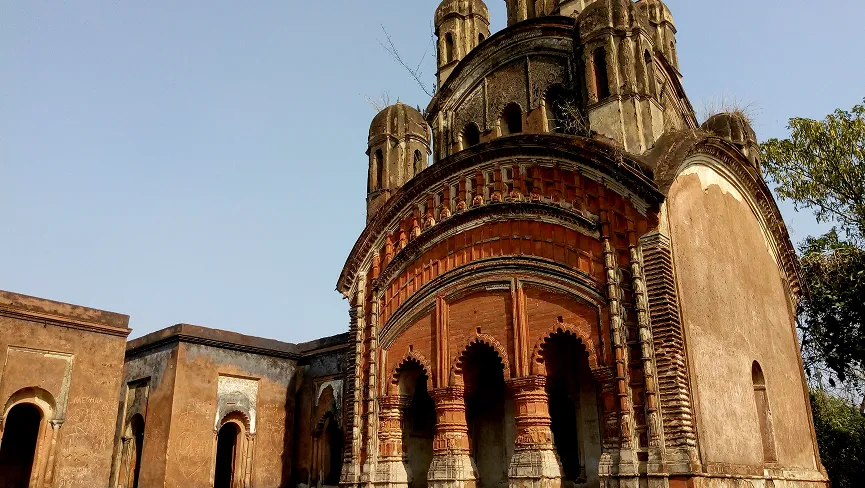
The architectural identity of Purba Medinipur ranges from historic temples and royal residences to modern industrial infrastructure and coastal resorts.
Bargabhima Temple
Bargabhima Temple in Tamluk is one of the district's most important religious landmarks. The temple is traditionally associated with the ancient heritage of Tamralipta and is considered an important Shakti shrine.
Mahishadal Rajbari
Mahishadal Rajbari represents the district's royal architectural heritage. The complex includes historic mansions, temples and museum collections. Census documentation records important structures dating from the 16th to 18th centuries.
Muktidham Temple
Muktidham Temple near Haldia is known for its white-marble architecture and landscaped surroundings. Its entrance shows South Indian architectural influence, while the complex includes shrines dedicated to several Hindu deities.
Famous Places to Visit in Purba Medinipur
Tamluk
Tamluk, the district headquarters, is the historical heart of Purba Medinipur. Its association with ancient Tamralipta, Bargabhima Temple, the freedom movement and the Rupnarayan River makes it an important heritage stop.
Bargabhima Temple
The historic Bargabhima Temple is one of Tamluk's most prominent religious attractions. The temple is associated with local legends and the ancient identity of Tamralipta and attracts devotees throughout the year.
Mahishadal Rajbari
Mahishadal Rajbari is located about 16 km from Tamluk. The palace complex and museum provide an opportunity to explore the region's royal history, old buildings, collections and temple architecture.
Geonkhali
Geonkhali is a scenic riverside destination near Mahishadal. It is situated around the confluence of three rivers and is known as a peaceful picnic and river-view location.
Haldia
Haldia is an important port and industrial city of Purba Medinipur. It provides a contrasting urban and industrial landscape alongside the district's beaches and heritage destinations.
Digha
Digha is the most famous beach destination in the district and one of West Bengal's most popular seaside resorts. Its long, shallow beach, casuarina plantations and sunrise-sunset views make it a classic weekend destination.
The district administration describes Digha as the “Brighton of the East” and records a beach stretching for about 7 km.
New Digha
New Digha offers a developed tourist environment with hotels, restaurants, shops, beach access and family-friendly attractions. It is one of the easiest places in the district for first-time coastal travellers.
Shankarpur
Shankarpur lies east of Digha and offers a quieter coastal experience. Its casuarina-lined beach and fishing harbour give it a different character from the busier Digha area.
Tajpur
Tajpur is known for its relatively quieter beach environment and coastal landscape. The beach lies along the Kolkata-Digha route and is popular with travellers looking for a relaxed seaside stay.
Mandarmani
Mandarmani is a popular seaside resort on the Bay of Bengal. West Bengal Tourism describes its beach as approximately 13 km long and notes its famous red-crab landscape and winter appeal.
Junput
Junput is a quieter coastal destination located about 40 km from Digha. It offers sea views, casuarina trees and a less commercial beach atmosphere. The area is also associated with brackish-water fish cultivation and research.
Udaipur Beach
Udaipur Beach lies near Digha on the West Bengal-Odisha border. Its coastal landscape and proximity to Digha make it suitable for a combined beach itinerary.
Muktidham
Muktidham is a temple complex associated with Vivekananda Mission Ashram. The white-marble structures, gardens and religious shrines make it an interesting cultural stop around Haldia.
Moynagarh
Moynagarh is a historical location associated with the remains of an old fort. It can be combined with Tamluk and Mahishadal for a heritage-focused day trip.
Famous Dishes and Local Food
Gohona Bori
Gohona Bori, also known as Naksha Bori, is one of Purba Medinipur's distinctive food traditions. These dried lentil dumplings are shaped into decorative patterns resembling jewellery and are particularly associated with the Tamluk region.
Maacher Tel Jhal
Maacher Tel Jhal is a spicy fish preparation associated with the coastal food culture of Purba Medinipur. Fish and rice remain central to traditional meals in the district.
Maacher Tok
Maacher Tok is a tangy fish preparation made with ingredients such as raw mango, dried mango or tamarind. Its sweet-sour and spicy flavour reflects the distinctive cooking style of coastal Bengal.
Posto Bati
Posto Bati is another traditional preparation documented in Purba Medinipur's food heritage. It is different from the more familiar posto-based dishes commonly found elsewhere in Bengal.
Gur Amla
Gur Amla combines jaggery with raw mango powder and ash gourd, along with spices used for tempering. It offers a sweet, tangy and mildly spicy flavour profile.
Panskura Chop
Panskura Chop is a popular regional snack associated with Panskura. It is generally enjoyed hot with puffed rice and other simple accompaniments.
Fresh Seafood
Being a coastal district, Purba Medinipur is also a good place to try fresh fish, prawns, crab and other seafood, particularly around Digha, Mandarmani, Shankarpur and Junput.
Famous Personalities Connected with Purba Medinipur
Matangini Hazra
Matangini Hazra is one of the most important historical personalities associated with Tamluk. She participated in India's freedom movement and was killed during the Quit India Movement in 1942. Her memorial in Tamluk remains an important reminder of the district's role in the freedom struggle.
Satish Chandra Samanta
Satish Chandra Samanta was a freedom fighter and one of the principal leaders associated with the Tamralipta Jatiya Sarkar formed during the Quit India Movement.
Sushil Kumar Dhara
Sushil Kumar Dhara was another important freedom fighter associated with the Tamluk movement and the Tamralipta National Government.
Ajoy Mukherjee
Ajoy Mukherjee was associated with the freedom movement and the Tamralipta Jatiya Sarkar during the Quit India period. His historical connection adds another layer to Tamluk's political and freedom-struggle heritage.
Festivals of Purba Medinipur
Durga Puja
Durga Puja is celebrated widely throughout the district with community pujas, cultural programmes, decorations and traditional rituals.
Kali Puja
Kali Puja is particularly important at religious centres such as Tamluk, where the Bargabhima tradition gives goddess worship a strong local identity.
Rath Yatra
Rath Yatra is celebrated in different parts of the district with processions, religious activities and local fairs.
Tusu
Tusu is a seasonal folk tradition of the wider Medinipur region. Songs and community gatherings form an important part of the celebration.
Bhadu
Bhadu is a folk festival associated with rural Bengal and is celebrated with songs and community participation.
Baha
Baha is a spring festival associated with tribal communities in the broader Medinipur cultural region. Music, dance and community rituals are central to the celebration.
Sohorai / Bandhna
Sohorai, also known as Bandhna in some communities, is connected with harvest traditions and rural community life.
Things to Do in Purba Medinipur
- Explore the historic streets and temples of Tamluk.
- Visit the Bargabhima Temple.
- Explore the heritage of Mahishadal Rajbari.
- Enjoy riverside views at Geonkhali.
- Spend a weekend at Digha Beach.
- Explore the quieter beaches of Shankarpur and Junput.
- Visit Mandarmani for a coastal resort experience.
- Explore Tajpur and Udaipur for beach photography.
- Try fresh seafood along the coastal belt.
- Buy traditional Gohona Bori where available.
- Explore the industrial and port landscape of Haldia.
- Combine history and nature on a Tamluk-Mahishadal-Geonkhali day trip.
- Visit local fairs and cultural events when travelling during festival periods.
- Enjoy sunrise and sunset photography along the Bay of Bengal.
Where to Eat, Shop, and Stay
Where to Eat
Digha, New Digha and Mandarmani have the widest choice of restaurants and hotels, particularly for tourists. Seafood restaurants are common along the coastal belt.
For traditional food experiences, explore local eateries and markets in Tamluk, Panskura and Mahishadal.
Where to Shop
- Digha/New Digha: Shell products, souvenirs, beach merchandise and local snacks.
- Tamluk: Traditional food products and local market items.
- Mahishadal: Local handicrafts and traditional products.
- Panskura: Local snacks and regional food products.
Where to Stay
| Area | Best For |
|---|---|
| Digha / New Digha | Families, first-time visitors and beach holidays |
| Mandarmani | Resort stays and relaxed beach trips |
| Shankarpur | Quieter coastal experience |
| Junput | Peaceful coastal getaway |
| Tamluk | History, temples and district-level sightseeing |
| Mahishadal | Heritage and cultural stays |
What is Purba Medinipur Famous For?
Purba Medinipur is famous for its unique combination of ancient history, beaches, temples, royal heritage, freedom movement history and coastal food culture.
- Tamluk and ancient Tamralipta
- Digha Beach
- Mandarmani Beach
- Shankarpur
- Tajpur
- Junput
- Mahishadal Rajbari
- Bargabhima Temple
- Haldia Port and industrial landscape
- Matangini Hazra and the freedom movement
- Tamralipta Jatiya Sarkar
- Gohona Bori
- Coastal Bengali seafood
Best Time to Visit Purba Medinipur
October to March is generally the most comfortable period for exploring Purba Medinipur. The weather is more suitable for beach visits, heritage sightseeing and outdoor activities.
Winter – October to February
Winter is particularly suitable for Digha, Mandarmani, Shankarpur, Tajpur and Junput. The relatively comfortable weather also makes it easier to combine coastal and heritage destinations.
Summer – March to May
Summer can be hot and humid, but coastal resorts remain popular for short breaks. Early morning and evening are generally more comfortable for outdoor sightseeing.
Monsoon – June to September
The monsoon brings greener landscapes but also rougher coastal conditions and weather-dependent travel. Visitors should check local weather and sea conditions before planning beach activities.
| Season | Travel Experience |
|---|---|
| October–November | Comfortable weather and post-monsoon greenery |
| December–February | Best period for beaches and sightseeing |
| March–May | Hotter weather; suitable for short coastal breaks |
| June–September | Monsoon greenery but weather-dependent coastal travel |
How to Reach Purba Medinipur
By Air
The main airport for travellers from outside the region is Netaji Subhas Chandra Bose International Airport, Kolkata. From Kolkata, visitors can continue by road or rail towards Tamluk, Haldia, Digha and other destinations.
By Train
Rail is one of the most convenient ways to reach the district from Kolkata and Howrah. Important railway points include Tamluk, Haldia and Digha, depending on the destination.
Digha has regular train connectivity from Howrah and other parts of the region, making it convenient for weekend travellers.
By Road
Purba Medinipur is well connected with Kolkata and neighbouring districts by road. The Kolkata-Digha corridor provides access to major coastal destinations such as Tajpur, Mandarmani, Shankarpur and Digha.
| Mode | Recommended For |
|---|---|
| Air | Long-distance travellers arriving through Kolkata |
| Train | Digha, Tamluk, Haldia and regional travel |
| Road | Beach hopping and multi-destination trips |
Nearby Places to Explore
Paschim Medinipur
Paschim Medinipur lies to the west and offers forests, heritage sites and rural cultural experiences.
Howrah
Howrah lies to the north-east and provides access to Kolkata and the wider metropolitan region.
South 24 Parganas
South 24 Parganas lies towards the east across the Hooghly estuarine region and offers a gateway towards southern Bengal's coastal and delta landscapes.
Balasore, Odisha
Balasore lies towards the south-west across the state border and can be combined with a longer coastal Odisha itinerary.
Kolkata
Kolkata is the main metropolitan gateway for Purba Medinipur and can easily be combined with a Digha, Mandarmani or Tamluk trip.
Best Duration for a Purba Medinipur Trip
Because Purba Medinipur is a large district with both heritage and coastal attractions, 3 to 4 days works well for a first trip. A longer itinerary is useful if you want to explore both the Tamluk-Mahishadal heritage belt and the Digha-Mandarmani coast.
| Duration | Suggested Plan |
|---|---|
| 1 Day | Digha or Tamluk heritage circuit |
| 2 Days | Digha + Shankarpur / Udaipur |
| 3 Days | Digha + Mandarmani + Shankarpur / Tajpur |
| 4 Days | Tamluk + Mahishadal + Geonkhali + coastal circuit |
| 5 Days | Complete heritage + beach-focused itinerary |
Travel Tips for Purba Medinipur
- Choose your base carefully: Stay in Digha or New Digha for a beach-focused trip and Tamluk for heritage-focused travel.
- Carry sunscreen and a hat: Coastal sun can be strong even during comfortable months.
- Check sea conditions: Avoid entering the sea during rough weather or when local authorities restrict bathing.
- Start heritage sightseeing early: Tamluk and Mahishadal are easier to explore before the afternoon heat.
- Try local seafood: Digha and the surrounding coastal belt offer many seafood options.
- Respect temples: Follow local rules regarding footwear, photography and dress.
- Keep valuables secure: Take normal precautions in crowded markets and busy tourist areas.
- Book weekends in advance: Digha and Mandarmani can become busy during holidays and weekends.
- Carry cash: Smaller coastal villages and local markets may have limited digital-payment facilities.
- Keep beaches clean: Avoid leaving plastic and food waste along the coastline.
- Plan transport between beaches: Distances between coastal destinations make local transport planning useful.
Why Visit Purba Medinipur?
Purba Medinipur is worth visiting because it combines several types of travel in one district. A traveller can explore an ancient port-city heritage site in Tamluk, visit a historic royal palace in Mahishadal, experience riverside landscapes at Geonkhali and then spend the next day beside the Bay of Bengal.
The district is particularly suitable for travellers who enjoy beaches, history, temples, food, photography, weekend trips, cultural experiences and coastal landscapes.
Its biggest advantage as a travel destination is this variety: ancient Tamralipta, freedom movement history, royal heritage and modern beach tourism all exist within the same broader region.
Conclusion
Purba Medinipur is one of West Bengal's most diverse travel regions. The historic character of Tamluk, the heritage of Mahishadal, the rivers around Geonkhali and the beaches stretching from Udaipur and Digha towards Mandarmani and Junput create a destination with many different experiences.
Whether the goal is a relaxing beach weekend, a heritage trip, a food-focused journey or a longer exploration of Bengal's coastal culture, Purba Medinipur offers a rich combination of history, nature, spirituality, food and seaside travel.
"Travel is the only thing you buy that makes you richer."