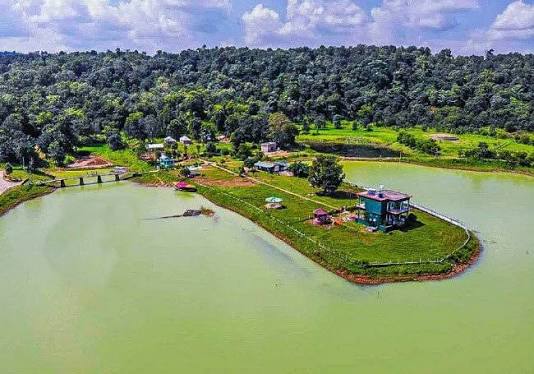
Korba, Chhattisgarh: Where Forests, Tribal Heritage and the Power Capital Meet
Korba is a fascinating destination in northern Chhattisgarh where dense forests, tribal traditions, ancient temples, waterfalls and modern industry exist side by side. Known as the “Power Capital of Chhattisgarh”, Korba is much more than an industrial district.
From the forested hills of Chaiturgarh and the waterfalls of Devpahari and Kendai to the historic temples of Pali and Sarvamangala, Korba offers a surprisingly diverse travel experience.
For travellers interested in nature, tribal culture, temples, history, road trips and lesser-known destinations, Korba is a destination worth exploring.
| Quick Fact | Details |
|---|---|
| State | Chhattisgarh |
| District Headquarters | Korba |
| District Established | 25 May 1998 |
| Area | 7,145.44 sq km |
| Population | 1,206,640 (2011) |
| Literacy Rate | 72.40% |
| Forest Area | 4,187.375 sq km |
| Sub-Divisions | 3 |
| Tehsils | 10 |
| Development Blocks | 5 |
| Villages | 792 |
| Municipalities / Urban Bodies | 5 |
| Major River | Hasdeo |
| Known As | Power Capital of Chhattisgarh |
History of Korba
Korba became a full-fledged revenue district on 25 May 1998. Before becoming a separate district, the area was part of the larger administrative landscape of northern Chhattisgarh.
The history of Korba is closely connected with its tribal communities, forests, agriculture, mineral resources and later industrial development. The district is home to communities including Pahadi Korwa, Gond, Raj Gond, Kawar, Bhaiyana, Binjwar and Dhanuhar.
Over time, Korba developed into one of India's important coal and power-producing regions. Its combination of coal resources, water and industrial infrastructure helped establish its modern identity as the Power Capital of Chhattisgarh.
Korba's Historical Journey
- Traditional era: The region developed around tribal communities, forests and agriculture.
- Historic period: Temples and settlements developed in places such as Pali and surrounding areas.
- 1998: Korba was established as a separate district.
- Modern era: Coal mining, thermal power and aluminium industries transformed the district into an industrial centre.
Geography of Korba
Korba is situated in the northern half of Chhattisgarh and comes under the Bilaspur division. The district headquarters is located around 200 km from Raipur.
The landscape combines forests, hills, rivers, valleys and industrial areas. The district's geographical identity is particularly shaped by the Hasdeo River, extensive forest cover and the northern Chhattisgarh hill landscape.
Korba covers approximately 7,145.44 sq km, of which more than 4,187 sq km is recorded as forest area.
Geographical Highlights
- Extensive forest landscapes
- Hasdeo River and its tributaries
- Hill ranges and plateaus
- Waterfalls and natural springs
- Coal-rich areas
- Tribal settlements
- Industrial and power-generation zones
Culture and Traditions of Korba
Korba's culture is strongly influenced by its tribal population and forest-based traditions. Pahadi Korwa and Birhor communities are among the important tribal groups associated with the district.
Hindi is widely spoken, while Chhattisgarhi is an important local language. Traditional customs remain particularly visible in rural and forest areas.
The district's cultural life combines mainstream Chhattisgarhi festivals with traditional tribal celebrations, music and dance.
Traditional Dances
- Rawat Nacha
- Karma Nacha
- Suwa Nacha
- Bar Nacha
Traditional Lifestyle
Traditional rural homes commonly use mud and red-burnt tiles, while urban areas have more modern permanent structures. Agriculture remains an important occupation alongside mining, industry, trade and other economic activities.
Architecture of Korba
Korba's architectural heritage is largely represented by its ancient temples, hilltop religious sites, caves and traditional structures.
The ancient Shiv Temple at Pali is particularly significant. The temple stands beside a large pond and features an unusual architectural layout, including an octagonal entrance and a raised platform.
Chaiturgarh offers another distinctive architectural experience. Rather than being a conventional stone fort, it is considered a strong natural fortification because its hilltop position is protected by natural walls and steep terrain.
Architectural Highlights
- Ancient Shiva temples
- Hilltop shrines
- Rock-cut caves
- Traditional rural houses
- Natural fortifications at Chaiturgarh
- Historic temple complexes at Pali and Sarvamangala
Famous Places to Visit in Korba
Chaiturgarh
Chaiturgarh, also known as Lafagarh, is one of Korba's most impressive historical and natural attractions. Located around 70 km from Korba, it stands on a hilltop and is regarded as a strong natural fort.
The site has three principal entrances known as Menaka, Humkara and Simhadwar. The hilltop also features the famous Mahishasur Mardini Temple and nearby Shankar Cave.
Devpahari
Devpahari is situated approximately 58 km northeast of Korba on the banks of the Chornai River. The river creates a scenic waterfall known as Govind Kunj.
It is a good destination for travellers looking for greenery, water, photography and a peaceful natural environment.
Kendai Waterfall
Kendai is a scenic destination around 85 km from Korba. The area is known for a beautiful waterfall with a height of approximately 75 feet.
The waterfall is particularly attractive during the monsoon and post-monsoon period when the surrounding landscape becomes greener.
Madwarani Temple
Madwarani Temple is situated on a hilltop around 22 km from Korba on the Korba-Champa road. The temple is dedicated to Goddess Madwarani and becomes especially lively during the Navratri season.
A local tradition connects the temple area with the growth of jowar beneath Kalmi trees during the Navratri period.
Pali Shiv Temple
Pali is an important historical destination around 50 km from Korba. Its ancient Shiva temple stands beside a large pond and is considered an important heritage structure of the area.
The temple has an east-facing entrance, an octagonal doorway and a raised five-level platform.
Sarvamangala Temple
Sarvamangala Temple is one of Korba's prominent religious attractions. Dedicated to Goddess Durga, the temple complex is surrounded by other religious structures including Trilokinath Temple and Kali Temple.
The site also has a cave associated with local historical traditions.
Sitamani
Sitamani is located near Sitamani Railway Station within Korba city. The site contains three rock-cut caves, including one containing ancient figures associated by local tradition with Ram, Sita and Lakshman.
The location also contains an old stone inscription and a Ram-Sita temple, making it an interesting destination for visitors interested in mythology, history and archaeology.
Kanaki
Kanaki is a forest-surrounded destination known for the Kankeshwar Mahadev Temple and several ponds. The area can also attract migratory birds during the appropriate season.
Kudurmal
Kudurmal is another religious and cultural destination in the Korba region. It can be included in a wider itinerary exploring the district's temples and traditional heritage.
Famous Dishes of Korba
Korba's food culture reflects the broader culinary traditions of Chhattisgarh. Rice, seasonal vegetables, pulses and locally available ingredients form an important part of everyday food.
Fara
Fara is a traditional rice-based Chhattisgarhi preparation. It is generally steamed and makes for a light but filling local food experience.
Chila
Chila is a savoury pancake prepared using rice or lentil-based batter. It is commonly enjoyed as breakfast or a snack.
Angakar Roti
Angakar Roti is a traditional thick flatbread prepared from rice-based dough and is associated with Chhattisgarhi home-style cuisine.
Aamat
Aamat is a traditional Bastar-region preparation made with vegetables and spices. Travellers exploring the wider cultural region around Korba may encounter regional variations of such traditional dishes.
Local Rice-Based Meals
Simple rice-based meals with seasonal vegetables, pulses and local preparations are an important part of everyday regional cuisine. For an authentic experience, try trusted local eateries rather than expecting a standard tourist menu.
Famous Personalities and Cultural Communities of Korba
Korba's identity is more strongly connected with its tribal communities, artisans, agricultural communities and industrial workforce than with a long list of nationally famous personalities.
Pahadi Korwa Community
The Pahadi Korwa are a particularly important tribal community of Korba. Their traditional lifestyle is closely connected with the forest and hilly environment of the region.
Gond and Raj Gond Communities
Gond and Raj Gond communities contribute significantly to the cultural diversity of Korba and the wider northern Chhattisgarh region.
Birhor Community
The Birhor are another tribal community associated with the district. Their traditional lifestyle and relationship with forest environments form an important part of Korba's cultural heritage.
Festivals of Korba
Hareli
Hareli is celebrated during the monsoon and is strongly associated with agriculture and greenery. Farmers celebrate the festival with traditional customs and rituals.
Pola
Pola is an important agrarian festival in which clay bullocks are traditionally worshipped. The festival reflects the importance of cattle and agriculture in rural life.
Karma
Karma is an important tribal festival associated with traditional community celebrations, music and dance.
Cherchera
Cherchera is another traditional festival celebrated in the region and is connected with rural and community traditions.
Dev Uthani
Dev Uthani is observed as an important religious occasion and forms part of the district's traditional festival calendar.
Navratri
Navratri has special significance at temples such as Madwarani. The hilltop temple becomes an important gathering point during the September–October festival season.
Things to Do in Korba
- Explore Chaiturgarh and its hilltop heritage.
- Visit Devpahari and Govind Kunj waterfall.
- See Kendai Waterfall, especially after the monsoon.
- Visit Madwarani Temple during Navratri.
- Explore Pali Shiv Temple for history and architecture.
- Visit Sarvamangala Temple and its surrounding religious complex.
- Explore Sitamani caves inside Korba city.
- Visit Kanaki for its temple, ponds and natural setting.
- Experience tribal culture respectfully through local communities and cultural spaces.
- Take a road trip through Korba's forested and hilly landscapes.
- Try traditional Chhattisgarhi food.
- Combine nature and heritage into a 2–3 day itinerary.
Where to Eat, Shop and Stay in Korba
Where to Eat
Korba city has the widest selection of restaurants, cafés and everyday eateries. Travellers can find North Indian, South Indian, Chinese and local Chhattisgarhi food.
For regional flavours, look for local restaurants and smaller eateries serving rice-based meals, chila, fara and other Chhattisgarhi preparations.
Where to Shop
Korba's markets are useful for everyday shopping, local food products, traditional items and regional handicrafts. For a wider selection of Chhattisgarh handicrafts, travellers can also combine their Korba trip with other major cities and cultural centres in the state.
Where to Stay
Korba city is the most practical base for exploring the district. It offers the widest range of hotels and other accommodation.
- Budget: Local hotels and guesthouses.
- Mid-range: Comfortable hotels in central Korba.
- Business stay: Hotels around the city's commercial and industrial areas.
- Nature trip: Plan day excursions from Korba to destinations such as Chaiturgarh, Devpahari and Kendai.
What is Korba Famous For?
Korba has a unique identity because it combines industry, forests, tribal culture and heritage tourism.
- Power Capital of Chhattisgarh
- Coal mining and power generation
- BALCO aluminium industry
- Hasdeo River
- Large forest areas
- Tribal culture
- Chaiturgarh
- Devpahari
- Kendai Waterfall
- Madwarani Temple
- Pali Shiv Temple
- Sitamani caves
The district's industrial importance is particularly notable. Official district information describes Korba as both the Power Capital and an Industrial Hub of Chhattisgarh, with coal, water resources, thermal power generation and aluminium production forming major parts of its economic identity.
Best Time to Visit Korba
The best overall period to explore Korba is generally from October to March. The weather is more comfortable for temple visits, road trips, hill destinations and outdoor sightseeing.
| Season | Travel Experience |
|---|---|
| October–November | Green landscapes after monsoon and pleasant conditions. |
| December–February | Cooler weather and ideal conditions for sightseeing. |
| March | Warmer but still suitable with early morning travel. |
| April–June | Hot and dry; outdoor sightseeing can be uncomfortable. |
| July–September | Excellent greenery and waterfalls, but heavy rain may affect road travel. |
Best overall choice: October to March.
Best for waterfalls: July to October, subject to weather and road conditions.
How to Reach Korba
By Air
Korba does not have a major commercial airport. The most practical airport for many travellers is Swami Vivekananda Airport in Raipur, approximately 200 km from Korba.
By Train
Korba Railway Station provides direct rail connectivity to the city. From Raipur, the official district administration gives an approximate journey time of 4 hours via Raipur – Bilaspur – Champa – Korba.
By Road
Korba is well connected by road with major cities of Chhattisgarh. From Raipur, the road journey takes approximately 5 hours, following the route through Bilaspur – Pali – Katghora – Korba.
| Mode | Route / Option | Approx. Information |
|---|---|---|
| Air | Raipur Airport | Approx. 200 km |
| Rail | Raipur – Bilaspur – Champa – Korba | Approx. 4 hours from Raipur |
| Road | Raipur – Bilaspur – Pali – Katghora – Korba | Approx. 5 hours from Raipur |
Nearby Places to Visit from Korba
Bilaspur
Bilaspur is one of the major cities of northern Chhattisgarh and can be combined with Korba for a broader cultural and urban itinerary.
Katghora
Katghora is an important town within the Korba district and serves as a useful route point for exploring destinations in the northern part of the district.
Pali
Pali is particularly worth visiting for its ancient Shiva temple and historical significance.
Chaiturgarh
Chaiturgarh is one of the strongest choices for a day trip from Korba, combining hills, history, temples and natural scenery.
Kendai
Kendai Waterfall is a good choice for travellers who want to add a nature and waterfall experience to their Korba itinerary.
Best Duration for a Korba Trip
2 to 3 days is a good duration for exploring the major attractions around Korba without rushing.
| Trip Length | Suggested Experience |
|---|---|
| 1 Day | Korba city, Sitamani, Sarvamangala and selected local attractions. |
| 2 Days | Korba + Chaiturgarh + Pali + Madwarani. |
| 3 Days | Add Devpahari, Kendai and Kanaki. |
| 4–5 Days | Explore Korba slowly and combine it with nearby northern Chhattisgarh destinations. |
Travel Tips for Korba
- Plan hill and waterfall trips during daylight.
- Carry comfortable footwear for Chaiturgarh and other hill destinations.
- Monsoon travel requires caution because waterfalls and forest roads can become difficult.
- Carry drinking water when travelling to remote natural attractions.
- Respect tribal communities and ask permission before photographing people or ceremonies.
- Dress appropriately when visiting temples and religious sites.
- Keep cash available when travelling outside Korba city.
- Start early for Chaiturgarh, Kendai and Devpahari.
- Do not litter around forests, waterfalls, temples or archaeological sites.
- Check local weather before travelling during the monsoon.
- Use Korba city as your main base if you want to explore several attractions through day trips.
Why Visit Korba?
Korba is worth visiting because it offers an unusual combination of industry, nature and tribal heritage.
Few destinations in Chhattisgarh can offer the contrast of a major power-producing industrial centre alongside extensive forests, tribal communities, ancient temples, waterfalls and hilltop destinations.
For travellers who enjoy offbeat destinations, road trips, nature photography, temples, history and cultural experiences, Korba offers plenty to discover.
Its biggest advantage is variety: one day can take you from the industrial landscape of the Power Capital to the forests and hills of Chaiturgarh or the waterfalls of Devpahari and Kendai.
Conclusion
Korba is much more than Chhattisgarh's Power Capital. Behind its industrial identity lies a landscape of forests, hills, rivers, temples, waterfalls and rich tribal traditions.
Whether you are exploring the ancient architecture of Pali, standing among the hills of Chaiturgarh, visiting Devpahari or experiencing the cultural traditions of the district, Korba offers a different side of Chhattisgarh.
For travellers looking beyond the state's most famous tourist destinations, Korba is a rewarding offbeat destination that combines nature, heritage and culture in one journey.
Korba Travel Snapshot
| Category | Information |
|---|---|
| Destination | Korba, Chhattisgarh |
| Region | Northern Chhattisgarh |
| District HQ | Korba |
| Established | 25 May 1998 |
| Area | 7,145.44 sq km |
| Population | 1,206,640 |
| Literacy | 72.40% |
| Forest Area | 4,187.375 sq km |
| Major River | Hasdeo |
| Best Time | October to March |
| Ideal Duration | 2–3 Days |
| Nearest Major Airport | Swami Vivekananda Airport, Raipur – approx. 200 km |
| Railway | Korba Railway Station |
| Major Attraction | Chaiturgarh |
| Famous Waterfalls | Devpahari and Kendai |
| Major Temple | Madwarani / Sarvamangala / Pali Shiv Temple |
| Known As | Power Capital of Chhattisgarh |
"Travel is the only thing you buy that makes you richer."