Mungeli, Chhattisgarh: Where Sacred Rivers, Ancient Temples and Forests Meet
Mungeli is one of those destinations in Chhattisgarh that rewards travellers who enjoy discovering places beyond the usual tourist circuit. From the archaeological remains of Madku Dweep and the sacred waters of Setganga to the forested landscapes around Lormi and the peaceful Khudia Reservoir, Mungeli brings together history, spirituality, nature and rural Chhattisgarhi life.
The district is especially interesting for travellers looking for a quieter experience. You can explore centuries-old temples in the morning, drive through agricultural landscapes in the afternoon and end the day beside a river, reservoir or forested hill.
| Travel Snapshot | Details |
|---|---|
| State | Chhattisgarh |
| District Headquarters | Mungeli |
| District Formation | January 2012 |
| Population | 7,01,707 (2011 Census) |
| Literacy Rate | 64.70% |
| Tehsils | 3 |
| Development Blocks | 3 |
| Sub-Divisions | 3 |
| Major Language | Chhattisgarhi |
| Other Common Language | Hindi |
| Major Rivers | Maniyari and Tesua |
| Best Known For | Madku Dweep, Setganga, temples, Khudia Reservoir and Achanakmar landscape |
Mungeli had a population of 7,01,707 according to the 2011 Census, with approximately 9.33% living in urban areas. Chhattisgarhi is the dominant first language, spoken by about 97.25% of the population according to the Chhattisgarh Tourism Board profile.
History
Mungeli has a long administrative history. The town received tehsil status in 1860 and remained an important tehsil for more than a century before becoming a separate district in January 2012.
The present district was created from the former Bilaspur administrative region and includes the three major administrative areas of Mungeli, Lormi and Patharia. The district administration currently lists three subdivisions and three corresponding Janpad blocks.
The historical importance of the region goes much further back than the modern district. Madku Dweep contains ancient temple remains, inscriptions, sculptures and archaeological material, while Setganga preserves religious traditions associated with the region's older cultural history.
The district's historical identity is closely connected with the wider cultural region of South Kosal, where Hindu religious traditions, local kingdoms, village communities and forest cultures developed over centuries.
Geography
Mungeli is situated in the central part of Chhattisgarh and forms part of the Bilaspur Division. Much of the district is made up of fertile plains, making agriculture an important part of local life.
The landscape changes as you move towards Lormi, where forested areas, hills and the Maikal landscape create a more scenic environment. Rivers and reservoirs also play an important role in the district's agriculture and tourism.
- Population: 7,01,707
- Urban Population: 65,439
- Urban Share: 9.33%
- Sex Ratio: 974 females per 1,000 males
- Population Growth (2001–2011): 38.29%
- Dominant Language: Chhattisgarhi
- Major Rivers: Maniyari and Tesua
The economy is largely agricultural, with paddy as the principal crop along with wheat, maize, pulses and oilseeds. Forest produce, animal husbandry and small-scale economic activities also contribute to the local economy.
Culture and Traditions
Mungeli reflects the traditional cultural character of Chhattisgarh, where village life, agriculture, folk traditions and religious celebrations remain closely connected.
Chhattisgarhi is the dominant language and is widely used in everyday life. Hindi is also understood and used in formal communication, education and administration.
Folk Music and Dance
Traditional forms such as Raut Nacha and Panthi remain important parts of the wider cultural identity of the district and surrounding Chhattisgarh region.
Village Markets and Melas
Local markets and religious fairs are important social spaces where villagers meet, trade agricultural products, purchase household goods and participate in cultural celebrations.
Traditional Lifestyle
Agriculture continues to influence daily life, seasonal celebrations and food traditions. The relationship between farming, cattle, forests and religious customs can be seen throughout the rural areas of Mungeli.
Architecture
Mungeli's architecture is predominantly religious and archaeological rather than monumental urban architecture. The most interesting examples are its ancient temples and archaeological remains.
Madku Dweep Temple Remains
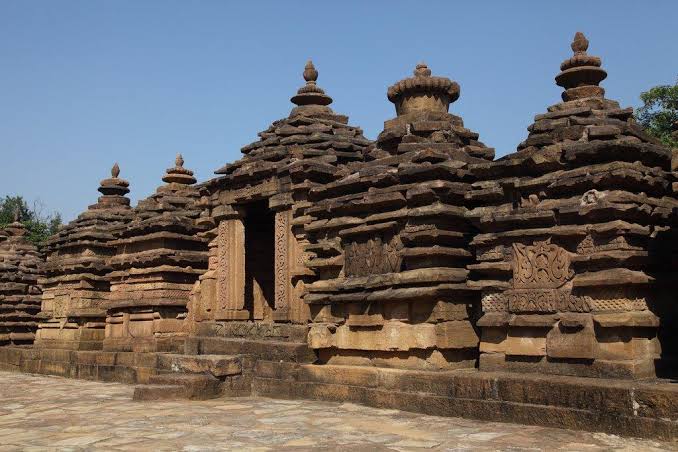
Madku Dweep contains ancient Shiva temples dating approximately to the 10th and 11th centuries. Archaeological discoveries at the island include inscriptions, sculptures, pottery and other remains that demonstrate the area's historical importance.
Setganga Temple Complex
The Shri Ram-Janaki Temple and the sacred Shwetganga Kund at Setganga represent the area's long-standing religious traditions. District sources associate their construction with the 10th–11th centuries.
Satyanarayan Temple
The Satyanarayan Temple at Malhapara is a distinctive religious landmark in Mungeli city. Local tradition considers it approximately 200 years old, while the district administration highlights its unusual importance as a temple dedicated specifically to Lord Satyanarayan.
Famous Places to Visit in Mungeli
Madku Dweep
Madku Dweep is one of Mungeli's most important attractions. The island is formed where the Shivnath River divides into two channels, creating a distinctive natural landscape. Ancient temples, inscriptions, sculptures, pottery and archaeological remains make it particularly valuable for history and heritage travellers. It is approximately 40 km from Mungeli headquarters.
Setganga
Setganga is a religious, cultural and historical village located about 16 km west of Mungeli. Its sacred Shwetganga Kund and Shri Ram-Janaki Temple are associated with centuries-old religious traditions. The place also hosts religious celebrations and fairs.
Rajiv Gandhi Reservoir – Khudia Reservoir
Khudia Reservoir is one of the district's most scenic water destinations. The reservoir was created by joining three natural hills, with the Maniyari River flowing between them. Construction began in 1927 and was completed in 1930. The reservoir is approximately 40 km north of Mungeli in Lormi block.
Shivghat
Shivghat lies on the banks of the Maniyari River in the Lormi area. The site is associated with an ancient self-manifested Shiva lingam and is an important centre of faith for local devotees. A seven-day fair is held during Mahashivratri. Shivghat is around 23 km from Mungeli headquarters.
Kharaghat
Kharaghat is a Shaivite pilgrimage site near Ramgarh, just around 2 km southeast of Mungeli. The site is associated with Mahadev worship and ascetic traditions. Mahashivratri and other religious occasions attract devotees to the area.
Satyanarayan Temple
Located in Malhapara in Mungeli city, the Satyanarayan Temple is regarded by the district administration as an unusual temple dedicated to Lord Satyanarayan. Local estimates place its age at around 200 years.
Achanakmar Tiger Reserve
The forested Achanakmar landscape is one of the major nature attractions associated with Mungeli's Lormi side. The tiger reserve forms part of the larger Maikal forest landscape and is known for dense Sal and bamboo forests and wildlife viewing. Chhattisgarh Tourism recommends November to June as a favourable period for visiting the reserve.
Hathnikala Temple
Hathnikala Temple is a religious destination surrounded by greenery and is listed among the district's tourist attractions. It combines a forested setting with local religious traditions.
Motimpur – Amar Tapu
Motimpur, also known as Amar Tapu, is another nature-and-faith destination listed by the Mungeli district administration. Its importance comes from its natural setting as well as local social and religious beliefs.
Famous Dishes
Mungeli's cuisine follows the broader food traditions of Chhattisgarh, with rice, lentils, seasonal vegetables and locally available ingredients forming the foundation of everyday meals.
Faraa
Faraa is a traditional steamed rice-based preparation and one of the most recognisable foods of Chhattisgarh. It is light, simple and commonly enjoyed with chutney or other accompaniments.
Chila
Chila is a savoury rice-and-lentil pancake that works well as a breakfast or snack. Its crisp edges and soft centre make it a popular traditional preparation.
Bara
Bara is prepared from fermented urad dal and is commonly served during family gatherings, festivals and special occasions.
Angakar Roti
Angakar Roti is a rustic rice-flour flatbread that pairs well with vegetables, lentils and local chutneys.
Chausela
Chausela is another traditional rice-flour preparation associated with festive and rural food traditions in Chhattisgarh.
Local Rice Preparations
Because agriculture is central to Mungeli's economy, rice-based meals remain an important part of everyday food culture. Travellers should try locally prepared rice dishes when visiting village markets or traditional eateries.
Famous Personalities
Mungeli's official tourism material focuses more strongly on its heritage, religious sites and regional culture than on a long list of nationally famous personalities. Therefore, it is better not to overstate personality associations without reliable local documentation.
Guru Ghasidas and the Satnami Tradition
Guru Ghasidas is an important cultural and religious figure in the wider Chhattisgarh region. The Satnami tradition has a strong social and cultural presence across Chhattisgarh, and Setganga also hosts an annual celebration associated with Guru Ghasidas.
Local Religious and Folk Figures
Mungeli's cultural identity is also shaped by local saints, ascetics, temple traditions and folk communities. Sites such as Kharaghat and Shivghat preserve stories connected with Shaivite practitioners and local spiritual traditions.
Festivals
Hareli
Hareli is an important agricultural festival of Chhattisgarh. It reflects the relationship between farming, cattle, seasonal cycles and rural life.
Pola
Pola celebrates the traditional importance of cattle and agriculture. The festival has a particularly strong connection with farming communities.
Teeja
Teeja is traditionally associated with women and is celebrated with religious observances, family gatherings and community participation.
Diwali
Diwali is celebrated across Mungeli with lamps, worship, family gatherings and festive food.
Mahashivratri
Mahashivratri is particularly important at religious destinations such as Shivghat and Kharaghat. Shivghat hosts a seven-day fair during the occasion, attracting devotees from surrounding areas.
Guru Ghasidas Jayanti
Guru Ghasidas Jayanti is observed at Setganga, where the local temple dedicated to Guru Ghasidas hosts an annual celebration.
Other festivals commonly celebrated across the district and wider Chhattisgarh cultural region include Holi, Dussehra, Navakhai and Chherchera.
Things to Do in Mungeli
- Explore the archaeological remains of Madku Dweep.
- Study the ancient temple architecture and sculptures at Madku.
- Visit the sacred Shwetganga Kund at Setganga.
- Visit the Shri Ram-Janaki Temple at Setganga.
- Explore the temples and spiritual atmosphere of Shivghat.
- Visit Kharaghat Mahadev near Mungeli.
- Enjoy the scenic landscape around Khudia Reservoir.
- Explore the forest landscapes around Lormi and Achanakmar.
- Visit Mungeli's distinctive Satyanarayan Temple.
- Try traditional Chhattisgarhi food.
- Experience local fairs and village markets when travelling during festival periods.
- Take a relaxed road trip through the rural landscapes of Mungeli district.
Where to Eat, Shop, and Stay
Where to Eat
Mungeli town is the most practical place to find restaurants, small eateries, tea stalls and everyday local food. Travellers exploring Lormi and rural attractions should plan meals in advance because dining options become more limited outside the main towns.
What to Shop
Mungeli is better suited to local-market shopping than premium retail. Travellers can explore local markets for regional food products, agricultural produce, household goods and traditional items.
Where to Stay
Mungeli city is the most convenient base for a first-time visitor. It allows easy day trips to Setganga, Kharaghat and other nearby attractions.
- Budget: Local hotels and guesthouses in Mungeli
- Mid-range: Hotels around the main town and transport areas
- Nature-focused: For Achanakmar and Lormi, consider accommodation options closer to the forest circuit where available
What is Mungeli Famous For?
Mungeli is best known for its combination of ancient archaeological sites, religious destinations, rivers, reservoirs and rural Chhattisgarhi culture.
| Known For | Why It Matters |
|---|---|
| Madku Dweep | Ancient island with temple ruins and archaeological remains |
| Setganga | Historic pilgrimage centre with Shwetganga Kund |
| Khudia Reservoir | Scenic reservoir created between three natural hills |
| Achanakmar Landscape | Forests, wildlife and Maikal-region scenery |
| Shivghat | Important Shiva pilgrimage and Mahashivratri fair |
| Satyanarayan Temple | Distinctive religious landmark in Mungeli city |
| Chhattisgarhi Culture | Folk traditions, festivals, food and rural lifestyle |
Best Time to Visit Mungeli
The best overall period for a Mungeli trip is generally October to March, when temperatures are more comfortable for sightseeing and road travel.
- October–November: Pleasant weather and festive atmosphere.
- December–February: Best suited for temples, heritage sites and road trips.
- March: Good for sightseeing before summer temperatures rise.
- November–June: Chhattisgarh Tourism identifies this as the favourable visiting period for the Achanakmar Tiger Reserve.
- Monsoon: The landscape becomes greener, but travellers should check road and forest-access conditions before visiting remote attractions.
How to Reach Mungeli
By Air
The nearest major airport is Swami Vivekananda Airport, Raipur, approximately 135 km from Mungeli according to the district administration.
By Train
Bilaspur Railway Station is the nearest major railway station, around 50 km from Mungeli. Raipur Railway Station is approximately 125 km away.
By Road
Mungeli is connected by road with Bilaspur and surrounding districts. The district administration identifies National Highway 130A as an important road connection between Bilaspur and Mungeli.
| Mode | Practical Option | Approx. Distance |
|---|---|---|
| Air | Swami Vivekananda Airport, Raipur | 135 km |
| Rail | Bilaspur Railway Station | 50 km |
| Rail | Raipur Railway Station | 125 km |
| Road | NH 130A via Bilaspur | Well connected |
Nearby Places to Visit
Bilaspur
Bilaspur is the nearest major city and railway hub for Mungeli. It is useful as both an arrival point and an additional destination on a Chhattisgarh trip.
Achanakmar
Achanakmar offers a forest and wildlife experience in the Maikal landscape. Chhattisgarh Tourism highlights its Sal and bamboo forests and opportunities for wildlife viewing.
Ratanpur
Ratanpur is an important historical and religious destination in the wider Bilaspur region. Its temples and Kalachuri-era heritage make it a natural addition to a northern Chhattisgarh itinerary.
Malhar
Malhar is another important archaeological destination in the Bilaspur region and can be considered by travellers interested in the ancient history of Chhattisgarh.
Gaurela-Pendra-Marwahi
The neighbouring Gaurela-Pendra-Marwahi region offers a more mountainous landscape, forests and tribal cultural experiences and works well for travellers extending their trip towards the Maikal region.
Best Duration for a Mungeli Trip
2 days is a comfortable starting point for exploring Mungeli's major attractions. Travellers interested in wildlife and a wider regional road trip should consider 3–4 days.
| Duration | Suggested Plan |
|---|---|
| 1 Day | Mungeli city + Kharaghat + Setganga |
| 2 Days | Mungeli + Setganga + Madku Dweep + Khudia/Shivghat |
| 3 Days | Add Lormi and Achanakmar landscape |
| 4–5 Days | Mungeli + Bilaspur + Ratanpur + Achanakmar regional circuit |
Travel Tips for Mungeli
- Keep comfortable footwear for temples, archaeological sites and uneven terrain.
- Start early when visiting multiple attractions outside Mungeli city.
- Carry enough drinking water when travelling towards remote areas.
- Keep some cash for rural markets and smaller establishments.
- Dress respectfully at temples and religious sites.
- Check forest-entry rules before visiting Achanakmar.
- Do not disturb wildlife or enter restricted forest areas.
- During monsoon, confirm road conditions before travelling to remote waterfalls, reservoirs or forest areas.
- Mahashivratri can be especially busy around Shivghat and other Shiva temples.
- For a relaxed trip, use Mungeli as the base and make day trips to nearby attractions.
Why Visit Mungeli?
Mungeli is ideal for travellers who want to experience a quieter, less commercial side of Chhattisgarh.
The district offers a rare combination of archaeological heritage, religious traditions, rivers, reservoirs, forests and rural culture. Madku Dweep is especially valuable for history lovers, while Khudia Reservoir and Achanakmar appeal to nature-focused travellers.
For photographers, Mungeli provides a varied canvas—from ancient stone sculptures and temples to green countryside, rivers and forested landscapes.
Conclusion
Mungeli may not be the first name that comes to mind when planning a Chhattisgarh trip, but that is precisely what makes it interesting. It offers an authentic glimpse into the state's heritage, spirituality, agriculture and natural landscapes.
From the ancient remains of Madku Dweep and the sacred traditions of Setganga to the waters of Khudia Reservoir and the forests around Lormi, Mungeli is a destination worth exploring at a relaxed pace.
If you are planning a northern Chhattisgarh road trip, keep at least two days for Mungeli and its surrounding attractions.
"Travel is the only thing you buy that makes you richer."