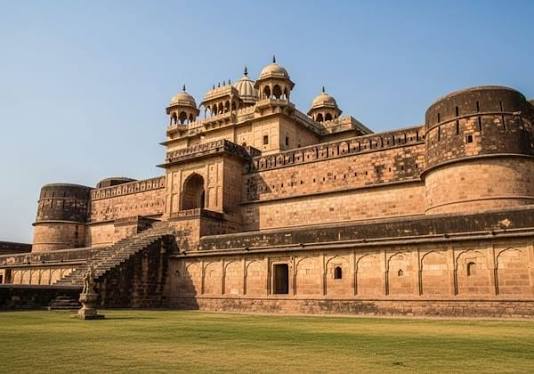
Koriya, Chhattisgarh: Where Royal Heritage Meets Forests, Hills and Hidden Waterfalls
Koriya is one of the lesser-known destinations of northern Chhattisgarh, where the legacy of a former princely state meets forested hills, waterfalls, tribal traditions, ancient temples and peaceful countryside.
With Baikunthpur as its district headquarters, Koriya offers a different side of Chhattisgarh. The district is known for its royal heritage, scenic landscapes, traditional community life and natural attractions such as Gaurghat Waterfall, Baniyadhara, Jhumka Dam, Balam Gadi and Ghunghutta Dam.
For travellers looking for an offbeat destination combining history, nature, tribal culture and road-trip experiences, Koriya is a destination worth discovering.
| Quick Fact | Details |
|---|---|
| State | Chhattisgarh |
| District Headquarters | Baikunthpur |
| District Established | 25 May 1998 |
| Area | 2,001.779 sq km |
| Population | 277,630 (2011) |
| Literacy Rate | 71.47% |
| Population Density | 117 persons per sq km |
| Sex Ratio | 974 females per 1,000 males |
| Sub-Divisions | 2 – Baikunthpur and Sonhat |
| Tehsils | 4 – Baikunthpur, Sonhat, Patna and Bachra-Pondi |
| Development Blocks | 2 – Baikunthpur and Sonhat |
| Gram Panchayats | 196 |
| Total Villages | 286 |
| Urban Local Bodies | 3 |
| Known For | Royal Heritage, Forests, Waterfalls, Tribal Culture and Hill Landscapes |
History of Koriya
The history of Koriya goes back to the era of the former Korea princely state. According to the district administration, the history of the region before the 17th century is not completely clear, but historical traditions associate the area with the Baland rulers and later the Kol rulers.
The region later became the Korea princely state. Its royal history is still visible in places such as the Korea Palace at Baikunthpur and the historic landscapes around Sonhat.
In 1797, Maratha forces attacked Sonhat. Later, following the defeat of the Marathas by the East India Company, the princely states of Chhattisgarh came under British suzerainty.
The district's modern history also became closely connected with coal mining and railway development. The Bijuri–Chirmiri railway line was begun in 1928 and completed in 1931, while railway communication with Manendragarh began in 1930.
After independence, Raja Ramanuj Pratap Singh Deo signed the agreement for the merger of Korea State with the Central Provinces and Berar on 15 December 1947. The merger took effect on 1 January 1948.
Koriya Historical Timeline
- Before 1600: Early history associated with Baland and Kol traditions.
- 1797: Maratha forces attacked Sonhat.
- 1819: Korea State entered into a formal arrangement involving annual tribute under British suzerainty.
- 1900: Raja Sheomangal Singh Deo shifted the capital from Sonhat to Baikunthpur.
- 1928–1931: Railway development connected the coal-producing region with wider networks.
- 1947: Raja Ramanuj Pratap Singh Deo signed the merger agreement.
- 1948: Korea State merged with the Central Provinces and Berar.
- 1998: Koriya became a separate district of Madhya Pradesh.
- 2000: Koriya became part of the newly created state of Chhattisgarh.
- 2022: Creation of MCB district changed the present-day geographical boundaries of Koriya.
Geography of Koriya
Koriya lies in the north-eastern part of Chhattisgarh. It is surrounded by Madhya Pradesh to the north, Korba and Bilaspur districts to the south, Surajpur to the east and Manendragarh-Chirmiri-Bharatpur to the west.
The district's landscape is characterised by forests, hills, rivers, valleys and waterfalls. The terrain makes Koriya particularly interesting for nature lovers and travellers who enjoy scenic road journeys.
The current district covers approximately 2,001.779 sq km. The official district profile places the average elevation at around 558 metres above sea level.
Geographical Highlights
- Forested hills and valleys
- Hasdeo and other river systems
- Waterfalls and natural springs
- Plateaus and hilltops
- Forest-based rural landscapes
- Tropical monsoon climate
- Important wildlife habitat
The district administration describes the climate as having a pleasant monsoon, mild summer and bearable winter, making much of the year suitable for travel.
Culture and Traditions of Koriya
Koriya's cultural identity is closely connected with its tribal communities, agricultural traditions and forest-based lifestyle. The district has a diverse social landscape that includes tribal and non-tribal communities.
Traditional community dances form an important part of local cultural life. The district administration particularly highlights Karma, Saila and Sua dances.
Karma Dance
Karma is associated with the agricultural cycle. It is celebrated after the completion of major Kharif agricultural operations, with communities praying to Karma Dev for a good harvest.
Saila Dance
Saila is a traditional community dance performed particularly during the month of Aghan. Dancers move in groups while striking small sticks together to the rhythm of the Mandar.
Sua Dance
Sua is traditionally performed by women. Dancers move in a circle while singing, with a decorated pot containing rice and wooden parrots placed at the centre.
Languages and Lifestyle
Chhattisgarhi and Hindi are widely used, while tribal communities maintain their own cultural traditions and practices. Agriculture, forest resources and local livelihoods remain important to rural communities.
Architecture of Koriya
Koriya's architecture reflects its royal past, religious traditions and connection with the surrounding landscape.
Korea Palace
The most important heritage structure in Baikunthpur is the historic Korea Palace, built for the former princely state. The palace's design was prepared in 1923, its ground floor was completed in 1930, the upper portion in 1938 and the entire palace was completed in 1946.
A distinctive feature of the palace is the extensive use of lime in its construction. The palace remains one of Koriya's most important symbols of royal heritage.
Hasdeshwar Temple
Hasdeshwar Temple at Mendra is built in an Orissa-style architectural tradition. Its craftsmanship and hill setting make it an interesting stop for travellers exploring the Sonhat region.
Traditional and Religious Architecture
Ancient temples, shrines, caves and traditional rural structures across Koriya reflect the region's connection with local faiths and community traditions.
Famous Places to Visit in Koriya
Korea Palace, Baikunthpur
Korea Palace is located approximately 0.5 km from the Koriya district headquarters. Built before independence, the palace represents the architectural and political history of the former Korea princely state.
For first-time visitors, this is one of the easiest places to begin understanding Koriya's history.
Jhumka Dam
Jhumka Dam is approximately 5 km from Baikunthpur railway station. The reservoir has become an important local recreation destination, with boating facilities and the Jhumka Island experience.
It is particularly suitable for families, casual outings, photography and relaxed evenings.
Gaurghat Waterfall
Gaurghat Waterfall is located on the Hasdeo River, approximately 35 km from Baikunthpur. Surrounded by natural landscapes, it becomes particularly attractive during the rainy and post-monsoon seasons.
Baniyadhara River and Waterfall
Baniyadhara is approximately 60 km from Baikunthpur and around 25 km from Sonhat. The river and waterfall landscape makes it a good choice for travellers looking for a quieter nature experience.
Balam Gadi
Balam Gadi is a hill destination situated on the Tropic of Cancer. The hill rises to approximately 1,350 feet and offers around a 180-degree panoramic view of the surrounding landscape.
It is particularly appealing to photographers, hikers and travellers interested in viewpoints.
Amhar Resort and Ghunghutta Dam
Amhar Resort is situated around 4 km from Sonhat near the Ghunghutta Dam. The reservoir, surrounding hills and recreational facilities make it a useful destination for a relaxed nature outing.
Ramdhara Jharna, Tanjara
Ramdhara Jharna is located near Tanjara. The site features two waterfalls on the Chand River. Ramdhara falls from approximately 30 feet, while Pakri Waterfall falls from around 15–20 feet.
The two waterfalls are separated by approximately 100 metres, and the area also contains a natural cave near Pakri Waterfall.
Hasdeshwar Temple, Mendra
Hasdeshwar Temple is located around 40 km from Baikunthpur and about 5 km from Sonhat. Built in an Orissa-style architectural tradition, the temple sits amid a scenic hill landscape.
Gangirani Temple, Natwahi
Gangirani Devi Temple is around 65 km from Baikunthpur. Near the temple is a large natural rock-cut cave measuring approximately 20 × 20 metres. The cave contains sculptures and traditional religious imagery.
Machhi-Bhairav Gadh
Machhi-Bhairav Gadh near Garnai combines hills, caves, sculptures and natural scenery. The hilltop provides a striking 360-degree view of the surrounding landscape.
Neelkanth Hill Station and Fair Site
Neelkanth is around 90 km from Baikunthpur. The hill destination combines natural scenery with religious significance. A small Shiva shrine is situated near a waterfall, creating a distinctive pilgrimage-and-nature experience.
23½° Latitude and 82½° Longitude Meeting Point
Near Sonhat is a geographically interesting location associated with the meeting point of the 23½° latitude and 82½° longitude lines. The location is promoted by the district administration as a distinctive geographical attraction.
Famous Dishes of Koriya
Koriya's food culture is closely connected with Chhattisgarhi cuisine, agriculture and locally grown grains. Rice, millets and seasonal ingredients are important parts of local food traditions.
Millet-Based Dishes
Millets such as ragi, jowar, bajra and kodo are promoted locally. The Korea Millets Cafe at the district collectorate serves breakfast and meals prepared using these grains.
Fara
Fara is a traditional rice-based Chhattisgarhi preparation, usually steamed and enjoyed as a light local meal or snack.
Chila
Chila is a savoury pancake prepared from rice or lentil-based batter. It is a familiar breakfast and snack across Chhattisgarh.
Angakar Roti
Angakar Roti is a traditional rice-based flatbread and a good example of simple regional Chhattisgarhi home-style food.
Korea Millets Cafe
Korea Millets Cafe at the district collectorate in Baikunthpur was inaugurated in 2023. It is operated by women from rural self-help groups and serves dishes made from locally produced millets including ragi, jowar, bajra and kodo.
The café is especially useful for travellers who want to experience the connection between local agriculture, nutrition, women's livelihoods and regional food traditions.
Famous Personalities and Royal Figures Connected with Koriya
Raja Ramanuj Pratap Singh Deo
Raja Ramanuj Pratap Singh Deo was the last ruler of the Korea princely state. He became ruler in 1909 and later signed the agreement for the merger of Korea State with the Central Provinces and Berar in December 1947.
His era is strongly associated with the development of Baikunthpur and the royal heritage visible in the district today.
Raja Sheomangal Singh Deo
Raja Sheomangal Singh Deo became ruler in 1899 and shifted the capital of Korea State from Sonhat to Baikunthpur in 1900. He constructed tanks and a temple near the new palace, contributing to Baikunthpur's development.
Rani Kadam Kunwar
Rani Kadam Kunwar, wife of Raja Amol Singh, played an important role in the administration of Korea State during her husband's reign. Historical records describe her as the effective ruler of the state for a period.
Festivals of Koriya
Ganga Dashera
Ganga Dashera is associated with the beginning of Kharif agricultural activities. The celebration includes community singing and folk dances and is regarded as a festival of rejoicing.
Chherta
Chherta is celebrated on the full moon of the Paus month after the agricultural harvest has been brought home. Families prepare food, children collect rice from households and communities later share a collective meal.
Navakhai
Navakhai is an agricultural festival associated with the arrival of new rice. The first rice of the harvest is traditionally offered to the family deity before the family begins consuming it.
Surhul
Surhul is celebrated when the Sal tree begins flowering. The festival has a strong connection with nature and the worship of Mother Earth. In traditional practice, agricultural activities such as ploughing or digging are avoided on the festival day.
Karma
Karma is one of the important community festivals of Koriya. It follows the completion of Kharif agricultural work and centres around worship of Karma Dev for a prosperous harvest.
Diwali, Holi and Dussehra
Major Indian festivals including Diwali, Holi and Dussehra are also widely celebrated across Koriya, alongside the district's distinctive agricultural and tribal festivals.
Things to Do in Koriya
- Explore Korea Palace and discover the history of the former princely state.
- Enjoy boating at Jhumka Dam and explore Jhumka Island.
- Visit Gaurghat Waterfall during the monsoon or post-monsoon season.
- Explore Baniyadhara for a quieter waterfall experience.
- Climb or explore Balam Gadi for panoramic views.
- Visit Ghunghutta Dam and Amhar Resort for a relaxed nature outing.
- Discover Ramdhara and Pakri waterfalls near Tanjara.
- Visit Hasdeshwar Temple for architecture and religious heritage.
- Explore Gangirani Temple and its ancient cave.
- Visit Machhi-Bhairav Gadh for hills, caves and viewpoints.
- Experience local festivals such as Karma, Chherta and Navakhai.
- Try millet-based food at Korea Millets Cafe.
- Take a scenic road trip through Sonhat and the surrounding hills.
- Explore the Koriya section of Guru Ghasidas-Tamor Pingla Tiger Reserve with appropriate permissions and local guidance.
Where to Eat, Shop and Stay in Koriya
Where to Eat
Baikunthpur is the most practical place to find restaurants and everyday food options. Travellers can also look for local eateries serving Chhattisgarhi food and rice- and millet-based preparations.
For a distinctive local food experience, Korea Millets Cafe offers dishes prepared using locally produced millets.
Where to Shop
Shopping in Koriya is more about local produce, food products and traditional rural goods than large-scale tourist shopping.
Travellers interested in local agriculture can explore millet-based products and other regional food items where available.
Where to Stay
Baikunthpur is the most convenient base for exploring Koriya because it is the district headquarters and has the widest selection of practical accommodation.
- Budget: Local hotels and guesthouses in Baikunthpur.
- Mid-range: Comfortable hotels around the town and railway area.
- Nature-focused: Resort or cottage options around selected reservoir and tourism areas, subject to availability.
What is Koriya Famous For?
Koriya is particularly known for its combination of royal history, forests, hills, waterfalls, tribal traditions and nature-based tourism.
- Korea Palace
- Former Korea Princely State
- Baikunthpur
- Jhumka Dam and Jhumka Island
- Gaurghat Waterfall
- Baniyadhara Waterfall
- Balam Gadi
- Ghunghutta Dam and Amhar Resort
- Ramdhara and Pakri Waterfalls
- Hasdeshwar Temple
- Gangirani Temple
- Tribal dances such as Karma, Saila and Sua
- Traditional festivals such as Chherta, Navakhai and Surhul
- Guru Ghasidas-Tamor Pingla Tiger Reserve
Best Time to Visit Koriya
The best overall time to visit Koriya is generally from October to March. Cooler temperatures make this period comfortable for sightseeing, road trips, temples and hill destinations.
| Season | Travel Experience |
|---|---|
| October–November | Green landscapes after the monsoon and pleasant weather. |
| December–February | Cooler conditions; ideal for sightseeing and road trips. |
| March | Warmer but suitable for early-morning outdoor activities. |
| April–June | Hotter weather; outdoor sightseeing can become uncomfortable. |
| July–September | Waterfalls and greenery are at their best, but rain may affect roads. |
Best overall: October to March.
Best for waterfalls and greenery: July to September, subject to weather and road conditions.
How to Reach Koriya
By Air
Koriya does not currently have a major commercial airport. Travellers generally use airports in nearby cities and continue by road or rail. Because airport connectivity can change, checking current flight and road connections before departure is recommended.
By Train
Baikunthpur Railway Station is an important rail connection for the district. The district administration states that trains from Baikunthpur connect with Ambikapur, Bilaspur, Raipur, Durg, Jabalpur and Katni.
Anuppur Railway Station, approximately 125 km from Baikunthpur, provides access to a wider national railway network.
By Road
Koriya is well connected by road with major cities of Chhattisgarh and neighbouring states. The district lies along the Katni–Gumla highway corridor, with direct bus connections toward Raipur, Ambikapur, Bilaspur, Varanasi, Prayagraj and Katni.
| Mode | Option | Useful Information |
|---|---|---|
| Rail | Baikunthpur Railway Station | Connections to Ambikapur, Bilaspur, Raipur, Durg, Jabalpur and Katni |
| Rail | Anuppur Railway Station | Approx. 125 km from Baikunthpur |
| Road | Katni–Gumla Highway Corridor | Major road connection |
| Bus | Baikunthpur | Direct services to several major cities |
Nearby Places to Visit from Koriya
Surajpur
Surajpur lies to the east of Koriya and can be combined with a wider northern Chhattisgarh road trip.
Ambikapur
Ambikapur is an important urban centre in northern Chhattisgarh and provides a useful base for exploring several destinations across the Surguja region.
Manendragarh-Chirmiri-Bharatpur
The neighbouring MCB district offers a different set of attractions, including Amritdhara Waterfall and other natural destinations. These should be treated as a separate district itinerary rather than as present-day Koriya attractions.
Guru Ghasidas-Tamor Pingla Tiger Reserve
The wider forest landscape extends into the Guru Ghasidas-Tamor Pingla Tiger Reserve. The reserve covers approximately 2,829 sq km and includes extensive forest, hills, rivers and wildlife habitat.
Korba
Korba lies south of Koriya and offers a contrasting experience of forests, waterfalls, temples and industrial heritage.
Best Duration for a Koriya Trip
2–3 days is a practical duration for experiencing the main attractions around Baikunthpur and Sonhat.
| Trip Length | Suggested Experience |
|---|---|
| 1 Day | Baikunthpur, Korea Palace, Jhumka Dam and local food. |
| 2 Days | Baikunthpur + Jhumka + Gaurghat + selected Sonhat attractions. |
| 3 Days | Add Balam Gadi, Ghunghutta, Ramdhara and Hasdeshwar Temple. |
| 4–5 Days | Explore Koriya slowly and combine it with nearby northern Chhattisgarh destinations. |
Travel Tips for Koriya
- Use Baikunthpur as your primary base for accommodation and transport.
- Start early when travelling toward Sonhat and remote hill destinations.
- Monsoon travel requires caution because waterfalls and forest roads can become slippery.
- Carry comfortable footwear for hills, waterfalls and caves.
- Carry drinking water for longer road trips.
- Keep cash available when travelling outside Baikunthpur.
- Respect local and tribal traditions when visiting villages or cultural events.
- Ask before photographing people, particularly during religious or community ceremonies.
- Dress appropriately at temples and religious sites.
- Do not litter around waterfalls, forests, reservoirs or heritage sites.
- Check local conditions before visiting remote natural attractions during heavy rain.
- Use local guidance for caves, forest areas and less-developed trekking locations.
Why Visit Koriya?
Koriya is worth visiting because it offers a combination that is difficult to find in one compact destination: royal heritage, tribal traditions, forest landscapes, waterfalls and hill viewpoints.
Unlike heavily commercialised tourist destinations, Koriya still feels relatively quiet and unexplored. A traveller can visit a historic palace in Baikunthpur, enjoy boating at Jhumka, drive through forested landscapes around Sonhat and discover waterfalls and caves in the same trip.
It is particularly suited to travellers interested in offbeat road trips, nature photography, heritage, tribal culture, waterfalls and slow travel.
Conclusion
Koriya is a destination where the story of a former princely state blends naturally with the forests and hills of northern Chhattisgarh.
From the historic Korea Palace and the royal legacy of Baikunthpur to Jhumka Dam, Gaurghat, Baniyadhara, Balam Gadi and the landscapes around Sonhat, the district offers plenty for travellers willing to explore beyond the state's most famous tourist circuits.
For anyone planning an offbeat Chhattisgarh road trip, Koriya deserves a place on the itinerary—not just as a stopover, but as a destination where history, nature and local culture can be experienced at a slower pace.
Koriya Travel Snapshot
| Category | Information |
|---|---|
| Destination | Koriya, Chhattisgarh |
| Region | North-Eastern Chhattisgarh |
| District Headquarters | Baikunthpur |
| Established | 25 May 1998 |
| Area | 2,001.779 sq km |
| Population | 277,630 (2011) |
| Literacy | 71.47% |
| Population Density | 117 persons/sq km |
| Sex Ratio | 974 females/1,000 males |
| Average Elevation | 558 metres |
| Sub-Divisions | Baikunthpur and Sonhat |
| Tehsils | Baikunthpur, Sonhat, Patna, Bachra-Pondi |
| Total Villages | 286 |
| Best Time | October to March |
| Ideal Duration | 2–3 Days |
| Main Railway Station | Baikunthpur Railway Station |
| Major Heritage Site | Korea Palace |
| Major Water Attractions | Jhumka Dam, Gaurghat, Baniyadhara, Ramdhara and Pakri |
| Major Hill Attraction | Balam Gadi |
| Major Cultural Attractions | Karma, Saila and Sua traditions |
| Signature Experience | Royal Heritage + Forests + Waterfalls + Tribal Culture |
"Travel is the only thing you buy that makes you richer."