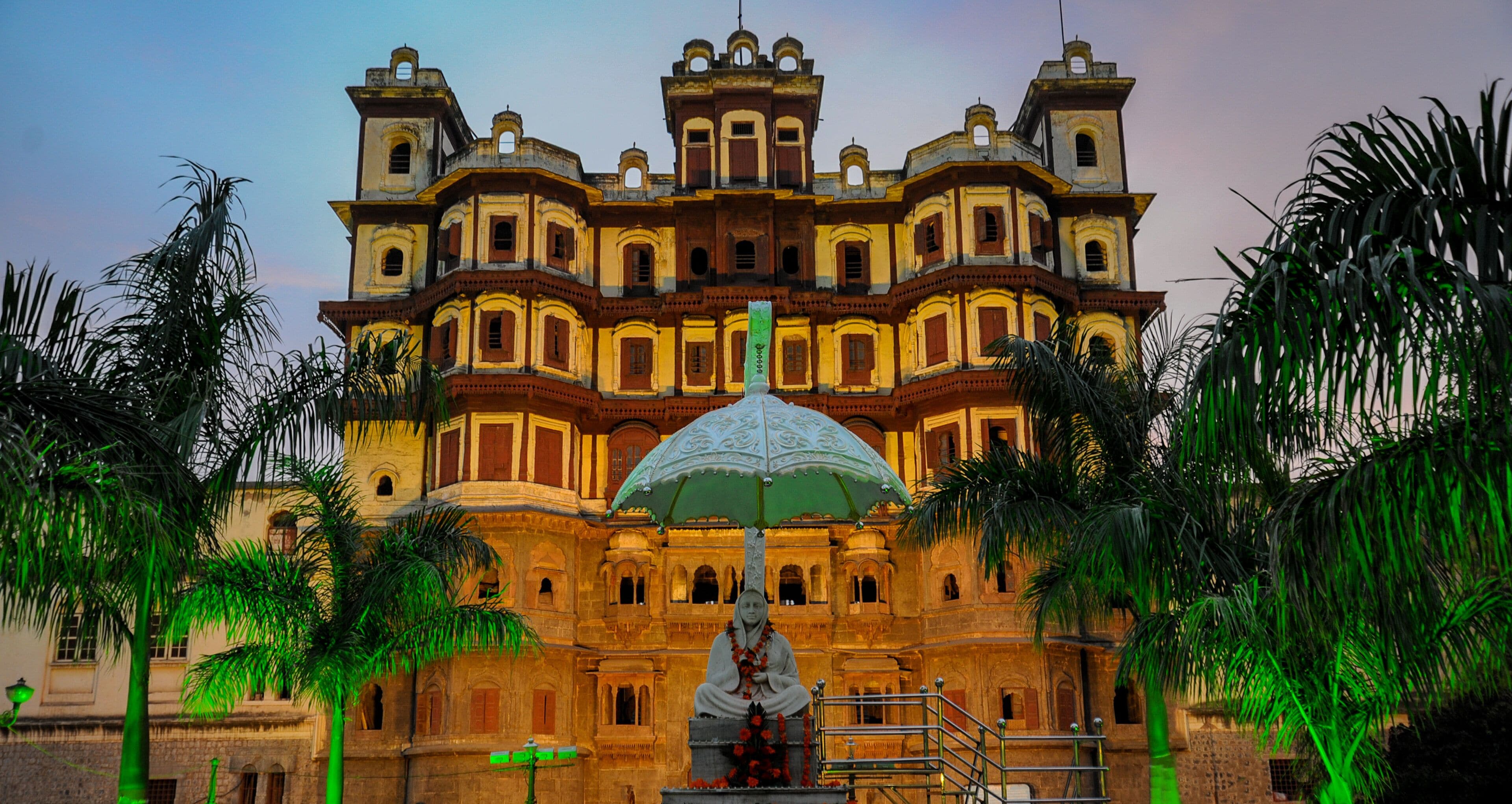
Indore – Where Holkar Grandeur Meets India's Street-Food Capital
Indore is the largest city of Madhya Pradesh and a vibrant destination where royal heritage, historic architecture, bustling markets, temples and legendary street food come together. The city developed strongly under the Holkar dynasty and continues to preserve that legacy through its palaces, monuments and cultural traditions.
From the historic Rajwada and magnificent Lal Bagh Palace to the food-filled lanes of Sarafa and Chappan Dukan, Indore offers a lively mix of history, culture, shopping and modern city life.
History of Indore
Indore's history is closely associated with the Holkar dynasty of the Maratha Empire. Malhar Rao Holkar established the dynasty's influence in the region, while later rulers played an important role in the development of the city.
Rajwada, constructed by the Holkars, became one of the most recognizable symbols of their rule. The city later came under British influence following the Maratha conflicts of the early 19th century.
Ahilyabai Holkar's Legacy
Ahilyabai Holkar remains one of the most respected figures associated with the Holkar tradition. Her reign is remembered for administration, public works and contributions to religious and architectural heritage across India.
Indore Under British Influence
After the defeat of the Holkars in the Third Anglo-Maratha War of 1817–1818, British influence increased in the region. Indore continued to develop as an important political and commercial centre before becoming part of independent India.
Geography of Indore
Indore is located in the western part of Madhya Pradesh on the Malwa Plateau. The city stands at an elevation of roughly 550 metres and lies between the Gambhir and Khan river systems.
The district combines an urban landscape with agricultural areas, low hills and scenic destinations toward Mhow and the surrounding countryside.
Malwa Landscape
The city's location in the Malwa region has influenced its climate, agriculture, cuisine and cultural identity. The surrounding countryside becomes particularly green during the monsoon.
Culture and Traditions of Indore
Indore has a cosmopolitan culture shaped by its Maratha heritage, Malwa traditions and modern urban lifestyle. Religious celebrations, food culture, markets and public festivals form an important part of everyday life.
Holkar Cultural Heritage
The legacy of the Holkars remains visible in the city's palaces, temples, monuments and public spaces. Rajwada and the city's historic neighbourhoods are especially important to this heritage.
Food Culture
Food is one of Indore's strongest cultural identities. The city's night-time food scene, especially around Sarafa Bazaar, is famous for combining traditional snacks, sweets and innovative local preparations.
Architecture of Indore
Indore's architecture reflects several historical influences, particularly Maratha, Mughal, European and Indo-Gothic styles.
Rajwada
Rajwada, also known as Holkar Palace or Old Palace, is a seven-storey historic structure built by the Holkars. Its lower levels are made largely of stone while the upper portions use wood, creating a distinctive architectural appearance.
Lal Bagh Palace
Lal Bagh Palace is one of Indore's grandest historic buildings. Built for the Holkar dynasty, it combines European architectural influences with elaborate interiors, landscaped gardens, chandeliers, Belgian glass and other decorative features.
Gandhi Hall is an important Indo-Gothic landmark of Indore. Originally known as King Edward Hall, it was constructed in the early 20th century and renamed after Mahatma Gandhi following independence.
Heritage and Modern Cityscape
Indore's historic buildings stand alongside modern commercial districts, creating a cityscape where royal-era architecture and contemporary urban development exist side by side.
Famous Places to Visit in Indore
Rajwada Palace
Rajwada is the most iconic historical landmark in central Indore. The palace stands near the old markets and provides an excellent starting point for exploring the city's Holkar heritage.
Lal Bagh Palace
The magnificent Lal Bagh Palace offers a glimpse into the lifestyle of the Holkar royal family. Its European-inspired interiors and expansive grounds make it one of Indore's most impressive heritage attractions.
Khajrana Ganesh Temple
Khajrana Ganesh Temple is one of the city's most important religious sites and attracts devotees from Indore and neighbouring regions.
Kanch Mandir
Kanch Mandir, or Glass Temple, is a distinctive Jain temple decorated extensively with glass and mirror work. It is one of the city's most unusual religious landmarks.
Central Museum
The Central Museum of Indore houses archaeological and historical collections including sculptures, coins, inscriptions, weapons and other artefacts associated with Madhya Pradesh's past.
Krishna Pura Chhatri
Krishna Pura Chhatri is an ornate riverside memorial associated with the Holkar rulers. Its domes, arches and decorative stonework make it an interesting architectural stop near Rajwada.
Pitru Parvat
Pitru Parvat is known for its large statue of Lord Hanuman and panoramic views over parts of Indore.
Patalpani Waterfall
Patalpani, located in the Mhow area of Indore district, is a popular natural attraction known for its seasonal waterfall and surrounding greenery.
Gulawat Lotus Valley
Gulawat Lotus Valley is a scenic destination near Gulawat village in Hatod tehsil. During the appropriate season, the valley becomes known for its lotus-covered water bodies and peaceful countryside setting.
Choral Dam
Choral Dam near Mhow is a popular nature destination around Indore, especially for visitors looking for a quieter setting surrounded by greenery.
Famous Dishes of Indore
Indore is one of India's most celebrated food destinations, particularly for its street food and late-night food culture.
Poha and Jalebi
The classic poha-jalebi combination is one of Indore's signature breakfasts. Light, sweet and savoury flavours make it a popular way to begin the day.
Indori Sev
Indori sev is a fine, crunchy snack that is used generously in local dishes and is an essential part of Indore's food identity.
Bhutte Ka Kees
Bhutte ka kees is a traditional Malwa preparation made from grated corn cooked with spices and milk. It is one of the city's most distinctive regional dishes.
Garadu
Garadu is a popular winter street-food snack made from fried yam pieces seasoned with spices and lemon.
Dahi Vada
Indori dahi vada combines soft lentil dumplings with yogurt, chutneys and local seasonings for a refreshing street-food experience.
Sabudana Khichdi
Sabudana khichdi is another popular local favourite, especially during fasting periods, and is commonly served with peanuts and curd.
Malpua and Shikanji
Traditional sweets and cooling drinks such as malpua and Indori-style shikanji add to the city's famous food trail.
Famous Personalities of Indore
Ahilyabai Holkar
Ahilyabai Holkar is one of the most important historical figures associated with the Holkar tradition. Her administrative and cultural legacy continues to influence Indore's identity.
Malhar Rao Holkar
Malhar Rao Holkar was the founder of the Holkar dynasty and played a major role in establishing the dynasty's influence in the Malwa region.
Lata Mangeshkar
Lata Mangeshkar, one of India's most celebrated playback singers, was born in Indore and remains one of the city's most internationally recognized cultural personalities.
Festivals of Indore
Rangpanchami
Rangpanchami is one of Indore's most distinctive celebrations. The festival is associated with colourful processions and traditional celebrations following Holi.
Ganesh Chaturthi
Ganesh Chaturthi is celebrated widely across the city with decorated pandals, cultural programmes and devotional gatherings.
Navratri
Navratri brings devotional activities, temple celebrations and cultural events throughout Indore.
Diwali
During Diwali, markets and historic parts of the city are decorated with lights, while families celebrate with traditional sweets and prayers.
Things to Do in Indore
- Explore the royal heritage of Rajwada.
- Visit the grand Lal Bagh Palace.
- Seek blessings at Khajrana Ganesh Temple.
- Explore the mirror-covered interiors of Kanch Mandir.
- Visit the Central Museum to learn about regional history.
- Explore Sarafa Bazaar for Indore's famous night-time food culture.
- Try local favourites such as poha-jalebi, bhutte ka kees and garadu.
- Visit Pitru Parvat and its monumental Hanuman statue.
- Take a nature trip to Patalpani or Choral Dam.
- Visit Gulawat Lotus Valley during the suitable season.
Where to Eat, Shop, and Stay in Indore
Where to Eat
Sarafa Bazaar is the city's most famous destination for experiencing Indore's street-food culture. Chappan Dukan is another popular food and shopping area offering a wide range of snacks, sweets and modern food options.
Where to Shop
The markets around Rajwada, Khajuri Bazaar and the old city are useful for textiles, traditional clothing, jewellery, handicrafts, snacks and everyday shopping.
Where to Stay
Indore offers accommodation across different budgets, from economical hotels near the railway station and central markets to upscale properties around Vijay Nagar and other modern commercial areas.
What is Indore Famous For?
Indore is famous for Holkar heritage, Rajwada Palace, Lal Bagh Palace, its legendary street food, Sarafa Bazaar, Chappan Dukan and vibrant commercial culture.
The city is also known for its temples, historic architecture and access to natural attractions around Mhow and the wider Indore district.
Best Time to Visit Indore
The best time to visit Indore is generally from October to March, when temperatures are more comfortable for sightseeing, walking through markets and visiting outdoor attractions.
July to September can be attractive for visitors interested in greenery, waterfalls and monsoon landscapes, particularly around Patalpani, Choral and Gulawat.
How to Reach Indore
By Air
Devi Ahilyabai Holkar Airport is the city's main airport and provides air connectivity with major Indian cities.
By Train
Indore is well connected by rail with major cities across Madhya Pradesh and India. Indore Junction is the principal railway station serving the city.
By Road
Indore has extensive road connectivity with cities including Bhopal, Ujjain, Dewas, Dhar, Ratlam and Khandwa. Buses, taxis and private vehicles make road travel convenient.
Nearby Places to Explore
Ujjain
Ujjain is an important pilgrimage city on the Shipra River, famous for Mahakaleshwar Jyotirlinga and its ancient religious heritage.
Mandu
Mandu is a historic hilltop city known for Afghan-style architecture, palaces, gateways, mosques and romantic legends associated with Baz Bahadur and Rani Roopmati.
Maheshwar
Maheshwar is a beautiful Narmada-side heritage town known for Ahilyabai Holkar's fort, temples, ghats and distinctive Maheshwari handloom traditions.
Omkareshwar
Omkareshwar is a major pilgrimage destination on the Narmada and home to one of India's twelve Jyotirlingas.
Mhow
Mhow is a historic cantonment town in Indore district and is associated with the birthplace memorial of Dr. B. R. Ambedkar.
Patalpani and Choral
The Mhow region provides easy access to natural attractions such as Patalpani Waterfall and Choral Dam, making it a useful extension to an Indore city itinerary.
Best Duration for an Indore Trip
2 days are enough for the main city attractions, including Rajwada, Lal Bagh Palace, temples, museums and the famous food markets.
A 3-day trip allows additional time for Patalpani, Choral, Gulawat or other attractions around the city.
For a broader Malwa itinerary including Ujjain, Mandu, Maheshwar or Omkareshwar, plan around 4 to 6 days depending on the number of destinations.
Travel Tips for Indore
- Start heritage sightseeing early to avoid the strongest afternoon heat.
- Keep an evening free for Sarafa Bazaar and local street food.
- Try regional dishes in small local eateries rather than limiting your food experience to restaurants.
- Carry comfortable footwear for exploring Rajwada, markets and temples.
- Keep additional time for traffic when travelling across the city during busy hours.
- During the monsoon, check local conditions before visiting waterfalls and reservoirs.
- Respect photography restrictions at religious and heritage sites where applicable.
- For a richer cultural experience, combine Indore with nearby Malwa heritage destinations.
Why Visit Indore?
Indore is an excellent destination for travelers who want to experience history, royal architecture, temples, shopping and food in one city.
The city's greatest strength is its variety. You can explore a Holkar palace in the morning, visit a temple or museum in the afternoon and spend the evening discovering some of India's most celebrated street food.
Its location also makes Indore an excellent base for exploring the wider Malwa region, including Ujjain, Mandu, Maheshwar and Omkareshwar.
Conclusion
Indore combines the grandeur of the Holkar era with the energy of a modern Indian city. Its historic palaces, temples, markets, food culture and surrounding natural attractions make it one of the most diverse destinations in Madhya Pradesh.
Whether you visit for Rajwada and Lal Bagh Palace, Indori street food, religious heritage, shopping or nearby Malwa destinations, Indore offers plenty of reasons to stay longer and explore beyond its famous food scene.
"Travel is the only thing you buy that makes you richer."