Bagalkot, Karnataka: A Complete Travel Guide
Bagalkot, located in the northern part of Karnataka, is a remarkable destination where ancient history, magnificent temple architecture, spiritual traditions, North Karnataka cuisine, handicrafts, and river landscapes come together. The district is especially famous for its connection with the Chalukya dynasty and for some of India's most important early medieval architectural monuments.
From the spectacular rock-cut caves of Badami and the experimental temple architecture of Aihole to the UNESCO World Heritage Site of Pattadakal and the spiritual importance of Kudalasangama, Bagalkot offers an extraordinary journey through Karnataka's cultural and architectural heritage.
The district also has a strong living culture. Traditional North Karnataka food, colourful festivals, handloom traditions, historic towns, temple fairs, and rural landscapes add another dimension to the travel experience.
| Quick Fact | Details |
|---|---|
| State | Karnataka |
| District Headquarters | Bagalkot |
| Region | North Karnataka |
| Area | About 6,583 sq. km |
| Major Rivers | Krishna, Ghataprabha and Malaprabha |
| Major Heritage Sites | Badami, Aihole and Pattadakal |
| Famous Pilgrimage Site | Kudalasangama |
| Primary Language | Kannada |
1. Introduction
Bagalkot is one of the most historically significant districts of Karnataka. Situated in North Karnataka, the district is known for its deep association with the Chalukyas, whose architectural and cultural achievements shaped the history of the Deccan.
The district is particularly attractive to history lovers because several important archaeological sites are located within a relatively compact region. Badami, Aihole and Pattadakal together form one of the most fascinating temple and architectural circuits in India.
Bagalkot is not limited to ancient monuments. The district also includes religious centres such as Kudalasangama, scenic locations around the Krishna and Malaprabha river systems, traditional towns, agricultural landscapes and vibrant cultural traditions.
For travellers interested in history, architecture, spirituality, photography, archaeology, food and rural culture, Bagalkot offers a diverse travel experience.
2. History of Bagalkot
Ancient Beginnings
Bagalkot has a history that goes back far beyond the medieval period. Archaeological investigations in the district have identified numerous prehistoric sites, including Middle Palaeolithic localities in the Kalagdi basin. Evidence of prehistoric habitation has also been discovered around the Malaprabha valley and near Pattadakal.
Archaeological discoveries include stone tools, ancient settlements, megalithic remains, early brick structures and coins associated with later historical periods. These findings demonstrate that the region has supported human habitation for thousands of years.
The Chalukya Era
The most important chapter in Bagalkot's history began with the rise of the Chalukyas of Badami during the 6th century CE.
Chalukya ruler Pulakeshin I established Vatapi, present-day Badami, as an important political centre, while Bagalkot and its surrounding areas became closely connected with the growing Chalukyan kingdom.
The period witnessed remarkable developments in temple architecture, sculpture and rock-cut monuments. Badami, Aihole and Pattadakal became important centres for architectural experimentation and religious art.
During the reign of Pulakeshin II, the Chalukyan kingdom became one of the most powerful political forces in the Deccan. The famous Aihole inscription records important events from this period.
Later Chalukyas and Medieval Kingdoms
After the decline of the Badami Chalukyas, the region came under the influence of several powerful dynasties, including the Rashtrakutas and the Kalyani Chalukyas. The later Chalukyas continued the architectural traditions that had developed in the region.
The region subsequently experienced the influence of the Vijayanagara Empire, Adil Shahi rulers and the Marathas before coming under British administration.
Bagalkot After Independence
Following India's independence, the region became part of Mysore State, which was renamed Karnataka in 1973.
Bagalkot district was created as a separate district in 1997 after being carved out of the former Bijapur district.
Today, Bagalkot is one of Karnataka's important historical and cultural districts.
3. Geography and Climate
Geographical Location
Bagalkot is situated in northern Karnataka. The district is bordered by Vijayapura, Gadag, Raichur, Koppal and Belagavi.
The district forms part of the broader North Karnataka landscape, which is characterised by relatively dry conditions, open agricultural areas, rocky terrain and river valleys.
Major Rivers
Three important rivers associated with the district are:
- Krishna River
- Ghataprabha River
- Malaprabha River
The meeting of rivers at places such as Kudalasangama gives the district considerable religious and geographical significance.
Climate
Bagalkot experiences a predominantly dry and warm climate. Summers can become quite hot, with temperatures reaching around 42°C during particularly hot periods. Winters are comparatively pleasant, with minimum temperatures commonly around the mid-teens.
| Season | General Conditions |
|---|---|
| Summer | Hot and dry, especially during April and May |
| Monsoon | Warm with periodic rainfall and greener landscapes |
| Winter | Cooler mornings and pleasant sightseeing conditions |
4. Culture and Traditions
Bagalkot's culture reflects the traditions of North Karnataka and its long history of interaction between different religious, social and artistic traditions.
Kannada Heritage
Kannada is the principal language of the district. Folk traditions, religious literature, music, temple festivals and village customs form an important part of local cultural life.
North Karnataka Traditions
Traditional life in Bagalkot has historically been influenced by agriculture, temple institutions and village communities. Traditional clothing, folk performances, local fairs and religious celebrations remain important parts of the region's cultural identity.
Handloom Traditions
The broader Bagalkot region is closely associated with traditional textile production. Ilkal sarees, known for their distinctive designs and traditional weaving techniques, are among the important handloom products associated with the region.
Holi in Bagalkot
Bagalkot has a particularly vibrant tradition of celebrating Holi. The local celebration is known as Holi Habba and traditionally continues for several days.
The celebrations begin with Kama Dahanam, followed by days of playing with colours. Several traditional localities of Bagalkot become important centres of celebration, bringing people from different communities together.
5. Architecture of Bagalkot
Architecture is perhaps the most distinctive feature of Bagalkot's tourism identity.
The district contains some of the finest surviving examples of early Chalukyan architecture, including rock-cut caves, structural temples, ornate sculptures and experimental architectural forms.
Rock-Cut Architecture
The Badami cave temples demonstrate the extraordinary ability of Chalukyan craftsmen to transform natural sandstone cliffs into elaborate religious spaces.
The caves contain sculptures associated with Shaivism, Vaishnavism and Jainism, demonstrating the religious diversity of the period.
Temple Architecture at Aihole
Aihole is particularly important because it represents a period of experimentation in Indian temple architecture. Numerous temples were constructed in different architectural forms, making the site extremely valuable for understanding the evolution of temple design.
Pattadakal's Architectural Synthesis
Pattadakal represents an extraordinary combination of architectural traditions. Temples display both northern Nagara and southern Dravidian influences.
The monuments demonstrate how architects experimented with different styles before later traditions became more established.
6. Famous Places and Tourist Places in Bagalkot
1. Badami Cave Temples
The Badami Cave Temples are among Karnataka's most famous historical monuments. Carved into red sandstone cliffs, the caves contain remarkable sculptures and religious imagery.
There are four principal cave temples, representing Hindu and Jain traditions. The first cave is particularly famous for its dramatic depiction of Shiva in a dancing form.
2. Badami Fort
Located on the rocky hills above Badami, the fort provides excellent views of the surrounding landscape and the historic town.
Several temples and ancient structures are associated with the hill complex.
3. Agastya Lake
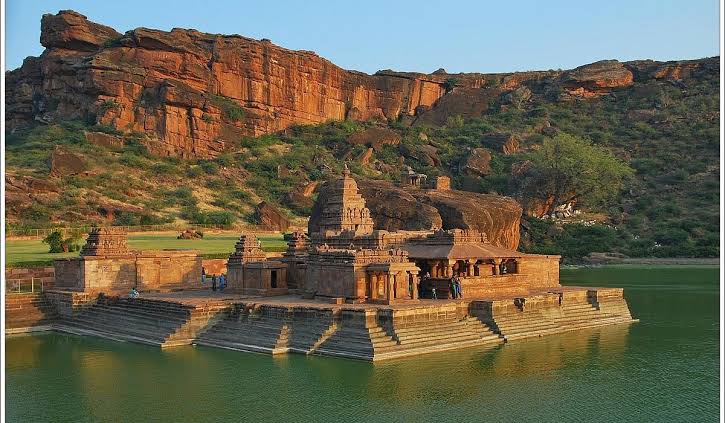
The historic lake below the Badami cliffs forms one of the most recognisable landscapes in the region. The surrounding temples, sandstone cliffs and water create an impressive setting for photography.
4. Aihole
Aihole is one of the most important archaeological destinations in Karnataka and is often described as a cradle of early temple architecture.
The site contains numerous temples and monuments spread across the village and surrounding areas.
Important monuments include:
- Durga Temple
- Lad Khan Temple
- Meguti Jain Temple
- Ravanaphadi Cave Temple
- Huchimalli Temple
- Ramalingeswara Temple
5. Pattadakal
Pattadakal is the architectural jewel of Bagalkot and a UNESCO World Heritage Site.
The monument complex contains temples representing different phases of Chalukyan architectural development. The Virupaksha Temple, Mallikarjuna Temple and Papanatha Temple are among the most important structures.
Pattadakal is especially valuable because it demonstrates the coexistence and experimentation of northern and southern Indian architectural styles.
6. Mahakuta
Mahakuta is an important Shaiva pilgrimage centre located near Badami. The temple complex is associated with early Chalukyan architecture and contains temples surrounding a natural spring and sacred water tank.
The peaceful surroundings make Mahakuta a good addition to a Badami heritage itinerary.
7. Kudalasangama
Kudalasangama is one of the most important spiritual destinations in Bagalkot district.
The site is associated with Basavanna, the 12th-century social reformer, philosopher and founder of the Lingayat tradition. The Aikya Mantapa is associated with Basavanna's final resting place.
The sacred landscape is also connected with the confluence of the Krishna and Malaprabha rivers.
8. Almatti Dam and Reservoir
Almatti is an important water-resource and recreational destination in the region. The reservoir landscape provides opportunities for sightseeing, photography and enjoying the surrounding open countryside.
9. Chikka Sangama
Chikka Sangama is another important river confluence associated with the Krishna and Ghataprabha river system. The Sangamanatha temple adds religious and architectural interest to the site.
10. Navanagar Museum
The museum in Navanagar provides an opportunity to explore objects and exhibits connected with the culture, history and artistic traditions of Bagalkot and its surrounding region.
11. Banashankari Temple
The Banashankari Temple near Badami is an important religious destination and is particularly well known for its annual festival and temple traditions.
7. Famous Dishes and Local Food
Food in Bagalkot reflects the hearty and flavourful culinary traditions of North Karnataka. Local cuisine makes extensive use of jowar, peanuts, lentils, vegetables, chillies, jaggery and traditional spice blends.
Jolada Rotti
Jolada rotti is one of the signature foods of North Karnataka. This thin flatbread is prepared using jowar flour and is commonly served with vegetable curries, chutneys and spicy accompaniments.
Yennegai
Yennegai is a popular brinjal preparation in which small eggplants are stuffed with a spicy masala. It pairs particularly well with jolada rotti.
Shenga Holige
Shenga holige is a traditional sweet flatbread prepared with a filling of peanuts and jaggery. It is a popular sweet in the North Karnataka culinary tradition.
Karadantu
Amingad Karadantu is one of Bagalkot's most recognisable food specialities. This traditional sweet is prepared using edible gum, dry fruits, jaggery or sugar and other ingredients.
Visitors travelling through the district should consider trying locally prepared karadantu from traditional sweet shops.
Other Local Foods to Try
- Kadak Rotti
- Spicy chutney pudi
- Groundnut chutney
- Garlic chutney
- Mirchi bajji
- Khara mandakki
- Traditional North Karnataka thali
8. Famous Personalities and Historical Figures Associated with Bagalkot
Bagalkot's most prominent personalities are closely connected with its ancient kingdoms, religious movements and cultural history.
Pulakeshin I
Pulakeshin I was one of the foundational rulers of the Early Chalukya dynasty. His reign established the political importance of Vatapi, present-day Badami, and laid the foundation for the Chalukyan architectural tradition that later flourished across the region.
Pulakeshin II
Pulakeshin II was among the most powerful Chalukya rulers. His reign marked a major period of political expansion and cultural development. The famous Aihole inscription is associated with his reign.
Basavanna
Basavanna, the 12th-century philosopher, poet and social reformer, has a profound connection with Kudalasangama. The site is associated with his spiritual life and contains the Aikya Mantapa connected with him.
His Vachana literature and teachings about equality, ethical living and the dignity of work became highly influential in Karnataka's social and literary history.
Akkadevi
Akkadevi, a member of the Kalyani Chalukya royal family, was an influential historical figure associated with the region during the 11th century. Historical records indicate that she exercised administrative authority over territories under Chalukyan rule.
9. Festivals of Bagalkot
Holi Habba
Holi is celebrated with exceptional enthusiasm in Bagalkot. The local tradition includes Kama Dahanam followed by several days of colour celebrations.
Banashankari Festival
The annual festival associated with Banashankari Temple near Badami attracts devotees and visitors. Temple rituals, fairs and cultural activities form an important part of the celebration.
Pattadakal Temple Festivals
Important temples at Pattadakal host annual religious celebrations. The Virupaksha Temple Car Festival and festivals associated with the Mallikarjuna Temple are among the notable events in the local calendar.
Jatre and Temple Fairs
Traditional jatre celebrations associated with temples are an important part of rural and religious life across the district.
10. Things to Do in Bagalkot
Bagalkot is particularly rewarding for travellers who enjoy combining heritage exploration with local culture.
- Explore the ancient Badami Cave Temples.
- Walk around the historic Badami Fort.
- Enjoy the landscape around Agastya Lake.
- Spend time exploring the monuments of Aihole.
- Study Chalukyan architecture at Pattadakal.
- Visit the temples of Mahakuta.
- Experience the spiritual atmosphere of Kudalasangama.
- Visit the Aikya Mantapa associated with Basavanna.
- Enjoy the landscape around Almatti Dam.
- Try authentic North Karnataka food.
- Buy traditional regional sweets such as Amingad Karadantu.
- Explore local handloom traditions and look for Ilkal sarees.
- Attend local temple festivals and fairs when travelling during festival season.
- Photograph the sandstone architecture and surrounding landscapes.
11. Where to Eat, Shop, and Stay in Bagalkot
Where to Eat
Bagalkot city, Badami and other major tourist centres have restaurants serving South Indian, North Indian and local North Karnataka food.
For a more authentic experience, travellers should look for traditional eateries and local food establishments serving jolada rotti meals, yennegai, chutney pudi and regional snacks.
What to Shop For
- Ilkal sarees
- North Karnataka handloom products
- Amingad Karadantu
- Traditional sweets
- Local handicrafts
- Religious souvenirs
Where to Stay
Bagalkot city is suitable for travellers looking for convenient accommodation and access to the district's wider attractions.
Badami is often a better choice for travellers whose main objective is exploring the heritage circuit because it provides convenient access to Badami, Pattadakal, Aihole and Mahakuta.
For pilgrimage-focused trips, accommodation is also available around Kudalasangama, while larger cities in the surrounding region provide additional options.
12. What Is Bagalkot Famous For?
Bagalkot is famous for a combination of history, architecture, spirituality, food and traditional culture.
| Known For | Why It Is Important |
|---|---|
| Badami | Ancient rock-cut cave temples and Chalukyan heritage |
| Aihole | Early temple architecture and archaeological monuments |
| Pattadakal | UNESCO World Heritage Site and Chalukyan temple complex |
| Kudalasangama | Important Lingayat pilgrimage centre associated with Basavanna |
| Chalukyan Heritage | Historic centre of early Deccan temple architecture |
| Amingad Karadantu | Traditional North Karnataka sweet |
| Ilkal Sarees | Traditional regional handloom heritage |
| Holi Habba | Distinctive multi-day local Holi tradition |
13. Best Time to Visit Bagalkot
The most comfortable period for exploring Bagalkot is generally from October to February, when temperatures are more suitable for outdoor sightseeing.
October to February
This is the most comfortable season for visiting Badami, Aihole, Pattadakal and other heritage destinations. The cooler weather makes walking around monuments much easier.
March to May
Summer can become very hot, particularly during April and May. Travellers visiting during this period should plan sightseeing during the morning and late afternoon and carry sufficient drinking water.
June to September
The monsoon brings periodic rainfall and can give the landscape a different appearance. However, travellers should account for changing weather conditions while planning outdoor sightseeing.
| Season | Travel Experience |
|---|---|
| October – February | Best overall period for heritage sightseeing |
| March – May | Hot; suitable with early-morning sightseeing |
| June – September | Monsoon conditions; greener surroundings |
14. How to Reach Bagalkot
By Air
Bagalkot does not have a major commercial airport of its own. Travellers can use airports at nearby major cities such as Hubballi and Belagavi and continue the journey by road or rail.
By Train
Bagalkot Railway Station provides rail connectivity with important destinations in Karnataka and other parts of India.
Rail travel can be a convenient option for travellers coming from Bengaluru and other major cities.
By Road
Road travel is one of the most practical ways to explore Bagalkot district, especially because many major attractions are spread across different towns and villages.
Bagalkot has road connections with major North Karnataka cities including Vijayapura, Hubballi and Belagavi.
Heritage Circuit Travel
For tourists, a road trip covering Badami → Pattadakal → Aihole → Mahakuta is one of the best ways to explore the district's architectural heritage.
15. Nearby Places to Visit
Bagalkot's location in North Karnataka makes it possible to combine a district visit with several important destinations in neighbouring areas.
- Vijayapura: Famous for Gol Gumbaz, Ibrahim Rauza and Deccan Sultanate architecture.
- Hampi: A major UNESCO World Heritage destination associated with the Vijayanagara Empire.
- Gadag: Known for historic temples and the architectural traditions of northern Karnataka.
- Belagavi: A historic city with forts, temples and colonial-era heritage.
- Hubballi: An important commercial and transportation centre of North Karnataka.
- Gajendragad: A historic town and fort destination in the wider northern Karnataka region.
16. Best Duration for a Bagalkot Trip
A minimum of 2 days is recommended for a focused Bagalkot heritage trip, while 3 days provides a much better experience.
2-Day Itinerary
| Day | Suggested Plan |
|---|---|
| Day 1 | Badami Cave Temples, Badami Fort, Agastya Lake and Mahakuta |
| Day 2 | Pattadakal, Aihole and local sightseeing |
3-Day Itinerary
| Day | Suggested Plan |
|---|---|
| Day 1 | Badami Caves, Badami Fort and Agastya Lake |
| Day 2 | Pattadakal, Aihole and Mahakuta |
| Day 3 | Kudalasangama, Almatti Dam and Bagalkot city |
Travellers interested deeply in archaeology, photography and architecture may prefer 3 to 4 days to explore the district without rushing.
17. Travel Tips for Bagalkot
- Plan heritage sightseeing during the cooler morning and evening hours.
- Carry drinking water, especially during summer.
- Wear comfortable footwear because several monuments require considerable walking.
- Carry sun protection such as sunglasses, a hat and sunscreen.
- Allow sufficient time for Badami, Aihole and Pattadakal rather than treating them as quick photo stops.
- Respect temple rules and dress appropriately at religious sites.
- Do not touch or climb protected sculptures and monuments.
- Try authentic North Karnataka food during the trip.
- Buy regional sweets and handloom products from reliable local shops.
- Check local conditions and festival dates before planning special-event travel.
- Start early if you want to cover several heritage sites in one day.
- Keep extra time for photography, particularly around Badami's sandstone landscapes.
18. Why Visit Bagalkot?
Bagalkot is one of the best destinations in Karnataka for travellers who want to experience India's architectural history beyond the most crowded tourist circuits.
The district brings together an exceptional collection of historical monuments within a relatively accessible region. Badami's rock-cut caves demonstrate the technical skill of ancient craftsmen, Aihole reveals the experimental phase of temple architecture, and Pattadakal presents a mature architectural tradition recognised internationally.
Beyond architecture, Kudalasangama provides a deeply spiritual experience connected with Basavanna and the Lingayat tradition. Local festivals, North Karnataka cuisine, handloom traditions and rural landscapes give the journey a strong cultural character.
Bagalkot is especially worth visiting if you enjoy:
- Ancient Indian history
- Chalukyan architecture
- Archaeology
- Temple architecture
- Photography
- Spiritual tourism
- North Karnataka cuisine
- Traditional festivals
- Handloom and local crafts
- Road trips and heritage circuits
19. Conclusion
Bagalkot is a destination where the history of Karnataka can be experienced through stone, sculpture, temples, rivers, food and living traditions. The district's association with the Chalukyas has left behind an extraordinary architectural legacy that continues to attract historians, archaeologists, photographers and travellers from around the world.
The journey through Badami, Aihole and Pattadakal offers an opportunity to understand how Indian temple architecture evolved through experimentation and artistic innovation. Meanwhile, Kudalasangama connects the region with the spiritual and social legacy of Basavanna.
Whether you are exploring ancient caves, admiring Chalukyan temples, tasting Amingad Karadantu, enjoying North Karnataka cuisine, discovering local handloom traditions or experiencing the energy of a traditional festival, Bagalkot offers something different from the conventional Karnataka travel experience.
For anyone planning a heritage-focused journey through Karnataka, Bagalkot deserves a prominent place on the itinerary. It is not simply a district filled with ancient monuments—it is a living landscape where history, architecture, spirituality and North Karnataka culture continue to meet.
"Travel is the only thing you buy that makes you richer."