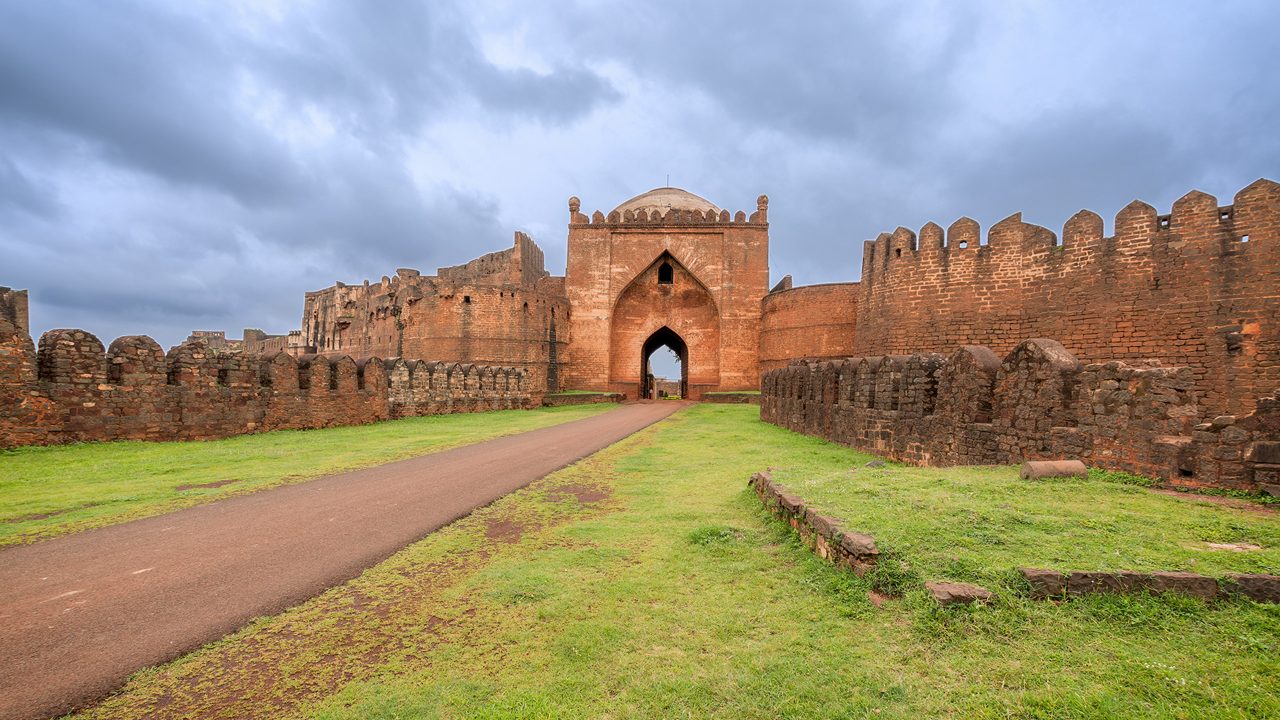
Bidar, Karnataka: A Complete Travel Guide
Bidar is a historic city and district in the northeastern part of Karnataka, situated on the Deccan Plateau. Known for its magnificent forts, medieval monuments, religious sites, traditional handicrafts and rich cultural heritage, Bidar offers a fascinating combination of history, architecture, spirituality and local traditions.
The city once served as the capital of the powerful Bahmani Kingdom and later became an important centre under the Barid Shahi rulers. Its heritage landscape contains forts, palaces, tombs, mosques, gateways and traditional water-management systems that reflect the cultural influences of the Deccan, Persia, Turkey and India.
Bidar is also internationally associated with Bidriware, the famous black-and-silver metal craft that takes its name from the city. Along with its historical monuments, places such as Guru Nanak Jhira Sahib, Papnash Shiva Temple, Basavakalyan and the Bahmani tombs make Bidar an attractive destination for heritage and cultural tourism.
| Quick Information | Details |
|---|---|
| State | Karnataka |
| Region | North-Eastern Karnataka / Deccan Plateau |
| District Headquarters | Bidar |
| Area | Approximately 5,448 sq. km |
| Population | Approximately 17.03 lakh as per Census 2011 |
| Major Identity | Bidar Fort, Bahmani Heritage and Bidriware |
| Best Time to Visit | October to March |
1. Introduction
Bidar is one of Karnataka's most fascinating destinations for travellers interested in history, architecture and culture. Located at a relatively high elevation on the Deccan Plateau, the district has a distinctive landscape and a pleasant winter climate compared with many parts of the surrounding region.
The historical importance of Bidar increased dramatically during the medieval period when the Bahmani rulers shifted their capital here. The city subsequently developed into an important political, cultural and architectural centre of the Deccan.
Today, visitors can explore the enormous Bidar Fort, admire the Bahmani and Barid Shahi tombs, experience the spiritual atmosphere of Guru Nanak Jhira Sahib, discover the traditional art of Bidriware and travel to Basavakalyan, a place strongly associated with the history of the Sharana movement.
For travellers looking for a destination that combines history, religious heritage, traditional craftsmanship and relatively unexplored attractions, Bidar is an excellent choice.
2. History
Ancient and Early History
The Bidar region has a long history extending across several periods of the Deccan. Its location on the plateau made it strategically important to different ruling powers.
The name Bidar is commonly associated with the word bidiru, meaning bamboo. Historical references suggest that the area was once associated with bamboo vegetation and may have been known by forms such as Bidarooru before evolving into the present name Bidar.
Bidar and the Bahmani Kingdom
The most important chapter in Bidar's medieval history began with the Bahmani Kingdom. Bidar became the capital of the Bahmani rulers after Sultan Ahmad Shah Bahmani shifted the capital from Gulbarga to Bidar in the early 15th century.
This transformation turned Bidar into an important political and cultural centre. Fortifications, palaces, mosques, gardens, educational institutions and royal tombs were constructed during this period.
The Barid Shahi Period
After the decline of the Bahmani Kingdom, Bidar came under the rule of the Barid Shahi dynasty. The rulers continued the city's architectural traditions and added several monuments and tombs.
Later Deccan Powers
Over subsequent centuries, Bidar came under the influence of other major powers of the Deccan, including the Adil Shahis, Mughals and the Nizams. Each period contributed to the region's architectural and cultural character.
Basavakalyan and the Sharana Tradition
The wider Bidar region is also closely connected with the history of the 12th-century Sharana movement. Basavakalyan, historically known as Kalyana, became an important centre associated with Basavanna, Allama Prabhu, Channabasavanna and other Sharanas.
The intellectual and social traditions associated with this movement played a significant role in the cultural history of Karnataka.
3. Geography and Climate
Geography
Bidar is situated in the northeastern part of Karnataka on the Deccan Plateau. The district covers approximately 5,448 square kilometres and has a predominantly plateau landscape.
The terrain includes gently undulating areas, rocky formations, agricultural land and valleys. The district's elevated position contributes to its comparatively pleasant winter conditions.
Climate
Bidar has a generally dry climate with a distinct monsoon season. Summer begins around February and temperatures rise considerably during April and May. The southwest monsoon generally continues from June through September.
| Season | Approximate Period | Weather |
|---|---|---|
| Summer | February to May | Hot and mostly dry |
| Monsoon | June to September | Rainy and greener |
| Post-Monsoon | October to November | Comfortable and pleasant |
| Winter | December to February | Cool and comfortable |
December is generally among the coolest months, while May is usually the hottest period. The best conditions for sightseeing are normally found between October and March.
4. Culture and Traditions
Bidar's culture reflects its position at the crossroads of several historical and cultural traditions. Kannada is an important language of the region, while the district also reflects influences from neighbouring Maharashtra and Telangana.
The centuries of Bahmani and Barid Shahi rule introduced strong Persian, Turkish and Indo-Islamic influences into local architecture, art and traditions.
Religious Diversity
Bidar has a diverse religious heritage. Hindu temples, Sikh pilgrimage sites, Islamic monuments and traditional fairs exist within the same cultural landscape.
Guru Nanak Jhira Sahib is particularly important for Sikh pilgrims, while the Bahmani tombs and other medieval monuments attract visitors interested in Islamic and Deccan heritage.
Traditional Craftsmanship
Bidriware is the most distinctive traditional craft associated with Bidar. The craft uses a dark metal base with intricate silver inlay and is traditionally produced by skilled artisans.
Traditional workshops offer visitors an opportunity to see how the craft is engraved, inlaid and finished.
Water Heritage
Bidar is also known for the historic Karez water-management system. This traditional underground water-harnessing technology uses tunnels and channels to transport groundwater and reflects the advanced engineering practices used in the medieval Deccan.
5. Architecture
Architecture is one of Bidar's greatest attractions. The city's monuments display a fascinating mixture of Indian, Persian, Turkish and Deccan architectural traditions.
Bidar Fort Architecture
Bidar Fort is a massive fortified complex built around a strategically elevated location. The fort includes gateways, defensive structures, palaces, mosques, gardens and other royal buildings.
The fortification system includes multiple defensive features, including moats and heavily protected gateways. The city's historic fortifications were carefully planned to protect the royal citadel as well as the surrounding settlement.
Bahmani Tomb Architecture
The Bahmani tombs at Ashtoor are characterized by large domes, monumental proportions, arches, decorative niches, stucco work and painted interiors.
The monuments demonstrate the evolution of Deccan Islamic architecture and the interaction between Persian-inspired forms and local construction traditions.
Barid Shahi Architecture
The tombs of the Barid Shahi rulers display another important phase of Bidar's architectural development. Decorative arches, domes, tile work, ornamental details and large platforms are prominent features.
Indo-Islamic Architectural Character
Across Bidar, travellers can see the influence of different artistic traditions rather than a single architectural style. This makes the city particularly interesting for photographers, architecture enthusiasts and heritage travellers.
6. Famous Places / Tourist Places
Bidar Fort
Bidar Fort is the most important historical landmark in the district. The fort was developed as a major royal complex after the Bahmani capital was shifted to Bidar.
The huge fortification, gateways, palaces, mosque, gardens and defensive structures make it one of the most impressive heritage attractions in northern Karnataka.
Rangin Mahal
Rangin Mahal is located within the Bidar Fort complex and is known for its decorative interior. The building reflects the sophisticated artistic traditions of the medieval Deccan.
Solah Khamba Mosque
The Solah Khamba Mosque is another important structure within the fort complex. Its name is associated with the prominent rows of columns supporting the structure.
Gumbaz Darwaza and Sharza Darwaza
These impressive gateways demonstrate the defensive planning and monumental architectural style of Bidar Fort. Their massive construction reflects the strategic importance of the city during the medieval period.
Bahmani Tombs at Ashtoor
Located near Bidar, Ashtoor contains a remarkable group of Bahmani royal tombs. Several large mausoleums stand together in an impressive heritage landscape.
The tomb of Ahmad Shah Al Wali Bahmani is particularly notable for its decoration, while the tomb of Alauddin Shah II is distinguished by its architectural scale and decorative details.
Chaukhandi of Hazrat Khalil Ullah
Chaukhandi is an important monument associated with Hazrat Khalil Ullah, who was regarded as a spiritual preceptor of Bahmani princes. Its elevated position and distinctive multi-sided structure make it a notable stop on a Bidar heritage tour.
Barid Shahi Tombs
The Barid Shahi tomb complex contains several royal mausoleums associated with the Barid Shahi dynasty. The monuments display large domes, arches, ornamental work and a distinctive Deccan character.
Guru Nanak Jhira Sahib Gurudwara
Guru Nanak Jhira Sahib is one of Bidar's most important religious attractions and a major Sikh pilgrimage destination in South India.
According to tradition, Guru Nanak visited the area during a period of famine, after which a spring emerged from the rocky hillside. The spring continues to be an important part of the religious significance of the site.
Papnash Shiva Temple
Papnash Shiva Temple is situated in a scenic valley and is associated with a natural spring and temple pond. Local tradition connects the Shiva Linga with the Ramayana tradition.
The temple attracts particularly large numbers of devotees during Maha Shivaratri.
Basavakalyan Fort
Basavakalyan lies in the Bidar district and is historically associated with the Kalyana Chalukyas and the Sharana movement. The fort, museum and sites connected with Basavanna and other Sharanas make it an important cultural destination.
Anubhava Mantapa
Basavakalyan is associated with the Anubhava Mantapa tradition and the philosophical discussions of the 12th-century Sharanas. The institution is remembered for its emphasis on spiritual inquiry, dialogue and social thought.
Karanja Dam
Karanja Dam is an important irrigation project constructed across the Karanja River. The surrounding landscape provides an alternative to the historic monuments and offers a more relaxed experience for travellers interested in nature and rural scenery.
Dev Dev Vana
Dev Dev Vana is a botanical and eco-tourism destination near Bidar. The site contains a collection of medicinal plants and provides a quieter experience away from the city's historic monuments.
Chaubara
Chaubara is a historic cylindrical watchtower located in Bidar town. The tower rises approximately 22 metres and historically provided a commanding view of the surrounding plateau.
7. Famous Dishes / Local Food
Bidar's food culture reflects its location in North Karnataka and its historical connections with the Deccan. Local cuisine combines traditional Karnataka dishes with culinary influences from neighbouring regions.
Popular Foods to Try
- Bidri Biryani: A flavourful rice and meat preparation associated with the local Deccan food culture.
- Bidri Kalia: A traditional meat preparation found in the region.
- Jowar Roti: A staple North Karnataka flatbread made from sorghum flour.
- Allu Susula: A popular breakfast or snack preparation made using puffed rice and tempering.
- Idli and Dosa: Common South Indian breakfast choices available throughout the city.
- North Karnataka Meals: Traditional meals often include roti, vegetables, dal, chutneys and other regional preparations.
- Biryani and Deccan-style meat dishes: Reflecting Bidar's medieval and regional culinary influences.
Visitors should also explore local eateries and traditional food establishments around the old city and major market areas to experience the everyday flavours of Bidar.
8. Famous Personalities
Basavanna
Basavanna, also known as Basaveshvara, is one of the most important historical and spiritual figures associated with the cultural history of the Bidar region through Basavakalyan and the 12th-century Sharana movement.
His teachings emphasized spiritual equality, social responsibility, ethical living and devotion, and his Vachana literature remains an important part of Kannada cultural heritage.
Allama Prabhu
Allama Prabhu was a major philosopher and mystic of the Sharana movement and is strongly associated with the intellectual traditions of Kalyana or Basavakalyan.
Channabasavanna
Channabasavanna was another prominent figure of the Sharana tradition and played an important role in the intellectual and literary development of the movement associated with Kalyana.
Ahmad Shah Bahmani
Sultan Ahmad Shah Bahmani was one of the most significant rulers associated with Bidar's medieval history. During his reign, Bidar developed into a major political and cultural centre and became the Bahmani capital.
Bidriware Artisans
Rather than being associated with one individual, Bidriware represents the work of generations of craftsmen who have preserved the distinctive metalworking tradition of Bidar.
9. Festivals
Bidar Utsav
Bidar Utsav is a cultural celebration showcasing the historical and artistic heritage of the city. Events may include music, dance, cultural performances, food, traditional arts and craft displays, often centred around the atmosphere of Bidar Fort.
Veerabhadreshwara Jatra
The Veerabhadreshwara Jatra at Humnabad is one of the important religious fairs of the district. It is generally held during January or February and attracts large numbers of devotees.
Ashtoor Urs / Jatra
The Bahmani tombs at Ashtoor are associated with an annual Urs or Jatra. The event reflects the shared cultural traditions of the region and attracts visitors from different communities.
Maha Shivaratri
Maha Shivaratri is celebrated with devotion at temples throughout Bidar district, with Papnash Shiva Temple being one of the notable pilgrimage destinations.
Guru Nanak Jayanti
Guru Nanak Jayanti is particularly significant at Guru Nanak Jhira Sahib, where Sikh devotees gather for prayers and religious observances.
Other Festivals
- Ugadi
- Deepavali
- Ganesh Chaturthi
- Dussehra
- Ram Navami
- Eid celebrations
- Local temple fairs and Urs celebrations
10. Things to Do
Bidar is best experienced slowly, particularly if you enjoy history, architecture and local culture.
Explore Bidar Fort
Spend time walking through the massive fort complex and exploring its gateways, palaces, mosque, gardens and defensive structures.
Visit the Bahmani Tombs
Travel to Ashtoor and explore the monumental Bahmani mausoleums. The scale and decorative details make this one of the most rewarding heritage experiences around Bidar.
Discover Bidriware
Visit traditional Bidriware workshops and observe artisans working on the famous black-and-silver metal craft.
Visit Guru Nanak Jhira Sahib
Experience the peaceful atmosphere of the Gurudwara and learn about its historical and spiritual traditions.
Explore Basavakalyan
Take a day trip to Basavakalyan to explore its fort and sites connected with the Sharana movement.
Explore Local Markets
Bidar's traditional markets are useful places to purchase Bidriware, local handicrafts, textiles and everyday regional products.
Photography
Bidar is particularly attractive for architectural photography. Fort gateways, domes, arches, tombs and old-city structures offer numerous photographic opportunities.
Experience Local Food
Try traditional North Karnataka meals, jowar roti, local snacks and Deccan-style dishes while exploring the city.
11. Where to Eat, Shop, and Stay
Where to Eat
Bidar has a mix of local eateries, vegetarian restaurants, South Indian tiffin centres and establishments serving North Karnataka and Deccan-style food.
- Traditional local food outlets around the old city
- Restaurants around the railway station and main roads
- Vegetarian restaurants for South Indian meals
- Local eateries serving jowar roti and regional dishes
- Restaurants offering biryani and Deccan-style cuisine
Visitors to Guru Nanak Jhira Sahib can also experience the community-oriented food traditions associated with the Gurudwara.
Where to Shop
The most important shopping experience in Bidar is undoubtedly Bidriware. Traditional workshops and stores offer items such as decorative boxes, vases, trays, bowls, plates, pen holders, figurines and other handcrafted products.
Other shopping options include:
- Traditional textiles
- Local handicrafts
- Wood-carved products
- Religious souvenirs
- Local food products
Where to Stay
Most accommodation options are concentrated around Bidar city. Travellers can choose from budget hotels, mid-range properties, guesthouses and other basic accommodation options.
For a heritage-focused trip, staying in Bidar city is convenient because most major attractions can be reached by road from the city centre.
12. What Is the District Famous For?
Bidar is famous for several important aspects of Karnataka's history and culture.
| Feature | Why It Is Famous |
|---|---|
| Bidar Fort | Massive medieval fort and former royal centre |
| Bidriware | Traditional black-and-silver metal craft originating in Bidar |
| Bahmani Tombs | Monumental royal tombs representing Deccan Islamic architecture |
| Guru Nanak Jhira Sahib | Important Sikh pilgrimage destination |
| Basavakalyan | Historic centre associated with the Sharana movement |
| Karez System | Historic underground water-management technology |
| Deccan Heritage | Combination of Indian, Persian, Turkish and regional influences |
| Bidar Utsav | Cultural celebration of Bidar's heritage and traditions |
13. Best Time to Visit
The best time to visit Bidar is generally from October to March. During these months, temperatures are more comfortable for exploring forts, tombs, temples and outdoor attractions.
October to November
The landscape becomes greener after the monsoon and temperatures begin to become more comfortable. This is a good period for sightseeing and photography.
December to February
Winter is generally the most comfortable season for heritage tourism. Cool mornings and pleasant daytime temperatures make it easier to explore outdoor monuments.
March
March can still be suitable for travel, although temperatures gradually begin to rise.
June to September
The monsoon brings greener surroundings but also occasional rain. Travellers who enjoy landscapes and monsoon photography may find this season attractive, although outdoor sightseeing can be interrupted by rain.
April to May
These months can be hot, particularly during the afternoon. Heritage sightseeing is better planned for early morning and late afternoon if travelling during this period.
14. How to Reach
By Air
Bidar has an airport, while Hyderabad is also an important nearby aviation gateway for travellers coming from many parts of India. Hyderabad's airport provides extensive flight connectivity and can be combined with a road journey to Bidar.
Travellers may also consider Kalaburagi Airport depending on flight availability and their overall itinerary.
By Train
Bidar has a railway station with connections towards Bengaluru, Hyderabad and other destinations. Rail travel can be a convenient option for travellers coming from major cities in Karnataka and Telangana.
By Road
Bidar is well connected by road with Hyderabad, Kalaburagi and other parts of Karnataka. State transport and private buses operate on several routes.
Road travel is particularly useful for visitors planning to combine Bidar with Basavakalyan and other attractions within the district.
| Mode | Recommended For |
|---|---|
| Air | Travellers coming from distant cities |
| Train | Budget-conscious and long-distance travellers |
| Road | Flexible sightseeing and multi-destination trips |
15. Nearby Places to Visit
Basavakalyan
Basavakalyan is one of the most important nearby destinations within Bidar district. It is associated with the Kalyana Chalukyas and the 12th-century Sharana movement.
Kalaburagi
Kalaburagi, formerly Gulbarga, is another major heritage destination in northern Karnataka. Its historical monuments and Bahmani heritage make it a natural addition to a Deccan heritage itinerary.
Humnabad
Humnabad is known for the Veerabhadreshwara Temple and its major annual jatra.
Bhalki
Bhalki is another town in Bidar district and can be included in a wider exploration of the district's rural and cultural landscape.
Nanded
Nanded in neighbouring Maharashtra is an important pilgrimage destination, particularly because of Hazur Sahib Gurudwara. It can be combined with Bidar for travellers interested in Sikh religious heritage.
Hyderabad
Hyderabad is an excellent extension to a Bidar trip for travellers interested in Deccan history, architecture, food and culture.
Other Deccan Heritage Destinations
Travellers with additional time can extend their journey towards destinations such as Solapur, Vijayapura and other historic cities of the Deccan.
16. Best Duration for a Trip
A 2-day trip is sufficient to cover the principal attractions of Bidar city, while a longer stay allows travellers to explore Basavakalyan and additional sites at a more relaxed pace.
| Duration | Suggested Plan |
|---|---|
| 1 Day | Bidar Fort, Guru Nanak Jhira Sahib, Bidriware and major city monuments |
| 2 Days | Bidar heritage circuit + Bahmani Tombs, Ashtoor, Papnash and local markets |
| 3 Days | Bidar + Basavakalyan + additional temples and cultural attractions |
| 4–5 Days | Bidar combined with nearby Deccan heritage destinations |
Suggested 2-Day Bidar Itinerary
Day 1: Begin with Bidar Fort and explore the major structures inside the complex. Visit Rangin Mahal, Solah Khamba Mosque and the historic gateways. Later, visit Guru Nanak Jhira Sahib and explore the old city and local markets.
Day 2: Start with the Bahmani Tombs at Ashtoor and Chaukhandi. Continue towards Papnash Shiva Temple and explore Bidriware workshops. If time permits, visit additional local attractions or begin a trip towards Basavakalyan.
17. Travel Tips
- Start monument sightseeing early in the morning, especially during warmer months.
- Wear comfortable footwear because several heritage attractions involve considerable walking.
- Carry drinking water during long heritage tours.
- Dress respectfully when visiting temples and religious institutions.
- Maintain silence and follow photography rules inside religious sites.
- Ask permission before photographing artisans or close-up images of craft-making.
- Compare Bidriware pieces carefully before purchasing and prefer established artisan workshops.
- Winter is generally the most comfortable season for extensive outdoor sightseeing.
- During monsoon, check local weather before travelling to outdoor attractions.
- Use a local cab or private vehicle if you want to cover several monuments in a single day.
- Keep additional time for Basavakalyan if you are interested in the history of the Sharana movement.
- Try local food instead of limiting the trip to familiar restaurant chains.
18. Why Visit Bidar?
Bidar is an excellent destination for travellers who want to explore a different side of Karnataka. While destinations such as Bengaluru, Mysuru and Hampi are more widely known, Bidar offers a quieter journey through the history of the Deccan.
For History Lovers
The city preserves a remarkable collection of monuments associated with the Bahmani and Barid Shahi periods, making it an important destination for understanding medieval Deccan history.
For Architecture Enthusiasts
Bidar's forts, gateways, palaces, mosques and tombs demonstrate a fascinating mixture of Indian, Persian, Turkish and regional architectural traditions.
For Art and Craft Lovers
Bidriware provides a unique opportunity to experience a traditional Indian metal craft that has been passed down through generations of artisans.
For Spiritual Travellers
Guru Nanak Jhira Sahib, Papnash Shiva Temple and the religious heritage of Basavakalyan make the district attractive to pilgrims and travellers interested in spiritual traditions.
For Cultural Explorers
Bidar's festivals, local cuisine, traditional markets and multi-religious heritage provide an authentic cultural experience of northern Karnataka.
For Slow Travellers
Bidar is well suited to travellers who prefer exploring historic cities at a relaxed pace, spending time at monuments, interacting with artisans and discovering lesser-known attractions.
19. Conclusion
Bidar is a remarkable destination where history, architecture, spirituality and traditional craftsmanship come together. Once an important capital of the Bahmani Kingdom, the city continues to preserve the legacy of the medieval Deccan through its massive fort, royal tombs, palaces, mosques and historic water systems.
Its identity goes beyond monuments. The spiritual importance of Guru Nanak Jhira Sahib, the heritage of Basavakalyan, the natural setting around Papnash and Karanja, and the centuries-old tradition of Bidriware make the district culturally diverse and rewarding to explore.
For anyone planning a North Karnataka journey, Bidar deserves a place on the itinerary. A well-planned visit of two to three days can reveal the city's major historical landmarks while also allowing enough time to experience its food, crafts, markets and religious traditions.
Bidar is not simply a historic city; it is a living expression of Karnataka's Deccan heritage, where forts, faith, craftsmanship and centuries of cultural exchange continue to shape the identity of the region.
"Travel is the only thing you buy that makes you richer."