Davanagere, Karnataka: A Complete Travel Guide
Davanagere is a vibrant district located in the heart of Karnataka. Known for its rich textile heritage, agricultural economy, historic temples, lakes, traditional architecture and especially its famous Davanagere Benne Dose, the district offers an interesting combination of history, culture, food and natural attractions.
The district headquarters, Davanagere city, is an important commercial centre of central Karnataka. Its location between Bengaluru and northern Karnataka has historically helped it develop as a major trading and transportation hub.
Davanagere is also known for its cotton industry and was once popularly associated with the title "Manchester of Karnataka" because of its flourishing textile mills. Today, the district continues to be an important commercial centre for agricultural products such as cotton, maize, chickpea, sunflower and rice.
Beyond the city, Davanagere district has several fascinating destinations including Kunduvada Lake, Shantisagara, Santhebennur Pushkarani, Harihara, Channagiri, Kondajji, Honnali and numerous historic temples.
| Quick Information | Details |
|---|---|
| State | Karnataka |
| Region | Central Karnataka |
| District Headquarters | Davanagere |
| District Formation | 15 August 1997 |
| Elevation of Davanagere City | Approximately 602.5 metres |
| Major River | Tungabhadra |
| Famous Food | Davanagere Benne Dose |
| Famous Attractions | Kunduvada Lake, Shantisagara, Santhebennur Pushkarani and Harihara |
| Famous Heritage | Harihareshwara Temple, Kalleshwara Temple and Hoysala-era temples |
| Famous For | Textiles, cotton trade, agriculture and Benne Dose |
| Best Time to Visit | October to February |
1. Introduction
Davanagere is one of the important districts of central Karnataka and occupies a strategic position in the state. Its central location has made it an important commercial, transportation and agricultural centre.
The district combines urban development with rural landscapes, historic settlements, temples, lakes and agricultural areas. While Davanagere city is well known for its food and textile heritage, the wider district offers several destinations for history and nature enthusiasts.
The Tungabhadra River is an important geographical feature of the district, particularly around Harihara and Honnali. Several temples and settlements developed along its banks, giving the region a strong historical and religious identity.
Davanagere is also an excellent destination for food lovers. The city's Benne Dose has become one of Karnataka's best-known regional dishes and is an essential part of the local culinary identity.
2. History
Early History
The region that forms present-day Davanagere has been influenced by several important dynasties and kingdoms of Karnataka. Its location in central Karnataka placed it along important routes connecting different parts of the Deccan.
The district contains temples and monuments reflecting the architectural traditions of the Chalukyas, Hoysalas, Vijayanagara rulers and later political powers.
Hoysala Influence
The Hoysala period had a significant influence on the architecture of the region. Several temples in and around Davanagere display intricate stonework and architectural elements associated with Hoysala craftsmanship.
Harihara is particularly important because of its historic Harihareshwara Temple, which reflects the artistic traditions of medieval Karnataka.
Vijayanagara Influence
During the Vijayanagara period, the region remained connected with the political and commercial networks of the Deccan. Several temples and settlements preserve architectural influences associated with this period.
Maratha and Mysore Influence
Different parts of the region subsequently came under the influence of Maratha, Mysore and other regional powers. The historical landscape of the district reflects these changing political influences.
Formation of Davanagere District
Davanagere became an independent district on 15 August 1997.
The new district was formed by bringing together parts of the former Chitradurga, Shivamogga and Ballari districts. Davanagere was selected as the headquarters of the newly formed district.
The creation of the district gave Davanagere a stronger administrative identity and further strengthened its role as a major commercial centre in central Karnataka.
Textile Heritage
Davanagere developed a strong textile industry, particularly through its cotton mills. The city's textile history contributed significantly to its economic development and earned it the popular association with the title "Manchester of Karnataka."
Even today, the district remains an important trading centre for cotton and several agricultural commodities.
3. Geography and Climate
Geographical Location
Davanagere is situated in central Karnataka and occupies an important geographical position between the southern and northern parts of the state.
The district includes a mixture of plains, agricultural land, river valleys, lakes, rocky landscapes and low hills.
Tungabhadra River
The Tungabhadra River is one of the most important geographical features of Davanagere district.
The river passes through Honnali and contributes to the landscape and agricultural life of the region. Around Harihara, the Tungabhadra has historically supported religious settlements and trade.
District Landscape
- Agricultural plains
- River valleys
- Lakes and reservoirs
- Rocky hill formations
- Temple towns
- Rural landscapes
- Dry and semi-arid areas
Climate
Davanagere experiences a tropical climate with hot summers, a monsoon season and comparatively pleasant winters.
| Season | Approximate Period | General Conditions |
|---|---|---|
| Summer | March to May | Hot and generally dry |
| Monsoon | June to September | Rainfall and greener surroundings |
| Post-Monsoon | October to November | Moderate weather and improved outdoor conditions |
| Winter | December to February | Cooler and comfortable for sightseeing |
4. Culture and Traditions
Davanagere's culture reflects the broader traditions of central Karnataka. Kannada language, temple festivals, rural traditions, agriculture and local food form important parts of the district's cultural identity.
Temple Culture
Historic temples are found throughout the district, ranging from major urban temples to smaller village shrines. Religious festivals often bring together communities from surrounding villages and towns.
Rural Traditions
Agriculture continues to play an important role in the district's economy and social life. Traditional agricultural practices, village fairs and temple celebrations remain important elements of rural culture.
Kannada Culture
Kannada is the principal language of the district. Local traditions include folk music, devotional performances, village festivals and regional forms of storytelling.
Food Culture
Food is an important part of Davanagere's identity. The city is particularly famous for its buttery and crisp Benne Dose, which has become popular far beyond the district.
Textile Culture
Davanagere's historical connection with cotton and textile mills has also influenced its commercial culture. The city developed as an important trading centre for cotton and other agricultural commodities.
5. Architecture and Heritage
Harihareshwara Temple
The Harihareshwara Temple at Harihara is one of the most important architectural landmarks of Davanagere district.
The temple is associated with a unique form of the deity Harihara, representing the combined aspects of Vishnu and Shiva. The temple is known for its Hoysala architectural characteristics and detailed stone craftsmanship.
Kalleshwara Temple, Bagali
The Kalleshwara Temple at Bagali is another significant heritage monument associated with the architectural traditions of medieval Karnataka.
Anekonda Temples
Anekonda is known for its historic temples, including temples displaying Hoysala-style architectural elements.
Santhebennur Pushkarani
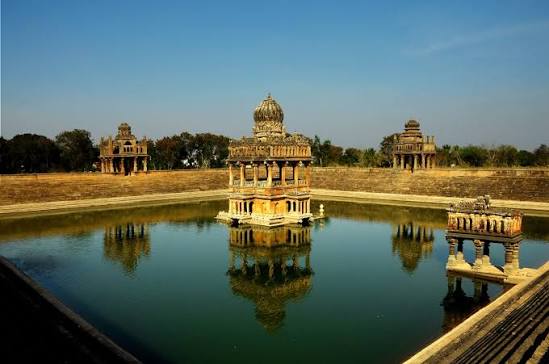
Santhebennur is famous for its historic Pushkarani, a beautifully designed stepped water structure traditionally known as a Honda.
The Pushkarani is particularly notable for its central Vasantha Mantapa, creating a distinctive architectural composition.
Channagiri Fort
Channagiri is known for its historic hill fort. The fort stands on a hill and provides broad views of the surrounding landscape.
Sultan and Maratha Heritage
Several locations in the district preserve historical associations with different ruling powers of the Deccan, reflecting the region's changing political history.
6. Famous Places / Tourist Places
Kunduvada Lake
Kunduvada Lake is one of the most popular recreational destinations near Davanagere city.
The lake is particularly attractive during the evening when visitors gather to enjoy the scenery, fresh air and sunset. It is also a popular local picnic destination.
Kunduvada Glass House
The Glass House is located near Kunduvada and is associated with gardens, horticultural displays and public events.
The combination of the Glass House and surrounding green spaces makes it a pleasant stop for visitors exploring Davanagere city.
Shantisagara
Shantisagara, also known as Sulekere, is one of the most remarkable water bodies in the district.
The lake is traditionally associated with Princess Shantavva and is believed to have been constructed during the 11th or 12th century. It is a major irrigation and water-resource feature of the region.
The large reservoir and surrounding landscape make Shantisagara an interesting destination for nature lovers and photographers.
Harihara
Harihara is a historic town situated on the banks of the Tungabhadra River.
The town is particularly famous for the Harihareshwara Temple, an important example of Hoysala architecture and a major religious attraction in the district.
Santhebennur Pushkarani
Santhebennur Pushkarani is one of the district's most distinctive heritage attractions. The historic water structure is known for its artistic design and central pavilion.
Kondajji
Kondajji is known for its lake and forested surroundings. It is a popular picnic destination and provides an opportunity to enjoy the natural landscape away from the city.
Channagiri
Channagiri is known for its historic hill fort. The climb towards the hilltop provides scenic views of the surrounding countryside.
Honnali
Honnali is a historic town associated with the Tungabhadra River and several religious sites.
The town also has remnants of an old fort and traditional temples.
Kuruva Island
Kuruva Island, also known as Kuruvada Gadde, is an island situated in the Tungabhadra River near Honnali.
The island is associated with the Rameshwara Temple and provides an interesting combination of river scenery and religious heritage.
Belagutti
Belagutti contains the remains of an old fort along with a historic Siddeshwara Temple.
Thirtharameshwara
Thirtharameshwara Temple in Honnali taluk is known for its natural spring of holy water.
The temple is also notable because it includes a shrine dedicated to Lord Brahma.
Mayakonda
Mayakonda is known for historic temples including the Obala Narasimha Temple and Keshava Temple.
Nanditavare
Nanditavare is home to the Amrita Manikyeshwara Temple, which displays Hoysala-style architectural features.
Balleshwara
Balleshwara is known for the historic Ballala Lingeshwara Temple located near the Tungabhadra River.
Joladhalu
Joladhalu is a pilgrimage destination associated with the Amba Bhavani Temple, also known locally as Kukkavadamma Renuka.
Kalkere
Kalkere is known for its horseshoe-shaped valley and temples including Balleshwara, Kalleshwara and Hanumantharaya temples.
Hodigere
Hodigere is associated with the tomb of Shahji Bhonsale, father of Chhatrapati Shivaji, making it an interesting historical destination.
Rajanahalli
Rajanahalli, located near Harihara, is known for religious sites including Bannimahakali Temple and Amba Bhavani Temple.
7. Famous Dishes / Local Food
Davanagere has a distinctive food identity, with its most famous dish being the iconic Davanagere Benne Dose.
Davanagere Benne Dose
Benne Dose literally refers to a dosa prepared with butter. Davanagere's version is known for its rich buttery flavour, crisp exterior and soft interior.
It is traditionally served with chutney and potato-based accompaniments.
Udyogare
Udyogare is a sweet preparation specifically associated with Davanagere and is mentioned by the district administration as one of the local foods visitors should try.
Idli and Vada
Traditional South Indian breakfast dishes such as idli and vada are widely available throughout Davanagere.
Masala Dosa
Masala dosa is another popular breakfast choice in the city, often served with sambar and coconut chutney.
Local Snacks
Davanagere's local eateries and bakeries offer a variety of traditional Karnataka snacks and sweets.
North Karnataka Influences
Because of its central location, Davanagere's food culture also reflects influences from different parts of Karnataka. Visitors can find both southern Karnataka breakfast traditions and northern Karnataka-style preparations.
8. Famous Personalities and Historical Figures
J. H. Patel
J. H. Patel, former Chief Minister of Karnataka, played an important administrative role in the formation of Davanagere as an independent district in 1997.
The creation of the district marked an important milestone in the modern administrative history of the region.
Shahji Bhonsale
Shahji Bhonsale, father of Chhatrapati Shivaji, is historically associated with the region through his tomb at Hodigere.
Local Religious Scholars and Saints
Davanagere's temple towns and religious institutions have historically been associated with numerous saints, spiritual leaders and scholars who contributed to the religious traditions of central Karnataka.
Community Leaders and Textile Entrepreneurs
The development of Davanagere's textile industry was supported by generations of local entrepreneurs, traders and workers who helped transform the city into an important commercial centre.
9. Festivals
Dasara
Dasara is celebrated across Davanagere with religious ceremonies, temple programmes and cultural activities.
Deepavali
Deepavali is celebrated with traditional lamps, sweets, family gatherings and religious rituals throughout the district.
Ugadi
Ugadi, the Kannada New Year, is an important festival in Karnataka and is celebrated with traditional food, prayers and family customs.
Maha Shivaratri
Shiva temples throughout the district observe Maha Shivaratri with special prayers and religious programmes.
Temple Festivals
Historic temples such as Harihareshwara, Durgambika, Kalleshwara and other local shrines organise annual festivals and fairs that attract devotees from surrounding areas.
Local Village Fairs
Village fairs and jatres are an important part of rural Karnataka culture. These events often combine religious ceremonies, traditional performances, markets and community gatherings.
10. Things to Do in Davanagere
Enjoy Benne Dose
A trip to Davanagere is incomplete without trying authentic local Benne Dose at one of the city's traditional eateries.
Spend an Evening at Kunduvada Lake
Visit Kunduvada Lake in the evening to enjoy the peaceful surroundings and sunset views.
Visit the Glass House
The Glass House and its surrounding garden area provide a pleasant place for a short visit, particularly for families and photography enthusiasts.
Explore Harihara
Take a short trip from Davanagere to Harihara and visit the historic Harihareshwara Temple on the banks of the Tungabhadra.
Visit Shantisagara
Explore the vast Shantisagara reservoir and enjoy its surrounding rural landscapes.
Explore Santhebennur
Visit Santhebennur Pushkarani to admire its historic architecture and central pavilion.
Explore Channagiri Fort
Visitors interested in history and light trekking can explore the hill fort at Channagiri.
Visit Historic Temples
Davanagere district has numerous historic temples ranging from Hoysala-era monuments to local village shrines.
Explore Rural Landscapes
The agricultural countryside surrounding Davanagere provides opportunities for photography and experiencing rural Karnataka.
Enjoy a Road Trip
Davanagere's central location makes it convenient for road trips towards Chitradurga, Shivamogga, Haveri and other parts of Karnataka.
11. Where to Eat, Shop and Stay
Where to Eat
Davanagere city has numerous restaurants and traditional eateries where visitors can experience local Karnataka food.
- Traditional South Indian restaurants
- Benne Dose eateries
- Vegetarian restaurants
- Local bakeries
- Family restaurants
- Modern cafés
- Traditional sweet shops
Must-Try Foods
- Davanagere Benne Dose
- Udyogare
- Idli
- Vada
- Masala Dosa
- South Indian meals
- Local sweets and snacks
Where to Stay
Davanagere city offers a variety of accommodation options suitable for business travellers, families and tourists.
- Business hotels
- Budget hotels
- Family hotels
- Lodges
- Guesthouses
- Highway-side accommodation
Where to Shop
Davanagere is an important commercial centre and offers a variety of shopping opportunities.
- Textiles
- Cotton products
- Traditional clothing
- Local food products
- Sweets
- Household goods
- Traditional Karnataka products
12. What Is Davanagere Famous For?
| Feature | Why It Is Famous |
|---|---|
| Benne Dose | Davanagere's signature buttery dosa |
| Textile Industry | Historic cotton mills and textile trade |
| Kunduvada Lake | Popular recreational and sunset destination |
| Shantisagara | Historic large irrigation reservoir |
| Harihara | Historic Tungabhadra-side temple town |
| Harihareshwara Temple | Important Hoysala architectural monument |
| Santhebennur Pushkarani | Historic and architecturally distinctive water structure |
| Channagiri Fort | Historic hill fort and scenic viewpoint |
| Kondajji | Lake and natural picnic destination |
| Tungabhadra River | Important geographical and cultural feature |
| Agriculture | Major producer and trading centre for commercial crops |
13. Best Time to Visit Davanagere
The most comfortable period to explore Davanagere is generally October to February, when temperatures are comparatively pleasant for sightseeing and outdoor activities.
October to November
The post-monsoon period brings improved weather and greener surroundings, making it a pleasant time to explore lakes, temples and rural areas.
December to February
Winter is generally the most comfortable period for sightseeing. Visitors can explore Davanagere city, Harihara, Santhebennur and other attractions without the intense summer heat.
March to May
Summer can be hot, particularly during the afternoon. If visiting during these months, sightseeing is more comfortable during the morning and evening.
June to September
The monsoon season brings rainfall and greener landscapes. Travellers interested in the countryside may enjoy this season, although rain can affect outdoor plans and road travel.
| Activity | Recommended Period |
|---|---|
| City Sightseeing | October to February |
| Temple Visits | October to February |
| Lake Visits | October to February |
| Photography | Post-Monsoon to Winter |
| Fort Exploration | October to February |
| Rural Exploration | Post-Monsoon and Winter |
14. How to Reach Davanagere
By Air
Davanagere does not have a major commercial airport within the city. The nearest useful airports include Hubballi Airport and Kempegowda International Airport in Bengaluru.
Hubballi is a practical option for travellers approaching from northern Karnataka, while Bengaluru provides extensive domestic and international connectivity.
By Train
Davanagere is an important railway station on the Bengaluru–Hubballi railway route. The city has good rail connectivity with Bengaluru, Hubballi and other major cities.
By Road
Davanagere is well connected by road and lies along the important highway network connecting Bengaluru with northern Karnataka.
Its central location makes it convenient for road travel towards Chitradurga, Shivamogga, Haveri, Hubballi and other parts of Karnataka.
| Mode | Travel Advantage |
|---|---|
| Air | Convenient through nearby major airports |
| Train | Strong railway connectivity |
| Road | Excellent access to central and northern Karnataka |
15. Nearby Places to Visit
Chitradurga
Chitradurga is located close to Davanagere and is famous for its massive historic fort, rocky hills and legendary stories associated with the region.
Shivamogga
Shivamogga lies towards the west and provides access to waterfalls, forests, rivers and Western Ghats landscapes.
Haveri
Haveri lies north-west of Davanagere and is known for temples, historic monuments and agricultural landscapes.
Harihara
Harihara is one of the closest important heritage destinations and can easily be combined with a Davanagere city trip.
Channagiri
Channagiri is a good option for travellers interested in hill landscapes, historic forts and temples.
Harapanahalli
Harapanahalli lies towards the north-east and provides access to several historic temples and heritage sites, including the Kalleshwara Temple at Bagali.
16. Best Duration for a Davanagere Trip
A 2-day trip is enough to explore the major attractions around Davanagere city. Travellers interested in heritage, temples and nearby lakes can extend the trip to three days.
| Duration | Suggested Plan |
|---|---|
| 1 Day | Davanagere city, Benne Dose, Kunduvada Lake and Glass House |
| 2 Days | Davanagere + Harihara + Santhebennur |
| 3 Days | Davanagere + Harihara + Shantisagara + Channagiri |
| 4 Days | Davanagere + surrounding temples + Honnali + Kuruva Island |
| 5 Days | Extended heritage and nature circuit around the district |
Suggested 3-Day Itinerary
Day 1: Begin your trip in Davanagere city. Explore local markets and historical areas, enjoy authentic Benne Dose and visit Kunduvada Lake and the Glass House in the evening.
Day 2: Travel towards Harihara and visit the historic Harihareshwara Temple. Continue towards Santhebennur and explore the famous Pushkarani before returning to Davanagere.
Day 3: Explore Shantisagara and the surrounding Channagiri region. If time permits, visit historic temples and rural attractions around the district.
17. Travel Tips
- Try authentic Davanagere Benne Dose from a traditional local eatery.
- Plan outdoor sightseeing during morning or evening during summer.
- Carry drinking water during longer road trips.
- Wear comfortable footwear while visiting forts and historic monuments.
- Dress respectfully when visiting temples and religious places.
- Follow temple-specific rules regarding photography.
- Carry sunscreen, sunglasses and a hat during sunny days.
- Carry an umbrella or rain protection during the monsoon.
- Check local weather conditions before visiting lakes and outdoor attractions.
- Be careful around water bodies and do not enter restricted areas.
- Respect historic monuments and avoid damaging stone structures.
- Do not litter around lakes, temples, forts or rural attractions.
- Start longer day trips early in the morning.
- Keep some cash available for local eateries and smaller establishments.
- Respect local customs during temple festivals and village fairs.
- Allow extra travel time during monsoon rainfall.
- Carry a camera or smartphone for photographing historic architecture and landscapes.
18. Why Visit Davanagere?
For Food Lovers
Davanagere is one of the best destinations in Karnataka for experiencing the famous Benne Dose. The city's food culture is one of its strongest attractions.
For History Lovers
Historic temples, forts, water structures and settlements provide a glimpse into different periods of Karnataka's history.
For Architecture Lovers
Harihareshwara Temple, Kalleshwara Temple, Santhebennur Pushkarani and other historic monuments showcase the architectural traditions of medieval Karnataka.
For Nature Lovers
Kunduvada Lake, Shantisagara, Kondajji and the Tungabhadra River provide opportunities to enjoy water bodies and rural landscapes.
For Pilgrimage Travellers
The district contains numerous historic temples and religious centres, making it an interesting destination for spiritual tourism.
For Road Trip Lovers
Davanagere's central location and excellent road connectivity make it a convenient base for exploring several neighbouring districts.
For Photography Lovers
The district offers a combination of historic architecture, lakes, temples, rural landscapes and sunset locations.
For Cultural Travellers
Traditional festivals, village fairs, temple traditions, Kannada culture and local food provide opportunities to experience central Karnataka beyond its major cities.
19. Conclusion
Davanagere is a destination that combines the character of central Karnataka with a distinctive food, textile and cultural identity. From its famous Benne Dose to its historic temples and vast reservoirs, the district offers much more than a simple stopover between major cities.
The city's central location has played an important role in its development as a commercial and transportation hub. Its historic association with cotton and textile mills further shaped its economic identity.
Beyond the city, destinations such as Kunduvada Lake, Shantisagara, Santhebennur Pushkarani, Harihara, Channagiri, Honnali and Kondajji provide opportunities for sightseeing, heritage exploration and nature experiences.
The Harihareshwara Temple at Harihara and other historic temples demonstrate the architectural richness of the region, while the Tungabhadra River adds an important natural and cultural dimension to the district.
For food lovers, history enthusiasts, temple travellers, photographers and road-trip explorers, Davanagere provides an accessible and rewarding introduction to the heart of Karnataka.
Davanagere is where Karnataka's central landscapes, historic heritage, textile legacy and unforgettable Benne Dose come together to create a distinctive travel experience.
"Travel is the only thing you buy that makes you richer."