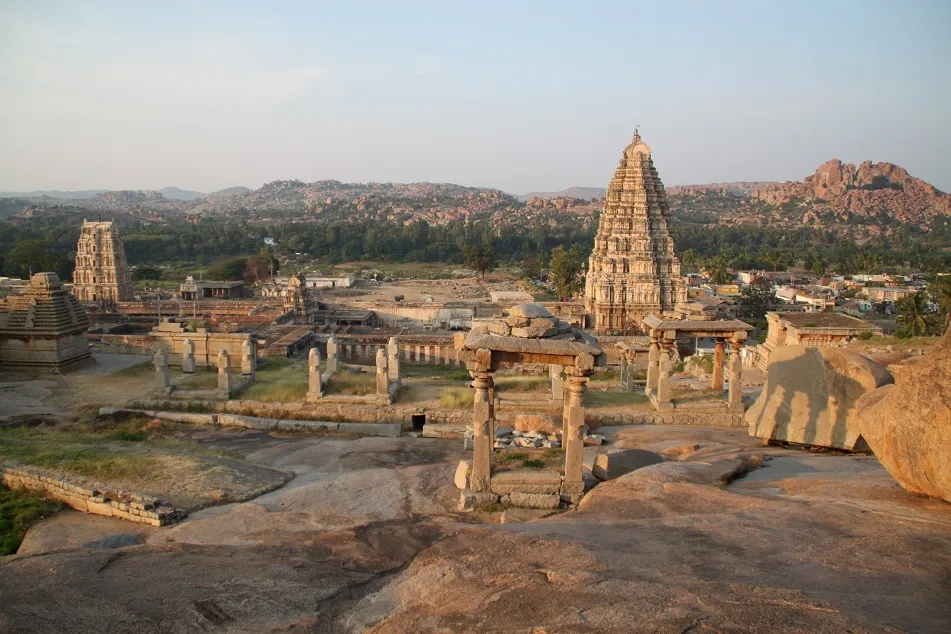
Vijayanagara, Karnataka: A Complete Travel Guide
1. Introduction to Vijayanagara
Vijayanagara is one of the historically significant districts of Karnataka, celebrated for its magnificent temples, ancient ruins, royal architecture, religious traditions, and dramatic rocky landscapes. Located in the Kalyana Karnataka region, the district is home to Hampi, the former capital of the powerful Vijayanagara Empire and a UNESCO World Heritage Site.
Hosapete, also known as Hospet, serves as the district headquarters. Vijayanagara district was carved out of the former Ballari district in 2020 and became Karnataka's 31st district in 2021. Its creation gave a separate administrative identity to a region deeply connected with one of the most influential empires in South Indian history.
Hampi is the district's most famous destination, attracting visitors from across India and around the world. Its enormous granite boulders, ancient temples, royal enclosures, stone chariot, ruined palaces, historic market streets, and sacred riverbanks create an extraordinary historical landscape. The Virupaksha Temple, Vijaya Vittala Temple, Lotus Mahal, Elephant Stables, Hazara Rama Temple, and Ugra Narasimha statue are among its best-known attractions.
Beyond Hampi, Vijayanagara district offers destinations such as Tungabhadra Dam, Ankasamudra Bird Sanctuary, the Mallikarjuna Temple at Kuruvatti, Mylaralingeshwara Temple at Mylar, and religious centres around Ujjini and Kotturu. The district also has an agricultural economy supported by irrigation, with paddy, cotton, sunflower, maize, and groundnut among its important crops.
Whether you are interested in history, architecture, spirituality, photography, birdwatching, or scenic road trips, Vijayanagara offers an unforgettable opportunity to explore Karnataka's royal past and cultural heritage.
2. History of Vijayanagara
Early History of the Region
The region around present-day Vijayanagara has a long history shaped by ancient settlements, religious traditions, trade routes, and the changing political powers of the Deccan. The Tungabhadra River provided water and supported settlements, while the surrounding hills and granite formations offered natural defensive advantages.
Before the rise of the Vijayanagara Empire, different dynasties and regional powers influenced the wider area. The landscape around Hampi also contains evidence of earlier religious activity and long-standing connections with Hindu mythology and pilgrimage traditions.
Foundation of the Vijayanagara Empire
The Vijayanagara Empire was founded in 1336 by Harihara I, also known as Hakka, and his brother Bukka Raya I. The empire developed along the Tungabhadra River and eventually became one of the most powerful political and cultural forces in southern India.
Its capital, Vijayanagara, grew into an extensive urban centre with temples, royal buildings, markets, fortifications, water systems, and residential areas. The surrounding hills and river helped shape the city's defensive and urban layout.
Expansion and Prosperity
During the 14th and 15th centuries, the empire expanded its influence across large parts of southern India. Its rulers supported temple construction, agriculture, irrigation, literature, trade, music, and the arts.
Foreign travellers who visited the capital described a prosperous city with busy markets, valuable merchandise, impressive public spaces, and magnificent religious structures. The city was connected to wider commercial networks that brought horses, textiles, precious stones, spices, and other goods into the region.
The Reign of Krishnadevaraya
Krishnadevaraya, who ruled from 1509 to 1529, is widely regarded as one of the greatest rulers of the Vijayanagara Empire. His reign was marked by military success, political expansion, economic strength, and remarkable cultural activity.
Several important monuments at Hampi are associated with the empire's prosperous period, including the Krishna Temple complex, Hazara Rama Temple, and the monumental Ugra Narasimha sculpture. Temple architecture, sculpture, literature, and courtly arts flourished during this era.
The Battle of Talikota and the Decline of Hampi
In 1565, the Vijayanagara army suffered a decisive defeat at the Battle of Talikota against an alliance of Deccan Sultanates. Rama Raya, a leading political figure of the empire, was killed, and the capital was subsequently subjected to extensive destruction and looting.
The city lost much of its political importance, and the royal centre was abandoned as the court shifted elsewhere. The empire survived in a reduced form for several decades, but the destruction of its capital marked a major turning point in South Indian history.
Later Political Rule
Following the decline of the Vijayanagara capital, the wider region came under different political powers over time, including the Deccan Sultanates, the Marathas, Mysuru-related authorities, and eventually the British. The area's temples and settlements continued to maintain their religious and cultural importance.
Formation of Modern Vijayanagara District
After Indian independence, the region became part of Mysore State, which was renamed Karnataka in 1973. Hampi gradually emerged as a major archaeological and international tourism destination, with conservation efforts helping protect its extraordinary monuments.
Vijayanagara district was carved out of Ballari district in 2020 and became Karnataka's 31st district in 2021, with Hosapete as its headquarters. Today, the district combines its historical identity with agriculture, tourism, education, commerce, and industrial development.
3. Geography and Climate of Vijayanagara
Geographical Location
Vijayanagara district is located in northern Karnataka, within the Deccan Plateau region. Its landscape includes rocky hills, granite boulder formations, open plains, agricultural fields, river valleys, and historic settlements.
The district shares its regional landscape with neighbouring parts of Karnataka, including Ballari, Koppal, Gadag, Haveri, and Davanagere. Its location along important inland routes has historically supported travel, trade, agriculture, and political connections across the Deccan.
The Tungabhadra River
The Tungabhadra River is one of the most important geographical features associated with Vijayanagara. It provided water to the historic capital, supported agricultural activity, and contributed to the development of the region's settlements.
The river continues to play a major role in irrigation and water management. Its banks near Hampi are also important for religious traditions, heritage tourism, and scenic photography.
Rocky Landscapes and Natural Features
The Hampi region is famous for enormous granite boulders, rugged hill formations, and open rocky terrain. These geological features create a distinctive landscape that differs from Karnataka's coastal areas and forested Western Ghats.
Matanga Hill, Hemakuta Hill, Anjanadri Hill, and other rocky elevations provide views across the surrounding countryside. The terrain is especially attractive to photographers, history enthusiasts, and visitors interested in walking and outdoor exploration.
Agriculture and Irrigation
Agriculture remains an important source of livelihood in Vijayanagara district. The Tungabhadra irrigation system supports cultivation in suitable areas, with paddy, cotton, sunflower, maize, and groundnut among the important crops.
The combination of irrigation infrastructure, agricultural land, and semi-arid climate has shaped the district's economy and settlement patterns.
Climate
Vijayanagara experiences a tropical semi-arid climate, with hot summers, seasonal monsoon rainfall, and comparatively mild winters. Temperatures can rise significantly during the summer months, especially across exposed rocky areas.
- Summer: March to May, generally hot and dry.
- Monsoon: June to September, bringing seasonal rainfall and changes in river levels.
- Post-monsoon: October and November, often suitable for outdoor sightseeing as temperatures begin to moderate.
- Winter: December to February, generally the most comfortable period for exploring Hampi and other outdoor attractions.
Visitors should carry drinking water, wear sun protection, and plan walks around the cooler parts of the day, particularly when exploring Hampi's extensive archaeological landscape.
4. Culture and Traditions of Vijayanagara
Kannada Cultural Heritage
Kannada is the principal regional language of Vijayanagara district. The district's culture reflects the traditions of northern Karnataka, including devotional literature, temple festivals, folk performances, agricultural celebrations, and community gatherings.
The legacy of the Vijayanagara Empire remains especially visible in Hampi, where temple rituals, sacred traditions, historic monuments, and pilgrimage activities continue to shape the cultural identity of the region.
Temple Traditions and Religious Life
Temples play an important role in the district's religious and cultural life. The Virupaksha Temple at Hampi remains an active place of worship, while other historic temples preserve traditions associated with Shiva, Vishnu, Hanuman, and regional deities.
Religious festivals often include special prayers, processions, devotional music, and community participation. These events offer visitors an opportunity to understand the living traditions of the region alongside its archaeological heritage.
Vachana Literature and Basaveshwara's Legacy
The wider region of northern Karnataka is deeply connected with the Vachana literary tradition and the teachings of Basaveshwara and other Sharanas. Their writings and philosophical ideas influenced religious thought, social reform, and Kannada literature.
Religious centres across the region preserve traditions associated with devotion, ethical living, community service, and spiritual learning.
Folk Arts and Music
Folk music, devotional songs, traditional dance, and storytelling remain part of the cultural landscape of Vijayanagara district. Performances may take place during temple festivals, village celebrations, fairs, and religious occasions.
Yakshagana and other folk traditions associated with the wider Karnataka region may also be encountered through cultural programmes, although performances and local traditions vary from place to place.
Festivals and Community Celebrations
Ugadi, Ganesh Chaturthi, Deepavali, Makar Sankranti, and other regional festivals are celebrated across the district. Hampi also hosts cultural events that highlight Karnataka's history, music, dance, and artistic traditions.
Temple fairs and local religious celebrations remain important for community life, bringing together residents and visitors for worship, cultural programmes, and traditional festivities.
5. Architecture of Vijayanagara
Vijayanagara Temple Architecture
The architecture of Vijayanagara is best understood through the monuments of Hampi. The region preserves an extraordinary collection of temples, shrines, pillared halls, royal structures, gateways, water systems, and fortified areas associated with the former imperial capital.
Characteristic features include monumental gateways, carved stone pillars, sculpted deities, ornate mandapas, granite construction, and temple courtyards. Many structures reflect the development of South Indian temple architecture during the medieval period.
Virupaksha Temple
The Virupaksha Temple is one of the most important surviving religious structures at Hampi. Dedicated to Lord Shiva, it has a long history that predates the height of the Vijayanagara Empire, although successive rulers expanded and embellished the complex.
Its towering entrance gopuram, temple courtyards, shrines, and carved architectural elements make it a major attraction for pilgrims and architecture enthusiasts.
Vijaya Vittala Temple
The Vijaya Vittala Temple is famous for its elaborate architecture, monumental pillared halls, and celebrated Stone Chariot. The complex demonstrates the artistic skill and engineering knowledge of Vijayanagara-period craftsmen.
The ornate pillars, sculptural decoration, and spacious temple layout make it one of Hampi's most significant monuments.
Royal Architecture and Palaces
The Royal Centre of Hampi contains remains of palaces, administrative buildings, ceremonial platforms, baths, and other structures associated with the imperial court. Although many buildings no longer survive in their original form, their foundations and surviving architectural elements reveal the scale of the former capital.
The Lotus Mahal and Elephant Stables are particularly notable for their distinctive design and the variety of architectural influences visible in the structures.
Water Management and Urban Planning
The historic capital incorporated reservoirs, canals, tanks, wells, and other water-management systems. These features supported agriculture, urban life, and the needs of a large population in a landscape with seasonal rainfall.
The surviving remains provide insight into the planning and engineering that supported one of the most important urban centres of medieval South India.
Regional Temples Beyond Hampi
Vijayanagara district also contains historic temples outside the main Hampi archaeological zone. The Mallikarjuna Temple at Kuruvatti, Marulasiddheshwara Temple at Ujjini, and Mylaralingeshwara Temple at Mylar reflect the religious and architectural traditions of different parts of the district.
These sites broaden the district's architectural heritage beyond the monuments of the imperial capital.
6. Famous Places and Tourist Attractions in Vijayanagara
1. Hampi
Hampi is the district's most famous destination and one of India's most remarkable historical landscapes. Once the capital of the Vijayanagara Empire, it is now recognised as a UNESCO World Heritage Site.
The site contains ancient temples, royal enclosures, market streets, gateways, water structures, and monumental sculptures spread across a landscape of granite hills and the Tungabhadra River. Exploring Hampi offers a unique opportunity to experience the scale and sophistication of a medieval South Indian capital.
2. Virupaksha Temple
The Virupaksha Temple is one of Hampi's principal religious landmarks and remains an active centre of worship. Dedicated to Lord Shiva, the temple is known for its towering gopuram, traditional rituals, carved pillars, and long religious history.
Visitors can explore the temple's architectural details while respecting worshippers, dress expectations, and local rules regarding photography.
3. Vijaya Vittala Temple
The Vijaya Vittala Temple is celebrated for its remarkable stone architecture and ornate pillared halls. It is one of the finest examples of the artistic achievements associated with the Vijayanagara Empire.
The temple complex is particularly famous for the Stone Chariot, an iconic monument that has become one of Karnataka's most recognisable heritage symbols.
4. Stone Chariot
The Stone Chariot stands within the Vijaya Vittala Temple complex and resembles a traditional ceremonial chariot carved in stone. It is among the most photographed monuments in Hampi.
The structure represents the craftsmanship of Vijayanagara-period artisans and is closely associated with the architectural identity of the former capital. Visitors should follow conservation rules and avoid touching or climbing on protected surfaces.
5. Lotus Mahal
The Lotus Mahal is a distinctive structure within the Zenana Enclosure of Hampi. Its symmetrical design, curved arches, open pavilions, and lotus-like appearance distinguish it from many of the surrounding stone monuments.
The building demonstrates the variety of architectural forms developed within the royal complex and is a favourite destination for architectural photography.
6. Elephant Stables
The Elephant Stables are a monumental structure traditionally associated with the housing of royal elephants. Their large arched openings, domed roof sections, and orderly arrangement make them one of the most impressive surviving buildings in the Royal Centre.
The structure illustrates the scale of royal administration and the importance of ceremonial animals in the imperial court.
7. Hazara Rama Temple
The Hazara Rama Temple is a historic temple associated with the royal complex at Hampi. It is especially known for its sculpted panels depicting scenes from the Ramayana and other decorative elements.
The temple's carvings provide valuable insight into religious storytelling, artistic traditions, and the cultural interests of the Vijayanagara rulers.
8. Ugra Narasimha Statue
The Ugra Narasimha statue is one of Hampi's most striking monolithic sculptures. It depicts Narasimha, the man-lion incarnation of Lord Vishnu, seated beneath a multi-hooded serpent canopy.
The sculpture stands approximately 6.7 metres tall and was commissioned during the reign of Krishnadevaraya in 1528. Although parts of the original composition were damaged, the surviving monument remains an extraordinary example of monumental stone carving.
9. Badavilinga Temple
The Badavilinga Temple contains a large Shiva lingam housed within a simple stone shrine. The structure stands close to the Ugra Narasimha statue and is commonly visited as part of a Hampi sightseeing route.
The shrine's distinctive form and religious significance make it an important stop for visitors exploring Hampi's sacred monuments.
10. Hemakuta Hill
Hemakuta Hill is known for its rocky landscape, ancient shrines, and panoramic views of the surrounding Hampi region. It is a popular place for watching the sunrise or sunset when conditions permit.
The hill also contains several small temples and structures that contribute to the historical character of the landscape.
11. Matanga Hill
Matanga Hill is one of Hampi's most recognisable viewpoints. The climb offers broad views over the rocky terrain, temple landscape, and Tungabhadra River region.
The route can be steep and uneven, so suitable footwear and caution are essential. Visitors should avoid climbing in extreme heat, heavy rain, or poor visibility.
12. Anjanadri Hill
Anjanadri Hill, near Anegundi across the Tungabhadra River, is traditionally believed to be the birthplace of Lord Hanuman. A temple dedicated to Hanuman stands near the summit, reached by a long flight of steps.
The hill offers sweeping views of the surrounding countryside and is an important pilgrimage destination. The climb can be demanding, particularly during hot weather.
13. Anegundi
Anegundi is an ancient settlement across the Tungabhadra River from Hampi. It is associated with early Vijayanagara history and local traditions identifying the region with Kishkindha from the Ramayana.
The area contains temples, historic buildings, rocky landscapes, and traditional settlements. It offers a quieter cultural experience alongside the main Hampi monuments.
14. Achyutaraya Temple
The Achyutaraya Temple is an impressive historic temple complex located between Matanga Hill and the surrounding rocky landscape. Its courtyards, pillared halls, and remains of a historic market street illustrate the scale of religious and commercial activity in Hampi.
The temple is a rewarding stop for visitors who want to explore beyond the busiest monuments.
15. Mahanavami Dibba
Mahanavami Dibba, also known as the Dasara Dibba, is a large ceremonial platform within the Royal Centre. It was associated with royal celebrations and public ceremonies, including festivities during the Mahanavami period.
The surviving platform contains carved panels and architectural details that offer clues about courtly life and ceremonial traditions.
16. Queen's Bath
The Queen's Bath is a historic bathing structure associated with the royal complex. Its enclosed design, ornamental arches, balconies, and water-related features make it an interesting example of palace architecture.
Although the building is now largely a historical ruin, its design provides insight into the private and ceremonial spaces of the former royal city.
17. Tungabhadra Dam
Tungabhadra Dam, located near Hosapete, is a major irrigation and water-management project built across the Tungabhadra River. It plays an important role in supporting agriculture and regional development.
The reservoir and surrounding landscape can provide attractive views, and designated recreational areas may be accessible to visitors. Entry arrangements and facilities can vary, so check local guidance before visiting.
18. Ankasamudra Bird Sanctuary
Ankasamudra Bird Sanctuary, in the Hagaribommanahalli area, is an important wetland habitat known for birdlife. The wetland attracts waterbirds and other species, making it a worthwhile destination for nature enthusiasts and birdwatchers.
The best experience depends on the season, water levels, and bird activity. Visitors should carry binoculars if available and avoid disturbing birds or their nesting habitats.
19. Mallikarjuna Temple, Kuruvatti
The Mallikarjuna Temple at Kuruvatti is a historic temple associated with the Kalyana Chalukya period and is generally dated to around the late 11th century. Dedicated to Lord Shiva, it is known for its architectural details and historical importance.
The temple is a valuable attraction for travellers interested in medieval Karnataka architecture beyond Hampi.
20. Mylaralingeshwara Temple, Mylar
The Mylaralingeshwara Temple at Mylar is an important regional religious destination associated with Lord Mylaralingeshwara. Situated near the Tungabhadra River, the site is known for its devotional traditions and the annual religious gathering.
The Mylar Jatre attracts devotees from different areas, although festival dates and travel conditions should be confirmed before planning a visit.
21. Marulasiddheshwara Temple, Ujjini
Ujjini is known for the Marulasiddheshwara Temple and its religious institution, associated with the Lingayat tradition. The temple and matha are important centres of worship and spiritual learning.
Visitors interested in regional religious history can include Ujjini in a wider tour of the district's temples and cultural sites.
22. Kotturu Basaveshwara Temple
Kotturu is a historic town associated with the Basaveshwara Temple and local religious traditions. It has long-standing connections with regional trade, community life, and pilgrimage.
The town offers an opportunity to explore the district's living religious heritage beyond the major archaeological attractions.
7. Famous Dishes and Local Food of Vijayanagara
Vijayanagara's food culture reflects the culinary traditions of northern Karnataka. The region's agriculture, dry climate, and cultural heritage have shaped a cuisine that uses grains, pulses, groundnuts, seasonal vegetables, chillies, and locally available produce.
Popular Local Dishes
- Jolada Rotti: A flatbread made from sorghum flour and widely eaten across northern Karnataka.
- Ennegayi: A spicy stuffed brinjal curry commonly served with jolada rotti.
- Shenga Chutney: A groundnut-based chutney that accompanies traditional meals and flatbreads.
- Jhunka: A savoury gram-flour preparation cooked with spices and often served with rotti.
- Ragi Mudde: A preparation made from finger millet and enjoyed with curries in several parts of Karnataka.
- Akki Rotti: A rice-flour flatbread served with chutney, vegetables, or curry.
- North Karnataka Meals: Traditional meals often include rotti, vegetable curry, pulses, chutney, curd, and seasonal dishes.
- Mirchi Bajji: Spicy chilli fritters commonly enjoyed as a snack.
- Holige: A sweet flatbread filled with ingredients such as lentils and jaggery, especially popular during festivals.
- Traditional Sweets: Local sweet shops offer preparations made with flour, jaggery, sugar, ghee, and other ingredients.
Local Produce and Agriculture
The district's agricultural economy supports the availability of paddy, cotton, sunflower, maize, groundnut, and other crops. Seasonal produce can be found in local markets, while rural areas provide insight into farming and irrigation practices.
Food Experiences in Hosapete and Hampi
Hosapete offers a variety of restaurants and local eateries serving regional Karnataka meals. Hampi has cafés, small restaurants, and food establishments catering to visitors, although opening hours and menu choices vary.
For a more traditional culinary experience, try local meals and regional snacks rather than relying entirely on tourist-oriented cafés. Ask about ingredients if you have dietary restrictions or food allergies.
8. Famous Personalities from Vijayanagara
Harihara I
Harihara I, also known as Hakka, was one of the founders of the Vijayanagara Empire. Along with his brother Bukka Raya I, he helped establish the kingdom in 1336 and laid the foundation for its subsequent expansion.
His role in founding the empire makes him one of the most important historical figures associated with the district.
Bukka Raya I
Bukka Raya I was a co-founder and an important early ruler of the Vijayanagara Empire. His reign contributed to the consolidation and expansion of the new kingdom during its formative period.
Krishnadevaraya
Krishnadevaraya was one of the greatest rulers of the Vijayanagara Empire. His reign is remembered for political expansion, military success, economic prosperity, temple patronage, and cultural development.
Several major monuments at Hampi are associated with the prosperous period of his rule, making him a central figure in the district's historical identity.
Achyuta Deva Raya
Achyuta Deva Raya succeeded Krishnadevaraya and continued the administration of the Vijayanagara Empire during a period of changing political circumstances. His reign forms an important part of the later history of the imperial capital.
Rama Raya
Rama Raya was a powerful statesman and military leader who exercised significant influence over the empire during its later period. He was killed at the Battle of Talikota in 1565, a decisive event that contributed to the destruction of the capital.
Purandara Dasa
Purandara Dasa was a major composer and devotional saint associated with the Haridasa movement and the development of Carnatic music. His compositions remain influential in South Indian devotional and classical music traditions.
The wider Vijayanagara region is closely associated with the Haridasa tradition, and Hampi's Purandara Mandapa is linked to devotional memories surrounding the composer.
Local Scholars, Artists, and Cultural Contributors
The district and its surrounding region have produced numerous scholars, religious teachers, musicians, artists, historians, and community leaders. Their contributions have helped preserve Kannada literature, devotional music, temple traditions, and the historical memory of the Vijayanagara Empire.
9. Festivals Celebrated in Vijayanagara
Hampi Utsav
Hampi Utsav, also known as Vijaya Utsav, is a cultural festival associated with the heritage of Hampi. The event has featured music, dance, folk performances, cultural programmes, and celebrations highlighting Karnataka's historical and artistic traditions.
The festival schedule and format may vary from year to year, so visitors should check the latest announcements before planning their trip around it.
Virupaksha Temple Car Festival
The annual car festival at Virupaksha Temple is one of Hampi's important religious events. The celebration includes traditional worship and a ceremonial procession associated with the temple's deity.
The festival attracts devotees and visitors, making the temple area especially lively. Travellers should expect crowds and arrange accommodation and transport in advance.
Purandaradasa Aradhana
Purandaradasa Aradhana is a devotional music observance associated with the memory of Purandara Dasa. Events connected with the Haridasa tradition and devotional music are held in the wider Hampi region, with schedules varying by year and venue.
The occasion is especially interesting for visitors who appreciate Carnatic music, devotional compositions, and Karnataka's musical heritage.
Ugadi
Ugadi marks the Kannada New Year and is celebrated with prayers, traditional foods, family gatherings, and cultural activities. It is an important festival throughout Karnataka, including Vijayanagara district.
Ganesh Chaturthi and Deepavali
Ganesh Chaturthi and Deepavali are celebrated in towns and villages with worship, decorations, community events, and festive meals. Local markets become lively during these occasions.
Mylar Jatre
The Mylar Jatre is an important religious gathering associated with the Mylaralingeshwara Temple at Mylar. Devotees travel to the site for worship and traditional observances.
The festival is a significant part of the district's religious culture. Visitors should verify dates, local transport, and accommodation arrangements before attending.
Local Temple Festivals and Religious Fairs
Temples across Vijayanagara district organise annual festivals, processions, fairs, and special worship ceremonies. The timing and customs vary by temple and community.
Visitors can experience the district's living cultural traditions by exploring these events respectfully and following the guidance of local organisers.
10. Things to Do in Vijayanagara
Vijayanagara offers a wide range of experiences for history enthusiasts, architecture lovers, pilgrims, photographers, and nature enthusiasts.
- Explore the UNESCO World Heritage landscape of Hampi.
- Visit the Virupaksha Temple and learn about its long religious history.
- Admire the Stone Chariot and pillared halls at the Vijaya Vittala Temple.
- Discover the Lotus Mahal and Elephant Stables in the Royal Centre.
- Study the sculpted panels at Hazara Rama Temple.
- See the Ugra Narasimha statue and Badavilinga Temple.
- Climb Matanga Hill or Hemakuta Hill when weather and access conditions are suitable.
- Visit Anjanadri Hill and explore the historic settlement of Anegundi.
- Walk through Hampi's ancient market areas and royal enclosures.
- Explore the remains of the Queen's Bath and Mahanavami Dibba.
- Visit Tungabhadra Dam and its designated recreational areas.
- Go birdwatching at Ankasamudra Bird Sanctuary during suitable seasons.
- Explore the Mallikarjuna Temple at Kuruvatti.
- Visit the Mylaralingeshwara Temple and other regional religious destinations.
- Try traditional northern Karnataka food, including jolada rotti and ennegayi.
- Attend Hampi Utsav or another cultural event if your travel dates coincide.
- Enjoy sunrise and sunset photography across Hampi's rocky landscape.
- Learn about the Vijayanagara Empire through its monuments, inscriptions, and archaeological remains.
11. Where to Eat, Shop, and Stay in Vijayanagara
Where to Eat
Hosapete is a convenient base for finding restaurants, cafés, traditional eateries, and family dining establishments. Visitors can enjoy northern Karnataka meals, including jolada rotti, stuffed brinjal curry, groundnut chutney, and other regional preparations.
Hampi has cafés, small restaurants, and eateries serving a range of dishes. Choices and opening hours vary by location and season, so travellers should plan meals around sightseeing, especially when exploring the archaeological site early in the morning.
Where to Shop
Local markets in Hosapete and the surrounding towns offer everyday goods, food products, textiles, and souvenirs. Around Hampi, visitors may find handicrafts and products inspired by Karnataka's cultural heritage.
- Traditional snacks and regional food products.
- Handicrafts and locally made souvenirs.
- Textiles and everyday household products.
- Religious souvenirs associated with temples and pilgrimage sites.
- Locally available agricultural produce and seasonal goods.
When purchasing souvenirs near heritage sites, avoid items made from protected archaeological materials or objects presented as genuine ancient artefacts without credible documentation.
Where to Stay
Vijayanagara district offers accommodation ranging from budget lodges and guesthouses to hotels, homestays, and resorts. The best place to stay depends on whether you want to focus on Hampi, explore the wider district, or visit the dam and inland religious sites.
- Hosapete: A practical base for transport connections, restaurants, hotels, and trips to Hampi.
- Hampi area: Suitable for visitors who want to spend more time exploring the monuments and nearby landscape.
- Kamalapura: A useful area to consider for access to selected archaeological attractions and the wider Hampi region.
- Anegundi: Worth considering for travellers seeking a quieter setting and a closer experience of the historic village landscape, subject to available accommodation.
Accommodation availability, visitor regulations, and access arrangements can change around Hampi. Check current local rules and book early during festivals and peak travel periods.
12. What Is Vijayanagara Famous For?
Vijayanagara is famous for Hampi, the former capital of the Vijayanagara Empire, and its extraordinary collection of temples, royal structures, stone sculptures, and archaeological remains. The district also offers religious landmarks, birdwatching opportunities, agricultural landscapes, and cultural traditions.
- Hampi: A UNESCO World Heritage Site and the former capital of the Vijayanagara Empire.
- Virupaksha Temple: A major active temple dedicated to Lord Shiva.
- Vijaya Vittala Temple: Famous for its ornate architecture and Stone Chariot.
- Lotus Mahal: A distinctive royal structure with elegant arches and pavilions.
- Elephant Stables: A monumental building traditionally associated with royal elephants.
- Ugra Narasimha statue: A monumental sculpture of Lord Vishnu's man-lion incarnation.
- Royal Centre: The remains of palaces, ceremonial platforms, baths, and administrative structures.
- Anegundi: A historic settlement associated with early Vijayanagara history and Ramayana traditions.
- Tungabhadra Dam: An important irrigation and water-management project near Hosapete.
- Ankasamudra Bird Sanctuary: A wetland habitat known for birdlife.
- Kuruvatti Mallikarjuna Temple: A historic temple associated with Kalyana Chalukya architecture.
- Mylaralingeshwara Temple: A regional religious centre associated with the Mylar Jatre.
- North Karnataka cuisine: Famous for jolada rotti, ennegayi, shenga chutney, and traditional meals.
13. Best Time to Visit Vijayanagara
The best time to visit Vijayanagara is generally from October to February, when temperatures are more comfortable for exploring Hampi's extensive outdoor monuments. The district can be very hot in summer, and many sightseeing activities involve walking across exposed rocky terrain.
October to November
The post-monsoon period can be attractive for exploring Hampi and the surrounding countryside. The landscape may be greener than during summer, and the weather generally becomes more suitable for heritage sightseeing.
December to February
Winter is usually the most comfortable period for visiting Hampi, Anjanadri Hill, Anegundi, and other outdoor attractions. Visitors can spend longer periods exploring monuments and viewpoints without the intense heat associated with summer.
This season is also suitable for combining heritage visits with birdwatching and cultural excursions, depending on local conditions.
March to May
Summer can bring high temperatures, especially in exposed rocky areas. Travellers visiting during this period should begin sightseeing early, take breaks in shaded areas, and avoid strenuous climbs during the hottest part of the day.
June to September
The monsoon brings seasonal rain and can make Hampi's rocky landscape more dramatic. However, wet stone surfaces can be slippery, river levels may change, and some outdoor activities may be affected by weather.
Travel recommendation: October to February is generally the most comfortable period for a comprehensive Hampi and Vijayanagara trip. Check current weather, monument timings, and access restrictions before travelling.
14. How to Reach Vijayanagara
By Air
Travellers can reach Vijayanagara district through airports serving northern Karnataka and the wider region. Jindal Vijaynagar Airport, also known as Vidyanagar Airport, may be convenient for some itineraries, subject to current flight availability.
Other possible options include Hubballi Airport and Kempegowda International Airport in Bengaluru. The most practical airport depends on available flights, destination, and onward road travel.
By Train
Hosapete Junction is an important railway station for travellers visiting Hampi and other destinations in Vijayanagara district. It has rail connections to selected cities and can serve as a convenient arrival point for a heritage trip.
From the station, visitors can arrange local transport to Hosapete hotels, Hampi, Kamalapura, and other attractions. Confirm current train schedules and connections before booking.
By Road
Vijayanagara district is connected to other parts of Karnataka by road. State transport buses, private buses, taxis, and personal vehicles can be used to reach Hosapete and nearby destinations.
Road travel from Bengaluru and other major cities may take several hours, depending on the route, traffic, and road conditions. Travellers visiting multiple attractions should plan their journey with sufficient time for sightseeing.
Local Transportation
Auto-rickshaws, taxis, hired vehicles, and local transport services are available in Hosapete and the wider Hampi region. For exploring multiple monuments, a local vehicle or organised sightseeing service can be useful.
Hampi's archaeological landscape is extensive, and some attractions require walking over uneven stone paths. Plan the route carefully, carry water, and allow enough time between locations.
15. Nearby Places to Visit from Vijayanagara
1. Koppal
Koppal district lies near Vijayanagara and offers attractions associated with ancient temples, forts, religious traditions, and the history of the Deccan. It can be included in a wider heritage trip covering northern Karnataka.
2. Anegundi and Anjanadri Hill
Anegundi is closely associated with Hampi's historical and mythological landscape. Anjanadri Hill, believed in local tradition to be the birthplace of Lord Hanuman, attracts pilgrims and visitors seeking panoramic views.
3. Badami
Badami, in neighbouring Bagalkot district, is famous for its rock-cut cave temples, sandstone cliffs, Agastya Lake, and historic fort. It is an excellent destination for travellers interested in the evolution of South Indian temple architecture.
4. Aihole
Aihole is an important early centre of temple architecture associated with the Chalukyan period. Its temples and historic structures make it a rewarding destination for architecture enthusiasts.
5. Pattadakal
Pattadakal is a UNESCO World Heritage Site known for its collection of Hindu and Jain temples. Its architecture reflects the achievements of the early Chalukyan period and complements a heritage journey through Hampi and Badami.
6. Ballari
Ballari is known for its historic fort, regional markets, and mining heritage. It can be combined with Vijayanagara district for a broader journey through the history and landscapes of eastern Karnataka.
7. Gadag
Gadag offers historic temples and examples of medieval Karnataka architecture. It is suitable for travellers interested in exploring the religious and architectural heritage of the northern Deccan.
8. Davanagere
Davanagere is known for its commercial activity and regional cuisine, including the popular Davanagere benne dosa. It can be included in a longer road trip through central and northern Karnataka.
Distances and journey times vary according to the starting point and road conditions. If your main interest is architecture, a multi-day circuit covering Hampi, Badami, Aihole, and Pattadakal offers an especially rewarding experience.
16. Best Duration for a Trip to Vijayanagara
The ideal duration depends on whether you want to explore only Hampi or cover the wider district. Hampi contains numerous monuments spread across a large landscape, so a relaxed visit generally requires more than a few hours.
One-Day Trip
- Visit Virupaksha Temple.
- Explore the Ugra Narasimha statue and Badavilinga Temple.
- Visit the Lotus Mahal and Elephant Stables.
- Explore selected viewpoints and nearby monuments according to available time.
Two-Day Trip
- Day 1: Explore the Virupaksha Temple, Hemakuta Hill, Ugra Narasimha statue, Badavilinga Temple, and other nearby monuments.
- Day 2: Visit the Vijaya Vittala Temple, Stone Chariot, Royal Centre, Lotus Mahal, Elephant Stables, and Hazara Rama Temple.
Three-Day Trip
- Day 1: Explore Hampi's main temples and sacred landscape.
- Day 2: Explore the Royal Centre, Stone Chariot, and other major archaeological attractions.
- Day 3: Visit Anegundi, Anjanadri Hill, or Tungabhadra Dam, depending on your interests and transport arrangements.
Four to Five Days
A four- or five-day trip allows visitors to explore Hampi at a relaxed pace and include destinations such as Ankasamudra Bird Sanctuary, Kuruvatti, Mylar, or Ujjini. It also provides time for photography, local food, and cultural exploration.
Six to Seven Days
A longer itinerary can combine Vijayanagara district with Koppal, Badami, Aihole, and Pattadakal. This is an excellent option for travellers interested in the history of the Vijayanagara and Chalukyan periods.
For the best experience, group attractions by location and avoid rushing between monuments. The archaeological landscape is extensive, and many sites deserve time for careful exploration.
17. Travel Tips for Visiting Vijayanagara
- Start early: Morning visits are generally more comfortable, especially when exploring Hampi's exposed rocky landscape.
- Carry drinking water: Some archaeological areas have limited shops and shaded spaces.
- Wear comfortable shoes: Many attractions involve walking across uneven stone surfaces, steps, and rocky paths.
- Protect yourself from the sun: Carry a hat, sunscreen, and light clothing, especially during summer.
- Respect religious customs: Follow temple dress expectations, footwear arrangements, and photography rules.
- Follow conservation rules: Do not climb on protected monuments, carve inscriptions, or remove stones and artefacts.
- Plan your sightseeing route: Hampi's monuments are spread over a large area, so group nearby attractions together.
- Check local transport: Confirm transport availability for Anegundi, Anjanadri Hill, and other locations outside the main town.
- Be cautious on hills: Matanga Hill and Anjanadri Hill involve climbs that may be difficult in hot or wet conditions.
- Respect the Tungabhadra River: Water levels and currents can change, so avoid unsafe river access and follow local instructions.
- Book accommodation early: Hampi can become busy during holidays, festivals, and peak travel periods.
- Carry some cash: Digital payments are common, but smaller vendors may prefer cash.
- Check festival schedules: Hampi Utsav and major temple events may affect accommodation, traffic, and access arrangements.
- Respect wildlife: At birdwatching sites, avoid disturbing birds, nests, and other wildlife.
- Ask before photographing people: Be considerate around worshippers, residents, and cultural activities.
- Allow enough time: A minimum of two days is useful for exploring Hampi's principal attractions without excessive rushing.
18. Why Visit Vijayanagara?
Vijayanagara is an exceptional destination for travellers who want to experience the grandeur of medieval South Indian history. Its ancient capital, Hampi, preserves an extraordinary collection of temples, royal buildings, market streets, fortifications, sculptures, and water systems that reveal the achievements of the Vijayanagara Empire.
History enthusiasts can explore the Virupaksha Temple, Vijaya Vittala Temple, Stone Chariot, Lotus Mahal, Elephant Stables, Hazara Rama Temple, and the remains of the Royal Centre. Architecture lovers can study the region's carved pillars, monumental gateways, royal structures, and carefully planned urban landscape.
Religious travellers can visit active temples, Anjanadri Hill, Anegundi, and regional pilgrimage centres. Nature enthusiasts can enjoy birdwatching at Ankasamudra Bird Sanctuary, explore the rocky landscape around Hampi, and visit the Tungabhadra Dam and surrounding countryside.
The district also provides a taste of northern Karnataka's food traditions, with jolada rotti, ennegayi, shenga chutney, and other regional dishes adding to the travel experience. Its cultural festivals and devotional traditions offer further opportunities to understand the region's living heritage.
Vijayanagara is suitable for history-focused holidays, educational trips, family travel, photography, spiritual journeys, and multi-day heritage circuits. It is especially rewarding for visitors who enjoy exploring ancient monuments at a relaxed pace rather than rushing between attractions.
19. Conclusion
Vijayanagara is one of Karnataka's most remarkable historical destinations, preserving the legacy of an empire that shaped the political, cultural, religious, and architectural history of southern India. Its most celebrated landmark, Hampi, offers an extraordinary landscape of temples, royal ruins, stone sculptures, ancient streets, and granite hills along the Tungabhadra River.
Beyond Hampi, the district offers religious destinations, birdwatching opportunities, the Tungabhadra Dam, and historic temples that reveal the region's wider cultural identity. Its traditions, agricultural landscapes, and northern Karnataka cuisine add further depth to the travel experience.
The most comfortable period for sightseeing is generally October to February, when visitors can explore the archaeological landscape with less exposure to extreme summer heat. A carefully planned itinerary makes it easier to appreciate the district's major monuments and lesser-known attractions.
Whether you are interested in history, architecture, religion, nature, or cultural exploration, Vijayanagara offers a memorable journey into Karnataka's past. Its monuments and living traditions make it an essential destination for anyone seeking to understand the heritage of the Deccan and the enduring legacy of the Vijayanagara Empire.
"Travel is the only thing you buy that makes you richer."