Gadag, Karnataka: A Complete Travel Guide
Gadag is a historically and culturally important district in northern Karnataka, renowned for its magnificent Chalukyan architecture, ancient temples, Kannada literature, Hindustani classical music, handloom traditions and religious harmony. The district offers a fascinating combination of heritage, spirituality, nature and traditional culture.
Gadag became a separate district on 24 August 1997. Today, it is known not only for its historic monuments but also as an important centre of literature, music, printing, handloom weaving and education.
The district is particularly famous for its association with Mahakavi Kumaravyasa, who is traditionally believed to have composed the Karnata Bharata Kathamanjari in the Veeranarayana Temple at Gadag. The region has also produced or been associated with celebrated personalities such as Pandit Bhimsen Joshi, Pandit Puttaraja Gawai, Huilgol Narayana Rao and Sunil Joshi.
For history and architecture enthusiasts, destinations such as Lakkundi, Trikuteshwara Temple, Veeranarayana Temple, Dambal and Sudi showcase the remarkable architectural traditions of northern Karnataka.
| Quick Information | Details |
|---|---|
| State | Karnataka |
| Region | North Karnataka |
| District Headquarters | Gadag |
| District Formation | 24 August 1997 |
| Major Cities and Towns | Gadag, Betageri, Ron, Gajendragad, Mundargi, Shirahatti and Nargund |
| Famous For | Chalukyan architecture, literature, music, temples, handlooms and religious harmony |
| Major Heritage Sites | Lakkundi, Trikuteshwara Temple, Veeranarayana Temple and Dambal |
| Natural Attractions | Magadi Bird Sanctuary, Kappat Gudda and Gadag Zoo |
| Famous Personalities | Kumaravyasa, Bhimsen Joshi, Puttaraja Gawai, Huilgol Narayana Rao and Sunil Joshi |
| Best Time to Visit | October to February |
1. Introduction
Gadag is a fascinating destination for travellers who want to experience the historical and cultural side of Karnataka. Unlike destinations that are primarily known for beaches, waterfalls or hill stations, Gadag attracts visitors with its ancient temples, intricate stone carvings, literary heritage, classical music traditions and peaceful countryside.
The district lies in the northern part of Karnataka and shares its boundaries with Koppal, Dharwad, Bagalkot and Haveri. The Malaprabha River flows along the northern side of the district, while the Tungabhadra lies towards the southern side.
Gadag is often described as a land of temples and literature. Its historic monuments preserve the architectural legacy of the Kalyana Chalukyas, Hoysalas and Vijayanagara rulers, while its literary and musical traditions continue to influence Karnataka's cultural landscape.
The neighbouring town of Betageri is particularly known for handloom weaving, while Gadag itself has historically been associated with printing presses and publishing.
2. Why Is Gadag Famous and Why Should You Visit?
Famous for Chalukyan Architecture
Gadag is one of the important destinations in Karnataka for experiencing Western or Kalyana Chalukyan temple architecture. The temples feature intricately carved pillars, stone screens, sculptures and detailed architectural elements.
Land of Kumaravyasa
Gadag has a special place in Kannada literary history because of its association with Kumaravyasa, the celebrated poet traditionally associated with the composition of the Karnata Bharata Kathamanjari.
Centre of Hindustani Classical Music
The district has produced and nurtured several renowned musicians. Gadag is strongly associated with Pandit Bhimsen Joshi and Pandit Puttaraja Gawai, making it an important destination for music lovers.
Historic Temples
From the Trikuteshwara Temple in Gadag to the magnificent Kashi Vishwanatheshwara Temple at Lakkundi, the district contains an impressive collection of historic religious monuments.
Religious Harmony
Gadag has a notable tradition of religious harmony. The district administration highlights the association between the Veeranarayana Temple, Trikuteshwara Temple and Jumma Masjid through a common trust as a distinctive example of interfaith cooperation.
Handloom Heritage
Betageri, the twin town of Gadag, is traditionally known for handloom weaving. Visitors interested in traditional textiles can explore the area's weaving culture.
Nature and Wildlife
Gadag is not only about temples. The district also offers natural attractions such as Magadi Bird Sanctuary, Kappat Gudda and Gadag Zoo.
3. History
Ancient and Medieval Heritage
The Gadag region has a long and fascinating history associated with several important dynasties of the Deccan.
The area became particularly important during the period of the Western Chalukyas, also known as the Kalyana Chalukyas. Many of the temples and monuments found throughout the district reflect the architectural achievements of this period.
Kalyana Chalukya Period
The Kalyana Chalukyas played a major role in the development of temple architecture in northern Karnataka. Gadag and nearby Lakkundi became important centres of artistic and religious activity.
The elaborate stone carvings, decorative pillars and carefully designed temple complexes found in the region reflect the sophistication of medieval Deccan architecture.
Hoysala Influence
Later developments introduced Hoysala architectural elements into several monuments. The Veeranarayana Temple at Gadag is particularly notable for its combination of Chalukyan, Hoysala and Vijayanagara architectural features.
Vijayanagara Influence
The Vijayanagara period also contributed to the development of several temples and architectural elements in the region.
As a result, some monuments in Gadag display architectural characteristics belonging to more than one historical period.
Gadag as a Literary Centre
Gadag became closely associated with Kannada literature. The region is traditionally connected with Kumaravyasa, while several other medieval and modern Kannada poets and scholars have also contributed to its literary identity.
Gadag During the Modern Period
Gadag remained an important centre for administration, agriculture, trade, printing, handloom weaving and education.
The district was officially formed on 24 August 1997 after being separated from the larger Dharwad district.
Freedom Movement and Naragund
The wider region has connections with resistance movements during the nineteenth century. Naragund Babasaheb and Mundargi Bhimarao are remembered in connection with resistance against British rule during the period surrounding the 1857 uprising.
4. Geography and Climate
Geographical Location
Gadag is located in northern Karnataka and occupies an important geographical position between several major districts.
The district is bordered by:
- North: Bagalkot
- East: Koppal
- West: Dharwad
- South: Haveri
Rivers and Water Resources
The Malaprabha River flows along the northern part of the district, while the Tungabhadra River lies towards the southern side.
The Bennehalla is another important watercourse in the region and joins the Malaprabha near Ron.
Soil
Black soil is predominant across much of the district, while red soil mixed with sand is also found in some areas.
The soil supports agriculture and the cultivation of crops suited to the semi-arid conditions of northern Karnataka.
Landscape
The landscape consists largely of agricultural plains, rocky terrain, historic settlements and scattered hills. The Kappat Gudda region provides a more elevated and greener landscape compared with the surrounding plains.
Climate
Gadag experiences a generally moderate but warm climate. Summers can be hot, while the winter months are comparatively pleasant.
| Season | Approximate Period | General Conditions |
|---|---|---|
| Summer | February to May | Hot and dry, with April and May being the warmest months |
| Monsoon | June to September | Rainfall brings greenery to the district |
| Post-Monsoon | October to November | More comfortable weather with occasional rainfall |
| Winter | December to January | Cool and pleasant, especially for sightseeing |
5. Best Time to Visit Gadag
The best time to visit Gadag is generally from October to February, when the weather is more comfortable for exploring temples, heritage sites, wildlife areas and surrounding towns.
October to November
The post-monsoon period provides pleasant conditions for exploring the temples and countryside. The landscape may also appear greener following the monsoon.
December to February
Winter is particularly suitable for sightseeing. The cooler weather makes it easier to spend several hours exploring heritage sites such as Lakkundi, Gadag and Dambal.
March to May
Summer temperatures can become high, especially during the afternoon. Travellers visiting during this period should schedule outdoor sightseeing during the morning and evening.
June to September
The monsoon season brings rainfall and greenery. Nature lovers may enjoy the changing landscape, although outdoor travel plans may need flexibility.
| Travel Activity | Recommended Period |
|---|---|
| Heritage Sightseeing | October to February |
| Temple Visits | October to February |
| Nature Exploration | Post-Monsoon to Winter |
| Birdwatching | Winter months |
| Road Trips | October to February |
6. Famous Places to Visit in Gadag
Trikuteshwara Temple
The Trikuteshwara Temple is one of Gadag's most important historic monuments. The temple is associated with Kalyana Chalukyan architecture and is renowned for its intricate stone carvings, pillars and sculptural details.
The main shrine is associated with three Shiva Lingas representing the Hindu Trinity of Brahma, Vishnu and Shiva. The temple complex also contains the historic Saraswati shrine.
The detailed carvings of deities, musicians, dancers and mythological figures make the temple particularly interesting for architecture and history enthusiasts.
Veeranarayana Temple
The Veeranarayana Temple is one of the most significant religious and literary landmarks of Gadag.
The temple displays a combination of Chalukya, Hoysala and Vijayanagara architectural styles.
According to the traditional account, the temple was constructed around 1117 CE during the reign of Hoysala King Vishnuvardhana.
The temple is also associated with Kumaravyasa, who is traditionally believed to have composed his famous Kannada version of the Mahabharata while sitting in the temple.
Lakkundi
Lakkundi is one of the most important heritage destinations in the Gadag district and is often described as a paradise of temples.
The village contains numerous historic temples, Jain basadis, inscriptions and ancient stepwells. More than 50 ancient temples and monuments are spread across the area.
Kashi Vishwanatheshwara Temple, Lakkundi
The Kashi Vishwanatheshwara Temple is one of Lakkundi's most celebrated monuments.
The temple is noted for its detailed stone carving, decorative pillars and sophisticated architectural design.
Brahma Jinalaya
The Brahma Jinalaya at Lakkundi is an important Jain monument associated with Queen Attimabbe, one of the prominent patrons of Jainism and literature in medieval Karnataka.
Musukina Bavi
Musukina Bavi is an ancient stepwell at Lakkundi and demonstrates the sophisticated water-management traditions of medieval Karnataka.
Dambal
Dambal is located around 20 kilometres from Gadag and is known for its historic temples and agricultural landscape.
The village is particularly famous for the Dodda Basappa Temple, an important example of medieval Karnataka architecture.
Dodda Basappa Temple
The Dodda Basappa Temple at Dambal is a remarkable monument dedicated to Lord Shiva.
Its detailed stonework, architectural planning and sculptural decoration make it an important stop for travellers exploring the Chalukyan heritage of Gadag.
Sudi
Sudi is another historically important village in Gadag district. It contains several ancient monuments, including the Mallikarjuna Temple.
The region is known for its stone architecture and historical inscriptions.
Gadag Zoo / Binkadakatti Zoo
The Gadag Zoo, also known as Binkadakatti Zoo, was established in 1972.
The zoo houses different species and also provides facilities for the care and rehabilitation of rescued wild animals. It is located around 4 kilometres from Gadag city.
Magadi Bird Sanctuary
Magadi Bird Sanctuary is an important attraction for nature and bird lovers. It is located approximately 26 kilometres from Gadag.
The sanctuary is particularly interesting during the birdwatching season, when visitors can observe different species around the wetland environment.
Kappat Gudda
Kappat Gudda is a scenic elevated region in the southern part of Gadag district.
The highest point is around 750 metres above sea level, making it one of the more elevated landscapes in the district.
The area is suitable for travellers interested in nature, hills, landscape photography and quieter surroundings.
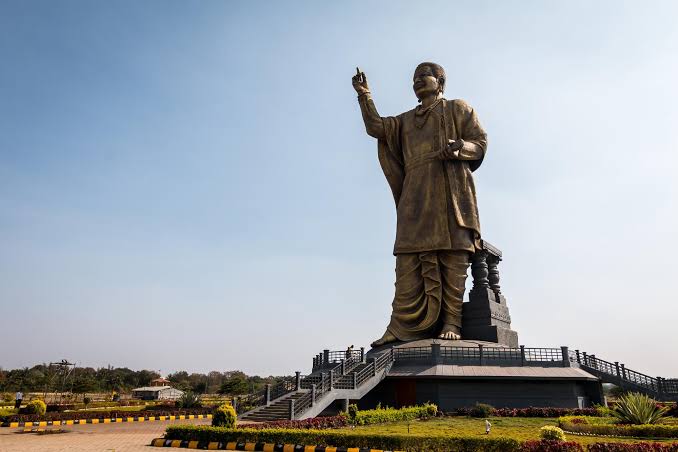
Basaveshwar Statue and Park
The Basaveshwar Statue in Gadag is a prominent modern landmark. The large statue stands within a landscaped area associated with a lake and recreational facilities.
The site also contains displays related to the life and social contributions of Basavanna, making it an interesting combination of history, culture and recreation.
7. Famous Personalities of Gadag
Kumaravyasa
Kumaravyasa, whose original name was Narayanappa, is one of the most important literary figures associated with Gadag.
He is famous for Karnata Bharata Kathamanjari, his celebrated Kannada retelling of the Mahabharata.
The Veeranarayana Temple at Gadag is traditionally associated with the composition of this important literary work.
Pandit Bhimsen Joshi
Pandit Bhimsen Joshi was one of India's most celebrated Hindustani classical vocalists and a recipient of the Bharat Ratna.
His connection with Gadag forms an important part of the district's musical identity.
Pandit Puttaraja Gawai
Pandit Puttaraja Gawai was a highly respected musician and spiritual figure associated with Gadag.
He continued the musical and social service tradition connected with the Veereshwara Punyashrama, which supported visually impaired and disadvantaged people through education, food, shelter and musical training.
Panchakshari Gawai
Pandit Panchakshari Gawai was an influential musician and teacher who played an important role in the development of musical education in Gadag.
Huilgol Narayana Rao
Huilgol Narayana Rao was a prominent Kannada writer and freedom movement figure associated with the cultural history of Karnataka.
Sunil Joshi
Sunil Joshi, the former Indian international cricketer, is associated with Gadag and is one of the district's well-known sporting personalities.
Chamarasa
Chamarasa, the celebrated Kannada poet, is traditionally associated with Narayanapur in the Gadag region.
Durgasimha
Durgasimha was an important medieval Kannada writer associated with the Ron region.
8. Famous Food of Gadag
Gadag's cuisine reflects the traditional food culture of northern Karnataka. The food is generally simple, hearty and closely connected with locally grown grains, pulses and vegetables.
Jolada Rotti
Jolada Rotti is one of the signature foods of northern Karnataka. It is prepared using jowar flour and is commonly served with spicy curries, vegetables and chutneys.
Ennegayi
Ennegayi is a traditional stuffed brinjal preparation made with a spicy masala and is commonly served with Jolada Rotti.
North Karnataka Meals
Traditional meals in the region often include jowar-based dishes, pulses, vegetables, chutneys, curd and spicy accompaniments.
Holige
Holige is a traditional sweet flatbread prepared with a sweet filling. It is especially popular during festivals and celebrations.
Kadle Bele and Traditional Snacks
Roasted and spiced pulses, gram-based snacks and other traditional preparations are commonly enjoyed as everyday snacks in the region.
Local Seasonal Produce
The agricultural landscape around Gadag contributes to a variety of seasonal vegetables, fruits and grains used in traditional local cuisine.
9. Festivals and Cultural Celebrations
Ugadi
Ugadi, the Kannada New Year, is celebrated across Gadag with traditional rituals, family gatherings and special food.
Ganesha Chaturthi
Ganesha Chaturthi is celebrated with devotional programmes, cultural events and community celebrations throughout the district.
Deepavali
Deepavali is celebrated with lamps, prayers, sweets and family gatherings.
Navaratri and Dasara
Navaratri and Dasara are important cultural occasions marked by religious ceremonies, temple activities and community celebrations.
Maha Shivaratri
Maha Shivaratri holds particular importance in a district containing several historic Shiva temples, including the Trikuteshwara and Dodda Basappa temples.
Temple Jatres
Several villages and historic temples in Gadag district organise annual jatres and religious fairs. These celebrations provide an opportunity to experience traditional music, food, local markets and community traditions.
Music and Literary Events
Gadag's strong association with classical music and Kannada literature means that cultural programmes, musical performances and literary gatherings are an important part of the region's cultural life.
10. Culture and Traditions
Kannada Literary Heritage
Gadag has a remarkable literary tradition extending from medieval Kannada literature to modern writers and scholars.
The legacy of Kumaravyasa, Chamarasa, Durgasimha and numerous modern Kannada writers gives the district an important place in Karnataka's literary history.
Hindustani Classical Music
The district is one of the important centres of Hindustani classical music in Karnataka.
The traditions associated with Panchakshari Gawai, Puttaraja Gawai and Bhimsen Joshi have contributed greatly to Gadag's musical identity.
Handloom Weaving
Betageri is traditionally associated with handloom weaving. The craft represents the continuing importance of textiles in the region's local economy and cultural heritage.
Printing Tradition
Gadag has historically been known for its printing presses and publishing activities.
A local saying describes the town as a place where a stone thrown in any direction might land on either a printing press or a handloom, reflecting the importance of these two traditional industries.
Religious Harmony
The coexistence of Hindu, Muslim, Jain and Christian religious institutions demonstrates the diverse cultural character of the district.
Veereshwara Punyashrama
The Veereshwara Punyashrama associated with Pandit Puttaraja Gawai has played an important social and educational role, particularly in supporting visually impaired and disadvantaged people.
11. Architecture and Heritage
Gadag is one of the most interesting destinations in Karnataka for studying medieval Deccan temple architecture.
Kalyana Chalukya Architecture
The Kalyana Chalukyan style is characterised by carefully carved stone pillars, decorative walls, sculptural panels, ornate doorways and sophisticated temple planning.
Chalukya-Hoysala-Vijayanagara Combination
Some temples, particularly the Veeranarayana Temple, demonstrate architectural influences from several dynasties.
This makes Gadag especially valuable for visitors interested in understanding how architectural styles developed over centuries.
| Heritage Site | Major Architectural / Historical Importance |
|---|---|
| Trikuteshwara Temple | Kalyana Chalukyan architecture and intricate sculpture |
| Veeranarayana Temple | Blend of Chalukya, Hoysala and Vijayanagara traditions |
| Kashi Vishwanatheshwara Temple | Major Lakkundi monument with detailed stonework |
| Brahma Jinalaya | Important Jain heritage monument associated with Attimabbe |
| Dodda Basappa Temple | Historic Shiva temple at Dambal |
| Mallikarjuna Temple | Historic temple at Sudi |
12. What Is Gadag Most Famous For?
| Feature | Why It Is Famous |
|---|---|
| Kumaravyasa | Association with the famous Kannada Mahabharata, Karnata Bharata Kathamanjari |
| Chalukyan Architecture | Historic temples and monuments featuring detailed stone carving |
| Lakkundi | Historic temple village with numerous monuments and stepwells |
| Trikuteshwara Temple | Important historic temple and architectural landmark |
| Veeranarayana Temple | Religious and literary importance |
| Hindustani Music | Association with Bhimsen Joshi and Puttaraja Gawai |
| Handlooms | Betageri's traditional weaving heritage |
| Printing | Long-standing tradition of printing and publishing |
| Magadi Bird Sanctuary | Important destination for birdwatching and nature lovers |
| Kappat Gudda | Scenic elevated landscape and natural surroundings |
13. Things to Do in Gadag
Explore Ancient Temples
Visit the Trikuteshwara Temple and Veeranarayana Temple in Gadag to experience the district's religious and architectural heritage.
Take a Heritage Trip to Lakkundi
Spend several hours exploring Lakkundi's temples, Jain basadis, inscriptions and ancient stepwells.
Visit Dambal
Explore the historic Dodda Basappa Temple and experience the quieter atmosphere of this heritage village.
Explore Sudi
Visit Sudi to discover its historic temples and traditional architecture.
Enjoy Nature at Magadi
Bird lovers can visit Magadi Bird Sanctuary and spend time observing the local birdlife and wetland environment.
Visit Kappat Gudda
Enjoy the hill landscape and natural surroundings of Kappat Gudda, particularly during the cooler months.
Visit Gadag Zoo
The Binkadakatti Zoo provides an opportunity to see animals and learn about wildlife conservation and rehabilitation.
Experience Local Handlooms
Explore Betageri's handloom tradition and discover locally produced textiles.
Taste North Karnataka Food
Try Jolada Rotti, Ennegayi and other traditional dishes at local restaurants and eateries.
Explore Local Markets
Gadag and Betageri offer opportunities to explore traditional textiles, local products, food items and everyday life in northern Karnataka.
14. Where to Eat, Shop and Stay
Where to Eat
Gadag has restaurants and local eateries serving traditional North Karnataka cuisine as well as South Indian and contemporary dishes.
- Traditional North Karnataka restaurants
- Vegetarian restaurants
- Local family restaurants
- Street food stalls
- Traditional sweet shops
Must-Try Foods
- Jolada Rotti
- Ennegayi
- North Karnataka Thali
- Holige
- Traditional chutneys and spicy curries
- Local seasonal snacks
Where to Stay
Visitors can find accommodation in Gadag and nearby towns such as Betageri.
- Budget hotels
- Mid-range hotels
- Family accommodation
- Guesthouses
- Business hotels
Where to Shop
Visitors interested in local products can explore:
- Betageri handloom products
- Traditional textiles
- Local handicrafts
- Traditional food products
- Local household products
15. How to Reach Gadag
By Air
The nearest major airport is Hubballi Airport, located approximately 64 kilometres from Gadag.
Travellers can continue from Hubballi to Gadag by road or rail.
By Train
Gadag has its own railway station and is connected by rail to several major cities and towns in Karnataka and other parts of India.
Rail travel is one of the convenient ways to reach the district, particularly for travellers coming from Bengaluru, Hubballi, Gadag's neighbouring districts and other major cities.
By Road
Gadag is connected by road with Dharwad, Hubballi, Bagalkot, Koppal, Haveri and other important destinations in Karnataka.
| Mode | Travel Information |
|---|---|
| Air | Hubballi Airport is the nearest major airport |
| Train | Gadag has its own railway station |
| Road | Well connected with major towns of northern Karnataka |
16. Nearby Places to Visit from Gadag
Dharwad
Dharwad lies towards the west and is famous for literature, Hindustani classical music, education and the famous Dharwad Pedha.
Hubballi
Hubballi is the major commercial and transport centre of the region and forms a twin-city relationship with Dharwad.
Bagalkot
Bagalkot lies towards the north and offers access to important heritage destinations including Badami, Aihole and Pattadakal.
Koppal
Koppal lies towards the east and provides access to the historic landscapes of northern Karnataka, including sites associated with the Vijayanagara heritage region.
Haveri
Haveri lies towards the south and is known for historic temples, cultural traditions and agricultural landscapes.
Lakkundi
Lakkundi is one of the most important heritage destinations within Gadag district and deserves a dedicated visit for its temples and stepwells.
Dambal
Dambal is another nearby heritage destination famous for the Dodda Basappa Temple.
17. Suggested Gadag Travel Itinerary
One-Day Trip
Morning: Start with the Trikuteshwara Temple and Veeranarayana Temple in Gadag.
Afternoon: Enjoy a traditional North Karnataka meal and explore the local town.
Evening: Visit the Basaveshwar Statue and surrounding recreational area or explore the local markets.
Two-Day Trip
Day 1: Explore Gadag city, Trikuteshwara Temple, Veeranarayana Temple, Gadag Zoo and local markets.
Day 2: Spend the day exploring Lakkundi and its historic temples and stepwells. If time permits, continue towards Dambal.
Three-Day Heritage Trip
Day 1: Gadag city and its historic temples.
Day 2: Lakkundi and Dambal.
Day 3: Sudi, Magadi Bird Sanctuary or Kappat Gudda depending on your interests.
18. Travel Tips for Gadag
- Plan heritage sightseeing during the morning or late afternoon, particularly during summer.
- October to February is generally the most comfortable period for exploring the district.
- Wear comfortable footwear while visiting temple complexes and heritage sites.
- Carry sufficient drinking water during long heritage tours.
- Carry sunscreen, sunglasses and a hat during the hotter months.
- Keep rain protection available if travelling during the monsoon.
- Dress respectfully when visiting temples, maths and other religious institutions.
- Follow photography restrictions wherever applicable.
- Do not touch or damage ancient carvings and sculptures.
- Keep the surroundings of heritage monuments clean.
- Birdwatchers should carry binoculars when visiting Magadi Bird Sanctuary.
- Early morning is a good time for nature and birdwatching activities.
- Allow sufficient time for Lakkundi because the heritage sites are spread across the village.
- Try traditional North Karnataka food during your visit.
- Explore Betageri if you are interested in traditional handloom weaving.
- Consider travelling by road when visiting multiple villages and heritage sites.
- Check local conditions before travelling to interior natural areas.
- Respect local traditions during temple festivals and religious fairs.
- Keep some cash available for smaller shops and local eateries.
19. Conclusion
Gadag is a destination where history, architecture, literature, music, spirituality and nature come together in a remarkably compact region of northern Karnataka.
The district's ancient temples and monuments provide a window into the architectural achievements of the Kalyana Chalukyas, Hoysalas and Vijayanagara rulers. Places such as Trikuteshwara Temple, Veeranarayana Temple, Lakkundi and Dambal make Gadag an important destination for anyone interested in the heritage of Karnataka.
Gadag's cultural identity goes far beyond its monuments. The literary legacy of Kumaravyasa and Chamarasa, the musical traditions associated with Pandit Bhimsen Joshi and Pandit Puttaraja Gawai, and the handloom and printing traditions of the region have all contributed to its distinctive character.
Nature lovers can explore Magadi Bird Sanctuary, Kappat Gudda and Gadag Zoo, while travellers interested in local culture can experience traditional food, handlooms, religious institutions and village life.
The district's tradition of religious harmony is another important aspect of its identity, reflecting the coexistence of different faiths and cultural communities over generations.
Whether you are a history enthusiast, architecture lover, literature reader, classical music admirer, nature lover or simply a traveller looking for an authentic cultural experience, Gadag offers plenty to discover.
Gadag is a journey into the architectural, literary and musical soul of northern Karnataka, where ancient temples, timeless literature and living traditions continue to shape the identity of the region.
"Travel is the only thing you buy that makes you richer."