Chamarajanagar, Karnataka: A Complete Travel Guide
Chamarajanagar is the southernmost district of Karnataka and a fascinating destination where wildlife, sacred hills, forests, tribal traditions and cultural heritage come together. Located at the meeting point of Karnataka, Tamil Nadu and Kerala, the district is surrounded by forest-covered hills and forms an important ecological region of southern India.
Formerly known as Arikottara, Chamarajanagar was renamed after Chamaraja Wodeyar, a member of the Mysore Wodeyar dynasty who was born here. The district was carved out of the erstwhile Mysore district and became a separate district in 1997.
Chamarajanagar is particularly known for Bandipur National Park, Biligiri Rangaswamy Temple Wildlife Sanctuary, Male Mahadeshwara Hills, Himavad Gopalaswamy Betta, temples, forests and traditional culture. The region is also home to communities such as the Soligas and other forest-dependent communities whose traditions are closely connected with the surrounding landscape.
| Quick Information | Details |
|---|---|
| State | Karnataka |
| Region | Southern Karnataka |
| District Headquarters | Chamarajanagar |
| Area | Approximately 5,101 sq. km |
| Population | Approximately 10.21 lakh as per Census 2011 |
| Major Identity | Wildlife, Sacred Hills, Forests and Cultural Heritage |
| Major Wildlife Areas | Bandipur, BRT and Male Mahadeshwara Hills |
| Best Time to Visit | October to March |
1. Introduction
Chamarajanagar is one of Karnataka's most scenic and culturally diverse districts. Situated at the southern tip of the state, it contains extensive forest areas, rolling plains, hill ranges and important wildlife habitats.
The district's location is especially significant because it connects the landscapes of Karnataka with Tamil Nadu and Kerala. The hills and forests around Chamarajanagar form part of an important ecological corridor for elephants, tigers and other wildlife.
Unlike destinations that are primarily known for one monument or one attraction, Chamarajanagar offers a combination of experiences. Visitors can go on wildlife safaris, visit ancient temples, explore sacred hills, experience tribal culture, enjoy forest landscapes and discover historic towns such as Kollegala.
The district is therefore an attractive destination for nature lovers, wildlife enthusiasts, pilgrims, photographers, trekkers and travellers looking for a quieter side of Karnataka.
2. History
Ancient History
The region that is now Chamarajanagar has been influenced by several South Indian dynasties and cultural traditions. Its location between the Mysore region and the Tamil-speaking areas of the south made it an important geographical transition zone.
Several temples and archaeological structures in the district preserve evidence of its long religious and architectural history.
Arikottara
Chamarajanagar was historically known as Arikottara. The settlement later became associated with the Mysore Wodeyar rulers.
Chamaraja Wodeyar
Chamaraja Wodeyar, a member of the Mysore Wodeyar dynasty, was born in this region. The town was subsequently renamed Chamarajanagar in his honour.
Hoysala Influence
The district contains monuments associated with the Hoysala period. The Vijaya Parsvanath Basadi, a Jain shrine, was constructed in 1117 CE during the reign of the Hoysala king Vishnuvardhana and is an important example of the area's Jain heritage.
Vijayanagara and Mysore Periods
Different parts of the region came under the influence of the Vijayanagara Empire and later the Mysore Wodeyars. Temples and other structures reflect the architectural and religious traditions that developed during these periods.
Kollegal
Kollegal is one of the important historic towns of the district. It has traditionally been associated with silk production and handloom activities and has long been an important commercial centre in southern Karnataka.
Formation of Chamarajanagar District
Chamarajanagar became a separate district in 1997, after being separated from the larger Mysore district. The creation of the district gave the southernmost part of Karnataka a distinct administrative identity.
3. Geography and Climate
Geography
Chamarajanagar covers approximately 5,101 square kilometres and lies in the southern part of Karnataka. The district shares boundaries with Tamil Nadu and Kerala and is connected to the wider Nilgiri and Western Ghats landscape.
The terrain is a mixture of semi-arid plains, agricultural areas, forest-covered hills and undulating landscapes. Hill ranges extend broadly from north to south, while large areas of the district are covered by dry deciduous and mixed forest.
Forest Landscape
The forest ecosystem is one of Chamarajanagar's defining geographical characteristics. Bandipur, Biligiri Rangaswamy and Male Mahadeshwara landscapes provide important habitats for elephants, tigers, leopards, gaurs, deer and numerous bird species.
Climate
Chamarajanagar generally experiences a tropical climate with hot summers, a monsoon season and relatively pleasant winters.
| Season | Approximate Period | Weather |
|---|---|---|
| Summer | March to May | Hot, especially during afternoons |
| Monsoon | June to September | Rainy, greener forests and hills |
| Post-Monsoon | October to November | Green landscapes and comfortable weather |
| Winter | December to February | Cool and pleasant |
4. Culture and Traditions
Chamarajanagar has a rich rural and forest-based cultural heritage. Kannada is the principal language, while Tamil is also widely understood in areas close to the Tamil Nadu border.
Tribal Heritage
Several forest-dwelling communities live in and around the district's protected forest areas. The Soliga community is particularly associated with the Biligiri Hills and has a long cultural relationship with the forest ecosystem.
Traditional knowledge relating to forest plants, honey, food, medicinal resources and seasonal changes forms an important part of the cultural landscape.
Kamsale Tradition
Kamsale is a traditional devotional performance associated with the Male Mahadeshwara tradition. Performers use a pair of metallic cymbal-like instruments while singing and dancing in praise of the deity.
The tradition is especially visible during religious festivals and local fairs.
Folk Traditions
Chamarajanagar's rural culture includes folk songs, storytelling, devotional performances, temple fairs and traditional dances. The legends of Male Mahadeshwara and other regional saints have contributed significantly to local folk literature.
Handloom and Silk
Kollegal has historically been associated with silk production and silk weaving. The town's silk trade has contributed to the economic and cultural identity of the district.
5. Architecture
Chamarajanagar's architecture reflects several periods of South Indian history, ranging from Hoysala and Chola influences to Vijayanagara and Mysore traditions.
Chamarajeshwara Temple
Located in the heart of Chamarajanagar town, the Chamarajeshwara Temple is an important religious and architectural landmark. Its traditional South Indian temple design and association with the town's history make it an important stop for visitors.
Vijaya Parsvanath Basadi
The Vijaya Parsvanath Basadi is an important Jain monument dating to the Hoysala period. Built in 1117 CE, the temple demonstrates the Jain architectural tradition that existed in the region during the medieval period.
Gowrishwara Temple and Bale Mantapa
The Gowrishwara Temple at Yelandur is associated with the Vijayanagara architectural tradition. Its stone pillars and carved elements provide an interesting example of the region's temple architecture.
Ramalingeshwara Temple at Narasamangala
The Ramalingeshwara Temple complex at Narasamangala is associated with the early medieval period and displays architectural features connected with the Ganga tradition.
Historic Residences
The residence and hut associated with Diwan Purnaiah at Yelandur provide an insight into the administrative history of the former Mysore State.
6. Famous Places / Tourist Places
Bandipur National Park and Tiger Reserve
Bandipur is one of the major wildlife destinations associated with Chamarajanagar. The protected forest is home to elephants, tigers, leopards, gaurs, deer and many species of birds and smaller mammals.
Wildlife safaris provide visitors with an opportunity to explore the forest landscape under regulated conditions.
Biligiri Rangaswamy Temple Wildlife Sanctuary
The Biligiri Rangaswamy Temple Wildlife Sanctuary, commonly called BRT, is one of the most important natural attractions of the district.
The Biligiri Hills are particularly significant because they form an ecological transition zone between the Eastern and Western Ghats. The sanctuary contains diverse habitats and supports a large variety of birds and mammals.
Biligiri Ranganathaswamy Temple
The hilltop Biligiri Ranganathaswamy Temple is dedicated to Lord Ranganatha. The temple gives the Biligiri Hills their name and is an important pilgrimage destination.
The temple is located in a spectacular forested mountain setting, making the journey itself an important part of the experience.
Male Mahadeshwara Hills
Male Mahadeshwara Hills, popularly known as MM Hills, is one of the most important pilgrimage destinations in southern Karnataka.
The Sri Male Mahadeshwara Temple is situated amid forest-covered hills and is associated with the life and legends of Male Mahadeshwara Swamy, a revered saint and folk deity.
The surrounding landscape is also part of the Male Mahadeshwara Wildlife Sanctuary, creating a unique combination of pilgrimage and wilderness.
Himavad Gopalaswamy Betta
Himavad Gopalaswamy Betta is a scenic hill in the Bandipur landscape. The name Himavad refers to the mist that frequently surrounds the hill.
The hill is home to the historic Gopalaswamy Temple dedicated to Lord Krishna. At an elevation of around 1,450 metres, the hill offers panoramic views of the surrounding landscape.
Chamarajeshwara Temple
The Chamarajeshwara Temple in Chamarajanagar town is one of the district's important religious landmarks and is particularly significant during local festivals and temple celebrations.
Suvarnavathi Reservoir
The Suvarnavathi Reservoir is located near Chamarajanagar and provides a scenic setting surrounded by the rural landscape. It is a suitable place for visitors who want to experience the quieter side of the district.
Yelandur
Yelandur is a historic town known for its temples, heritage structures and connection with Diwan Purnaiah. The town provides an interesting combination of cultural and architectural attractions.
Kollegal
Kollegal is one of the major towns of the district and has traditionally been associated with silk production and trade. It is also connected with several folk and religious traditions of southern Karnataka.
Kyathadevaragudi / K.Gudi
K.Gudi is a forest destination situated in the Biligiri landscape. Located at a high elevation, the area provides opportunities for wildlife experiences, nature walks and birdwatching.
Jodigere
Jodigere is known for its grasslands, forest landscape and wildlife. The area is sometimes described locally as a natural Jurassic Park because of its striking combination of open grassland, forest and wildlife.
Karivaradarajaswamy Hill
Karivaradarajaswamy Hill is a scenic and religious landmark near Chamarajanagar. The hill offers opportunities for outdoor activities as well as panoramic views of the surrounding region.
Dzogchen Monastery
The Dzogchen Monastery near Kollegal provides a distinctive Buddhist cultural presence in the district. The monastery and its surroundings offer a peaceful environment for visitors interested in Buddhist traditions and architecture.
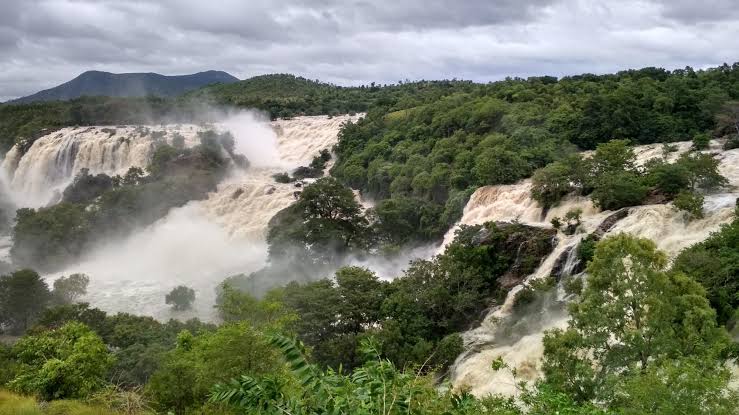
Bharachukki Falls
Bharachukki is one of the major cascades of the Shivanasamudra waterfall system and can be included in a wider itinerary around the Kollegal region.
7. Famous Dishes / Local Food
Chamarajanagar's cuisine is influenced by the food traditions of southern Karnataka, Mysore and the neighbouring Tamil Nadu region. Rural meals commonly use locally available grains, vegetables, pulses and spices.
Popular Foods to Try
- Ragi Mudde: A traditional finger-millet preparation commonly served with spicy curries and sambar.
- Ragi Rotti: A rustic flatbread prepared using finger-millet flour.
- Akki Rotti: Rice-based flatbread popular across Karnataka.
- Jowar Roti: A traditional millet flatbread found in rural Karnataka.
- Vegetable Palya: Simple seasonal vegetable preparations commonly served with rice or roti.
- Sambar and Rasam: Everyday South Indian dishes that are widely available.
- Idli and Vada: Popular breakfast foods available in towns and roadside eateries.
- Dosa: A common South Indian breakfast and evening meal.
- Mysore-style sweets: Sweet dishes influenced by the culinary traditions of the nearby Mysore region.
Travellers exploring forest and rural areas should carry sufficient food and water because restaurant choices can be limited away from major towns.
8. Famous Personalities
Chamaraja Wodeyar
Chamaraja Wodeyar is one of the most important historical figures associated with the district. He was born in the region, which was later renamed Chamarajanagar in his honour.
Male Mahadeshwara Swamy
Male Mahadeshwara Swamy is a revered saint and folk deity whose traditions are deeply connected with the Male Mahadeshwara Hills. His stories are preserved through devotional songs, oral traditions and folk performances.
Kanakadasa
Kanakadasa, one of Karnataka's important poet-saints, is associated with the wider cultural landscape of the region. The Biligiri Hills contain a site known as Kanakadasa Cave, which is connected with local traditions surrounding the saint.
Diwan Purnaiah
Diwan Purnaiah was an important administrator of the Mysore State. His association with Yelandur is preserved through the historic residence and hut located there.
Dr. Rajkumar
Kannada cinema legend Dr. Rajkumar was born at Gajanur in the neighbouring Mysore region and is strongly connected with the cultural history of the broader southern Karnataka area. The district's official tourism material also highlights his connection with the Kollegala region.
9. Festivals
Maha Shivaratri
Maha Shivaratri is one of the most important religious festivals in Chamarajanagar. It is celebrated with particular significance at Male Mahadeshwara Hills and several Shiva temples throughout the district.
Male Mahadeshwara Rathotsava
The annual Rathotsava at Male Mahadeshwara Hills attracts large numbers of devotees. The event is accompanied by religious rituals, devotional music and traditional cultural activities.
Biligiri Ranganathaswamy Festivals
Religious celebrations at Biligiri Ranganathaswamy Temple attract pilgrims from Karnataka and neighbouring states. The annual Brahmarathotsava is an important event in the local religious calendar.
Chamarajeshwara Ratha Yatra
The annual Ratha Yatra associated with Chamarajeshwara Temple is an important local religious celebration. Traditional performances and community gatherings form part of the festival atmosphere.
Gowri and Ganesha Festivals
Gowri and Ganesh festivals are widely celebrated throughout the district with household rituals, public celebrations and cultural programmes.
Dasara
As part of the wider Mysore cultural region, Dasara has a strong presence in the district and is celebrated through religious and community events.
Local Tribal and Folk Festivals
Forest communities and rural settlements preserve several seasonal and religious traditions. Folk songs, dances and devotional performances remain an important part of local cultural life.
10. Things to Do
Go on a Wildlife Safari
Wildlife safaris are among the most popular experiences in the Chamarajanagar region. Bandipur and BRT provide opportunities to observe elephants, deer, gaur, wild dogs, leopards and, with luck, tigers.
Visit Sacred Hills
Explore Male Mahadeshwara Hills, Biligiri Hills and Himavad Gopalaswamy Betta to experience the combination of spirituality and mountain scenery.
Birdwatching
BRT and the surrounding forest landscapes support a rich bird population. Birdwatchers can look for both resident forest species and seasonal visitors.
Explore Forest Landscapes
Nature lovers can explore permitted trails and viewpoints around the forest regions. Activities should always follow forest department regulations and local restrictions.
Visit Ancient Temples
Explore Chamarajeshwara Temple, Biligiri Ranganathaswamy Temple, Himavad Gopalaswamy Temple and historic temples around Yelandur and Narasamangala.
Experience Kamsale
If travelling during a local festival, look for performances of Kamsale and other traditional folk arts associated with the religious traditions of the region.
Explore Local Markets
Local markets provide an opportunity to purchase regional food products, textiles, traditional items and sandalwood-related handicrafts.
Visit Kollegal
Spend time exploring Kollegal and learn about its long association with silk production and regional trade.
Enjoy Hill Views
The district's many hills and forest viewpoints provide excellent opportunities for landscape photography, especially during the early morning and late afternoon.
11. Where to Eat, Shop, and Stay
Where to Eat
Chamarajanagar town, Gundlupet and Kollegal have the widest range of restaurants and eateries in the district.
- South Indian breakfast restaurants
- Traditional Karnataka meal outlets
- Local vegetarian restaurants
- Roadside eateries serving dosa, idli and vada
- Restaurants serving rice meals and regional curries
Food choices become more limited inside or close to protected forest areas, so visitors planning safaris should plan meals in advance.
Where to Shop
Visitors can shop for regional products and traditional handicrafts in Chamarajanagar and Kollegal.
- Sandalwood products
- Traditional handicrafts
- Silk products from the Kollegal region
- Local agricultural products
- Traditional souvenirs
Where to Stay
Accommodation is available in Chamarajanagar town, Gundlupet, Kollegal and around major wildlife destinations.
For a wildlife-focused trip, travellers can consider forest and jungle-lodge style accommodation around Bandipur and BRT. Homestays and smaller hotels can be useful for budget travellers.
Visitors heading towards Male Mahadeshwara Hills can also find accommodation around the pilgrimage centre, although facilities may be more basic than those in larger towns.
12. What Is the District Famous For?
Chamarajanagar is famous for its combination of forests, wildlife, sacred hills and cultural heritage.
| Feature | Why It Is Famous |
|---|---|
| Bandipur National Park | Important tiger reserve and wildlife habitat |
| BRT Wildlife Sanctuary | Biodiversity-rich forest landscape between major mountain systems |
| Male Mahadeshwara Hills | Major pilgrimage centre surrounded by forests |
| Himavad Gopalaswamy Betta | Misty hill and historic Krishna temple |
| Biligiri Ranganathaswamy Temple | Important hilltop pilgrimage site |
| Chamarajeshwara Temple | Historic temple in the district headquarters |
| Kollegal Silk | Long-standing silk production and weaving tradition |
| Kamsale | Traditional devotional folk performance |
| Tribal Heritage | Traditional forest-linked culture, particularly of Soliga communities |
13. Best Time to Visit
The best time to visit Chamarajanagar is generally from October to March. The weather during this period is more comfortable for wildlife safaris, temple visits, sightseeing and outdoor activities.
October to November
The forests become greener after the monsoon and the weather starts becoming pleasant. This is a good period for nature photography and sightseeing.
December to February
Winter offers comfortable temperatures and is one of the most suitable seasons for wildlife trips, hill visits and heritage exploration.
March to May
Summer can be hot during the day, but wildlife sightings may sometimes become easier around water sources. Travellers should follow the specific safari operator's seasonal guidance.
June to September
The monsoon brings greenery and fresh landscapes, but rain can affect forest access, roads and outdoor activities. Some attractions may have seasonal restrictions.
| Activity | Recommended Period |
|---|---|
| Wildlife Safari | October to May, subject to forest rules |
| Hill Visits | October to March |
| Temple Visits | October to March |
| Birdwatching | November to April |
| Landscape Photography | Post-monsoon and winter |
14. How to Reach
By Air
The nearest major airport for most travellers is Mysuru Airport, while Kempegowda International Airport in Bengaluru provides much broader domestic and international connectivity.
Travellers can continue from the airport by road towards Chamarajanagar, Bandipur or other destinations in the district.
By Train
Chamarajanagar has a railway station that connects the town with Mysuru and other parts of Karnataka. Rail travel is convenient for travellers coming from Mysuru and nearby areas.
By Road
Road travel is one of the easiest ways to explore Chamarajanagar because the district has several attractions spread across different towns and forest regions.
Chamarajanagar is connected with Mysuru, Bengaluru, Kollegal, Gundlupet and Tamil Nadu by road. KSRTC buses and private vehicles are commonly used for travel.
| Mode | Recommended For |
|---|---|
| Air | Long-distance travellers using Mysuru or Bengaluru as gateways |
| Train | Travellers coming through Mysuru |
| Road | Best option for combining wildlife, temples and hill destinations |
15. Nearby Places to Visit
Mysuru
Mysuru is one of the most popular destinations near Chamarajanagar and can easily be combined with a district tour. The city is known for Mysore Palace, Chamundi Hills, markets and its Dasara celebrations.
Bandipur
Bandipur is one of the major wildlife destinations in the region and can be included in a southern Karnataka wildlife itinerary.
Ooty
Ooty in Tamil Nadu is located beyond the Nilgiri hills and can be combined with Chamarajanagar and Bandipur for a longer hill-and-wildlife journey.
Gudalur
Gudalur is another destination in the Nilgiri region and provides access to scenic mountain and forest landscapes.
Shivanasamudra
Shivanasamudra is known for its spectacular waterfalls on the Kaveri River and can be combined with destinations around Kollegal.
Hogenakkal Falls
Hogenakkal Falls lies in neighbouring Tamil Nadu and is a popular extension for travellers exploring the southern Deccan and Kaveri landscape.
Wayanad
Wayanad in Kerala is another possible extension for travellers interested in forests, hills, wildlife and rural landscapes.
Sathyamangalam
Sathyamangalam in Tamil Nadu is part of the larger Nilgiri landscape and is known for its forests and wildlife. It can be included in a broader South Indian wildlife circuit.
16. Best Duration for a Trip
A 2-day trip is suitable for visitors who want to explore Chamarajanagar town and one major wildlife or hill destination. A 3-day itinerary is more comfortable if you want to combine wildlife with temples and cultural attractions.
| Duration | Suggested Plan |
|---|---|
| 1 Day | Chamarajanagar town, Chamarajeshwara Temple and nearby attractions |
| 2 Days | Chamarajanagar + Bandipur or BRT wildlife experience |
| 3 Days | Wildlife + Male Mahadeshwara Hills + major temples |
| 4–5 Days | Chamarajanagar + BRT + Bandipur + MM Hills + nearby destinations |
Suggested 3-Day Itinerary
Day 1: Begin with Chamarajanagar town and visit Chamarajeshwara Temple. Explore nearby heritage attractions and continue towards Yelandur if time permits.
Day 2: Travel towards Bandipur or BRT for a wildlife safari. Explore the forest landscape and, depending on access and timings, visit Himavad Gopalaswamy Betta or K.Gudi.
Day 3: Travel towards Male Mahadeshwara Hills. Visit the Sri Male Mahadeshwara Temple, enjoy the hill scenery and explore the surrounding pilgrimage landscape.
17. Travel Tips
- Plan wildlife safaris in advance, especially during weekends, holidays and peak tourist seasons.
- Follow all forest department rules while entering protected areas.
- Do not feed or approach wild animals.
- Maintain silence during wildlife safaris to improve the experience for both visitors and animals.
- Carry binoculars if you are interested in birdwatching.
- Wear comfortable shoes for hill destinations and temple visits.
- Carry sufficient drinking water, particularly when travelling during summer.
- Use insect repellent when staying near forest areas.
- Respect local tribal traditions and avoid entering restricted community or forest areas without permission.
- Dress modestly when visiting temples and religious centres.
- Check access restrictions before travelling to forest and hill destinations.
- Avoid night travel through protected forest areas because forest roads may have restrictions and wildlife can be active after dark.
- Keep extra time in your itinerary because forest and hill roads can take longer than expected.
- Carry cash when travelling to remote areas because digital payment facilities may not always be available.
18. Why Visit Chamarajanagar?
For Wildlife Lovers
Chamarajanagar provides access to some of southern Karnataka's most important wildlife landscapes. Bandipur and BRT offer opportunities to experience forests, elephants, deer, gaur, birds and other wildlife.
For Pilgrims
Male Mahadeshwara Hills and Biligiri Ranganathaswamy Temple are major religious destinations set within spectacular hill environments.
For Nature Lovers
The combination of forests, grasslands, hills and valleys makes the district particularly attractive for nature photography and peaceful outdoor experiences.
For Culture Enthusiasts
The district's folk traditions, Kamsale performances, tribal heritage, temple festivals and silk traditions provide an opportunity to experience the cultural diversity of southern Karnataka.
For History Lovers
Hoysala, Vijayanagara and Mysore-period temples and monuments can be found throughout the district, providing an interesting journey through several centuries of South Indian history.
For Slow Travellers
Chamarajanagar is well suited to travellers who prefer forests, hills, temples, rural landscapes and less commercialised destinations over crowded urban tourist centres.
19. Conclusion
Chamarajanagar is a destination where the natural and cultural landscapes of southern Karnataka meet. From the forests of Bandipur and BRT to the sacred peaks of Male Mahadeshwara Hills and Biligiri Hills, the district offers an unusually diverse travel experience.
Its history adds another layer to the journey. Ancient Jain heritage, medieval temples, Mysore-era connections, traditional silk production and the folk traditions associated with Male Mahadeshwara all contribute to the district's distinctive identity.
For wildlife enthusiasts, Chamarajanagar provides access to important protected forests. For pilgrims, it offers sacred temples and hill shrines. For history and architecture lovers, its temples and heritage structures provide plenty to explore. For nature lovers, the hills, forests and grasslands offer peaceful scenery and opportunities for photography and birdwatching.
Chamarajanagar is more than the southern gateway of Karnataka—it is a meeting point of forests, wildlife, sacred hills, folk traditions and centuries of cultural heritage.
"Travel is the only thing you buy that makes you richer."