Ambala Tourism Guide : Best Places to Visit, History, Food & Travel Tips
Introduction
Ambala is a historic city in the Indian state of Haryana, sitting right at the crossroads of the Grand Trunk Road and the routes connecting Delhi, Chandigarh, and Punjab. Because of this strategic location, Ambala has long served as a gateway city for travelers heading toward Himachal Pradesh, Punjab, and the hill stations of the north — yet it holds enough heritage, spirituality, and local flavor to be a destination in its own right.
The city is split into two main parts: Ambala City, the older, commercial heart with its bazaars and temples, and Ambala Cantonment (Cantt), a British-era military zone known for its tree-lined avenues, colonial architecture, and army establishments. This mix gives Ambala a unique split personality — part ancient pilgrim town, part 19th-century garrison city.
History of Ambala: How the City Got Its Name
Ancient Origins
Ambala's roots run deep into ancient Indian history. Some of the earliest literary references to the region appear in the Taittiriya Aranyaka, where the area is mentioned as Turghna, a locality bordering the northern edge of Kurukshetra — later identified with Shrughna (Sugh), a site referenced even in Panini's ancient Sanskrit texts. Archaeological explorations by British-era historians and later scholars have uncovered traces connected to the ancient Kushan empire, hinting at temples and settlements that once stood in the region.
The Legend Behind the Name
There isn't one single accepted story of how Ambala got its name — instead, there are several fascinating theories:
- Amba Rajput theory: Historical accounts suggest the district was founded by Amba Rajput during the 14th century.
- "Amba Wala" (Mango Village) theory: Another popular belief is that "Ambala" is a corruption of Amba Wala, meaning "the mango village," inspired by the mango groves that once surrounded the settlement.
- Goddess Bhawani Amba theory: A widely told version claims the city is named after the Goddess Bhawani Amba, whose ancient temple still stands in Ambala City today and remains an active place of worship.
Ambala Through the Mughal and British Eras
During the Mughal period, the region gained strategic importance along the Grand Trunk Road. The Kos Minar, an old milestone tower near the Cloth Market, is believed to have been constructed on the orders of Sher Shah Suri around 400 years ago to mark distances between major stops along this historic highway.
Later, under British colonial rule, Ambala Cantonment was developed into a major military station — one of the oldest in northern India. This period left behind Gothic-style churches, a colonial clock tower, and sprawling cantonment infrastructure that still defines the city's character. Ambala's Air Force Station, established during British times, also played a significant strategic role during the 1947 and 1965 India-Pakistan conflicts.
Today, Ambala carries forward this dual identity — deeply linked to the Indian Army and Air Force on one hand, and recognized across India as a manufacturing hub for scientific and surgical instruments on the other.
Weather and Climate in Ambala
Ambala experiences a semi-arid, continental climate with sharply contrasting seasons — scorching summers, a humid monsoon, and cool, pleasant winters.
Summer (March to June)
Summers are intense, with daytime temperatures regularly climbing past 40°C and occasionally touching 45°C during peak heat in May, the hottest month of the year. Hot, dry winds are common, making outdoor sightseeing uncomfortable during this period.
Monsoon (July to September)
The monsoon season brings much-needed relief from the heat, along with high humidity and moderate-to-heavy rainfall. July is typically the wettest month. While the city turns lush and green, sudden downpours can disrupt travel plans.
Winter (October to February)
This is Ambala at its most pleasant. Temperatures range roughly between 5°C and 20°C, with December and January being the coldest months and occasional dips below 5°C during early mornings. Clear skies, cool breezes, and comfortable daytime temperatures make this the ideal season for sightseeing.
Best Time to Visit Ambala
The best time to visit Ambala is between October and March. The post-monsoon months of October and November are especially pleasant as humidity drops and skies clear up, while December to February offers a proper North Indian winter experience. Avoid visiting between April and June unless you don't mind extreme heat.
Top Tourist Places to Visit in Ambala
Ambala may not be a mainstream tourist hotspot, but it rewards travelers with a genuinely diverse set of religious, historical, and colonial-era attractions packed into a compact area.
Historical and Colonial Landmarks
Rani Ka Talab
A serene, roughly 400-year-old pond located near Ambala Cantonment, believed to have been built by a local queen (some accounts credit King Ranjit Singh). Surrounded by well-maintained gardens and still supervised by the army, it's a peaceful spot for a walk and a reminder of the region's royal past.
Holy Redeemer Church
Built by the British in 1848 (some sources cite 1905), this church is one of the finest examples of Gothic-style colonial architecture in the region. With stained-glass windows, marble pavements, sturdy pillars, and a high Victorian-style roof, it remains one of the most peaceful and photogenic spots in Ambala Cantt.
Saint Paul's Church
One of the oldest churches in the region, established in 1857. It suffered significant damage during the 1965 Indo-Pak war, and today only a single tower of the original structure remains standing — a quiet, poignant reminder of the city's turbulent history.
Kos Minar
An ancient Mughal-era milestone tower located along the Grand Trunk Road near the Cloth Market, believed to have been constructed under Sher Shah Suri around 400 years ago to mark travel distances between towns.
Ambala Clock Tower
A prominent colonial-era municipal landmark standing at a busy crossroads in the older part of the city. Though weathered by time, it remains a central navigational point and a favorite meeting spot for locals, surrounded by shops and street vendors.
Christian Cemetery
Spread across roughly 22 acres on Jagadhari Road in Ambala Cantt, this cemetery is around 300 years old and maintained by the Haryana Government. It holds the graves of several notable historical figures from the colonial era.
Temples and Spiritual Sites
Bhawani Amba Temple
An ancient temple dedicated to Goddess Amba — the deity many believe the city itself is named after. Known for its intricately carved pillars and detailed traditional architecture, it remains one of the most visited religious sites in Ambala City. The nearby Kali Mata Mandir is also worth a visit while you're in the area.
Bhuteshwar Temple
A significant temple reflecting the city's long spiritual history, popular among devotees seeking a quieter, more traditional temple experience away from the main city bustle.
Gurudwaras
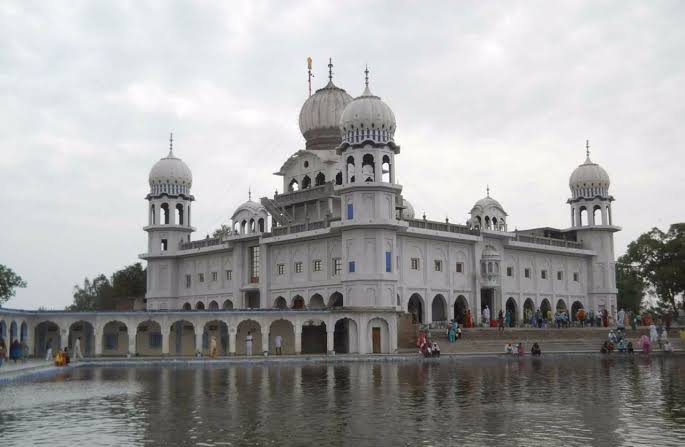
Sis Ganj Gurudwara
A revered Sikh shrine commemorating the martyrdom of Guru Tegh Bahadur, the ninth Sikh Guru. Known for its striking architecture and calm atmosphere, it's open from 4 AM to 10 PM and draws devotees from across the region.
Gurudwara Sri Panjokhra Sahib
Dedicated to the eighth Sikh Guru, Sri Harkrishan Sahib Ji, this gurudwara offers a deeply spiritual atmosphere and is considered a must-visit for anyone exploring Ambala's Sikh heritage.
Gurudwara Manji Sahib
Another important Sikh shrine in the city, commemorating a historic visit by a Sikh Guru and forming part of Ambala's broader network of religious landmarks.
Other Notable Spots
Maharaja Agrasen Chowk
One of the main landmarks and traffic junctions of Ambala city, often used as a reference point by locals and visitors alike.
Ambala Air Force Station
One of the oldest Indian Air Force bases, established during British rule and historically significant for its role in the 1947 conflict. Public access is limited to designated viewing points only, but it remains an important symbol of the city's military legacy.
Best Markets and Shopping Places in Ambala
The Cloth Market (Ambala City)
If there's one shopping experience that defines Ambala, it's this. The Cloth Market of Ambala is often cited as the largest cloth trading market in the subcontinent, with a dense cluster of roughly 900 to 1,000 wholesale shops. It specializes in:
- Hand-loom fabrics
- Silk sarees
- Suiting and shirting materials
- Bridal wear and dress materials
Shoppers travel from across the region specifically for this market, and it's an experience worth having even if you're not buying in bulk — the sheer scale and variety of textiles on display is a sight in itself.
Local Bazaars Near the Clock Tower
The area around the old clock tower is packed with smaller shops, street vendors, and everyday bazaars selling everything from clothing to household goods — a good spot to experience the everyday rhythm of Ambala City.
Must-Try Foods in Ambala
Ambala's food scene leans heavily into North Indian and Punjabi flavors, shaped by its proximity to Punjab and its large cantonment population.
Amritsari Kulcha with Chole
A crispy, stuffed kulcha served alongside spicy chole — best enjoyed at the city's popular Punjabi restaurants, especially around Ambala Cantt.
Lassi
Thick, creamy, and generously sweetened, Punjabi-style lassi is a local favorite, especially at traditional dairy shops and dhabas scattered around the city.
Dal Makhani and Tandoori Roti
A slow-cooked, comforting combination that's a staple at local eateries — rich, buttery dal paired with fresh tandoori roti straight off the clay oven.
Street Food Around Local Markets
Busy market-side food joints near the Cloth Market and Clock Tower area serve up classic North Indian street snacks, chaat, and quick bites perfect for grazing while you shop.
Where to Stay in Ambala
Ambala offers accommodation options across a range of budgets, largely concentrated in and around Ambala Cantt and the city center.
- Budget travelers: June, August, and September tend to see lower hotel prices, making them the most affordable months to book a stay, even though the weather isn't ideal for sightseeing during these months.
- Peak season: June, July, and September also happen to be the busiest months for tourism, so book in advance if you're traveling then.
- Recommended stay duration: A stay of at least 2 to 3 days is recommended to properly explore Ambala's historical landmarks, markets, and religious sites without rushing.
- Boutique stays: For a more personalized experience, boutique hotels in the city often provide better value and a more distinctive stay compared to larger chain hotels.
Most travelers base themselves in Ambala Cantt, given its proximity to the churches, Rani Ka Talab, and easy connectivity to the rest of the city.
Famous Personalities from Ambala
Ambala has been the birthplace of several notable names across film, food, and public life:
- Om Puri — Acclaimed actor known for his roles in both mainstream Hindi cinema and internationally recognized art films.
- Juhi Chawla — Popular Bollywood actress, former Miss India, and film producer.
- Parineeti Chopra — Hindi film actress and singer, who studied at the Convent of Jesus and Mary in Ambala before entering the film industry.
- Sanjeev Kapoor — Widely recognized Indian celebrity chef and restaurateur.
This mix of cinema, cuisine, and public figures adds another layer to Ambala's cultural identity beyond its historical monuments.
How to Reach Ambala
Ambala's biggest travel advantage is its location — it sits directly on the Grand Trunk Road corridor and is a major railway junction connecting Delhi with Punjab, Himachal Pradesh, and Jammu & Kashmir. This makes it:
- Easily accessible by train, with Ambala Cantonment Railway Station being one of the busiest junctions in North India.
- Well-connected by road, via National Highways linking it to Delhi, Chandigarh, and Punjab.
- A convenient stopover for travelers heading toward Himachal Pradesh's hill stations or Punjab's cultural circuit.
Travel Tips for Visiting Ambala
A few practical pointers to make your trip smoother:
- Carry light woolens in winter: Early mornings and evenings between December and February can get chilly, even though days stay pleasant — a light jacket or shawl helps.
- Avoid April to June: Unless you can handle extreme dry heat (up to 45°C), skip this window entirely for outdoor sightseeing.
- Start sightseeing early: Temples, gurudwaras, and the Cloth Market get busy by mid-morning. Starting by 8–9 AM lets you beat both the crowds and the heat.
- Combine Ambala City and Cantt in separate legs: The two areas are a fair distance apart — plan City-side temples and markets on one outing, and Cantt's churches, Rani Ka Talab, and cantonment sights on another, rather than zig-zagging between them.
- Bargain at the Cloth Market: Since it's primarily a wholesale market, prices are often negotiable, especially if you're buying more than one piece.
- Respect dress codes at religious sites: Cover your head at gurudwaras and dress modestly at temples and churches — most sites provide head coverings if needed.
- Keep cash handy: Smaller shops, dhabas, and street food stalls in the older markets may not accept cards or digital payments.
- Use Ambala as a base, not just a stopover: Given its connectivity, it's easy to treat Ambala as a launchpad for day trips to Chandigarh, Panchkula, or Morni Hills — but it deserves at least one full day on its own itinerary.
- Book Cantt-area hotels for convenience: Staying in Ambala Cantt puts you closer to the churches, Rani Ka Talab, and better dining options, with easy access to the railway junction.
Final Thoughts
Ambala isn't the kind of city that dominates typical North India itineraries, but that's exactly what makes it worth a detour. Between its centuries-old temples, Gothic churches, a legendary cloth market, and its deep ties to India's military history, the city offers a layered, unhurried travel experience — best enjoyed slowly, over a crisp winter weekend, with a plate of dal makhani and a glass of lassi close at hand.
Frequently Asked Questions About Ambala
Q: What is Ambala famous for?
Ambala is known as the "City of Scientific Instruments" for its long-standing manufacturing industry, its strong Indian Army and Air Force presence, its historic Cloth Market, and its blend of ancient temples with British-era colonial architecture.
Q: How many days are enough to explore Ambala?
2 to 3 days are generally sufficient to cover the major historical sites, temples, gurudwaras, and markets at a relaxed pace.
Q: Is Ambala good for a religious or spiritual trip?
Yes. With sites like Bhawani Amba Temple, Sis Ganj Gurudwara, Gurudwara Sri Panjokhra Sahib, and several historic churches, Ambala offers a genuinely multi-faith spiritual experience.
Q: What should I buy in Ambala?
Textiles are the standout purchase — head to the Cloth Market for hand-loom fabrics, silk sarees, and bridal wear at wholesale prices.
Q: Can Ambala be visited as a day trip from Chandigarh or Delhi?
Yes, Ambala is well connected to both cities by road and rail, making it possible to visit as a day trip. However, spending a night lets you cover the Cantt and City sides without rushing.
Q: Is Ambala well-connected by public transport within the city?
Local travel is mainly via auto-rickshaws, cycle rickshaws, and app-based cabs, since Ambala City and Ambala Cantt are spread apart and best explored by hired transport rather than walking between them.
Q: Are there any wildlife or nature spots near Ambala?
Ambala itself is primarily an urban/religious/historical destination, but nearby Morni Hills (in Panchkula district) offers a nature and light-trekking getaway within a couple of hours' drive.
Q: Is Ambala safe for solo and family travelers?
Yes. As a cantonment city with a strong Army and Air Force presence, Ambala is generally considered safe, with well-patrolled main roads and markets.
"Travel is the only thing you buy that makes you richer."