Palwal — The Cotton Town Where Gandhi Was First Arrested
Introduction
Palwal wears its history quietly. This is a city named after a demon slain in the Mahabharata, a town the Pandavas are said to have passed through during their exile, and — centuries later — the very railway platform where Mahatma Gandhi was first arrested by British police. Today, Palwal is better known as one of India's key cotton-trading hubs, but scratch beneath its commercial surface and you'll find temples, forts, and freedom-movement history layered into every corner. It's a city that doesn't try hard to impress visitors, and that unpretentious quality is exactly what makes it worth a stop.
History
According to legend, Palwal takes its name from Palwasura, a demon who ruled this land during the era of the Pandavas and was eventually slain by Balarama, the elder brother of Lord Krishna. The town finds mention in the Mahabharata as part of the Pandava kingdom of Indraprastha, and local tradition holds that the Pandavas spent part of their exile in the area now known as Pandav Van.
Centuries later, the town was reconstructed by King Vikramaditya after a period of destruction, and it later came under the rule of the Parmara dynasty during the medieval period. Under British rule, Palwal belonged to both the Punjab and Gurgaon regions, and its people played an active role in India's freedom struggle — 17 residents, including Hayat Ali and Khairat Ali, were martyred following the Revolt of 1857.
Palwal's most famous modern historical moment came in 1919, when Mahatma Gandhi, traveling to protest the Jallianwala Bagh massacre, was arrested for the very first time at Palwal Railway Station — an event now commemorated through the Gandhi Ashram built in his memory. Administratively, Palwal was part of Faridabad district after 1979, before finally becoming the headquarters of its own separate district on 15th August 2008.
Geography
Palwal is located in the southern part of Haryana, within the National Capital Region, roughly 60 km from Delhi and 29 km from Faridabad. It sits at an average elevation of 195 meters and shares its borders with Mewat, Aligarh, Gurgaon, and Faridabad districts, as well as Delhi itself.
The district falls within the historic Braj region, adding a distinct cultural and mythological layer to its geography beyond Haryana's typical identity. The land here is fertile and agricultural, well suited to the district's major economic activity — cotton farming — alongside fruit cultivation, particularly mangoes and guavas. The climate remains dry for most of the year, save for the monsoon season, which brings a welcome, lush transformation to the landscape.
Culture and Traditions
Palwal's culture blends Haryanvi and Braj traditions, a natural result of its position within the historic Braj cultural region associated with Krishna and Balarama worship. Hindi is the district's official language, with local dialects reflecting this dual Haryanvi-Braj heritage.
Community life here remains closely tied to religious observance and mythology, particularly around figures like Balarama, whose legend is central to the city's identity and annual festivals. Palwal's role as a major cotton and grain trading hub has also shaped its commercial culture, with large markets forming an important part of everyday community life. The city's freedom-struggle legacy adds another layer of civic pride, commemorated through local memorials and annual observances.
Architecture
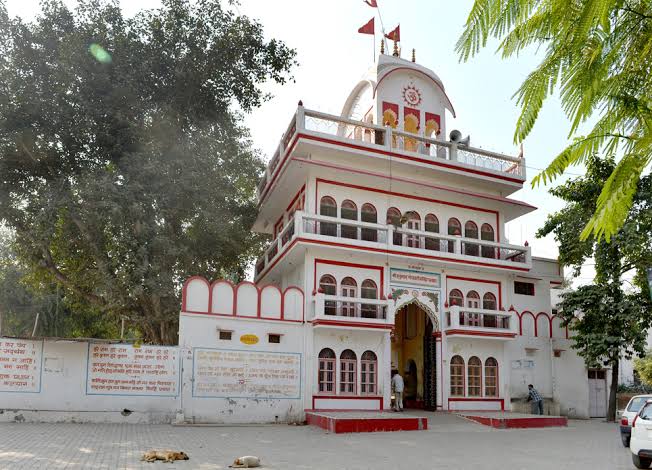
Palwal's architecture reflects its layered mythological, medieval, and colonial history. The Dauji Temple, dedicated to Balarama, stands near the city's Municipal Chowk as one of its most significant religious structures, directly tied to the Palwasura legend that gives the city its name.
The Panchvati Temple and sites within Pandav Van reflect the city's Mahabharata-linked mythology through both religious and natural architecture — including caves associated with the Pandavas' period of exile. Colonial-era architecture is represented by the Gandhi Ashram, built near Palwal Railway Station in memory of Mahatma Gandhi's historic arrest, alongside surviving structures from the district's role in the 1857 uprising. Nearby, the restored Raja Nahar Singh Palace at Ballabgarh reflects the region's Jat-era royal architectural style.
Famous Places
Dauji Temple
A temple dedicated to Balarama, elder brother of Lord Krishna, located near Palwal's Municipal Chowk. This is the city's most spiritually significant site, directly connected to the legend of Palwasura and the annual Baldev Chhat Ka Mela held in his honor.
Mythological Significance
The temple commemorates Balarama's victory over the demon Palwasura, an event still celebrated annually and central to the city's very name and identity.
Visiting Tips
The temple sees its largest crowds during the Baldev Chhat Ka Mela, making a visit during this period especially rewarding for those interested in local religious tradition.
Quick Tip
Combine your visit with a walk through the surrounding Municipal Chowk market for a fuller sense of daily life in old Palwal.
Gandhi Ashram (Gandhi Museum)
Located near Palwal Railway Station, this ashram was built in memory of Mahatma Gandhi's first-ever arrest, which took place here in 1919 while he was en route to protest the Jallianwala Bagh massacre. Run by the Gandhi Sewashram Trust, it also serves the local poor and hosts an annual tribute on Gandhi Jayanti.
Pandav Van and Panchvati
A site tied to Mahabharata legend, believed to be where the Pandavas spent part of their period of exile. The temple and cave here remain an active pilgrimage destination for visitors interested in the city's mythological roots.
Sati Temple and Pond (Hodal)
Located in Hodal, part of Palwal district, this temple and pond hold local religious significance, with an annual mela held here each January drawing devotees from across the region.
Jal Mahal (Hodal)
A historic water palace situated in Hodal, offering visitors a glimpse into the district's royal architectural heritage beyond Palwal city itself.
Roshan Chirag Tomb
A tomb built by a Sufi saint, constructed by collecting stones over time, reflecting the district's Islamic heritage alongside its dominant Hindu religious landmarks.
Famous Dishes
Chole Bhature
A beloved North Indian favorite, Palwal's local eateries — including well-known spots near Jawahar Nagar — are particularly famous for their version of this spicy chickpea and fried bread combination.
Dal Tadka with Paneer Chilli
A comforting, tempered lentil dish often paired with spicy paneer chilli, popular at local dhabas along the highway stretches near the city.
Local Street Snacks
Palwal's markets, particularly around Agra Chowk, are known for classic North Indian street food, including well-loved pizza and snack spots that draw steady crowds of locals.
Seasonal Mangoes and Guavas
Given Palwal's strong agricultural identity, the district's fresh mangoes and guavas are a genuine seasonal highlight, best enjoyed directly from local orchards and markets.
Famous Personalities
Shekhar Gupta
Originating from Palwal district, Shekhar Gupta is a highly respected Indian journalist who rose through print journalism at The Telegraph and India Today before serving as editor-in-chief of The Indian Express from 2006 to 2008. In 2017, he founded ThePrint, a prominent digital news platform focused on policy analysis and regional issues.
A Career Built on Investigative Journalism
Gupta's editorial leadership included overseeing coverage of major national stories, establishing him as one of India's most influential media figures.
Connection to Palwal
His roots in Palwal district remain part of his public biography, tying one of India's most recognized journalists back to this quiet Haryana town.
Fast Fact
ThePrint, the platform he founded, continues to focus on policy analysis and regional issues, including agrarian concerns relevant to his home state of Haryana.
Cheti Lal Verma
Born in 1921, Cheti Lal Verma is recognized as a notable personality from Palwal district, contributing to the region's historical and civic legacy.
Festivals
Baldev Chhat Ka Mela
Palwal's most significant local festival, commemorating Balarama's victory over the demon Palwasura. Celebrated with genuine community enthusiasm, it marks the mythological triumph of good over evil that gives the city its very name.
Gandhi Jayanti
Observed with special significance in Palwal given the city's direct connection to Mahatma Gandhi's freedom-struggle history, with annual tributes held at the Gandhi Ashram.
Diwali and Holi
Celebrated with the same warmth found across North India, these major festivals bring Palwal's markets and homes alive with lights, colors, and family gatherings throughout the year.
Things to Do
- Visit Dauji Temple, the mythological and spiritual heart of the city.
- Explore Gandhi Ashram, a genuine piece of India's freedom-struggle history.
- Walk through Pandav Van, tracing the city's Mahabharata-linked legend.
- Take a day trip to Hodal, home to Sati Temple, Jal Mahal, and Anjani Kund.
- Shop and eat around Agra Chowk, the city's lively local market hub.
- Attend the Baldev Chhat Ka Mela, if your visit aligns with the festival calendar.
- Sample fresh mangoes and guavas, a genuine seasonal local specialty.
Where to Eat, Shop, and Stay
Eat: Local eateries across Palwal serve popular North Indian staples like chole bhature and dal tadka, with well-known spots around Agra Chowk and Jawahar Nagar drawing steady crowds.
Shop: Palwal's large grain and cotton markets reflect its identity as a major agricultural trading hub, while local bazaars offer everyday goods and seasonal produce.
Stay:
- Budget: Simple guesthouses and small hotels cover most short-stay needs for travelers passing through.
- Mid-range: A handful of comfortable hotels near the city center offer better amenities.
- Luxury: For upscale stays, travelers often base themselves in nearby Faridabad or Gurugram, both well connected to Palwal by road.
What is Palwal Famous For?
Palwal is best known as a major cotton and grain trading hub, its mythological connection to the Mahabharata through the legend of Palwasura, and its historic role in India's freedom movement as the site of Mahatma Gandhi's first arrest. It's also recognized for its fertile orchards, particularly mangoes and guavas.
Best Time to Visit
October to March is generally the most comfortable window to visit Palwal, though the region can be visited throughout the year. Many travelers particularly enjoy visiting during the monsoon season, when the surrounding countryside turns lush and green. Summers can get quite hot and dry, making outdoor sightseeing more difficult.
How to Reach
By Air: The nearest airport is Indira Gandhi International Airport in Delhi, roughly 55–60 km away.
By Rail: Palwal is well connected on the Delhi-Agra rail route, with its own railway station serving regular trains.
By Road: Palwal sits on National Highway 2, with regular bus services connecting it to Delhi, Faridabad, and Agra.
Nearby Places
Faridabad
About 29 km away, Faridabad offers a larger city experience with additional heritage sites like Raja Nahar Singh Palace, alongside more extensive shopping and dining options.
Why It Complements a Palwal Trip
Faridabad's own Mahabharata-linked and royal heritage sites pair naturally with Palwal's mythological history, deepening the same regional narrative.
Getting There
The two cities are well connected by road, making a same-day visit easy.
Quick Tip
Combine a Palwal morning with a Faridabad afternoon at Raja Nahar Singh Palace for a well-rounded regional day trip.
Hodal
A town within Palwal district itself, home to Sati Temple, Jal Mahal, and Anjani Kund, each tied to its own local legends and worth a dedicated half-day visit.
Mathura
Roughly 60 km away, Mathura extends Palwal's own Braj-region mythology with its own deep Krishna-linked pilgrimage sites.
Best Duration for a Trip
1 to 2 days is generally sufficient to comfortably explore Palwal's temples, the Gandhi Ashram, and local markets. Travelers combining it with Hodal or Faridabad can extend this into a fuller 3-day regional trip.
Travel Tips
- Visit between October and March for the most comfortable sightseeing weather, though the monsoon season offers its own scenic appeal.
- Dress modestly and respect local customs when visiting temples and religious sites.
- Carry cash, as smaller markets and eateries may not accept digital payments.
- Use local buses or taxis for easier movement between Palwal, Hodal, and Hathin.
- Time your visit around the Baldev Chhat Ka Mela for a richer cultural experience.
- Try the local mangoes and guavas in season for a genuine taste of the region's produce.
Why Visit Palwal?
Palwal offers a quiet, genuinely layered slice of Haryana history — a city where Mahabharata legend, medieval reconstruction, and modern freedom-struggle history all sit within walking distance of one another. It's not built for spectacle, but for travelers who appreciate finding real historical weight in an otherwise unassuming, hardworking market town.
Conclusion
Palwal may not top most travel itineraries, but it holds a genuinely rich blend of mythology, history, and everyday commerce. From the temple honoring Balarama's mythological victory to the railway platform where Gandhi was first arrested, and from its bustling cotton markets to its orchards of mangoes and guavas, this quiet Haryana town rewards travelers willing to look beyond the highway. A short visit here, paired with a plate of chole bhature and a walk through its old bazaars, offers a genuinely rooted glimpse into one of the National Capital Region's most overlooked corners.
"Travel is the only thing you buy that makes you richer."