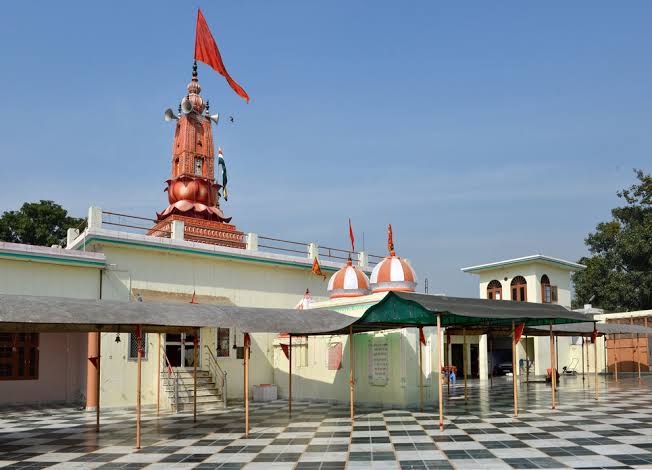
Yamunanagar — Where the Sacred River Meets the Shivalik Wild
Introduction
Cradled on the banks of the Yamuna River and pressed right up against the green foothills of the Shivalik range, Yamunanagar doesn't fit the flat, dusty image most people carry of Haryana. This is a timber town with a genuinely soulful side — home to one of India's oldest Buddhist stupas, a temple complex tucked into forested hills, a national park teeming with wildlife, and legends that place the Pandavas wandering through its ancient forests. Known industrially for plywood and paper, Yamunanagar quietly doubles as one of the state's most rewarding gateways to nature and history.
History
Yamunanagar's story begins with its lifeline — the Yamuna River, which has shaped the region's culture, economy, and spiritual identity for centuries. Local legend links this land to the Mahabharata, with the Pandavas believed to have roamed its dense forests during their years of exile.
The district's most striking historical landmark is the Chaneti Buddhist Stupa, which according to the Chinese traveler Hieun Tsang, was built by King Ashoka himself — placing Yamunanagar firmly within the Mauryan-era Buddhist landscape of ancient India. Centuries later, the Mughals left their own mark through structures like the Kos Minars, milestone towers erected during the reign of Emperor Jahangir to mark travel distances along historic routes. The region's connection to Sikh history runs deep too, with its proximity to the historical Gurudwara of Paonta Sahib linking it to a broader network of Sikh pilgrimage sites in the area.
Yamunanagar's modern character took shape after Partition, when many refugee families from Punjab settled here, adding new layers to the town's culture in the process. It became a small village concentrated around its railway station before growing into today's industrial hub, and Yamunanagar district itself came into existence as a separate administrative unit on 1st November 1989.
Geography
Yamunanagar sits on the north-eastern tip of Haryana, bordered by Himachal Pradesh to the north and Uttar Pradesh to the east, at a location where the borders of Haryana, Himachal Pradesh, Uttar Pradesh, and Uttarakhand nearly converge. The city's position along the Yamuna River and its closeness to the Shivalik foothills give it a genuinely different landscape compared to Haryana's flatter agricultural plains.
This proximity to the hills also gives rise to the district's most celebrated natural attraction — Kalesar National Park, spread across roughly 11,570 acres of dense forest. The climate here follows a typical North Indian pattern, but the surrounding greenery and river geography make it noticeably cooler and more scenic than much of the rest of the state, particularly appealing for nature-focused travel.
Culture and Traditions
Yamunanagar's culture reflects a genuine blend of Haryanvi roots and post-Partition Punjabi influence, with Hindi, Haryanvi, and Punjabi all commonly spoken across the district. This layered identity took shape when refugee families arriving after Partition chose to make Yamunanagar their new home, adding fresh cultural threads to the town's fabric.
The district's economy and community life remain closely tied to its timber and paper industries, with generations of families connected to the plywood trade that gives the region its modern identity. Spirituality also runs deep here, reflected in the district's mix of ancient Buddhist heritage, Hindu temple traditions, and nearby Sikh pilgrimage sites — a genuinely diverse religious landscape for a mid-sized industrial town.
Architecture
Yamunanagar's architecture spans Buddhist, Mughal, and colonial-era styles, each layer reflecting a different chapter of the region's history. The Chaneti Buddhist Stupa, a 100-square-meter sphere with a 7.5-meter diameter, stands as the oldest architectural structure in the area, believed to have been built under Emperor Ashoka.
The Kos Minars, erected during Emperor Jahangir's reign, represent the district's earliest surviving Mughal-era construction, originally built to mark distances along important travel routes. Religious architecture is well represented by the Adibadri Temple Complex, a cluster of shrines nestled in the Shivalik foothills offering panoramic views alongside spiritual significance. Colonial-era engineering is showcased through the Shyama Prasad Mukherjee Railway Bridge, a 1,042-metre structure spanning the Yamuna River to connect the district with Saharanpur.
Famous Places
Chaneti Buddhist Stupa
Located about 10 km from Yamunanagar, this is one of the most intriguing destinations in the region — a 100-square-meter Buddhist stupa believed, according to the Chinese traveler Hieun Tsang, to have been built by Emperor Ashoka himself, making it one of the oldest surviving Buddhist structures in the area.
An Ancient Buddhist Legacy
The stupa's Mauryan-era origins connect Yamunanagar directly to one of India's most significant historical periods, offering a genuinely rare archaeological experience for a district otherwise known for its industry.
Visiting Tips
The site is best explored slowly, allowing time to appreciate both its scale and its historical context within the broader spread of Ashokan-era Buddhist monuments across North India.
Quick Tip
Combine your visit here with the nearby Shani Mandir for a fuller half-day of sightseeing in the area surrounding the stupa.
Kalesar National Park
Spread across roughly 11,570 acres in the Shivalik foothills, this is Yamunanagar's premier nature destination, drawing wildlife enthusiasts and nature lovers for its dense forest cover, diverse fauna, and scenic beauty along the Haryana-Uttarakhand border.
Adibadri Temple Complex
A cluster of shrines nestled in the Shivalik foothills, offering panoramic views alongside genuine spiritual tranquility. This site is perfect for travelers seeking both history and a peaceful natural setting.
Hathni Kund Barrage
Located on the state border between Haryana and Uttar Pradesh, about 40 km from the city center, this barrage is a popular destination with roads leading toward both Paonta Sahib and Dehradun, making it a scenic stop for travelers heading further into the hills.
Kos Minars
Mughal-era milestone towers erected during Emperor Jahangir's reign, standing among the earliest surviving examples of Mughal road infrastructure in the region, and a compelling stop for history enthusiasts.
Shani Mandir
Dedicated to Shani Bhagawan and located near the Jagadhri Workshop Railway Station, this temple is known for its intricate architecture and draws a steady stream of devoted worshippers.
Famous Dishes
Bajra Roti with White Butter
A hearty millet flatbread served with generous white butter, reflecting the region's rustic Haryanvi food traditions and forming a beloved staple across local households and dhabas.
Kadhi Pakora
A spicy, tangy yogurt-based curry with fried gram-flour dumplings, commonly served with rice — a comforting favorite found across Yamunanagar's local eateries.
Sarson da Saag
A seasonal mustard greens curry, especially popular in winter, reflecting the strong Punjabi influence brought to the region by post-Partition refugee families.
Ghee-Soaked Peda, Rewari, and Jalebi
Yamunanagar's local halwai shops are known for their rich, ghee-soaked peda, traditional rewaris, and piping hot jalebis, making the district's sweet shops a genuine highlight for any visitor.
Famous Personalities
Shyam Singh Rana
A Rajput leader and MLA representing the Radaur constituency in Yamunanagar district, Shyam Singh Rana was inducted into the Haryana Cabinet as a minister, marking a significant political milestone for the district. He previously served as BJP district president and Chief Parliamentary Secretary before his cabinet appointment.
A Rising Political Figure
Known for connecting with constituents through morning walks and direct engagement, Rana's political career reflects a hands-on approach that has earned him strong local support in Yamunanagar.
Connection to Yamunanagar
His representation of the Radaur constituency and subsequent cabinet appointment mark a historic first for the district, giving Yamunanagar direct representation at the state's highest political level.
Fast Fact
He secured his 2024 Assembly election win by a substantial margin of over 13,000 votes, defeating a three-time sitting MLA.
Naresh Kamboj
Born in Fatehpur village, now part of Yamunanagar district, Naresh Kamboj is a politician and social worker who has served as a member of the Debt Conciliation Board and the Haryana Environment Protection Council, continuing a family legacy of civic and farmer-welfare activism in the region.
Festivals
Diwali
Celebrated with lit-up homes, festive markets, and family gatherings, Diwali brings Yamunanagar's bazaars alive with shoppers in the days leading up to the celebration.
Baisakhi
Given the district's strong Punjabi influence following Partition, Baisakhi is celebrated with genuine enthusiasm, marking the harvest season with community gatherings and festive energy.
Lohri
Marking the peak of winter, Lohri is celebrated with bonfires, traditional songs, and community gatherings, reflecting the region's blend of Haryanvi and Punjabi cultural traditions.
Things to Do
- Explore the Chaneti Buddhist Stupa, tracing Yamunanagar's Ashokan-era Buddhist heritage.
- Visit Kalesar National Park for wildlife spotting and forest walks in the Shivalik foothills.
- Walk through Adibadri Temple Complex, combining spirituality with panoramic hill views.
- Visit Hathni Kund Barrage, a scenic stop on the way toward Paonta Sahib or Dehradun.
- See the Kos Minars, a rare surviving piece of Mughal-era road infrastructure.
- Shop for sweets at Yamunanagar's local halwai shops, known for peda, rewari, and jalebi.
- Dine at a roadside dhaba, experiencing authentic Haryanvi rustic flavors under the open sky.
Where to Eat, Shop, and Stay
Eat: Roadside dhabas across Yamunanagar serve hearty Haryanvi staples like bajra roti and kadhi pakora, while local halwai shops are the go-to destination for ghee-soaked peda, rewaris, and fresh jalebis.
Shop: Local markets across the twin towns of Yamunanagar and Jagadhri offer everyday goods and regional produce, alongside sweets and snacks from long-running local shops.
Stay:
- Budget: Simple guesthouses and small hotels cover most short-stay needs for travelers passing through.
- Mid-range: A handful of comfortable hotels near the city center offer better amenities for a more relaxed stay.
- Luxury: For upscale stays, travelers often base themselves in nearby Chandigarh or Dehradun, both well connected to Yamunanagar by road.
What is Yamunanagar Famous For?
Yamunanagar is best known for its timber, plywood, and paper industries, its scenic location along the Yamuna River and Shivalik foothills, and its Ashokan-era Chaneti Buddhist Stupa. It's also recognized for Kalesar National Park and its role as a gateway to nature, spirituality, and history in northern Haryana.
Best Time to Visit
October to March is the ideal window to visit Yamunanagar, when the weather turns cool and pleasant for nature walks, heritage tours, and outdoor activities. Summers can be quite harsh, making the winter and early spring months the clear favorite among travelers.
How to Reach
By Air: The nearest airport is Chandigarh International Airport, roughly 90 km away.
By Rail: Yamunanagar-Jagadhri Railway Station links the city to major destinations across North India, sitting on the popular Amritsar-Kolkata main line.
By Road: Yamunanagar is well connected via NH-344, with regular buses and taxis from Delhi, Chandigarh, and Ambala.
Nearby Places
Paonta Sahib
A historically significant Sikh gurudwara town, easily reached via routes near Hathni Kund Barrage, offering a natural spiritual extension to a Yamunanagar trip.
Why It Complements a Yamunanagar Trip
Given Yamunanagar's own Sikh and Buddhist heritage, Paonta Sahib extends the same spiritual and historical narrative into neighboring Himachal Pradesh.
Getting There
Paonta Sahib is accessible via a scenic route from Hathni Kund Barrage, making it a natural extension for travelers already exploring that part of the district.
Quick Tip
Combine a Yamunanagar morning at the Chaneti Stupa with an afternoon drive toward Paonta Sahib for a well-rounded heritage trip.
Kurukshetra
About 60 km away, Kurukshetra offers its own deep Mahabharata-linked mythology, adding a complementary historical layer to a Yamunanagar-based itinerary.
Chandigarh
A modern contrast to Yamunanagar's industrial and natural character, Chandigarh offers iconic architecture, gardens, and city attractions for travelers wanting a change of pace.
Best Duration for a Trip
1 to 2 days is generally sufficient to comfortably explore Yamunanagar's stupa, temples, and Kalesar National Park. Travelers combining it with Paonta Sahib or Kurukshetra can extend this into a fuller 3-day regional trip.
Travel Tips
- Visit between October and March for the most comfortable sightseeing weather.
- Carry appropriate footwear and clothing for exploring Kalesar National Park's forested terrain.
- Dress modestly and respect local customs when visiting temples and religious sites.
- Carry cash, as smaller markets and eateries may not accept digital payments.
- Hire a local taxi for easier movement between Yamunanagar's scattered natural and historical sites.
- Don't miss the local sweet shops for an authentic taste of the region's peda and jalebi.
Why Visit Yamunanagar?
Yamunanagar offers a genuinely refreshing contrast within Haryana — a district where ancient Buddhist heritage, Mughal-era milestones, and thick Shivalik forests coexist alongside a modern timber and paper industry. It rewards travelers looking for both natural beauty and layered history, all within a comfortable drive from Delhi and Chandigarh.
Conclusion
Yamunanagar may be best known industrially for its plywood and paper mills, but it holds a genuinely rich, layered identity beneath that reputation. From the ancient Chaneti Buddhist Stupa to the wild greenery of Kalesar National Park, and from its Mughal-era milestones to its post-Partition cultural blend, this river-and-forest district rewards travelers willing to look beyond its industrial label. A short visit here, paired with a plate of bajra roti and a walk through its old bazaars, offers a genuinely soulful glimpse into one of Haryana's most naturally beautiful corners.
"Travel is the only thing you buy that makes you richer."