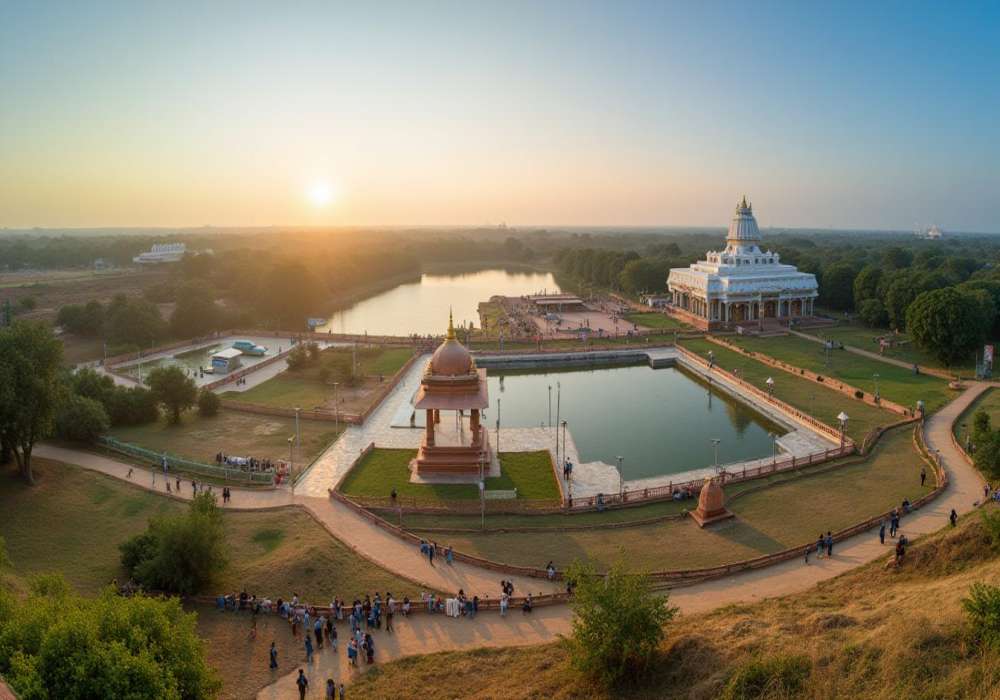
Kurukshetra — Dharmakshetra: The Battlefield Where the Bhagavad Gita Was Born
Introduction
Few cities on Earth carry the weight that Kurukshetra does. This is Dharmakshetra — the "Land of Righteousness" — where the Mahabharata war between the Kauravas and Pandavas unfolded, and where Lord Krishna is believed to have spoken the Bhagavad Gita to Arjuna beneath a banyan tree that, in spirit, still stands today. Long before it became a pilgrimage town, Kurukshetra was one of the great centers of Vedic learning, later drawing even Emperor Ashoka, who turned it into a hub of education. Walk its sacred tanks and ancient sites, and you're not just sightseeing — you're standing inside one of Hinduism's most foundational stories.
History
Kurukshetra's history stretches back to the pre-Harappan era, with archaeological evidence confirming settlement here since ancient times. The city was historically known as Thanesar or Sthaneswar, meaning "place of God," and research shows the region's settlements span over six distinct cultural periods, from the 1st to the 19th century AD.
Its most defining identity comes from the Mahabharata war, fought between the Kauravas and Pandavas on this very land. It was here that Lord Krishna delivered the Bhagavad Gita to Arjuna at Jyotisar, preparing him for battle and revealing his cosmic Vishwaroop (universal form). Long before that, Kurukshetra had already established itself as one of the most important centers of Vedic civilization and learning.
By the Mauryan era, Emperor Ashoka recognized the city's scholarly reputation and made Kurukshetra a center of learning that drew people from across the ancient world. The city's spiritual pull continued through the centuries — even Lord Buddha and several Sikh Gurus are known to have visited and spent time here.
Geography
Kurukshetra is located roughly 170 km north of Delhi, in Haryana, well connected via National Highway 44. The city's defining geographical feature is its network of sacred water tanks, or sarovars, most notably the vast Brahma Sarovar, believed to have been created by Lord Brahma himself, and the Sannihit Sarovar, considered the meeting point of seven tributaries of the ancient Saraswati River.
The surrounding landscape is part of Haryana's broader agricultural plains, with the region's spiritual geography — its many kunds, shrines, and sacred groves — layered directly onto otherwise flat, fertile farmland. The climate follows a typical North Indian pattern: hot summers, a humid monsoon, and cool, pleasant winters.
Culture and Traditions
Kurukshetra's culture is built almost entirely around its identity as a center of Vedic learning and Hindu pilgrimage. Hindi and Haryanvi are the primary languages spoken, and daily life remains deeply intertwined with religious observance, scholarship, and seasonal pilgrimage crowds. The presence of Kurukshetra University adds a distinctly scholarly layer to the city's otherwise devotional character. Community life often centers around the sarovars and temples, with rituals, holy baths, and spiritual gatherings forming a continuous thread through the city's calendar, especially around major astronomical and religious events.
Architecture
Kurukshetra's architecture reflects its layered religious history — Hindu temple architecture, Mughal-era tombs, and modern museum design all coexist within the city. The Sthaneshwar Mahadev Temple, dedicated to Lord Shiva, stands as one of the city's most significant religious structures, its shrine on the northern bank of Sannihit Sarovar believed to house a Linga placed by Brahma himself.
Islamic architecture is represented by Sheikh Chilli's Tomb, built in classic Mughal style with gardens, a mosque, and an accompanying museum. In more recent history, Dharohar, a dedicated museum, was built to showcase Kurukshetra's archaeological and cultural heritage, while the Kurukshetra Panorama and Science Centre brings a modern architectural approach to presenting the Mahabharata's legacy.
Famous Places
Brahma Sarovar
A vast, sacred water tank believed to have been created by Lord Brahma himself, forming the spiritual heart of Kurukshetra. Its northern bank holds a shrine to Lord Shiva, and the sarovar remains a major gathering point for pilgrims, especially during solar eclipses.
Spiritual Significance
The 12th-century scholar Al Beruni mentioned this very sarovar in his memoirs on India, underlining its long-standing importance even beyond Hindu tradition.
Best Time to Visit
Evenings offer the most serene atmosphere, with the sarovar's still waters reflecting the surrounding temples and ghats beautifully.
Quick Tip
Visit during a solar eclipse if your travel dates align — Kurukshetra is considered one of India's best places to witness one, drawing enormous pilgrim crowds to Brahma Sarovar.
Jyotisar
Considered one of the holiest sites in the city, Jyotisar marks the exact spot where Krishna delivered the Bhagavad Gita to Arjuna and revealed his universal form. A revered Banyan tree stands here, believed to be a living link to the original tree present during the epic battle.
Sannihit Sarovar
Regarded as the meeting point of seven tributaries of the ancient Saraswati River, this sacred tank holds deep ritual significance and is often visited alongside Brahma Sarovar.
Sheikh Chilli's Tomb
The resting place of a revered Sufi saint, built with classic Mughal architecture, complete with gardens, a mosque, and an on-site museum.
Krishna Museum
A dedicated museum housing artefacts related to Lord Krishna and his incarnations, spanning works from the 1st century AD to the 11th century AD.
Kurukshetra Panorama and Science Centre
An interactive exhibit space combining technology and culture, most notably featuring a life-like panorama recreation of the legendary Mahabharata battle.
Famous Dishes
Kachori and Chaat
Kurukshetra's bustling HUDA Market is well known for its street food scene, with fresh, hot kachoris and tangy chaat drawing steady crowds.
Bajra Roti with Sarson Saag
A hearty, traditional combination of millet flatbread and mustard greens curry, reflecting the region's broader Haryanvi agrarian food culture.
Lassi
Thick, creamy, and generously sweetened, lassi remains a popular refreshment across Kurukshetra's local eateries, especially welcome after temple-hopping in summer heat.
Prasad and Temple Sweets
Given the city's deep religious character, temple prasad and traditional sweets form an important part of the culinary experience, often shared among pilgrims at the major sarovars.
Famous Personalities
Ram Prakash
Born on 5th October 1939 in Tangore, Kurukshetra district, Ram Prakash was a respected Vedic scholar, author, and educationist who went on to represent Haryana in the Rajya Sabha from 2007 to 2014. He authored and edited numerous books on Vedic philosophy, a fitting legacy for someone born in the very city long associated with Vedic learning.
A Scholarly Legacy
Ram Prakash served as the second Chairperson of the Centre for Studies in Civilizations, reflecting his lifelong dedication to Indian philosophical and Vedic scholarship.
Connection to Kurukshetra
Both his birth and his later years were tied to Kurukshetra district, where he passed away in December 2023.
Fast Fact
His academic path took him from Panjab University all the way to Charles University in Prague, before returning to a career rooted in Vedic studies.
Dalel Singh Ror
Born in Amin, Kurukshetra district, Dalel Singh Ror is recognized among Haryana's notable sporting personalities, contributing to the district's athletic legacy alongside the state's celebrated wrestling and combat-sport traditions.
Festivals
Gita Jayanti
Kurukshetra's most significant festival, celebrating the day Lord Krishna delivered the Bhagavad Gita to Arjuna. The city hosts a major International Gita Mahotsav around this time, drawing scholars, pilgrims, and cultural performers from across India.
Solar Eclipse Gatherings
While not a fixed annual festival, solar eclipses bring enormous pilgrim crowds to Brahma Sarovar, where devotees gather for holy baths and spiritual merit.
Diwali
Celebrated with lights, sweets, and family gatherings across Kurukshetra, Diwali brings the city's markets alive with festive shopping beforehand.
Things to Do
- Take a peaceful evening walk around Brahma Sarovar, the spiritual heart of the city.
- Visit Jyotisar, where the Bhagavad Gita was delivered beneath the sacred Banyan tree.
- Explore the Krishna Museum for artistic and mythological context on the city's central deity.
- Walk through Sheikh Chilli's Tomb for a look at Mughal-era architecture and gardens.
- Experience the Panorama and Science Centre, especially engaging for younger visitors.
- Shop and eat at HUDA Market, the city's lively street food and bazaar hub.
- Attend Gita Jayanti celebrations, if your visit aligns with the festival calendar.
Where to Eat, Shop, and Stay
Eat: HUDA Market is the city's go-to destination for street food, from fresh kachoris to tangy chaat, while local eateries also serve traditional Haryanvi staples like bajra roti with sarson saag.
Shop: Local markets around the main pilgrimage circuit offer religious items, temple prasad, and handicrafts, alongside everyday goods in areas like HUDA Market.
Stay:
- Budget: Simple guesthouses and dharamshalas near the main sarovars cater well to pilgrims.
- Mid-range: A handful of comfortable hotels near the city center offer better amenities.
- Luxury: For upscale options, travelers often visit the nearby heritage-style Noor Mahal hotel in Karnal.
What is Kurukshetra Famous For?
Kurukshetra is best known as the sacred battlefield of the Mahabharata and the site where Lord Krishna delivered the Bhagavad Gita to Arjuna. It's also recognized as an ancient center of Vedic learning, home to sacred sarovars, significant Sufi and Sikh heritage, and modern institutions like Kurukshetra University.
Best Time to Visit
October to March is the ideal window to visit Kurukshetra, when the weather turns pleasant for temple visits, sarovar walks, and outdoor sightseeing. Summers get quite hot, making extended outdoor exploration difficult, so the winter season remains the clear favorite among pilgrims and travelers alike.
How to Reach
By Air: The nearest major airport is in Chandigarh, connected onward to Kurukshetra by road.
By Rail: Kurukshetra Junction is well connected to Delhi, Chandigarh, and other major cities across North India.
By Road: Kurukshetra is accessible via National Highway 44, with regular Haryana Roadways and private bus services connecting it to nearby cities.
Nearby Places
Karnal
About 40 km away, Karnal shares Kurukshetra's Mahabharata-linked mythology through its own connection to Karna, alongside Karna Lake and the historic Atal Park.
Why It Complements a Kurukshetra Trip
Given both cities' deep ties to the Mahabharata, visiting Karnal extends the same epic narrative with its own significant mythological sites.
Getting There
The two cities are well connected by road, making a same-day or overnight extension easy.
Quick Tip
Combine a Kurukshetra morning with a Karnal afternoon at Karna Lake for a well-rounded mythological day trip.
Kaithal
Roughly 40 km away, Kaithal offers its own mix of mythology and history, including its Hanuman-linked legend and the tomb of Razia Sultan.
Panipat
About 45 km away, Panipat is renowned for its historic battlefields and monuments, adding further depth to a regional heritage circuit.
Best Duration for a Trip
1 to 2 days is generally sufficient to comfortably cover Kurukshetra's major sarovars, temples, and museums. Travelers wanting a deeper, more reflective pilgrimage experience, or those combining it with Karnal and Kaithal, can extend this into a fuller 3-day trip.
Travel Tips
- Visit between October and March for the most comfortable sightseeing weather.
- Dress modestly when visiting temples, sarovars, and other religious sites.
- Auto-rickshaws are the most convenient way to travel around the city.
- Carry cash, as smaller markets and prasad stalls may not accept digital payments.
- Time your visit around Gita Jayanti for a richer cultural and spiritual experience.
- Stay hydrated and pace your sightseeing, since many major sites involve walking around large sarovars.
Why Visit Kurukshetra?
Kurukshetra offers something no other Indian city can claim in quite the same way — the actual ground on which the Bhagavad Gita's teachings were first spoken, layered over thousands of years of Vedic scholarship, Sufi heritage, and Sikh history. It's a destination that rewards travelers seeking genuine spiritual and historical depth, not just sightseeing, in a city where mythology feels less like legend and more like lived geography.
Conclusion
Kurukshetra isn't just a place to visit — it's a place to stand still in. From the sacred waters of Brahma Sarovar to the ancient Banyan tree at Jyotisar, and from its Vedic scholarly roots to its modern university town character, this city holds a depth of meaning that few destinations anywhere in the world can match. A short visit here, paired with a quiet evening walk along its sarovars, offers a genuinely profound glimpse into the spiritual heart of Indian civilization.
"Travel is the only thing you buy that makes you richer."