Jind — The Beating Heart of Haryana's Mythology and Memory
Introduction
Call it what locals do — the "Heart of Haryana" — and Jind quickly proves it's earned the title. This isn't a city built for postcard views; it's one built on layers of legend, where the Pandavas are said to have offered prayers before the Mahabharata war, where Sikh princely history once took root, and where archaeologists have traced settlements back to the Harappan age. Jind moves at its own unhurried pace, but for travelers willing to dig a little, it holds one of Haryana's richest concentrations of mythology, history, and quiet spiritual sites.
History
Jind's story begins with a legend. According to tradition, the Pandavas worshipped Jayant (Indra), the lord of victory, before the Mahabharata war, and built a temple in honor of Jayanti Devi, the goddess of victory. A town grew around this temple, first known as Jaintapuri, which over time became "Jind."
The city's history as a formal ruling state begins in 1763, and it later became one of the earliest Sikh princely states in the region. In 1775–76, Raja Gajpat Singh built a fort here, cementing Jind's status as a seat of power. Archaeological excavations have since revealed traces of Pre-Harappan, Late Harappan, and Painted Grey Ware civilizations, confirming this land was inhabited long before recorded history. Excavation evidence suggests the city was destroyed and rebuilt five times, yet it always recovered "with full spirit," as local records put it.
After Independence, Jind briefly became part of Sangrur district in 1948, before emerging as a separate district within Haryana on 1st November 1966, later split into the Jind and Safidon tehsils in 1967.
Geography
Jind sits in central Haryana, about 182 km from Chandigarh and roughly 130 km from Delhi, well connected via National Highway 10. The terrain is flat and agrarian, typical of the Haryana plains, with farming forming the backbone of the local economy. The district's most defining natural feature is its water heritage — the sacred Rani Talab and various sarovars reflect a long-standing connection between local geography and religious practice. Winters are cool and pleasant, while summers turn hot and dry.
Culture and Traditions
Jind's culture blends Haryanvi, Hindi, and Punjabi influences, reflecting its Sikh princely roots alongside its Haryanvi agrarian identity. Daily life moves largely to the rhythm of farming seasons and religious observances, with numerous temples devoted to Lord Shiva anchoring the city's spiritual life. Community gatherings, particularly around religious fairs and Amavasya observances, remain central to local tradition. The city also carries quiet pride in its sporting culture — wrestling and cricket run deep through Jind's community life.
Architecture
Jind's architecture spans mythological-era temple sites, Sikh-era fortifications, and ancient Buddhist structures — an unusually diverse mix for a city its size. The most significant structure is Jind Fort, built by Raja Gajpat Singh in 1775, standing as a reminder of the city's era as a Sikh princely state. Equally striking is the Bodh Stupa, a huge, round masonry structure constructed during the Buddhist period, reflecting a much older architectural layer. Temple architecture also runs throughout the city, most notably at Jayanti Devi Temple and Bhuteshwar Temple, the latter rebuilt with a modern tourist complex around it.
Famous Places
Jayanti Devi Temple
Dedicated to the goddess of victory, this temple is believed to have been built by the Pandavas themselves, according to local legend. It remains one of the city's most spiritually significant sites and the very source of Jind's name.
Mythological Roots
The temple's founding story ties directly into the Mahabharata, with the Pandavas said to have worshipped here before heading into battle.
Visiting Tips
Mornings tend to be quieter for a peaceful darshan, while evenings often see larger crowds gathering for aarti.
Quick Tip
Combine your visit here with nearby Jind Fort, since both sites sit close together in the city center.
Jind Fort
Built by Raja Gajpat Singh in 1775, Jind Fort stands as a historical landmark from the city's era as a Sikh princely state.
Bhuteshwar Temple
A significant Shiva temple that has been rebuilt over time, now featuring a dedicated tourist complex alongside the shrine.
Pandu Pindara
An important pilgrimage site tied to the Mahabharata, where legend says the Pandavas offered pinds (ritual offerings) to their ancestors.
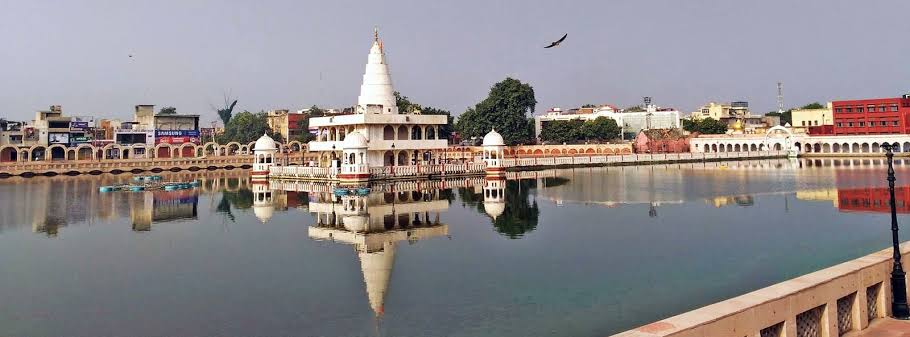
Rani Talab
The city's most prominent water body and central tourist attraction, this sacred tank draws pilgrims and casual visitors for its calm, historic atmosphere.
Dhamtan Sahib Gurudwara
Located near Narwana, this gurudwara holds deep religious significance and draws large crowds during its annual mela.
Famous Dishes
Haryanvi Kadhi Pakora
A tangy, spiced yogurt-based curry with fried gram-flour dumplings, commonly served with steamed rice — a beloved comfort food across Jind's local eateries.
Bajra Roti with Lassi
A hearty millet flatbread paired with a tall glass of chilled, thick lassi, reflecting the region's agrarian and dairy-farming roots.
Churma
A traditional sweet made from crushed wheat flour, ghee, and jaggery, often served during festivals and family celebrations.
Local Street Snacks
Jind's bustling local markets serve classic North Indian street food, including chaat and kachoris, best enjoyed fresh from small stalls.
Famous Personalities
Yuzvendra Chahal
Born in Jind on 23rd July 1990, Yuzvendra Chahal is one of India's most successful leg-spin bowlers, having represented the country extensively in international One Day and T20 cricket. He remains a proud sporting icon for the city.
Rise Through Domestic Cricket
Chahal built his reputation through consistent performances in domestic cricket before earning his international debut in 2016.
Connection to Jind
His journey from a Jind household to the Indian national cricket team continues to inspire aspiring young cricketers across the district.
Fast Fact
He is widely regarded as one of the finest leg-spin bowlers of his generation in white-ball cricket.
Anshu Malik
Born in Nidani village, Jind district, Anshu Malik is an accomplished Indian wrestler who won gold at the Under-20 World Wrestling Championship in 2023, becoming only the second Indian woman to achieve this feat.
Rajinder Goel
A former cricketer from Jind district, Rajinder Goel holds the record for the maximum wickets in Ranji Trophy history, playing as a left-arm spinner for Patiala, Southern Punjab, Delhi, and Haryana.
Festivals
Dhamtan Sahib Mela
A major religious fair is held at the Dhamtan Sahib Gurudwara, drawing large crowds for its spiritual gatherings and community celebrations.
Amavasya Observances
Religious sites like Pandu Pindara and Ramrai see a significant rise in visitors during Amavasya, when pilgrims gather for holy baths and ancestor-worship rituals.
Diwali
Celebrated with lights, sweets, and family gatherings across Jind, bringing the city's markets alive with festive shopping beforehand.
Things to Do
- Visit Jayanti Devi Temple, the mythological heart of the city's name.
- Explore Jind Fort for a glimpse into the region's Sikh princely history.
- Take a peaceful walk around Rani Talab, the city's central sacred tank.
- Attend the Dhamtan Sahib Mela, if timing allows.
- Visit Pandu Pindara, especially around Amavasya.
- Shop in the local markets for handicrafts and everyday Haryanvi products.
- Sample local street food in the city's bustling bazaars.
Where to Eat, Shop, and Stay
Eat: Local eateries across Jind serve authentic Haryanvi dishes like kadhi pakora and bajra roti, while the city's markets are great for fresh street snacks and traditional sweets like churma.
Shop: Jind's markets are known for handicrafts and everyday goods at notably low prices, a favorite for locals and visiting shoppers alike.
Stay:
- Budget: Simple guesthouses and small hotels cover most short-stay needs.
- Mid-range: A handful of comfortable hotels near the city center offer better amenities.
- Luxury: For upscale options, travelers often base themselves in nearby Rohtak or Karnal.
What is Jind Famous For?
Jind is best known for its deep mythological roots tied to the Mahabharata, its temples devoted to Lord Shiva, and its historical significance as one of the earliest Sikh princely states. It's also recognized for its sporting legacy, having produced cricketers and wrestlers who've represented India internationally.
Best Time to Visit
November to March is the ideal window to visit Jind, when the weather turns cool and comfortable for sightseeing. Summers can get quite hot, making outdoor exploration difficult.
How to Reach
By Air: The nearest airport is Indira Gandhi International Airport in Delhi, roughly 113 km away.
By Rail: The nearest major railway station is Rohtak, about 54 km from Jind.
By Road: Jind has excellent road connectivity via NH-10, with regular bus services linking it to Delhi and other parts of Haryana.
Nearby Places
Kaithal
About 50 km away, Kaithal is known for its historical monuments and temples, making it a natural extension to a Jind trip.
Kurukshetra
Roughly 70 km from Jind, Kurukshetra is the legendary battlefield of the Mahabharata and one of India's most significant pilgrimage destinations.
Why It Complements a Jind Trip
Given Jind's own Mahabharata-linked mythology, Kurukshetra offers a natural continuation of the same historical and religious narrative.
Getting There
The two destinations are well connected by road, making a same-day or overnight extension easy.
Quick Tip
Plan a full day for Kurukshetra alone, since its sites — including Brahma Sarovar — deserve unhurried exploration.
Panipat
About 85 km away, Panipat is renowned for its historic battlefields and monuments, adding further depth to a regional heritage circuit.
Best Duration for a Trip
1 to 2 days is generally sufficient to comfortably explore Jind's temples, fort, and local markets. Travelers combining it with Kurukshetra or Kaithal can extend this into a fuller 3-day trip.
Travel Tips
- Visit between November and March for the most comfortable weather.
- Respect local customs and dress modestly at temples and religious sites.
- Carry cash, as smaller markets and eateries may not accept digital payments.
- Stay hydrated and plan outdoor visits for cooler parts of the day in warmer months.
- Hire a local taxi for easier movement between scattered religious and historical sites.
- Time your visit around Amavasya or the Dhamtan Sahib Mela for a richer cultural experience.
Why Visit Jind?
Jind offers something increasingly rare — a city where mythology, archaeology, and history genuinely intersect. From temples tied directly to the Mahabharata to a fort built by a Sikh raja, and from Harappan-era excavation traces to modern-day world-champion wrestlers, Jind tells a story of resilience and reinvention that spans thousands of years, all without the crowds of India's better-known heritage destinations.
Conclusion
Jind may not top most travel itineraries, but it holds an outsized share of Haryana's mythology, faith, and grit. From the sacred waters of Rani Talab to the ancient stupa on its outskirts, and from its Mahabharata-era legends to its modern sporting heroes, this quiet city rewards travelers who take the time to look closer. A short visit here, paired with a plate of bajra roti and a walk through its old markets, offers a genuinely rooted glimpse into the true heart of Haryana.
"Travel is the only thing you buy that makes you richer."