Jhajjar — Where Haryana's Soldiers, Scholars, and Champions Are Born
Jhajjar rarely makes it onto a typical tourist map, and that's its charm. Just an hour from Delhi, this district headquarters town in Haryana is a place of quiet greenery, old temples, and fierce local pride — the kind that comes from producing Olympic shooters, Army chiefs, and freedom fighters. Jhajjar won't overwhelm you with monuments, but it offers a genuine, unhurried look at rural Haryanvi life, wrapped around a surprisingly rich historical core.
History
Jhajjar's origins are wrapped in local legend. One story credits a man named Chhaju with founding the settlement, originally called Chhajunagar, which evolved into "Jhajjar." Another theory ties the name to Jharnaghar, meaning natural fountain.
What began as forested land became a contested prize for the Mughals and the Delhi Sultanate. The town's most dramatic chapter came during the Revolt of 1857, when Nawab Abdur Rahman Khan, the ruler of Jhajjar, played a key role in the uprising against British rule. After the revolt was crushed, he was hanged at Kotwali in Chandni Chowk, Delhi, on 23rd January 1858, alongside two other regional rulers executed the same day.
Jhajjar remained part of Rohtak district for decades, until it was carved out as an independent district on 15th July 1997, settling into the stable, agriculture-driven town it is today — still proud of its 1857 legacy.
Geography
Jhajjar lies in northern Haryana, part of the Delhi NCR, roughly 55–72 km west of the capital, at the crossroads of NH-71A and highways connecting it to Rohtak, Rewari, and Gurgaon. The landscape is flat and agrarian, typical of Haryana's plains. Bhindawas Lake, a bird sanctuary, and the Jhajjar stream near Jhajjar Kotli bring pockets of wetland greenery to an otherwise dry countryside. The climate follows a typical North Indian pattern: hot summers, a modest monsoon, and cool winters.
Culture and Traditions
Jhajjar's culture is rooted in traditional Haryanvi rural life. Hindi and Haryanvi are spoken widely, and the town's rhythm still follows the agricultural calendar. Community bonds run strong, and locals take pride in the district's association with soldiering — many young men here have historically joined the Indian Army. Local customs, food, and entertainment reflect an authentic, small-town Haryanvi character, with traditional handicrafts and textiles forming an important part of everyday commerce.
Architecture
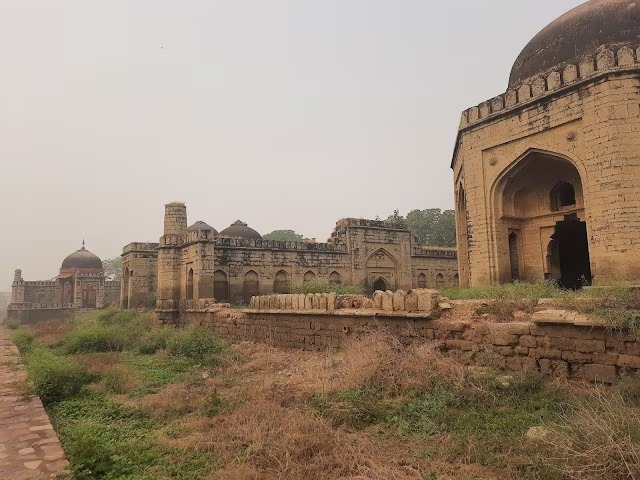
Jhajjar's architecture reflects its layered political history. The most significant structure is Jhajjar Fort, now largely in ruins but still notable for its strategic hillside positioning. The town's spiritual architecture ranges from historic temples to sites connected with the region's Islamic rulers, including memorials linked to Nawab Abdur Rahman Khan. Institutions like Gurukul Jhajjar, established in the early 20th century, reflect the town's long-standing emphasis on scholarship alongside its military and agricultural identity.
Famous Places
Jhajjar Fort
Though largely in ruins today, Jhajjar Fort remains a significant historical landmark, offering a fascinating window into the region's strategic and political past under various ruling powers.
Historical Significance
The fort's location once made it a key point of control, tied closely to the era of Nawab rule before the 1857 revolt reshaped the region.
What Remains Today
Visitors can still explore the fort's weathered structure, even though much of the original architecture has eroded over time.
Quick Tip
Visit in early morning or late afternoon light for the best photographs of the aged stonework.
Bhindawas Bird Sanctuary
A peaceful wetland sanctuary home to over 250 species of birds, including many migratory visitors — a favorite for birdwatchers and photographers. Winter brings the highest concentration of migratory species; carry binoculars and arrive early morning for the best activity.
Archaeological Museum of Gurukul
Established in 1959 by Swami Omanand Saraswati, this museum houses antique idols and coins gathered from Rajasthan, Haryana, Punjab, and Uttar Pradesh.
Samadhi of Nawab Abdur Rahman Khan
A memorial dedicated to the Nawab who played a pivotal role in the 1857 revolt, offering a direct connection to one of the most defining events in Jhajjar's history.
Bua Wala Talab and Jhajjar Kotli
A serene lake surrounded by greenery, alongside Jhajjar Kotli — a picnic-friendly spot on the banks of the Jhajjar stream.
Pratapgarh Farms
A government-run ethnic destination evolving into an eco-tourism spot, featuring green spaces, local traditions, food, and games.
Famous Dishes
Dal Makhani
A rich, slow-cooked lentil preparation finished with cream and butter, a comforting staple of everyday Haryanvi meals.
What Makes It Rich
The dish gets its signature depth from hours of slow simmering, allowing the lentils to absorb the butter and cream fully.
Where to Try It
Local dhabas across Jhajjar serve their own versions, often passed down through family recipes.
Fast Fact
It pairs especially well with fresh tandoori roti, a combination found at nearly every eatery in town.
Rajma Chawal
A hearty combination of red kidney beans curry served over steamed rice, popular across the town's dhabas and home kitchens.
Bajra Khichdi
A traditional millet-based dish reflecting the region's agrarian roots, often paired with ghee and yogurt.
Local Sweets and Street Snacks
Jhajjar's markets serve classic North Indian street food and traditional sweets, best enjoyed fresh from family-run shops.
Famous Personalities
Manu Bhaker
Born in Jhajjar district, Manu Bhaker is one of India's most accomplished Olympic shooters, having represented the country at the highest levels of international competition. Her achievements have made her a proud symbol of Jhajjar's growing sporting legacy.
Rise to National Prominence
Bhaker's precision and composure in shooting events have earned her recognition as one of India's brightest young sporting talents.
Connection to Jhajjar
Her roots in the district have made her a source of local inspiration, especially for young athletes across rural Haryana.
Fast Fact
She began competing at national level while still in her teens, quickly building a reputation as one of India's most promising shooters.
General Dalbir Singh Suhag
Born in Bishan village, Jhajjar district, General Dalbir Singh Suhag served as the 26th Chief of Army Staff of the Indian Army and later as India's High Commissioner to Seychelles — a towering example of the district's deep military tradition.
Jagat Jakhar
Born in Sundreti village, Jhajjar district, Jagat Jakhar was a celebrated Haryanvi film actor, best known for leading Chandrawal (1984), the largest-grossing Haryanvi film of its time.
Festivals
Diwali
Celebrated across Jhajjar with lit-up homes, festive markets, and family gatherings, bringing the town's bazaars alive in the days leading up to the celebration.
How It's Celebrated Locally
Homes are decorated with diyas and lights, while families gather for shared meals and the exchange of sweets.
Market Buzz Before Diwali
The days leading up to the festival see a noticeable spike in shopping activity across Jhajjar's main bazaars.
Quick Tip
Visit the local markets a few days before Diwali to see the festive decorations and shopping rush at their peak.
Baisakhi
Marking the harvest season, Baisakhi is celebrated with genuine enthusiasm in this agriculture-driven district, tying the festival closely to the community's farming rhythms.
Teej
A traditional festival especially significant to the women of the region, marked by traditional songs, swings, and community gatherings.
Things to Do
- Explore the ruins of Jhajjar Fort for a hands-on sense of the region's political history.
- Birdwatch at Bhindawas Bird Sanctuary, especially during winter.
- Visit the Archaeological Museum of Gurukul to see centuries-old idols and coins.
- Pay respects at the Samadhi of Nawab Abdur Rahman Khan.
- Relax by the water at Bua Wala Talab or Jhajjar Kotli.
- Experience rural Haryanvi life at Pratapgarh Farms.
- Wander the local markets for handicrafts, textiles, and street food.
Where to Eat, Shop, and Stay
Eat: Local dhabas and small eateries across Jhajjar serve authentic Haryanvi cuisine — dal makhani, rajma chawal, and bajra-based dishes — alongside street food and sweets in the main market areas.
Shop: Jhajjar's bustling local markets are the best place to pick up traditional Haryanvi handicrafts, textiles, and local produce.
Stay:
- Budget: Simple guesthouses and small hotels cover most short-stay needs.
- Mid-range: A handful of comfortable hotels near the town center offer more amenities.
- Luxury: For upscale stays, most travelers base themselves in nearby Gurgaon or Delhi.
What is Jhajjar Famous For?
Jhajjar is best known for its role in the 1857 Revolt, its strong military tradition, and its connection to notable personalities like Olympic shooter Manu Bhaker and former Army Chief General Dalbir Singh Suhag. It's also recognized for the Bhindawas Bird Sanctuary, its authentic Haryanvi rural culture, and its position as a quiet, easily accessible getaway from Delhi NCR.
Best Time to Visit
October to March is the ideal time to visit Jhajjar, when mild weather makes it comfortable to explore forts, lakes, and local markets. Summers turn hot and dry, making outdoor sightseeing difficult.
How to Reach
By Air: The nearest airport is Indira Gandhi International Airport in Delhi, roughly 60–72 km away.
By Rail: The nearest major railhead is Rohtak Junction, well connected to Delhi and other major cities, with Jhajjar's own station also serving regional trains.
By Road: Jhajjar sits on NH-71A, about 72 km from Delhi, and is well connected by public and private buses from Delhi, UP, and neighboring states.
Nearby Places
Rohtak
About 40 km away, Rohtak offers a larger city experience with additional shopping, dining, and historical sites, making it a convenient extension to a Jhajjar visit. The two towns are well connected by road, so combining a Jhajjar morning with a Rohtak afternoon makes for an easy, well-rounded day trip.
Gurgaon
Around 60 km away, Gurgaon offers a modern contrast with malls, nightlife, and corporate energy, ideal for travelers wanting NCR's contemporary side.
Delhi
Just over an hour's drive, Delhi's monuments, museums, and markets make for an easy and rewarding extension to any Jhajjar itinerary.
Best Duration for a Trip
1 day is generally enough to cover Jhajjar's key sites comfortably. Travelers combining it with Rohtak or a wider NCR itinerary can extend this into a relaxed 2-day trip.
Travel Tips
- Visit between October and March for the most comfortable weather.
- Carry sufficient cash, as card payment options may be limited in local markets.
- Respect local customs at historical and religious sites.
- Stay hydrated and dress appropriately during warmer months.
- Hire a taxi or private vehicle for easier movement between sites.
- Maintain cleanliness and avoid littering, particularly around lakes and natural sites.
Why Visit Jhajjar?
Jhajjar offers a rare, unfiltered look at rural Haryanvi life just an hour from Delhi — a district defined by real historical weight, from its role in the 1857 revolt to its ongoing legacy of producing soldiers and Olympic athletes. It's not built for spectacle, but for travelers who want an honest, grounded slice of Haryana's culture and history.
Conclusion
Jhajjar may be modest in scale, but it carries an outsized share of Haryana's history and pride. From the ruins of its old fort to the quiet wetlands of Bhindawas, and from its 1857 martyrs to its modern-day Olympic champions, this small district tells a story of resilience well worth discovering. A short visit here, paired with a plate of rajma chawal and a walk through its local markets, offers a genuinely grounded escape from the Delhi NCR rush.
"Travel is the only thing you buy that makes you richer."