Kaithal — The Abode of Hanuman, Where Myth Walks the Streets
Introduction
Long before it was a district headquarters on the map of Haryana, Kaithal was known as Kapisthal — the "Abode of Kapi," another name for Lord Hanuman. Local tradition holds that this is the very place where Hanuman was born, and that the town itself was founded by Yudhishthira of the Mahabharata. Walk through Kaithal today and that layered mythology is still visible — in ancient temples, Sufi tombs, the resting place of India's only woman to rule Delhi, and a fort that once controlled trade routes for empires. It's a small city that carries an outsized share of Indian legend.
History
Kaithal's origins are steeped in mythology. According to the Vamana Purana, the town's name — Kapisthal — ties it directly to Hanuman, and tradition holds that Yudhishthira, eldest of the Pandavas, founded the settlement here during the Mahabharata era. Archaeological finds of coins from the Indo-Greek period confirm Kaithal's history stretches back far beyond legend into genuinely ancient settlement.
By the medieval period, Kaithal had become an important Muslim cultural centre, and several Sufi shrines and tombs dating to the 13th century still stand today, including the tomb of Sheikh Sala-ud-din of Bhalkh from 1246 CE. Timur is believed to have halted here in 1398 before marching on to Delhi. Kaithal also holds a remarkable, lesser-known chapter — it's linked to Razia Sultan, the first woman to ever sit on the throne of Delhi, whose tomb lies on the Kaithal-Manas road.
In more recent centuries, Kaithal came under Sikh-Jat rule, with local chiefs known as "Bhais" governing as a princely state. The last chief, Bhai Udey Singh, built an imposing palace in Indo-European style. After independence, Kaithal moved between Karnal and Kurukshetra districts before finally becoming a separate district headquarters on 1st November 1989.
Geography
Kaithal lies in the north-western part of Haryana, bordering Punjab along its Guhla-Cheeka boundary, with Kurukshetra to the north, Jind to the south, and Karnal to the east. The city sits on the historic banks of the now largely dried Saraswati River, connecting it to the same ancient river system referenced across much of North India's early history.
The district is known locally for being "surrounded by seven ponds and eight gates," a phrase that captures both its old fortified layout and its long-standing relationship with water tanks, or kunds, built by various rulers over different periods. The climate here is classified as tropical steppe — hot, dry summers, cold winters, and a humid monsoon.
Culture and Traditions
Kaithal's culture blends Hindu, Sikh, and Sufi influences, a natural result of its layered rule under Rajput, Mughal, and Sikh-Jat powers. Hindi, Haryanvi, and Punjabi are all commonly spoken here, and the city has functioned as an important regional market town for centuries. Religious life runs deep, with pilgrims visiting both Hanuman-linked sites and Sufi shrines — a genuinely rare cultural overlap. Kaithal also carries a strong sporting tradition, particularly in boxing, and its agricultural economy shapes daily rhythms and community life.
Architecture
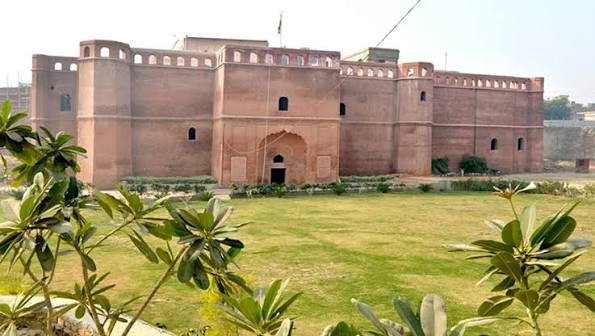
Kaithal's architecture reflects an unusually diverse mix of Hindu, Islamic, and Sikh-era styles layered across centuries. The Kaithal Fort, built to control trade routes and later used by British rulers for the same purpose, remains one of the city's most significant structures. The Sikh-era palaces, built by the ruling Bhais in Indo-European fashion, stand out for their carved entrances and ornate walls. Islamic-era architecture is equally prominent, seen in the 16th-century tomb of Razia Sultan, built with lime mortar and brick, alongside several 13th-century Sufi tombs scattered through the town.
Famous Places
Kaithal Fort
A historic fort that once controlled the movement of trade goods through the region, later used by British rulers for the same strategic purpose. Its strong walls and gateways still offer visitors a genuine sense of the city's role as a regional power center.
Strategic Importance
The fort's location made it a key checkpoint for trade and movement, a role it continued to serve well into the British colonial period.
What to See Today
Visitors can explore the surviving gateways and courtyard areas, gaining insight into the fort's original scale and purpose.
Quick Tip
Pair a fort visit with a walk through the old town's narrow lanes to get a fuller sense of Kaithal's historic layout.
Tomb of Razia Sultan
Located on the Kaithal-Manas road, this 16th-century tomb marks the resting place of Razia Sultan, the only woman to ever rule the Delhi Sultanate. Built with lime mortar and brick, and accompanied by a mosque on the same premises, it remains one of Kaithal's most historically significant and often-overlooked sites.
Anjani Tila
A temple dedicated to Anjani, the mother of Lord Hanuman, marking the mythological site of Hanuman's birth — arguably Kaithal's most spiritually significant location.
Sheikh Tayyab's Tomb
A 16th-century Sufi tomb whose name translates to "pure saint," reflecting the deep Islamic heritage woven into Kaithal's religious landscape.
Kunds of Kaithal
A collection of historic water tanks built by different rulers at different periods, forming a key part of the city's "seven ponds" identity.
Famous Dishes
Bajra Khichdi
A traditional millet-based dish reflecting Kaithal's agrarian roots, typically served with ghee and yogurt.
Kadhi Chawal
A tangy, spiced yogurt curry served over steamed rice, popular across Kaithal's local eateries as a comforting, home-style meal.
Lassi
Thick, creamy, and generously sweetened, Kaithal's lassi reflects the region's strong dairy-farming tradition.
Local Sweets
Kaithal's traditional sweet shops serve classic North Indian mithai, popular during festivals, with several long-running shops known for their milk-based specialties.
Famous Personalities
Manoj Kumar
Born in Rajound village in Kaithal district, Manoj Kumar is an accomplished Indian boxer who won gold in the light welterweight division at the 2010 Commonwealth Games and bronze at the 2018 Commonwealth Games in Gold Coast. He remains a proud sporting icon for the district.
Rise Through Boxing
Kumar built his reputation through consistent performances in national and international boxing competitions, becoming one of Haryana's most recognized combat-sport athletes.
Connection to Kaithal
His journey from Rajound village to international podiums continues to inspire young athletes across Kaithal district.
Fast Fact
He has spoken publicly about how sports offer a genuine path to government jobs and stability for athletes from smaller Haryana towns like his own.
Balwant Singh Sagwal
Born in Kaul, Kaithal district, Balwant Singh Sagwal is recognized among Haryana's notable sporting figures, reflecting the district's broader contribution to the state's athletic legacy.
Festivals
Diwali
Celebrated with lit-up homes, festive markets, and family gatherings, Diwali in Kaithal brings the town's traditional bazaars alive in the days beforehand.
Baisakhi
Marking the harvest season, Baisakhi is celebrated enthusiastically in this agriculture-driven district, tying the festival to the community's farming calendar.
Hanuman Jayanti
Given Kaithal's mythological connection to Hanuman's birth, Hanuman Jayanti holds special significance here, with large crowds gathering at Anjani Tila for prayers.
Things to Do
- Explore Kaithal Fort for a hands-on sense of the city's strategic past.
- Visit the Tomb of Razia Sultan, a rare and often-overlooked piece of Indian royal history.
- Pay respects at Anjani Tila, the mythological birthplace of Hanuman.
- Walk through the Sikh-era palaces for a look at Indo-European architectural detail.
- Visit the historic kunds, Kaithal's collection of ancient water tanks.
- Shop in the old town markets for local produce and everyday goods.
- Sample traditional sweets and lassi from the city's long-running shops.
Where to Eat, Shop, and Stay
Eat: Local eateries across Kaithal serve authentic Haryanvi staples like bajra khichdi and kadhi chawal, while traditional sweet shops in the old town are known for milk-based mithai.
Shop: Kaithal has functioned as a regional market town for centuries, and its bazaars remain a good place to pick up everyday goods, local produce, and handicrafts at reasonable prices.
Stay:
- Budget: Simple guesthouses and small hotels cover most short-stay needs.
- Mid-range: A handful of comfortable hotels near the city center offer better amenities.
- Luxury: For upscale stays, travelers often base themselves in nearby Kurukshetra or Karnal.
What is Kaithal Famous For?
Kaithal is best known as the mythological birthplace of Lord Hanuman, its historic fort, and its rare connection to Razia Sultan, the only woman to rule the Delhi Sultanate. It's also recognized for its Sikh-era palaces, Sufi shrine heritage, and its strong contribution to India's boxing legacy through athletes like Manoj Kumar.
Best Time to Visit
October to March is the ideal window to visit Kaithal, with temperatures ranging from a comfortable 5°C to 20°C, perfect for outdoor sightseeing. Summers turn very hot and dry, making exploration difficult.
How to Reach
By Air: The nearest major airport is in Chandigarh, connected onward to Kaithal by road.
By Rail: Kaithal has its own railway station with connections to major regional cities.
By Road: Kaithal is well connected by national and state highways to Karnal, Kurukshetra, Jind, and Punjab, with regular bus services from Delhi and Chandigarh.
Nearby Places
Kurukshetra
About 40 km away, Kurukshetra is the legendary battlefield of the Mahabharata and one of India's most significant pilgrimage destinations, home to Brahma Sarovar and Jyotisar.
Why It Complements a Kaithal Trip
Given Kaithal's own Mahabharata-linked mythology, Kurukshetra offers a natural continuation of the same historical and religious narrative.
Getting There
The two cities are well connected by road, making a same-day or overnight extension easy.
Quick Tip
Set aside a full day for Kurukshetra alone, since its major sites deserve unhurried exploration.
Karnal
Roughly 45 km away, Karnal offers additional historical sites and a larger city experience, making it a convenient base for travelers wanting more amenities.
Jind
About 50 km from Kaithal, Jind is known for its own mythological ties to the Mahabharata and its historic Rani Talab, adding further depth to a regional heritage circuit.
Best Duration for a Trip
1 to 2 days is generally sufficient to comfortably explore Kaithal's fort, temples, tombs, and markets. Travelers combining it with Kurukshetra can extend this into a fuller 3-day trip.
Travel Tips
- Visit between October and March for the most comfortable sightseeing weather.
- Dress modestly and respect local customs when visiting temples, tombs, and gurudwaras.
- Carry cash, as smaller markets and eateries may not accept digital payments.
- Hire a local taxi for easier movement between the city's scattered historical sites.
- Stay hydrated and plan outdoor visits for cooler parts of the day in warmer months.
- Combine a Kaithal visit with Kurukshetra for a richer, more complete Mahabharata-linked heritage trip.
Why Visit Kaithal?
Kaithal offers something genuinely rare — a small city where Hindu mythology, Sufi heritage, and Sikh-era royal history sit within walking distance of one another. From the mythological birthplace of Hanuman to the tomb of Delhi's only female ruler, Kaithal tells a story of layered coexistence that few destinations of its size can match, all without the crowds of India's better-known heritage circuits.
Conclusion
Kaithal may be modest in size, but it holds an extraordinary depth of legend, faith, and history. From the ancient walls of its fort to the quiet dignity of Razia Sultan's tomb, and from its Hanuman-linked temples to its modern boxing champions, this small Haryana city rewards travelers willing to slow down and look closer. A short visit here, paired with a glass of fresh lassi and a walk through its old bazaars, offers a genuinely rich glimpse into one of North India's most underrated heritage towns.
"Travel is the only thing you buy that makes you richer."