Mewat — Haryana's Untouched Heartland of Forts, Faith, and Folk Music
Introduction
Just an hour from the glass towers of Gurugram lies a region that feels like a different world entirely. Mewat — now largely known as Nuh district — is one of Haryana's least-visited yet most culturally distinct corners, a land of shaking minarets, ancient salt-trade ponds, and a musical tradition that gave Indian classical music one of its most celebrated gharanas. This is a region defined by its Meo community, its blend of Rajput and Muslim heritage, and a rugged, hilly landscape that stands apart from Haryana's flatter agricultural belt. Mewat doesn't perform for tourists — it simply exists, authentically, and that's precisely its appeal.
History
Mewat's history is inseparable from the Khanzada Rajput dynasty, which ruled the region for nearly 200 years before the arrival of the Mughals. Local tradition holds that the region's ancestors converted to Islam in the 1350s, on the invitation of Firuz Shah Tughlaq and through the preaching of Nasiruddin Chiragh Dehlavi, giving rise to the Meo Muslim community that still defines Mewat's identity today.
The region's most defining historical figure is Raja Hasan Khan Mewati, the ninth and final ruler of the Mewat dynasty, who governed from 1504 to 1527. Known for his sharp intellect and skill in languages including Hindi, Urdu, Persian, and Arabic, Mewati took power at just 25 years old. He fought alongside Ibrahim Lodi at the First Battle of Panipat in 1526, and later joined the Rajput Confederation under Rana Sanga at the Battle of Khanwa in 1527, where he was killed fighting against Emperor Babur's forces — a battle that decisively cemented Mughal rule over North India.
The town of Nuh itself gained prominence during the reign of Bahadur Singh of Ghasera, becoming an important trading center for salt manufactured in surrounding villages. Its historical ruins, many dating to the 14th century, still stand as reminders of this trading legacy today.
Geography
Mewat, centered around present-day Nuh district, sits roughly 70 km from Delhi at an elevation of about 190 meters, positioned along the Delhi-Alwar Highway. The wider historical region of Mewat stretches across parts of Haryana, Rajasthan, and Uttar Pradesh, but its core lies in Haryana's Nuh, Punahana, Ferozepur Jhirka, Taoru, and Sohna tehsils.
The terrain here is notably hilly and rugged compared to Haryana's flatter agricultural plains, shaped by its proximity to the Aravalli range. This landscape gives Mewat a distinct scenic character, especially striking during the monsoon season when the hills turn green. The climate follows a typical North Indian pattern — hot, dry summers, a humid monsoon, and cool, comfortable winters that make the region far more pleasant to explore.
Culture and Traditions
Mewat's culture centers around the Meo community, whose blend of Rajput ancestry and Islamic faith has produced a genuinely distinct regional identity. Mewati, Hindi, and Urdu are the primary spoken languages, with English understood among younger generations. This cultural fusion is also visible in local customs, dress, and everyday life, distinguishing Mewat clearly from neighboring, more urbanized districts like Gurugram and Faridabad.
The region holds a remarkable place in Indian classical music history as the birthplace of the Mewati Gharana, a Hindustani classical singing tradition founded in the late 19th century, known for its purity of tone, intricate taans, and deeply expressive khayal singing style — later popularized globally by legendary vocalist Pandit Jasraj. Traditional pottery and terracotta craftsmanship also remain an important part of Mewat's artisanal heritage, alongside its role as a significant pilgrimage destination, marked by numerous sacred shrines and temples.
Architecture
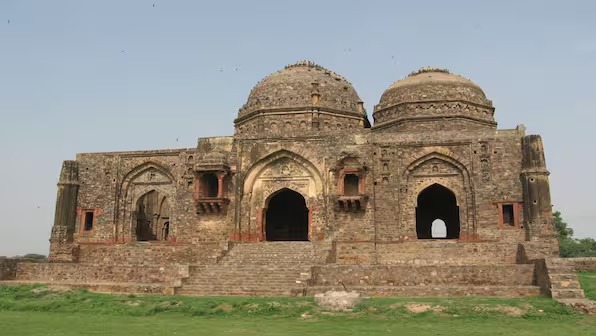
Mewat's architecture blends Rajput and Indo-Islamic styles, a direct reflection of the region's layered political and religious history. The Shaking Minarets of Sheikh Musa, an engineering marvel from the 14th century, remain one of the region's most fascinating structures — a tomb complex renowned for its Rajput and Muslim architectural fusion.
The Kotla Mosque, built in the 14th century, showcases stunning Indo-Islamic design with intricately carved stone pillars and beautiful arches. Nearby, the Chui Mai Pond, built from red sandstone with an ornate chhatri (kiosk) featuring floral carvings, reflects the region's practical yet artistically detailed water architecture. The Ahirwal Fortress and Shahi Mosque in Taoru add further depth to the region's historic built environment.
Famous Places
Sheikh Musa's Shaking Minarets
A 14th-century tomb complex famous for its "shaking minarets" — an extraordinary feat of ancient engineering where pushing one minaret causes a corresponding vibration in the other, without damaging the structure. This remains Mewat's most celebrated architectural attraction.
An Engineering Mystery
Historians and engineers alike remain fascinated by the structural technique that allows the minarets to shake in tandem, a design choice believed to have protected the towers from earthquake damage.
Visiting the Site
The complex also includes Rajput and Muslim architectural elements throughout, worth exploring beyond just the minarets themselves.
Quick Tip
Visit with a local guide who can demonstrate the shaking phenomenon safely and explain its architectural significance.
Chui Mai Pond (Chhuimmal Talab)
A nearly 200-year-old pond built by Chhuimmal Seth, a prominent salt trader, to support Nuh's once-thriving salt industry and provide drinking water for local residents. Today, its calm waters, greenery, and an ornate memorial chhatri built by the trader's son make it a peaceful spot for picnics and quiet reflection.
Kotla Mosque
A 14th-century mosque located in a village 7 km from Nuh, renowned for its intricately carved stone pillars and Indo-Islamic arches. According to folklore, the Pandavas briefly stopped near here during their 14-year exile, adding a layer of Mahabharata-linked legend to the site.
Nalhar Temple
An important pilgrimage site connected to Lord Shiva, drawing large crowds especially during the annual Nalhar Mela, reflecting Mewat's role as a genuine multi-faith religious destination.
Pataudi Fort
A historic fort in the wider Mewat region, offering visitors a glimpse into the area's Rajput-era architectural and political history.
Famous Dishes
Dal Baati
A hearty, rustic dish of baked wheat dumplings served with spiced lentils, reflecting Mewat's proximity to Rajasthan and its shared culinary traditions with the neighboring state.
Khichdi
A simple, comforting rice-and-lentil preparation, widely eaten across Mewati households as an everyday staple, often paired with ghee or yogurt.
Chaas and Lassi
Traditional buttermilk and yogurt-based drinks remain popular dairy staples across Mewat, reflecting the region's strong pastoral and farming traditions.
Bajra Roti
A traditional millet flatbread, commonly paired with local curries and dairy products, forming a core part of everyday Mewati meals.
Famous Personalities
Raja Hasan Khan Mewati
The last ruler of the Mewat dynasty, Hasan Khan Mewati governed from 1504 to 1527 and became a defining historical figure for his role in resisting Mughal expansion. He fought alongside Rana Sanga at the Battle of Khanwa in 1527, where he was killed — a battle that marked a turning point in North Indian history. A government medical college in the region, Shaheed Hasan Khan Mewati Government Medical College, is named in his honor.
A Legacy of Resistance
Mewati's alliance with the Rajput Confederation against Babur's forces remains one of the most significant regional resistances to early Mughal expansion in North India.
Honored in Mewat Today
His name lives on prominently in the region, most notably through the medical college established in his memory.
Fast Fact
He was known for his sharp intellect from childhood and was fluent in Hindi, Urdu, Persian, and Arabic.
Founders of the Mewati Gharana
The Mewati Gharana, one of Hindustani classical music's most respected traditions, traces its roots to the Mewat region, later carried to global prominence by the legendary vocalist Pandit Jasraj. The gharana's distinctive style of khayal singing remains deeply associated with the region's name.
Festivals
Nalhar Mela
A major religious fair held at the Nalhar Temple, drawing large crowds of devotees for spiritual gatherings, rituals, and community celebrations tied to Lord Shiva worship.
Eid Celebrations
Given Mewat's significant Meo Muslim population, Eid is celebrated with genuine community warmth, marked by prayers, feasting, and family gatherings across the region.
Teej
A traditional festival especially significant to the women of the region, celebrated with songs, swings, and community gatherings that reflect Mewat's rural cultural fabric.
Things to Do
- Witness the Shaking Minarets of Sheikh Musa, a genuine architectural marvel.
- Relax by Chui Mai Pond, a peaceful spot steeped in local trading history.
- Explore Kotla Mosque, complete with its Mahabharata-linked folklore.
- Visit Nalhar Temple, especially during its annual mela.
- Discover Pataudi Fort for a glimpse into Mewat's Rajput-era past.
- Interact with local artisans practicing traditional pottery and terracotta craft.
- Attend a local fair or festival, if your visit timing allows.
Where to Eat, Shop, and Stay
Eat: Local eateries across Mewat serve rustic, hearty dishes like dal baati and khichdi, alongside dairy staples like chaas and lassi that reflect the region's pastoral roots.
Shop: Mewat's traditional pottery and terracotta craftsmanship make for genuine, meaningful souvenirs, best sourced directly from local artisan communities.
Stay:
- Budget: Simple guesthouses and small hotels cover most short-stay needs across the region.
- Mid-range: A handful of comfortable hotels near Nuh and Taoru offer better amenities for a more relaxed stay.
- Luxury: For upscale stays, most travelers base themselves in nearby Gurugram, well connected to Mewat by road.
What is Mewat Famous For?
Mewat is best known as the historical homeland of the Meo community, its Rajput-Islamic architectural heritage including the Shaking Minarets, and as the birthplace of the Mewati Gharana of Hindustani classical music. It's also recognized for its rugged, Aravalli-fringed landscape and its role as a significant multi-faith pilgrimage region.
Best Time to Visit
October to March is the ideal window to visit Mewat, when the weather turns cool and pleasant for exploring forts, ponds, and historical sites. Summers turn hot and dry, making outdoor sightseeing difficult, so the winter season remains the clear favorite among travelers.
How to Reach
By Air: The nearest airport is Indira Gandhi International Airport in Delhi, roughly 70 km away.
By Rail: The nearest railway station is in Gurugram, well connected to Delhi and other major cities.
By Road: Mewat is well connected by road, lying along the Delhi-Alwar Highway, making it easily accessible from Delhi and Gurugram.
Nearby Places
Sohna
A nearby town known for its natural hot springs and scenic hills, offering a relaxing extension to a Mewat trip.
Why It Complements a Mewat Trip
Sohna's hot springs and hill views add a natural, restorative counterpoint to Mewat's history-heavy sightseeing circuit.
Getting There
Sohna is well connected to Nuh and the wider Mewat region by road, making a same-day extension easy.
Quick Tip
Combine a Mewat morning with a relaxed Sohna afternoon at the hot springs.
Alwar
The historical capital of the Mewat region, located in Rajasthan, Alwar offers additional forts, palaces, and museums tied to the same shared regional history.
Gurugram
A modern contrast to Mewat's rural character, Gurugram offers malls, nightlife, and corporate energy for travelers wanting NCR's contemporary side.
Best Duration for a Trip
1 to 2 days is generally sufficient to comfortably explore Mewat's forts, ponds, and temples. Travelers combining it with Sohna or Alwar can extend this into a fuller 3-day regional trip.
Travel Tips
- Visit between October and March for the most comfortable sightseeing weather.
- Dress modestly and respect local customs at religious sites and villages.
- Carry cash, as smaller markets and eateries may not accept digital payments.
- Hire a local taxi for easier movement between the region's scattered attractions.
- Engage respectfully with local communities to learn about Mewat's unique Meo heritage.
- Stay hydrated and plan outdoor visits for cooler parts of the day in warmer months.
Why Visit Mewat?
Mewat offers something genuinely rare in the NCR region — an authentic, largely untouristed glimpse into a distinct cultural identity shaped by centuries of Rajput-Islamic fusion. From the engineering mystery of the Shaking Minarets to the region's role as birthplace of a celebrated classical music gharana, Mewat rewards travelers seeking depth and authenticity over polished tourist infrastructure.
Conclusion
Mewat may not appear on most travel itineraries, but it holds a genuinely rich, layered identity that few nearby destinations can match. From the shaking minarets of Sheikh Musa to the peaceful waters of Chui Mai Pond, and from Hasan Khan Mewati's historic resistance to the birth of the Mewati Gharana, this quiet region tells a story of resilience, faith, and artistry. A short visit here, paired with a plate of dal baati and a walk through its old villages, offers a genuinely authentic glimpse into one of Haryana's most distinct and underexplored corners.
"Travel is the only thing you buy that makes you richer."