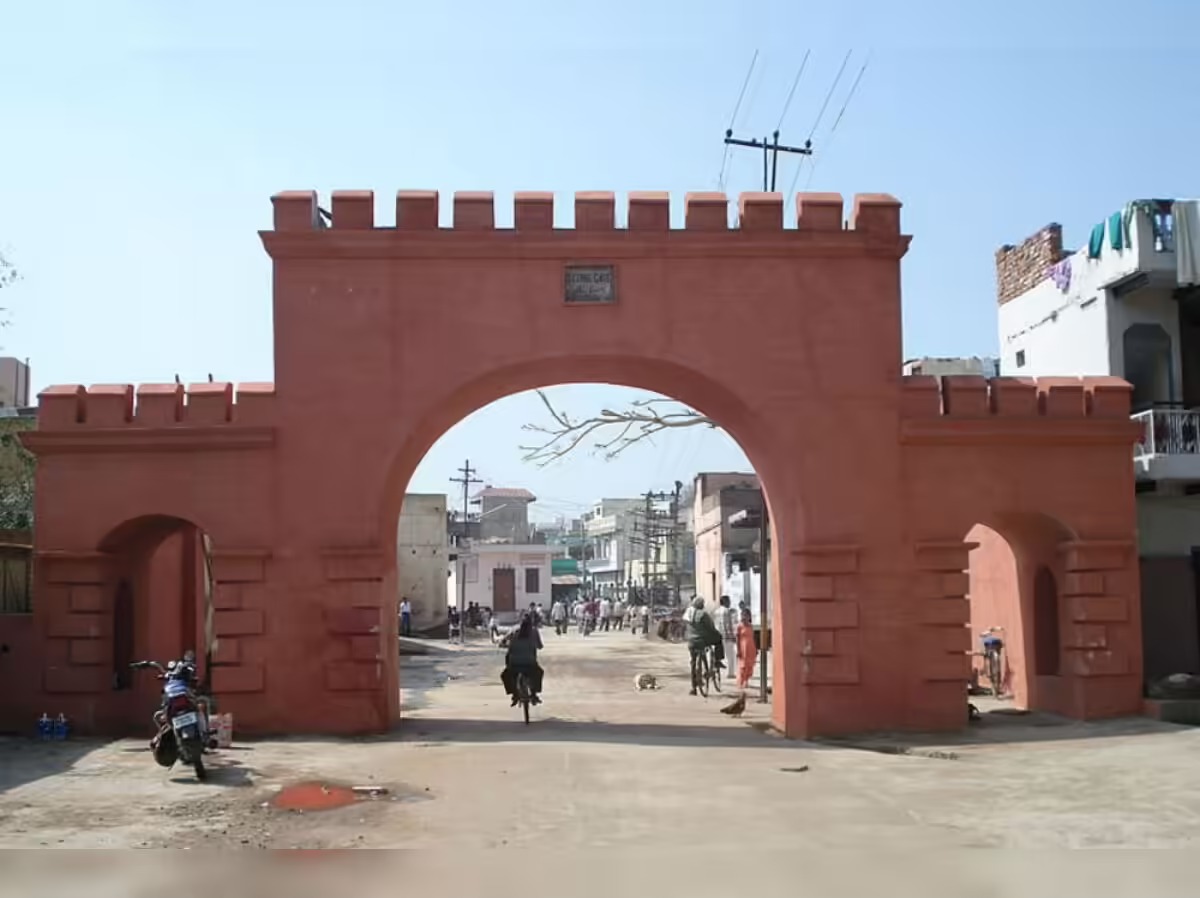
Rewari — The Brass City That Raised India's Last Hindu Emperor
Introduction
Rewari carries an unusual double identity. This is the city where Hemu Vikramaditya — the last Hindu emperor to rule from Delhi — spent his childhood and rose to power, and it's also, quite literally, the "Brass City of Haryana," a global center for copper and brass manufacturing that traces its industrial roots directly back to his reign. Add a steam locomotive museum housing some of India's oldest surviving engines, spiritual centers, and an old-town charm shaped by pre-independence princely history, and Rewari offers a genuinely layered day trip just an hour from Delhi.
History
Rewari's most defining historical connection is to Hemu Vikramaditya, widely regarded as the last Hindu king to rule from Delhi during the medieval period. Historians believe Hemu spent his childhood and formative years in Rewari, and his fort still stands today in the city's Qutabpur neighbourhood. Between 1554 and 1556, Hemu won an extraordinary 22 consecutive battles against Afghan and Mughal forces across North India, before his coronation at Purana Qila in Delhi on 6th October 1556 — a remarkable achievement that briefly restored Hindu rule to the capital before his eventual defeat at the Second Battle of Panipat later that year.
Under Hemu's influence, Rewari developed into a major center for brass and copper production, manufacturing everything from kitchenware to jewellery — a legacy so enduring that the city remains one of the world's most significant copper production hubs even today. In more recent history, the town of Bawal, part of Rewari district, was originally part of the Jhajjar princely state before the 1857 mutiny, later coming under Nabha chief Hira Singh, who built a fort there in 1875.
Geography
Rewari is located approximately 82 to 89 km south-west of Delhi, along the historic Delhi-Jaipur National Highway (NH 8), placing it firmly within the National Capital Region. The district borders Jhajjar and lies at a strategic crossroads connected by three national highways — NH8, NH71, and NH71B — linking it to Jaipur, Mumbai, Jalandhar, Rohtak, and Palwal.
Rewari also serves as a major railway junction, with six lines branching out to Ajmer via Ringas, Delhi, Ajmer via Alwar, Hisar, Loharu, and Rohtak — a connectivity legacy that ties directly into its historic role as a railway hub during the colonial era. The surrounding landscape reflects Haryana's broader semi-arid plains, with the climate following a typical North Indian pattern of hot summers, a modest monsoon, and cool, comfortable winters.
Culture and Traditions
Rewari's culture blends Haryanvi and Rajasthani influences, a natural result of its position along the Delhi-Jaipur corridor. Hindi and Haryanvi are the primary spoken languages, and daily life remains closely tied to the city's dual identity as both a historic royal town and a modern industrial center.
The city's spiritual life is notably active, home to Shree Ram Sharnam, an International Spiritual Center with branches across India, drawing devotees of Lord Rama seeking peace and reflection. Community pride in Rewari's brass and copper manufacturing heritage also runs deep, with generations of local families connected to the trade that Hemu's reign first established centuries ago.
Architecture
Rewari's architecture reflects a mix of Rajput-era forts, colonial railway heritage, and Mughal religious structures. Hemu's Fort in the Qutabpur neighbourhood stands as the city's most historically significant structure, a direct physical link to the reign of Rewari's most famous historical figure.
The Bawal Fort, built in 1875 by Nabha chief Hira Singh using slate and stone masonry, remains in reasonably preserved condition, with three surviving walls and a rear gateway. Religious architecture includes the Lal Masjid (Red Mosque), built during Emperor Akbar's reign, and a rare three-storied Sanatan Dharma temple in the heart of the city housing statues of numerous Hindu deities. Colonial-era industrial architecture is represented by the Rewari Heritage Steam Locomotive Shed, built in 1893 and now home to one of India's most significant railway heritage collections.
Famous Places
Rewari Heritage Steam Locomotive Museum
Housed in a shed built in 1893, this is Rewari's single most celebrated attraction — the only museum in India hosting a collection of steam engines that have survived their strenuous working journeys. It remains a genuine paradise for railway history enthusiasts and photographers alike.
A Rare Railway Legacy
The museum's steam engines represent a vanishing chapter of Indian railway history, making Rewari's collection nationally significant rather than just a local curiosity.
Best Time to Visit
Weekday mornings tend to be quieter, offering a more relaxed pace to explore and photograph the vintage engines.
Quick Tip
Combine your visit here with a walk through Rewari's old town, since the museum sits close to the city's historic railway junction.
Hemu's Fort (Qutabpur)
The enduring fort associated with Hemu Vikramaditya, located in Rewari's Qutabpur neighbourhood. Though modest in scale today, it remains a powerful physical connection to the city's most celebrated historical figure and his remarkable rise to power.
Shree Ram Sharnam
A sacred spiritual center dedicated to Lord Rama, part of an International Spiritual Center network with branches across India. Visitors describe feeling a genuine sense of peace and purity here, making it a popular stop for spiritual seekers passing through Rewari.
Bada Talab
Built by Rao Tej Singh between 1810 and 1815, this historic pond near the old Town Hall features separate bathing provisions and a Hanuman temple on its banks, drawing large numbers of devotees for daily prayer.
Bawal Fort
Built in 1875 by Nabha chief Hira Singh using slate and stone masonry, this fort in Bawal town offers visitors a glimpse into the district's 19th-century princely-state history, with its three-sided walls and rear gateway still reasonably intact.
Lal Masjid (Red Mosque)
Built during Emperor Akbar's reign, this striking red mosque remains one of Rewari's most beautiful historical monuments, reflecting the city's Mughal-era architectural heritage.
Famous Dishes
Bajra Roti with Lassi
A hearty millet flatbread paired with a tall glass of chilled, thick lassi, reflecting the region's strong agrarian and dairy-farming traditions.
Dal Makhani
A rich, slow-cooked lentil preparation finished with cream and butter, widely enjoyed across Rewari's local eateries as a comforting staple.
Rajasthani-Influenced Snacks
Given its position along the Delhi-Jaipur corridor, Rewari's food scene carries genuine Rajasthani influence, with kachori and other fried snacks popular across the city's local markets.
Local Sweets
Traditional North Indian mithai from Rewari's old-town sweet shops remain popular during festivals and family celebrations, with several long-running shops known for their milk-based specialties.
Famous Personalities
Hemu Vikramaditya
Widely regarded as the last Hindu emperor to rule from Delhi, Hemu spent his childhood and education in Rewari before rising to extraordinary military and political power. Between 1554 and 1556, he won 22 consecutive battles against Afghan and Mughal forces, was crowned emperor at Purana Qila in Delhi on 6th October 1556, and briefly restored Hindu rule to the capital before his defeat at the Second Battle of Panipat.
An Unmatched Military Record
Hemu's string of 22 consecutive victories across North India remains one of the most remarkable military achievements in medieval Indian history, rarely matched by any ruler of his era.
Connection to Rewari
His fort still stands in the city's Qutabpur neighbourhood, and his legacy as the founder of Rewari's brass and copper industry remains visibly alive in the city's economy today.
Fast Fact
Under his reign, Rewari became a major producer of brass and copper goods, a legacy that continues to make the city one of the world's most significant copper production centers.
Rao Tej Singh
The builder of Rewari's historic Bada Talab pond between 1810 and 1815, Rao Tej Singh remains a notable figure in the city's local history, with the pond still bearing his name in local memory.
Festivals
Diwali
Celebrated with lit-up homes, festive markets, and family gatherings, Diwali brings Rewari's old-town bazaars alive with shoppers in the days leading up to the celebration.
Baisakhi
Marking the harvest season, Baisakhi is celebrated with genuine community spirit across this agriculture-driven district, tied closely to the region's farming calendar.
Ram Navami
Given the presence of Shree Ram Sharnam and the city's strong devotion to Lord Rama, Ram Navami holds special spiritual significance in Rewari, drawing devotees for prayers and celebrations.
Things to Do
- Explore the Rewari Heritage Steam Locomotive Museum, a genuinely rare railway heritage attraction.
- Visit Hemu's Fort in Qutabpur, tracing the city's most famous historical figure.
- Seek peace at Shree Ram Sharnam, a significant spiritual center.
- Walk around Bada Talab, a historic pond with its riverside Hanuman temple.
- Visit Bawal Fort, a 19th-century princely-era structure.
- Shop for brass and copper goods, Rewari's signature local craft.
- Sample Rajasthani-influenced street food in the city's local markets.
Where to Eat, Shop, and Stay
Eat: Local eateries across Rewari serve authentic Haryanvi staples like bajra roti and dal makhani, alongside Rajasthani-influenced snacks reflecting the city's position along the Delhi-Jaipur corridor.
Shop: Rewari's brass and copper markets remain a genuine highlight for shoppers, given the city's centuries-old manufacturing legacy dating back to Hemu's reign.
Stay:
- Budget: Simple guesthouses and small hotels cover most short-stay needs for travelers passing through.
- Mid-range: A handful of comfortable hotels near the city center offer better amenities for a more relaxed stay.
- Luxury: For upscale stays, travelers often base themselves in nearby Gurugram, well connected to Rewari by road.
What is Rewari Famous For?
Rewari is best known as the childhood home and power base of Hemu Vikramaditya, the last Hindu emperor to rule from Delhi, and as the "Brass City of Haryana" for its centuries-old copper and brass manufacturing industry. It's also recognized for its Rewari Heritage Steam Locomotive Museum and its role as a major railway junction.
Best Time to Visit
October to March is the ideal window to visit Rewari, when the weather turns cool and comfortable for exploring forts, markets, and the steam locomotive museum. Summers turn hot and dry, making outdoor sightseeing more difficult, so the winter season remains the clear favorite among travelers.
How to Reach
By Air: The nearest airport is Indira Gandhi International Airport in Delhi, roughly 82–89 km away.
By Rail: Rewari is a major junction on the Indian railway network, connected directly to Delhi, Ajmer, Hisar, Loharu, and Rohtak.
By Road: Rewari is well connected via NH8 (Delhi-Jaipur-Mumbai), NH71, and NH71B, with regular bus services from Delhi and other parts of Haryana.
Nearby Places
Gurugram
About 50 km away, Gurugram offers a modern contrast to Rewari's historic character, with malls, nightlife, and corporate energy for travelers wanting NCR's contemporary side.
Why It Complements a Rewari Trip
Pairing Rewari's brass-town heritage with Gurugram's modern skyline offers a compelling contrast between old and new Haryana.
Getting There
The two cities are well connected by road, making a same-day extension easy.
Quick Tip
Combine a Rewari morning at the locomotive museum with a Gurugram evening for a well-rounded regional day trip.
Alwar
Located across the border in Rajasthan, Alwar offers forts, palaces, and museums that extend the historical narrative Rewari begins with Hemu's legacy.
Mahendragarh
Roughly 60 km away, Mahendragarh offers its own hilltop forts and Mughal-era monuments, adding further depth to a regional heritage circuit.
Best Duration for a Trip
1 to 2 days is generally sufficient to comfortably explore Rewari's fort, museum, and markets. Travelers combining it with Gurugram or Alwar can extend this into a fuller 3-day regional trip.
Travel Tips
- Visit between October and March for the most comfortable sightseeing weather.
- Carry cash, as smaller markets and eateries may not accept digital payments.
- Dress modestly and respect local customs when visiting temples and spiritual centers.
- Hire a local taxi for easier movement between Rewari's scattered historical sites.
- Combine a Rewari visit with Gurugram or Alwar for a richer regional trip.
- Bargain confidently at the city's brass and copper markets for the best prices.
Why Visit Rewari?
Rewari offers a genuinely unique historical thread — the rise of India's last Hindu emperor to rule from Delhi, still visible today in both a standing fort and a thriving brass industry he helped establish. Paired with a rare steam locomotive museum and its position along the historic Delhi-Jaipur corridor, Rewari rewards travelers looking for substantial history within easy reach of the capital.
Conclusion
Rewari may not top most travel itineraries, but it holds a genuinely rich blend of royal history, industrial heritage, and railway nostalgia. From the fort walls linked to Hemu Vikramaditya to the vintage steam engines resting in their century-old shed, and from its brass markets to its spiritual centers, this Brass City rewards travelers willing to look beyond the highway. A short visit here, paired with a plate of bajra roti and a walk through its old-town bazaars, offers a genuinely rooted glimpse into one of the National Capital Region's most historically significant towns.
"Travel is the only thing you buy that makes you richer."