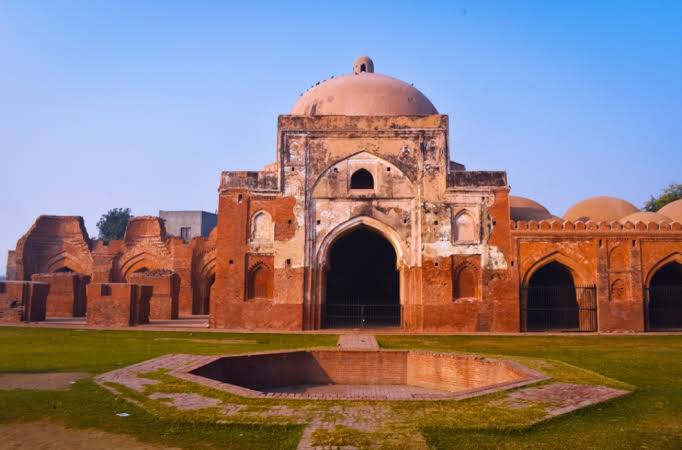
Panipat — The City of Three Battles That Rewrote India's Destiny
Introduction
Few patches of land anywhere in the world have shaped a nation's history quite like Panipat. Three times — in 1526, 1556, and 1761 — armies clashed on this flat stretch of Haryana soil, and each time, the outcome altered the course of the Indian subcontinent. Today, Panipat carries that weight quietly, having reinvented itself as the "City of Weavers" and a global hub for textile recycling. It's a city where you can stand on a battlefield that toppled an empire in the morning, and walk through a bustling handloom market by afternoon — a genuinely rare pairing of monumental history and everyday industry.
History
According to legend, Panipat was one of the five prasthas (cities) the Pandavas demanded from Duryodhana before the Mahabharata war, its ancient name recorded as Panduprastha. But it's the three battles fought here centuries later that truly defined Panipat's place in Indian history.
The First Battle of Panipat, fought on 21st April 1526, saw the Timurid warlord Babur defeat Ibrahim Lodhi, the Sultan of Delhi, despite being significantly outnumbered — a victory that ended Lodi rule and founded the Mughal Empire in India. Thirty years later, the Second Battle of Panipat took place on 5th November 1556, between the forces of Akbar and Hemu, a king from Rewari who had captured Agra and Delhi and won 22 consecutive battles before his defeat here. The Third Battle of Panipat, fought in 1761, pitted the Maratha Empire against Ahmad Shah Abdali, marking a pivotal moment in the decline of Maratha power in North India.
Panipat district itself has a more recent administrative history — carved out of Karnal district on 1st November 1989, briefly merged back in 1991, before finally becoming an independent district again on 1st January 1992.
Geography
Panipat sits on the historic Grand Trunk Road, roughly 90 km north of Delhi and 169 km south of Chandigarh. Its flat, open terrain — unremarkable in ordinary times — is precisely what made it such a strategically decisive battleground for armies moving between Delhi and Punjab over the centuries.
The district lies within Haryana's fertile agricultural plains, with the region's soil supporting extensive farming alongside its now-dominant industrial and textile economy. The climate follows a typical North Indian continental pattern — hot, dry summers, a humid monsoon, and cool, comfortable winters that make the October-to-March window by far the most pleasant time to explore the city's historical sites.
Culture and Traditions
Panipat's culture is deeply shaped by its identity as the "City of Weavers" and "Textile City" — home to one of the world's largest textile recycling industries, earning it the nickname "cast-off capital." Hindi and Haryanvi are the primary languages, with generations of families connected to the handloom and weaving trade that defines the local economy.
The city's history as a battlefield has also left a cultural imprint, with local memory and civic pride closely tied to its role in three of India's most consequential military conflicts. Religious diversity runs through Panipat's traditions too, reflected in its mix of Hindu temples, Sufi shrines, and Mughal-era mosques — a legacy of the many rulers and communities who've passed through this land.
Architecture
Panipat's architecture reflects its extraordinary military history, blending Sultanate, Mughal, and Sufi-era styles. The Kabuli Bagh Mosque, built by Babur himself to commemorate his victory in the First Battle of Panipat, stands as a striking example of early Mughal architectural artistry.
The Old Fort, though largely in ruins, houses rare historical fragments spanning from Babur's era to Hemu's time, offering a tangible link to the city's turbulent past. The tomb of the 13th-century Sufi saint Bu Ali Shah Qalandar represents the city's significant Islamic spiritual architecture, remaining an active pilgrimage site. Meanwhile, memorials like Hemu's Samadhi Sthal and the black mango tree site known as Kala Amb mark the precise locations where history's decisive moments unfolded.
Famous Places
Panipat Battlefields Memorial
A dedicated memorial exploring the historical sites of all three Battles of Panipat, including markers, informational boards, and preserved battleground areas. It remains the single most important stop for anyone interested in the city's defining military history.
Tracing Three Battles
Each battle site carries its own distinct history, from Babur's decisive 1526 victory to the Maratha defeat of 1761, making a single visit here a walk through 235 years of Indian history.
Visiting the Sites
The third battle site, near the Kala Amb monument, is generally the best preserved, with a boundary wall, walking paths, and graphical representations of the battle carved into copper plates.
Quick Tip
Carry GPS navigation or hire a local guide, since the battle sites are spread across the district and can be tricky to locate independently.
Kabuli Bagh Mosque
Built by Emperor Babur to commemorate his victory in the First Battle of Panipat, this mosque remains one of the finest surviving examples of early Mughal architecture in the region, blending religious and historical significance in equal measure.
Hemu's Samadhi Sthal
A memorial marking the site of Hemu's execution following the Second Battle of Panipat, serving as a solemn reminder of one of Indian history's great "what if" moments — Hemu had captured Delhi and Agra before his ultimate defeat here.
Kala Amb (Black Mango Tree Site)
Located about 8 km from Panipat, this site marks where Maratha commander Sadashiv Rao Bhau commanded his forces during the Third Battle of Panipat. Though the original black mango tree has long since disappeared, a brick pillar with an iron rod now marks the historic spot.
Devi Mandir
A significant temple in Panipat, forming part of the city's broader religious and historical landmark circuit alongside its battle-linked sites.
Tomb of Bu Ali Shah Qalandar
The resting place of a revered 13th-century Sufi saint, remaining an active and meaningful pilgrimage site for devotees visiting Panipat, reflecting the city's rich Islamic spiritual heritage.
Famous Dishes
Handloom Town Street Food
Panipat's bustling markets, closely tied to its identity as a textile hub, are known for classic North Indian street food — chaat, samosas, and kachoris — best enjoyed fresh while exploring the city's weaving districts.
Dal Makhani and Butter Chicken
Rich, buttery Punjabi-influenced classics remain popular staples across Panipat's local eateries, reflecting the broader North Indian culinary influence found throughout the Grand Trunk Road corridor.
Bajra Roti with Sarson Saag
A hearty traditional combination of millet flatbread and mustard greens curry, deeply rooted in the region's agrarian food culture and especially popular during winter months.
Lassi
Thick, creamy, and generously sweetened, lassi remains a favorite refreshment across Panipat's local eateries, a welcome respite after a day of historical sightseeing in the summer heat.
Famous Personalities
Altaf Hussain Hali
Born in 1837 in Panipat, Khwaja Altaf Hussain Hali became one of the most celebrated Urdu poets, scholars, and critics of his era. In 1869, he met the legendary poet Mirza Ghalib, who recognized and encouraged his talent, and Hali went on to write "Yaadgar-e-Ghalib," the first biography of Ghalib ever published.
A Founding Figure in Urdu Criticism
Hali is widely regarded as one of the founders of modern Urdu literary criticism, with his work shaping the direction of Urdu poetry for generations that followed.
Connection to Panipat
His birth and early life in Panipat remain a proud part of the city's literary legacy, tying this historic battlefield town to one of Urdu literature's most influential figures.
Fast Fact
After his encouragement from Ghalib in 1869, Hali went on to become one of the most prolific literary voices of his generation.
Saleem Kausar
Born in Panipat in 1947, Saleem Kausar later migrated to Pakistan after Partition and became a well-known Urdu poet, celebrated for his acclaimed ghazal "Main Khayal Hoon Kisi Aur Ka," and honored with Pakistan's Pride of Performance Award in 2015.
Festivals
Diwali
Celebrated with lit-up homes, festive markets, and family gatherings, Diwali brings Panipat's textile bazaars and local markets alive with shoppers in the days leading up to the celebration.
Baisakhi
Marking the harvest season, Baisakhi is celebrated with genuine enthusiasm across the district, tying the festival closely to the region's farming calendar.
Holi
Panipat's Holi celebrations bring color, music, and community spirit to the city's neighborhoods, marking the arrival of spring with the same warmth found across North India.
Things to Do
- Explore the Panipat Battlefields Memorial, tracing three of Indian history's most decisive conflicts.
- Visit Kabuli Bagh Mosque, a striking example of early Mughal architecture.
- Pay respects at Hemu's Samadhi Sthal, a poignant historical memorial.
- Walk through the city's handloom markets, experiencing Panipat's living textile heritage.
- Visit the Tomb of Bu Ali Shah Qalandar for a peaceful spiritual experience.
- Shop for textiles and home furnishings, Panipat's signature local product.
- Sample fresh street food in the city's bustling market areas.
Where to Eat, Shop, and Stay
Eat: Local eateries across Panipat serve authentic Haryanvi staples like bajra roti with sarson saag, alongside North Indian classics like dal makhani, with fresh street food readily available in the city's market areas.
Shop: Panipat's fame as the "City of Weavers" makes it one of India's best destinations for handloom textiles, home furnishings, and blankets, with local markets offering genuine value for textile shoppers.
Stay:
- Budget: Simple guesthouses and small hotels cover most short-stay needs for travelers passing through.
- Mid-range: A handful of comfortable hotels near the city center offer better amenities for a more relaxed stay.
- Luxury: For upscale stays, travelers often base themselves in nearby Karnal or Delhi, both well connected to Panipat by road.
What is Panipat Famous For?
Panipat is best known globally for the three decisive battles fought here in 1526, 1556, and 1761, each a turning point in Indian history. It's also recognized as the "City of Weavers" for its massive textile and handloom industry, and as a leading global hub for textile recycling.
Best Time to Visit
October to March is the ideal window to visit Panipat, offering pleasant weather perfect for exploring historical battle sites and outdoor monuments. Summers can get very hot, making extended outdoor exploration difficult, so the winter season remains the clear favorite among travelers.
How to Reach
By Air: The nearest major airport is Indira Gandhi International Airport in Delhi, roughly 90 km away.
By Rail: Panipat Junction is a major railway station, well connected to Delhi and other major cities across India.
By Road: Panipat sits directly on the Grand Trunk Road (NH 44), with regular bus services connecting it to Delhi and other parts of Haryana.
Nearby Places
Karnal
About 40 km away, Karnal shares its own Mahabharata-linked mythology through Karna Lake, alongside the historic Cantonment Church Tower and major agricultural research institutes.
Why It Complements a Panipat Trip
Given both cities' deep historical roots, visiting Karnal extends Panipat's own layered narrative of mythology and empire.
Getting There
The two cities are well connected by road, making a same-day or overnight extension easy.
Quick Tip
Combine a Panipat morning at the battlefields with a Karnal afternoon at Karna Lake for a well-rounded historical day trip.
Kurukshetra
Roughly 90 km away, Kurukshetra is the legendary battlefield of the Mahabharata, adding an even older layer of mythological history to a Panipat-based itinerary.
Sonipat
About 45 km away, Sonipat offers additional historical and educational institutions, making it a convenient extension for travelers exploring the wider region.
Best Duration for a Trip
1 to 2 days is generally sufficient to comfortably explore Panipat's battle sites, mosques, and textile markets. Travelers combining it with Karnal or Kurukshetra can extend this into a fuller 3-day regional heritage trip.
Travel Tips
- Visit between October and March for the most comfortable sightseeing weather.
- Carry GPS navigation or hire a local guide, since the three battle sites are spread across the district.
- Bargaining is common in local textile markets, so negotiate confidently.
- Dress modestly when visiting religious sites like the Bu Ali Shah Qalandar tomb.
- Carry cash, as not all establishments accept credit cards.
- Be mindful of belongings in crowded market areas to prevent petty theft.
Why Visit Panipat?
Panipat offers something genuinely rare — the chance to stand on the exact ground where three of Indian history's most consequential battles were fought, each one reshaping the subcontinent's political future. Paired with its living identity as a modern textile powerhouse, the city tells a story of both monumental conflict and everyday industry, rewarding travelers who want their sightseeing to carry real historical weight.
Conclusion
Panipat may be best known for the battles that shaped an empire, but it holds far more than military history. From the Mughal artistry of Kabuli Bagh Mosque to the quiet dignity of Hemu's Samadhi Sthal, and from its identity as the City of Weavers to its connection with celebrated Urdu poet Altaf Hussain Hali, this Grand Trunk Road city rewards travelers willing to look beyond its battlefield reputation. A short visit here, paired with a walk through its handloom markets and a plate of hot bajra roti, offers a genuinely rich glimpse into one of India's most historically significant towns.
"Travel is the only thing you buy that makes you richer."