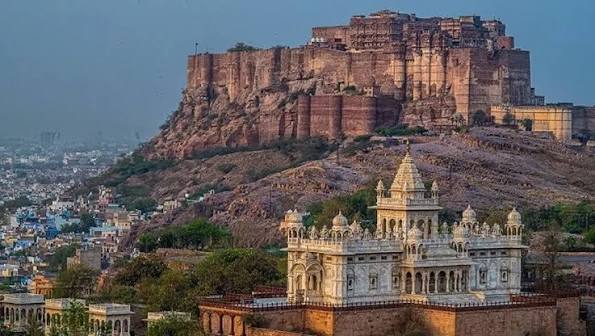
Mahendragarh — Where Hilltop Forts Guard Haryana's Forgotten Frontier
Introduction
Tucked into Haryana's dry, hilly south-western corner, bordering Rajasthan, Mahendragarh is a district that rewards travelers willing to venture off the state's more familiar tourist trail. This is a land of hilltop forts, Mughal-era tombs, and a name that quite literally changed with history — from Kanaud to Mahendragarh. It's also, perhaps surprisingly, the birthplace of one of India's most recognized modern spiritual figures. Between its Sufi shrines, its historic Narnaul monuments, and its rugged Aravalli-fringed terrain, Mahendragarh offers a genuinely different side of Haryana travel.
History
Mahendragarh was originally known as Kanaud, a name tied to its association with the Kanaudia group of Brahmans who once settled here. It was only during the mid-19th century that the town came to be called Mahendragarh, marking a shift in both its identity and administrative importance.
The wider district carries a much older and richer historical layer, centered largely around Narnaul, now its administrative headquarters. Narnaul flourished as an important town under the Delhi Sultanate and Mughal Empire, and its 14 major historical sites — including tombs, mosques, and step-wells — reflect centuries of Sultanate and Mughal-era patronage, largely built between the Tughlaq period and the reign of Akbar. The district also holds royal-era additions, including Madhogarh Fort, built atop a hill near Madhogarh village in the 18th century.
As an administrative unit, Mahendragarh district was formed in 1948, created by grouping tracts from several former princely states — Narnaul and Mahendragarh tehsils from Patiala State, Dadri from Jind State, and part of Bawal Nizamat from Nabha State — before eventually becoming part of independent Haryana.
Geography
Mahendragarh district sits in the extreme south-western corner of Haryana, directly bordering Rajasthan. The terrain here is markedly different from the flat plains found elsewhere in the state — sandy, hilly, and notably dry, shaped by its position at the edge of the Aravalli range.
This hilly, rugged landscape has become one of the district's defining tourism assets, with its hilltop strongholds and elevated forts drawing steadily increasing numbers of visitors over the years. Mahendragarh town itself sits at an elevation of roughly 262 meters, giving it a slightly cooler, more elevated character compared to Haryana's low-lying agricultural belts. The climate remains largely dry and continental, with hot summers, a modest monsoon, and cool winters.
Culture and Traditions
Hindi is the official language across Mahendragarh, with Haryanvi widely spoken in everyday life. The district's culture carries a strong rural, hill-edge character, shaped by its historical role as a princely-state territory and its geographic isolation compared to Haryana's more urbanized districts.
Religious life here reflects genuine diversity, with Hindu temples, Sufi dargahs, and Mughal-era mosques all forming part of the district's everyday spiritual landscape. The presence of the Central University of Haryana in Mahendragarh has also introduced a modern academic layer to what remains, at its core, a traditional, close-knit rural community.
Architecture
Mahendragarh district's architecture is remarkably diverse for its size, spanning Tughlaq, Mughal, and colonial-era styles concentrated heavily around Narnaul. The tomb-cum-mosque complex of Ibrahim Khan Suri draws on architectural heritage stretching from the Tughlaq era to the British period, with the tomb and adjoining mosque originally built during Firoz Shah Tughlaq's reign, and eastern colonnades added later in 1357 AD by Alam Khan Mewati.
The Jal Mahal, constructed in 1591, showcases elegant Mughal-style water-palace architecture, with lime-built walls that remain visible even today. Equally distinctive is the so-called "Chor Gumbad" (Thief's Dome) — originally built as a memorial gravestone for an Afghan monarch named Jamal Khan, later repurposed as a hideout by thieves due to its isolated location, earning it its unusual nickname. Hilltop fort architecture is represented by both Mahendragarh Fort and the 18th-century Madhogarh Fort, both currently being restored in a style inspired by Pinjore Gardens as part of a wider regional tourism circuit.
Famous Places
Mahendragarh Fort
Perched atop a hill, this architectural landmark offers panoramic views of the surrounding town and countryside, drawing history enthusiasts and photographers alike. Its elevated position makes it one of the district's most rewarding short hikes.
Restoration and Tourism Plans
The fort is currently being restored as part of a wider regional tourist circuit connecting Rewari, Narnaul, Mahendragarh, and Madhogarh, styled after the landscaping approach used at Pinjore Gardens.
Best Time to Visit
Early morning or late afternoon visits offer the most comfortable climbing conditions and the best light for photography over the surrounding hills.
Quick Tip
Wear sturdy footwear, since the fort's hilltop approach involves an uneven, sloped path.
Jal Mahal (Narnaul)
A striking Mughal-style water palace built in 1591 by Shah Kuli Khan, located just outside the city's population in the south. Its lime-built walls and elegant proportions remain visible even after centuries, making it one of Narnaul's most photogenic historical structures.
Tomb of Ibrahim Khan Suri
A tomb-cum-mosque complex reflecting architectural styles from the Tughlaq era through to the British period. Originally constructed during Firoz Shah Tughlaq's reign, with later additions by Alam Khan Mewati in 1357 AD, it remains one of Narnaul's most historically layered monuments.
Chor Gumbad
Built as a memorial gravestone for an Afghan monarch named Jamal Khan on a height in the city's northwestern direction, this structure later earned its unusual name — "Thief's Dome" — after thieves began using its isolated location as a hideout.
Birbal Ka Chatta
A famous cave-like structure in Narnaul, locally believed to extend all the way to Gurugram, adding a layer of local legend to the town's already rich historical landscape.
Hargopal Lake
A scenic water body within the district, offering a peaceful, natural counterpoint to Mahendragarh's dense concentration of historical monuments.
Famous Dishes
Bajra Khichdi
A traditional millet-based dish reflecting the region's dry, agrarian terrain, typically served with ghee and yogurt — a hearty, rustic staple of everyday meals here.
Kachri ki Sabzi
A distinctive local vegetable preparation made from kachri, a wild desert melon common to this drier part of Haryana, giving the dish a tangy flavor unique to the region.
Bajra Roti with Lassi
A hearty millet flatbread paired with a tall glass of chilled, thick lassi, reflecting the district's dairy and farming traditions.
Local Sweets
Traditional North Indian mithai from Narnaul and Mahendragarh's local shops remain popular during festivals and family celebrations, with several long-running shops known for their milk-based specialties.
Famous Personalities
Baba Ramdev
Born as Ramkrishna Yadav in Alipur village, Mahendragarh district, Baba Ramdev went on to become one of India's most recognized spiritual leaders, known for his contributions to yoga, Ayurveda, and wellness. He is the founder of the Patanjali Group of Institutions and has taught yoga to numerous public figures, including several Bollywood celebrities.
From Village Roots to National Recognition
Ramdev's journey from a small village in Mahendragarh to becoming a household name in Indian wellness culture remains a defining source of local pride.
Connection to Mahendragarh
His birthplace in Alipur village continues to be recognized as part of the district's cultural identity, even as his work has taken him across India and internationally.
Fast Fact
He built the Patanjali Group into one of India's largest FMCG and wellness brands, rooted in Ayurvedic principles.
Surinder Sharma
Born in Nangal Chaudhary, Mahendragarh district, Surinder Sharma is recognized among Haryana's notable personalities, contributing to the district's broader profile within the state.
Festivals
Diwali
Celebrated with lit-up homes, festive markets, and family gatherings, Diwali brings Mahendragarh and Narnaul's local bazaars alive in the days leading up to the celebration.
Baisakhi
Marking the harvest season, Baisakhi is celebrated with genuine community spirit in this agriculture-driven district, tied closely to the region's farming calendar.
Urs at Local Dargahs
Given the district's strong Sufi heritage, annual Urs celebrations at shrines like the dargah of Sheikh Meena draw devotees for spiritual gatherings, music, and community feasting.
Things to Do
- Climb Mahendragarh Fort for panoramic hilltop views of the district.
- Explore Narnaul's Mughal-era monuments, including Jal Mahal and Ibrahim Khan Suri's tomb.
- Visit Chor Gumbad, one of the district's most curiously named landmarks.
- Walk through Birbal Ka Chatta, exploring local legend alongside history.
- Relax by Hargopal Lake for a peaceful natural break from sightseeing.
- Shop in the local markets for handicrafts and everyday produce.
- Interact with local villages to experience traditional Haryanvi rural life firsthand.
Where to Eat, Shop, and Stay
Eat: Local eateries across Mahendragarh and Narnaul serve authentic regional dishes like bajra khichdi and kachri ki sabzi, alongside traditional sweet shops known for fresh, milk-based mithai.
Shop: Local markets offer handicrafts and everyday produce, giving visitors a genuine taste of the district's rural commerce, particularly around Narnaul's older bazaars.
Stay:
- Budget: Simple guesthouses and small hotels cover most short-stay needs for travelers passing through.
- Mid-range: A handful of comfortable hotels in Narnaul offer better amenities for a more relaxed stay.
- Luxury: For upscale stays, travelers often base themselves in nearby Rewari or Gurugram, both well connected to Mahendragarh by road.
What is Mahendragarh Famous For?
Mahendragarh is best known for its historical and religious heritage, particularly the 14 major monuments concentrated in Narnaul, spanning Tughlaq, Mughal, and colonial-era architecture. It's also recognized for its hilltop forts, its Sufi shrine heritage, and as the birthplace of spiritual leader Baba Ramdev.
Best Time to Visit
October to March is the ideal window to visit Mahendragarh, when the weather turns cool and comfortable for exploring forts, tombs, and local markets. Summers turn very hot and dry, given the district's sandy, semi-arid terrain, making the winter season the clear favorite among travelers.
How to Reach
By Air: The nearest major airport is Indira Gandhi International Airport in Delhi, connected onward to Mahendragarh by road.
By Rail: The nearest significant railheads are in Rewari and Narnaul, both well connected to Delhi and other major cities.
By Road: Mahendragarh is well connected by road to Rewari, Gurugram, and Delhi, making it accessible as a comfortable weekend getaway from major NCR cities.
Nearby Places
Narnaul
The district headquarters and largest town in the district, Narnaul is home to most of Mahendragarh's major historical monuments, including Jal Mahal, Chor Gumbad, and Ibrahim Khan Suri's tomb.
Why It Complements a Mahendragarh Trip
Since most of the district's Mughal-era monuments are concentrated in Narnaul, a visit here rounds out the historical experience begun at Mahendragarh Fort.
Getting There
Narnaul is well connected to Mahendragarh by road, making a same-day visit easy.
Quick Tip
Set aside at least half a day for Narnaul alone, given the density of monuments packed into the town.
Rewari
Rewari is a neighboring town known for its own historical and industrial significance, offering additional shopping and dining options for travelers extending their trip.
Madhogarh
Home to the 18th-century Madhogarh Fort, this nearby village adds another hilltop fortress to a regional heritage circuit alongside Mahendragarh's own fort.
Best Duration for a Trip
1 to 2 days is generally sufficient to comfortably explore Mahendragarh Fort, Narnaul's monuments, and local markets. Travelers wanting to include Madhogarh Fort and Rewari can extend this into a fuller 3-day regional trip.
Travel Tips
- Visit between October and March for the most comfortable sightseeing weather.
- Wear sturdy footwear for uneven terrain at hilltop forts like Mahendragarh and Madhogarh.
- Carry water and sun protection, given the district's dry, semi-arid climate.
- Dress modestly and respect local customs when visiting dargahs and religious sites.
- Hire a local taxi for easier movement between Mahendragarh, Narnaul, and Madhogarh.
- Carry cash, as smaller markets and eateries may not accept digital payments.
Why Visit Mahendragarh?
Mahendragarh offers a genuinely different side of Haryana — hilly, historic, and largely untouched by mainstream tourism. From its hilltop forts and Mughal-era monuments in Narnaul to its Sufi shrines and rugged Aravalli-fringed terrain, the district rewards travelers looking for authentic, uncrowded heritage exploration, all within easy reach of Delhi and Gurugram.
Conclusion
Mahendragarh may sit at the edge of Haryana's map, but it holds a genuinely rich concentration of forts, tombs, and history. From the panoramic views atop Mahendragarh Fort to the elegant Mughal-era Jal Mahal in Narnaul, and from its Sufi shrine heritage to its connection with a modern spiritual icon, this district rewards travelers willing to venture beyond the state's more familiar destinations. A short visit here, paired with a plate of bajra khichdi and a walk through its historic bazaars, offers a genuinely rooted glimpse into one of Haryana's most underrated corners.
"Travel is the only thing you buy that makes you richer."