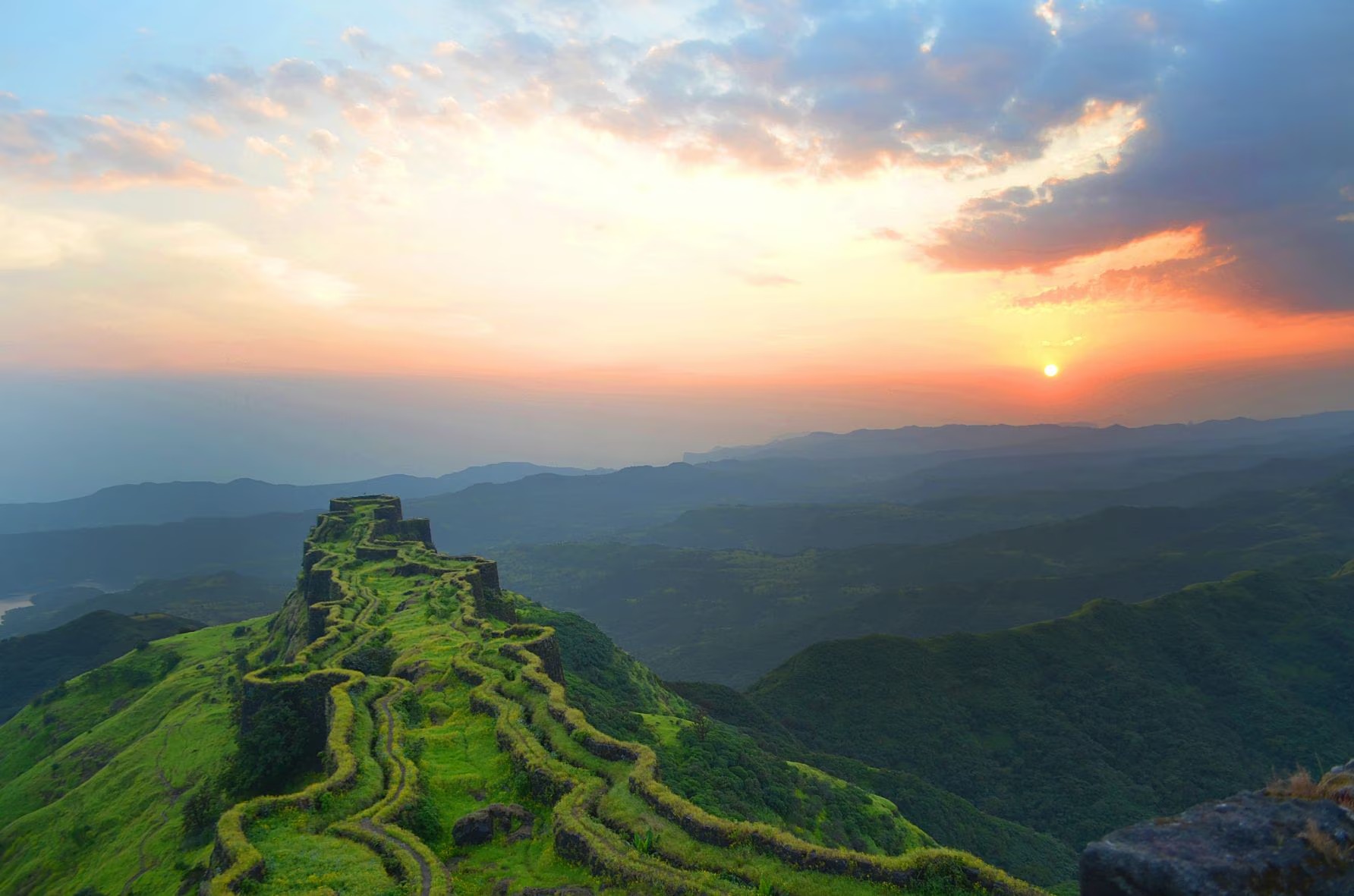
Pune – Where Maratha Heritage, Culture and Modern Energy Come Together
Located on the banks of the Mula and Mutha Rivers, Pune is one of Maharashtra's most important cities and a fascinating destination where history, education, culture, technology and modern urban life come together. Often associated with the legacy of the Maratha Empire and Chhatrapati Shivaji Maharaj, Pune has evolved from a historic Deccan settlement into one of India's major metropolitan and educational centres.
From the historic lanes of Shaniwar Wada and the spiritual atmosphere of Dagdu Sheth Halwai Ganpati Temple to the hills of Parvati, the caves of Pataleshwar and the scenic destinations surrounding the city, Pune offers a rich variety of experiences.
Whether you are interested in history, architecture, food, spirituality, shopping, education, nightlife or weekend adventures, Pune provides an excellent introduction to the cultural and contemporary character of Maharashtra.
History of Pune
Pune has a long and significant history that became particularly prominent during the rise of the Maratha Empire. The city grew from a regional settlement into an important political and administrative centre under the Peshwas.
- Pune's early history is connected with several Deccan dynasties and regional kingdoms.
- Chhatrapati Shivaji Maharaj spent part of his childhood in the Pune region under the guidance of his mother Jijabai and his guardian Dadoji Konddev.
- The city became the political centre of the Peshwas, who governed the Maratha Empire from Pune.
- Shaniwar Wada became the seat of the Peshwas and one of the most important political centres of the Maratha Empire.
- Pune later came under British control following the decline of Maratha power.
- The city played an important role in India's social reform, education and freedom movement.
- Pune became a major centre for education, industry and technology during the twentieth century.
The city's historical legacy can still be experienced through its forts, temples, wadas, museums and old neighbourhoods.
Geography of Pune
Pune is situated in the Deccan Plateau of Maharashtra, surrounded by hills and located close to the Western Ghats. The city lies at an elevation of roughly 560 metres above sea level and has a landscape shaped by rivers, hills and surrounding plateaus.
Pune's geography is defined by:
Mula and Mutha Rivers flowing through the metropolitan region
Western Ghats located to the west of the city
Numerous hills and elevated viewpoints within and around Pune
Deccan plateau landscapes extending across the eastern side
Green valleys and waterfalls in the surrounding hill regions
Agricultural and rural landscapes surrounding the urban area
This geographical setting makes Pune an excellent base for exploring forts, hill stations, trekking routes, caves, waterfalls and scenic weekend destinations.
Culture and Traditions of Pune
Pune is widely regarded as one of Maharashtra's most important cultural centres. Its identity has been shaped by Marathi literature, theatre, classical music, education, social reform and the traditions of the Peshwa era.
Traditional Lifestyle
Traditional Pune developed around neighbourhoods known as peths, many of which retain their historic character. Old wadas, temples, markets and narrow streets continue to reflect the city's traditional urban lifestyle.
Language and Traditions
Marathi is the principal language of Pune, while Hindi and English are also widely spoken. The city has a strong tradition of Marathi literature, theatre, education and public debate.
Music, Dance and Festivals
Pune has a strong association with Hindustani classical music, Marathi theatre and traditional performing arts. The city hosts cultural programmes throughout the year and has produced generations of musicians, writers and theatre personalities.
Ganesh Chaturthi is particularly significant in Pune, where large public celebrations have a long historical tradition associated with Lokmanya Bal Gangadhar Tilak.
Architecture of Pune
Pune's architecture reflects its evolution from a Maratha-era city into a modern metropolitan centre. Its architectural heritage includes wadas, temples, forts, colonial structures and modern buildings.
Shaniwar Wada
Shaniwar Wada is the most iconic historical structure in Pune. Built in the eighteenth century, it served as the principal residence and administrative centre of the Peshwas. The surviving gates, walls and foundations provide a glimpse into Pune's Maratha-era grandeur.
Wada Architecture
Traditional Pune wadas were large residential complexes built around courtyards. They commonly featured wooden balconies, carved pillars, internal courtyards and multiple interconnected rooms.
Pataleshwar Cave Temple
The Pataleshwar Cave Temple is an ancient rock-cut temple dedicated to Lord Shiva. Carved from a single basalt rock, the complex represents the early rock-cut architectural traditions of the Deccan.
Temple Architecture
Pune is home to numerous historic temples featuring traditional Maharashtrian architectural elements. Temples such as Kasba Ganpati and Dagdusheth Halwai Ganpati are important parts of the city's religious landscape.
Colonial Architecture
British-era buildings, educational institutions and civic structures add another architectural layer to the city. Areas around Camp and central Pune contain several examples of colonial-era planning and architecture.
Famous Places in Pune
Pune has a wide range of attractions, from historic monuments and temples to museums, gardens, educational institutions and scenic viewpoints.
Shaniwar Wada
Shaniwar Wada is Pune's most famous historical attraction and one of the city's strongest symbols of the Peshwa era. Visitors can explore its massive entrance gates, historic walls and surrounding heritage district.
Aga Khan Palace
Aga Khan Palace is an important historical landmark associated with India's freedom movement. Mahatma Gandhi, Kasturba Gandhi and other freedom movement leaders were detained here during the Quit India Movement. The palace now houses a museum and memorial dedicated to this period.
Dagdu Sheth Halwai Ganpati Temple
Shreemant Dagdusheth Halwai Ganpati Temple is one of Pune's most famous religious landmarks. The temple attracts large numbers of devotees throughout the year and becomes particularly vibrant during Ganesh Chaturthi.
Pataleshwar Cave Temple
Pataleshwar Cave Temple is an ancient rock-cut shrine located in the heart of Pune. The temple's stone-carved interiors and peaceful atmosphere make it an interesting stop for history and architecture enthusiasts.
Parvati Hill
Parvati Hill is one of Pune's most popular viewpoints. Visitors climb the steps to reach historic temples and enjoy panoramic views of the city from the hilltop.
Raja Dinkar Kelkar Museum
The Raja Dinkar Kelkar Museum houses an extensive collection of Indian art, traditional objects, musical instruments, weapons and decorative pieces collected by Dinkar G. Kelkar.
Shinde Chhatri
Shinde Chhatri is a historic memorial dedicated to Maratha military leader Mahadji Shinde. Its ornate architecture combines traditional Maratha and later European influences.
Lal Mahal
Lal Mahal is an important historical site associated with Chhatrapati Shivaji Maharaj and his early years in Pune. The structure commemorates the city's Maratha heritage.
Kasba Ganpati Temple
Kasba Ganpati is traditionally regarded as the presiding deity of Pune. The temple has deep historical and cultural significance and occupies an important place in the city's Ganesh festival traditions.
Empress Garden
Empress Garden is one of Pune's historic green spaces. Its large trees, landscaped areas and peaceful atmosphere make it a pleasant destination away from the city's busy streets.
National Defence Academy
The National Defence Academy at Khadakwasla is one of India's premier military training institutions. While access to the campus is restricted, its location and surrounding Khadakwasla landscape are notable landmarks in the Pune region.
Mulshi Dam
Mulshi, located outside Pune, is a popular scenic destination surrounded by hills, forests and the Mulshi reservoir. It is particularly beautiful during and after the monsoon.
Khadakwasla Dam
Khadakwasla Dam is a popular nearby getaway and an important water source for Pune. The surrounding landscape is especially attractive during the monsoon and winter months.
Famous Dishes of Pune
Pune is one of Maharashtra's best cities for experiencing traditional Maharashtrian cuisine alongside modern cafes, bakeries and restaurants.
Misal Pav
Misal Pav is one of Maharashtra's most popular dishes and a must-try in Pune. It consists of a spicy sprouted-legume preparation topped with farsan and served with pav.
Vada Pav
Vada Pav is a classic Maharashtrian street-food favourite. A spiced potato fritter is placed inside a pav and served with chutneys and fried chillies.
Poha
Poha is a popular Maharashtrian breakfast made from flattened rice, onions, peanuts, spices and herbs. It is commonly enjoyed across Pune.
Bakarwadi
Bakarwadi is a crunchy, spicy snack made from gram-flour dough filled with a seasoned mixture and rolled before frying. It is one of Maharashtra's most popular packaged snacks.
Bhakri and Pithla
Bhakri and Pithla is a traditional Maharashtrian meal. The combination of millet-based bhakri with a spiced gram-flour preparation represents the simple and hearty food culture of the region.
Puran Poli
Puran Poli is a traditional sweet flatbread filled with jaggery and lentils and flavoured with cardamom. It is especially popular during festivals and family celebrations.
Sabudana Khichdi
Sabudana Khichdi is a popular fasting and breakfast dish made with tapioca pearls, peanuts, potatoes and spices.
Irani Chai and Bun Maska
Pune's old cafe culture has also contributed to the popularity of tea, coffee, bun maska and bakery-style snacks, particularly around traditional neighbourhoods and Camp.
Famous Personalities of Pune
Pune has been home to or strongly associated with many influential personalities from Indian politics, social reform, literature, education, science and the freedom movement.
Lokmanya Bal Gangadhar Tilak
Bal Gangadhar Tilak was one of India's prominent freedom movement leaders and played an important role in transforming Ganesh Chaturthi into a major public cultural festival. Pune was a major centre of his political and social activities.
Mahatma Jyotirao Phule
Mahatma Jyotirao Phule was a pioneering social reformer who worked extensively for education and social equality. Pune was central to his work, particularly his efforts to establish schools for girls and marginalised communities.
Savitribai Phule
Savitribai Phule was one of India's earliest female teachers and a pioneering advocate for women's education. Along with Jyotirao Phule, she played a historic role in establishing girls' education in Pune.
Gopal Ganesh Agarkar
Gopal Ganesh Agarkar was an influential social reformer, educationist and thinker associated with Pune's intellectual and educational development.
Vishnu Shastri Chiplunkar
Vishnu Shastri Chiplunkar was a prominent Marathi writer and intellectual who contributed significantly to the development of modern Marathi literature and education.
Pu La Deshpande
Purushottam Laxman Deshpande, popularly known as Pu La Deshpande, was a celebrated Marathi writer, humourist, actor, musician and cultural personality. Pune remains strongly associated with his literary and cultural legacy.
Vijay Tendulkar
Vijay Tendulkar was one of India's most influential modern playwrights and screenwriters. His work made a major contribution to Marathi theatre and Indian dramatic literature.
Festivals of Pune
Pune has a vibrant festival calendar that combines Maharashtrian traditions, religious celebrations, music, theatre and community events.
Ganesh Chaturthi
Ganesh Chaturthi is the most iconic festival of Pune. The city's major Ganpati mandals attract huge crowds, while elaborate processions, decorations, cultural programmes and devotional activities transform the city during the festival.
Gudi Padwa
Gudi Padwa marks the Marathi New Year and is celebrated with traditional decorations, processions, cultural performances and festive food.
Diwali
Diwali is celebrated throughout Pune with lamps, rangoli, sweets, family gatherings and traditional Maharashtrian customs.
Janmashtami
Janmashtami is celebrated at temples and community centres with devotional singing, prayers and cultural programmes.
Shiv Jayanti
Shiv Jayanti, celebrating the birth anniversary of Chhatrapati Shivaji Maharaj, has special significance in Pune because of the city's deep connection with Maratha history.
Sawai Gandharva Bhimsen Mahotsav
The Sawai Gandharva Bhimsen Mahotsav is one of India's prestigious Hindustani classical music festivals and reflects Pune's long-standing reputation as an important centre for Indian classical music.
Things to Do in Pune
Explore Pune's Heritage
Walk through the historic areas around Shaniwar Wada, Lal Mahal, Kasba Peth and other old peths to experience the city's Maratha-era heritage.
Visit Historic Temples
Explore Dagdusheth Halwai Ganpati, Kasba Ganpati and Parvati Temple to experience Pune's strong spiritual traditions.
Explore Museums
Visit the Raja Dinkar Kelkar Museum and other cultural institutions to discover Indian art, history, crafts and traditional objects.
Climb Parvati Hill
Climb the historic steps of Parvati Hill for temple visits and panoramic views over Pune.
Explore Local Markets
Visit traditional shopping areas such as Tulshibaug, Laxmi Road and nearby peth markets for clothing, jewellery, household goods, snacks and traditional products.
Enjoy Pune's Café Culture
Pune's student and professional population has created a thriving café culture. From traditional bakeries to modern speciality coffee shops, there are plenty of places to relax and experience the city's contemporary side.
Take a Fort Trek
The hills around Pune are filled with historic forts such as Sinhagad, Rajgad, Torna, Purandar and Lohagad. These destinations are ideal for trekking, photography and history enthusiasts.
Visit Sinhagad Fort
Sinhagad Fort is one of the most popular trekking destinations near Pune. Its historic significance, hilltop views and surrounding landscapes make it a favourite weekend getaway.
Enjoy Monsoon Getaways
During the monsoon, destinations around Mulshi, Lonavala, Khandala and Malshej become especially attractive with waterfalls, misty hills and lush greenery.
Where to Eat, Shop, and Stay in Pune
Pune offers an enormous range of restaurants, street-food stalls, cafes, shopping markets, hotels, hostels, serviced apartments and luxury properties.
Where to Eat
Traditional Maharashtrian restaurants and local eateries are ideal for trying misal pav, vada pav, poha, bhakri, pithla and puran poli.
Areas such as FC Road, Koregaon Park, Kalyani Nagar, Viman Nagar and Camp offer a wide variety of restaurants, cafes and international cuisines.
Where to Shop
Laxmi Road, Tulshibaug, FC Road and Camp are popular shopping areas. Visitors can find traditional clothing, sarees, jewellery, footwear, handicrafts, books, snacks and modern fashion.
For a more traditional experience, explore Pune's old markets and peth areas, where local shops and street vendors showcase the everyday commercial culture of the city.
Where to Stay
Pune has accommodation options for almost every budget and travel style.
Shivajinagar and Deccan are convenient for central sightseeing and access to historic attractions.
Koregaon Park and Kalyani Nagar are popular for restaurants, nightlife and upscale accommodation.
Viman Nagar is convenient for airport access and business travellers.
Camp offers easy access to shopping, heritage sites and traditional restaurants.
Accommodation options include:
Luxury hotels
Business hotels
Budget hotels
Hostels
Serviced apartments
Boutique properties
Guesthouses and homestays
What Is Pune Famous For?
Pune is famous for its Maratha history, Peshwa heritage, educational institutions, Ganesh festival, Marathi culture, food and proximity to historic hill forts.
Pune is especially known for:
Maratha Heritage – reflected in Shaniwar Wada, Lal Mahal, historic temples and nearby forts.
Ganesh Chaturthi – known for its grand public celebrations and historic association with Lokmanya Tilak.
Education – Pune is one of India's most important educational centres and is often associated with its large student population.
Marathi Culture – the city has played a major role in Marathi literature, theatre, music and social reform.
Maharashtrian Cuisine – famous for misal pav, vada pav, poha, bhakri, pithla and traditional sweets.
Historic Forts – with Sinhagad, Rajgad, Torna, Purandar and other forts located around the city.
IT and Technology – Pune has developed into a major technology, automotive and business hub.
Cultural Events – including classical music festivals, theatre performances and literary programmes.
For travellers, Pune provides an opportunity to experience both the historical soul and modern energy of Maharashtra.
Best Time to Visit Pune
The best time to visit Pune is generally from October to February, when the weather is pleasant for sightseeing, heritage walks and outdoor activities.
| Season | Months | Travel Experience |
|---|---|---|
| Winter | October–February | Pleasant weather, ideal for sightseeing and outdoor activities |
| Summer | March–May | Warm weather, better for indoor attractions and early-day sightseeing |
| Monsoon | June–September | Lush greenery, waterfalls and scenic hill landscapes |
| Post-Monsoon | October | Fresh landscapes and comfortable weather |
For exploring the city comfortably, October to February is generally the preferred period. The monsoon season is especially attractive for travellers planning trips to Sinhagad, Mulshi, Lonavala and other surrounding hill destinations.
How to Reach Pune
Pune is one of Maharashtra's best-connected cities and can be reached conveniently by air, train and road.
By Air
Pune International Airport provides domestic and selected international connectivity. The airport is located in the eastern part of the city and is connected with major Indian destinations.
By Train
Pune Junction Railway Station is an important railway hub with connections to Mumbai, Delhi, Bengaluru, Hyderabad, Chennai, Kolkata and several other major cities.
By Road
Pune is connected by major highways with Mumbai, Nashik, Kolhapur, Satara, Bengaluru and other cities. Intercity buses, taxis and private vehicles provide convenient road access.
Once in the city, travellers can use local buses, taxis, auto-rickshaws and app-based cab services. Pune also has a metro network serving several parts of the city.
Nearby Places to Visit from Pune
Pune's location makes it an excellent base for exploring the Sahyadri ranges, historic forts, hill stations, waterfalls and cultural destinations of Maharashtra.
Sinhagad Fort
Sinhagad Fort is one of the most popular destinations near Pune. The fort offers historical significance, trekking opportunities and spectacular views of the surrounding valleys.
Rajgad Fort
Rajgad Fort was an important capital of the Maratha Empire under Chhatrapati Shivaji Maharaj. Its extensive fortifications and scenic trekking routes make it a favourite among history and adventure enthusiasts.
Torna Fort
Torna Fort is historically significant as the first fort captured by Chhatrapati Shivaji Maharaj. It is also known for its challenging trekking routes and panoramic Sahyadri views.
Lonavala and Khandala
Lonavala and Khandala are popular hill stations located between Pune and Mumbai. During the monsoon, their waterfalls, valleys and mist-covered hills attract large numbers of visitors.
Mulshi
Mulshi is known for its reservoir, green hills, forests and peaceful countryside. It is particularly popular as a monsoon and weekend getaway.
Mahabaleshwar
Mahabaleshwar is a scenic hill station known for viewpoints, forests, strawberry farms and pleasant weather. It makes an excellent addition to a longer trip from Pune.
Lavasa
Lavasa is a planned hill city surrounded by mountains and a large lake. Its scenic roads and waterfront setting make it a popular short getaway from Pune.
Alibaug
Alibaug is a coastal destination known for beaches, forts and seafood. It can be combined with Pune as part of a broader Maharashtra road trip.
Best Duration for a Trip to Pune
A 3 to 5-day trip is generally enough to explore Pune's major attractions and include one or two nearby destinations.
A suggested itinerary could include:
Day 1: Explore Shaniwar Wada, Lal Mahal, Dagdusheth Halwai Ganpati Temple and the old peth areas.
Day 2: Visit Aga Khan Palace, Pataleshwar Cave Temple, Raja Dinkar Kelkar Museum and Parvati Hill.
Day 3: Take a day trip to Sinhagad Fort and Khadakwasla Dam.
Day 4: Explore Mulshi or Lonavala-Khandala for a scenic hill experience.
Day 5: Spend time shopping around Laxmi Road, Tulshibaug and FC Road, enjoy local food and depart.
Travellers with only a weekend can focus on Pune's heritage attractions and Sinhagad, while a longer holiday allows more time for the surrounding forts and hill destinations.
Travel Tips for Pune
Pune is a large and busy city, so a little planning can make sightseeing much easier.
Plan around traffic: Pune can experience heavy traffic during peak hours, so allow extra travel time between attractions.
Start fort trips early: Begin treks to Sinhagad, Rajgad and Torna early in the day, especially during warmer months.
Check monsoon conditions: Hill roads and trekking routes can become slippery during heavy rainfall.
Carry comfortable footwear: Historic areas, temples, museums and forts often involve considerable walking.
Use public transport when practical: Pune Metro and local buses can be useful for avoiding road congestion on selected routes.
Respect religious places: Dress appropriately and follow temple rules when visiting religious attractions.
Try local food: Do not miss misal pav, vada pav, poha, bhakri, pithla and traditional Maharashtrian sweets.
Explore beyond the city centre: Pune's surrounding forts, hills and waterfalls are an important part of the destination's appeal.
Carry sun protection: Summers can be warm, particularly during afternoon sightseeing.
Book accommodation ahead: Hotels can become busy during festivals, major events, weekends and academic or business seasons.
With proper planning, Pune can offer an excellent balance of heritage, food, culture, education, entertainment and outdoor adventure.
Why Visit Pune?
Pune is one of Maharashtra's most rewarding destinations for travellers who want to experience a city where history and modernity exist side by side.
Explore Maratha History
Historic landmarks such as Shaniwar Wada, Lal Mahal and the forts surrounding Pune provide a fascinating insight into the history of the Maratha Empire.
Experience Marathi Culture
Pune's literature, theatre, music, festivals and traditional neighbourhoods make it one of the strongest cultural centres of Maharashtra.
Taste Maharashtrian Food
The city's food scene ranges from traditional street food to modern restaurants, making Pune an excellent destination for food lovers.
Discover Historic Architecture
Wadas, temples, rock-cut caves, forts and colonial buildings create a diverse architectural landscape that reflects different periods of Pune's history.
Enjoy Weekend Adventures
The surrounding Sahyadri mountains provide easy access to trekking, waterfalls, forts, hill stations and scenic drives.
Experience Pune's Festivals
The city's grand Ganesh Chaturthi celebrations and classical music traditions offer a memorable cultural experience.
Discover a Modern Indian City
Alongside its historic identity, Pune is a major centre for education, technology, automobiles, business and innovation, giving the city a youthful and cosmopolitan atmosphere.
If you enjoy history, architecture, food, culture, trekking, festivals and modern city experiences, Pune offers something for every kind of traveller.
Conclusion
Pune is a city where Maratha history, Marathi culture, education, food and modern urban life come together. Its historic wadas and forts tell stories of the past, while its universities, technology hubs, cafes and cultural institutions represent its modern identity.
From exploring Shaniwar Wada and Aga Khan Palace to visiting temples, tasting authentic Maharashtrian food and trekking through the surrounding Sahyadri forts, Pune offers a diverse travel experience that extends far beyond traditional sightseeing.
Whether you are planning a heritage holiday, cultural journey, food trip, weekend getaway or adventure escape, Pune is one of Maharashtra's most versatile destinations.
For travellers looking to experience the history, culture, energy and natural beauty of Maharashtra, Pune is a destination that deserves a place on the itinerary.
"Travel is the only thing you buy that makes you richer."