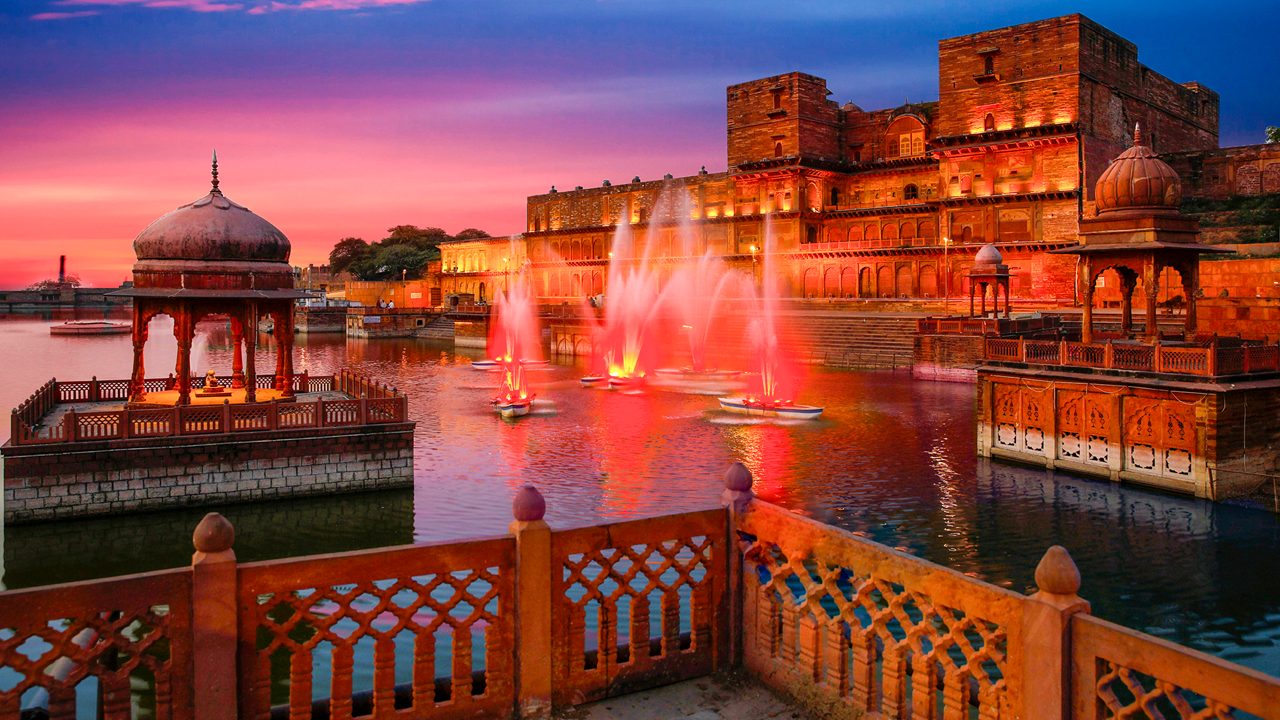
Dholpur: Where Red Stone Meets the Chambal
Dholpur is one of eastern Rajasthan's most distinctive destinations, known for its striking red sandstone, royal heritage, ancient temples and rugged Chambal landscape. Located close to the borders of Uttar Pradesh and Madhya Pradesh, the city has witnessed the rise and fall of several powerful kingdoms and continues to preserve traces of its long history.
Often described as the "Land of the Red Stone", Dholpur is famous for the locally quarried sandstone that has been used in important monuments across India, including the Red Fort in Delhi. The warm red colour of the stone gives many of the city's historic buildings a distinctive appearance.
Beyond its architectural heritage, Dholpur offers a completely different side of Rajasthan through the Chambal River, ravines, wildlife sanctuaries, lakes and wetlands. The National Chambal Sanctuary is particularly important for wildlife enthusiasts and photographers because of its gharials, river dolphins and rare turtles.
Visitors can explore royal palaces, ancient temples and historic forts, watch birds around Talab-e-Shahi and Ramsagar, experience the mythology of Machkund, or discover the rugged natural landscape around the Chambal River.
1. History
Dholpur has a long and complex history extending from ancient times to the period of princely states. Its strategic location between the major historical centres of Agra, Gwalior and Rajasthan made it an important region for several centuries.
Ancient Origins
Rajasthan Tourism traces the history of Dholpur back to ancient times and notes that the region was already significant around the period of the Buddha. It subsequently became associated with several major ruling powers.
Mauryan Influence
Dholpur was part of the Mauryan Empire during one phase of its early history. The wider region continued to experience political changes as different dynasties gained control.
Tomar and Chauhan Connections
According to Rajasthan Tourism, Dholpur was initially known as Dhawalpuri, associated with Raja Dhawal Deo, also known as Dholan Deo Tomar. The city is traditionally dated to around 700 AD, although some historical accounts place its formation later.
The region subsequently came under the influence of the Chauhan Rajputs, who ruled parts of Dholpur between approximately the 8th and 10th centuries.
Delhi Sultanate and Mughal Period
Dholpur's strategic position brought it into the sphere of several northern Indian powers. The region was subsequently associated with the Delhi Sultanate and later the Mughal Empire.
Dholpur Princely State
In the later period, Dholpur became the seat of a princely state. The royal family contributed to the construction of palaces, stepwells, towers and other structures that can still be seen around the city.
British Period
Dholpur remained a princely state during the British period. Its rulers maintained their position under the British paramountcy system until India's independence.
Formation of Dholpur District
Dholpur became a separate district in 1982, when four tehsils of Bharatpur district—Dholpur, Rajakhera, Bari and Baseri—were brought together to form the new district.
2. Geography
Dholpur occupies a distinctive position in eastern Rajasthan. The district is bordered by Agra to the north, Morena in Madhya Pradesh to the south and Karauli to the west.
Chambal Landscape
The Chambal River is one of the most important geographical features of Dholpur. Its rugged ravines and riverine ecosystem create a landscape very different from the desert regions of western Rajasthan.
Ravines
The Chambal region around Dholpur is characterised by dramatic ravines formed through erosion. These distinctive landforms have become an important part of the area's identity and natural scenery.
River Ecosystem
The Chambal supports a rich aquatic ecosystem and provides habitat for endangered species such as the gharial, Ganges river dolphin and red-crowned roof turtle.
Red Sandstone
Dholpur is famous for its high-quality red sandstone. The stone has been extensively quarried in the region and used in historic buildings, monuments and architectural projects.
Lakes and Wetlands
Talab-e-Shahi and Ramsagar are among the important water bodies around Dholpur. These wetlands attract a variety of resident and migratory birds, especially during the winter season.
3. Culture and Traditions
Dholpur's culture reflects its position at the meeting point of Rajasthan, Uttar Pradesh and Madhya Pradesh. Its traditions combine Rajasthani heritage with influences from neighbouring regions.
Rajput Heritage
The history of the Dholpur princely state has left a strong Rajput influence on the city's architecture, religious traditions and cultural identity.
Religious Traditions
Temples and pilgrimage sites are an important part of local life. Machkund, Chopra Shiv Temple and several other religious sites attract devotees throughout the year.
Sikh Heritage
Dholpur also has an important Sikh connection through Sher Shikhar Gurudwara near Machkund. The site is associated with the visit of the sixth Sikh Guru, Guru Hargobind Sahib.
River and Rural Culture
The Chambal and surrounding rural landscapes have influenced traditional livelihoods and local customs. Agriculture, livestock and river-related activities remain important outside the urban areas.
Local Fairs
Religious fairs and cultural gatherings form an important part of Dholpur's traditional calendar. The Machkund Fair is among the most significant local celebrations.
4. Architecture
Dholpur's architecture is strongly connected with its famous red sandstone. Royal buildings, temples, forts, stepwells and towers showcase the craftsmanship of the region.
Dholpur Red Sandstone
The city's locally quarried red sandstone is one of its defining architectural features. Rajasthan Tourism notes that Dholpur sandstone was used in the construction of the famous Red Fort in Delhi.
City Palace
The City Palace, also known as Dholpur Palace, is an imposing royal structure constructed from red sandstone. Its architecture reflects the grandeur of the former princely state.
Royal Stepwell
The Royal Stepwell behind Nihaleshwar Temple was constructed between 1873 and 1880. The four-storeyed structure features artistic pillars and carved stonework.
Nihal Tower
Nihal Tower, locally known as Ghanta Ghar, stands approximately 150 feet high. Construction began under Raja Nihal Singh in 1880 and was completed around 1910 under Raja Ram Singh.
Shergarh Fort
Shergarh Fort combines defensive architecture with decorative carvings. Its walls and surviving sculptures reflect the region's diverse Hindu and Jain artistic influences.
5. Famous Places
Machkund
Machkund is an ancient and sacred site located approximately 4 kilometres from Dholpur. The site is associated with Maharaja Machkund and an important Hindu legend involving Lord Krishna and the demon Kalyavan.
A modern 3D projection-based light and sound show at Machkund presents this legendary story and explains the religious importance of the site to the people of Dholpur.
Dholpur City Palace
City Palace, also called Dholpur Palace, was once the residence of the royal family. Built from the region's famous red sandstone, the palace reflects the history and grandeur of the former princely state.
Royal Stepwell
The Royal Stepwell is a four-storeyed historic baori located behind Nihaleshwar Temple. Its carved stonework and artistic pillars make it an interesting example of traditional water architecture.
Nihal Tower
Nihal Tower is one of Dholpur's most recognisable urban landmarks. Also called Ghanta Ghar, the 150-foot tower stands on Town Hall Road and contains twelve equal-sized gates at its base.
Chopra Shiv Temple
The Chopra Shiv Temple, also associated with the Chausath Yogini tradition, is one of Dholpur's older Shiva temples. It attracts devotees throughout the year, particularly during Mahashivratri.
Shergarh Fort
Located south of Dholpur, Shergarh Fort was initially built by Raja Maldeo of Jodhpur as a defensive structure. Sher Shah Suri reconstructed it in 1540 and named it Shergarh. The fort contains carved images, Hindu religious figures and Jain motifs.
Sher Shikhar Gurudwara
Sher Shikhar Gurudwara near Machkund is associated with the visit of Guru Hargobind Sahib, the sixth Sikh Guru. The site is an important place of pilgrimage for Sikh devotees.
Mughal Garden, Jhor
About 5 kilometres from Dholpur, the village of Jhor is associated with the historic Mughal garden known as Bagh-e-Nilofar. Although much of the original garden has disappeared, the site retains its connection with the Mughal period.
Damoh Waterfall
Damoh in Sarmathura is a seasonal waterfall. It is generally dry during much of the year and comes alive during the monsoon, particularly between July and September, when the surrounding landscape becomes green.
Talab-e-Shahi
Talab-e-Shahi is a picturesque lake located about 27 kilometres from Dholpur and approximately 5 kilometres from Bari. The lake and palace were originally constructed in 1617 as a hunting lodge for Prince Shah Jahan. During winter, migratory birds visit the lake.
Van Vihar Sanctuary
Van Vihar Sanctuary is a historic wildlife reserve spread across the Vindhyan landscape. The sanctuary supports wildlife including sambar, chital, nilgai, wild boar, sloth bear, hyena and leopard.
Ramsagar Sanctuary
Ramsagar Sanctuary surrounds Ramsagar Lake and supports aquatic as well as terrestrial wildlife. The area is known for fish, crocodiles, water snakes and numerous water birds. Migratory birds can also be seen during winter.
National Chambal Sanctuary
The National Chambal Sanctuary is one of Dholpur's most important natural attractions. The protected area extends across Rajasthan, Madhya Pradesh and Uttar Pradesh and provides habitat for the endangered gharial, the red-crowned roof turtle and the Ganges river dolphin.
6. Famous Dishes
Dholpur's cuisine reflects the food traditions of eastern Rajasthan while also showing influences from nearby Uttar Pradesh and Madhya Pradesh. The city does not have a single signature dish officially identified by Rajasthan Tourism, but visitors can explore a range of traditional North Indian and Rajasthani foods.
Dal Baati Churma
Dal Baati Churma is one of Rajasthan's best-known traditional meals. Baati is served with dal and sweet churma, making it a classic choice for travellers wanting to experience Rajasthani cuisine.
Gatte Ki Sabzi
Gatte ki sabzi is a traditional gram-flour preparation cooked in a spiced gravy. It is commonly eaten with roti or rice.
Ker Sangri
Ker Sangri is a traditional Rajasthani dish made from dried berries and beans. Its preparation reflects Rajasthan's historic methods of preserving ingredients.
Bajra Roti
Bajra roti is a millet-based flatbread traditionally served with vegetables, dal, chutney or ghee.
Kachori and Samosa
Local markets and snack shops commonly offer popular North Indian snacks such as kachori and samosa, making them convenient options while exploring the city.
Rajasthani Sweets
Visitors can also try popular regional sweets such as jalebi, ghevar, peda and milk-based sweets at local sweet shops.
7. Famous Personalities
Raja Dhawal Deo
Raja Dhawal Deo, also known as Dholan Deo Tomar, is traditionally credited with establishing Dholpur, then known as Dhawalpuri. Rajasthan Tourism associates the city's foundation with him.
Raja Maldeo
Raja Maldeo of Jodhpur is associated with the original construction of Shergarh Fort. The fort was later reconstructed by Sher Shah Suri in 1540.
Sher Shah Suri
Sher Shah Suri played an important role in the later history of Shergarh Fort, rebuilding the structure in 1540 and giving it the name Shergarh.
Guru Hargobind Sahib
Guru Hargobind Sahib, the sixth Sikh Guru, is associated with Dholpur through his visit to the Machkund area. Sher Shikhar Gurudwara commemorates this historical connection.
Prince Shah Jahan
Prince Shah Jahan is associated with Talab-e-Shahi, which was constructed in 1617 as a hunting lodge during his princely period.
8. Festivals
Dholpur's festivals combine religious traditions, local fairs and cultural celebrations. Rajasthan Tourism identifies several important local events associated with the district.
Machkund Fair
The Machkund Fair is one of the important religious gatherings of Dholpur. Devotees visit the sacred site to worship and participate in traditional activities associated with Machkund.
Mahashivratri
Mahashivratri is particularly important at the Chopra Shiv Temple. Large numbers of devotees visit the temple during the festival, and religious activities continue around the shrine.
Sharad Dholpur Mahotsav
The Sharad Dholpur Mahotsav is a cultural event associated with the district and provides a platform for local cultural activities and performances.
Saipu Mela
Saipu Mela is another traditional fair listed among Dholpur's important local festivals.
Bhishangarh Baba Mela
The Bhishangarh Baba Mela is held in the Bari area and forms part of the traditional religious and cultural calendar of the district.
Diwali and Holi
Like other parts of Rajasthan, Dholpur celebrates Diwali and Holi with family gatherings, religious ceremonies, sweets, decorations and community celebrations.
9. Things to Do
Explore Machkund
Visit the ancient Machkund site, explore its temples and learn about the mythology associated with Maharaja Machkund, Lord Krishna and Kalyavan.
Watch the Machkund Light and Sound Show
The modern 3D projection-based light and sound show offers an entertaining way to learn about the mythology and history of Machkund.
Explore Dholpur Palace
Admire the red sandstone architecture of City Palace and discover the royal heritage of the former Dholpur princely state.
Visit Shergarh Fort
Explore the historic fort and its surviving architectural details, including carved Hindu and Jain motifs.
Explore the Chambal
Nature lovers can explore the National Chambal Sanctuary and discover the river ecosystem supporting gharials, turtles and the endangered Ganges river dolphin.
Go Birdwatching
Talab-e-Shahi and Ramsagar are particularly attractive to birdwatchers during winter, when migratory birds visit the water bodies.
Visit Damoh Waterfall
If travelling during the monsoon, visit Damoh Waterfall in Sarmathura when the seasonal waterfall is flowing and the surrounding landscape becomes green.
Explore the Royal Stepwell
Visit the four-storeyed Royal Stepwell behind Nihaleshwar Temple to see its carved stonework and historic water-management architecture.
Experience Local Food
Explore Dholpur's markets and eateries to try traditional Rajasthani food alongside popular North Indian snacks and sweets.
10. Where to Eat, Shop, and Stay
Where to Eat
Dholpur has local restaurants, snack shops and eateries serving Rajasthani and North Indian food. Visitors can try traditional thalis, dal baati churma, gatte ki sabzi, kachori, samosa and local sweets.
Where to Shop
The city's markets offer clothing, household goods, traditional items, jewellery, sweets and everyday products. Travellers interested in local stone craftsmanship can also look for decorative products made from sandstone.
What to Buy
- Dholpur sandstone decorative items
- Traditional Rajasthani textiles
- Local handicrafts
- Traditional jewellery
- Rajasthani snacks and sweets
Where to Stay
Dholpur offers hotels, guesthouses and other accommodation options in and around the city. Staying in the city is convenient for visiting Machkund, City Palace, the Royal Stepwell and Nihal Tower.
Heritage Stay Experience
Travellers interested in royal architecture can look for heritage accommodation in the Dholpur area. Rajasthan Tourism's destination material also highlights the historic Raj Niwas Palace and its heritage setting near the Chambal ravines.
11. What is Dholpur Famous For?
Dholpur is famous for its red sandstone, royal heritage, Chambal landscape and wildlife.
- Red Sandstone: Dholpur's most famous natural and architectural resource, used in major monuments including Delhi's Red Fort.
- Chambal River: The river and its dramatic ravines define much of Dholpur's natural landscape.
- National Chambal Sanctuary: Important habitat for gharials, Ganges river dolphins and rare turtles.
- Machkund: An ancient sacred site associated with Hindu mythology.
- Dholpur City Palace: A major royal heritage structure built from red sandstone.
- Shergarh Fort: A historic fort with Rajput, Mughal and religious architectural influences.
- Talab-e-Shahi: A historic lake and former hunting lodge associated with Prince Shah Jahan.
- Van Vihar Sanctuary: A historic wildlife area known for its varied flora and fauna.
- Royal Stepwell: A four-storeyed historic baori displaying detailed stone craftsmanship.
- Nihal Tower: A distinctive 150-foot clock-tower landmark in the city.
12. Best Time to Visit
Dholpur can be visited throughout the year, but the best season depends on the type of experience you want. Winter is generally the most comfortable period for sightseeing and wildlife activities.
Winter – October to February
Winter is the best overall season for exploring Dholpur. The weather is more comfortable for visiting forts, temples, palaces and outdoor attractions. It is also a good period for birdwatching around Talab-e-Shahi and Ramsagar.
Spring – March
March can still be suitable for sightseeing, although temperatures gradually begin to rise.
Summer – April to June
Summer can become very hot, particularly during the afternoon. Travellers visiting during this period should schedule outdoor sightseeing for early morning or evening and carry sufficient water.
Monsoon – July to September
The monsoon transforms parts of the surrounding landscape. Damoh Waterfall becomes active during this period, particularly from July to September, making it the ideal season for travellers specifically interested in the waterfall.
Wildlife and Birdwatching
Winter is particularly attractive for wildlife enthusiasts because migratory birds visit Talab-e-Shahi and Ramsagar during the colder months.
Best overall period: October to February, with July to September recommended for Damoh Waterfall.
13. How to Reach
By Air
Agra Airport, also known as Kheria Airport, is the nearest airport listed by Rajasthan Tourism, approximately 54–55 kilometres from Dholpur. ([tourism.rajasthan.gov.in](https://www.tourism.rajasthan.gov.in/dholpur.html?utm_source=chatgpt.com))
By Train
Dholpur Junction is an important railway station with connections to major cities across India. Rail travel is one of the convenient ways to reach the city.
By Road
Dholpur is connected by road with Rajasthan as well as neighbouring Uttar Pradesh and Madhya Pradesh. Regular bus services connect the city with other important destinations.
From Agra
Dholpur's proximity to Agra makes it convenient to combine the two destinations in one journey. Travellers can reach Dholpur by road or rail from Agra.
Local Transportation
Auto-rickshaws, local vehicles, taxis and private cars can be used for sightseeing within Dholpur. A hired vehicle is particularly useful when visiting attractions outside the city.
14. Nearby Places
Agra
Located in neighbouring Uttar Pradesh, Agra is one of India's most famous heritage destinations, known for the Taj Mahal, Agra Fort and Mughal architecture. Its proximity makes it an easy addition to a Dholpur itinerary.
Bharatpur
Bharatpur is approximately 99 kilometres from Dholpur according to Rajasthan Tourism. It is famous for Keoladeo National Park and its rich birdlife.
Alwar
Alwar is approximately 209 kilometres from Dholpur and is known for its forts, palaces, lakes and Aravalli landscapes.
Sawai Madhopur
Sawai Madhopur is approximately 212 kilometres away and is the gateway to Ranthambore National Park, one of India's best-known tiger reserves.
Gwalior
Gwalior in Madhya Pradesh is another natural extension of a Dholpur journey. Its massive hill fort and historic palaces make it particularly attractive to heritage travellers.
Karauli
Karauli lies to the west of Dholpur and offers temples, palace heritage and the distinctive red-sandstone architecture of eastern Rajasthan.
15. Best Duration for a Trip
1 Day
A one-day trip is suitable for covering Machkund, City Palace, Nihal Tower, the Royal Stepwell and one or two nearby attractions.
2 Days
Two days allow travellers to explore Dholpur's major heritage attractions while also visiting Shergarh Fort or one of the surrounding lakes and sanctuaries.
3 Days
A three-day itinerary provides enough time to combine the city's heritage with a visit to the Chambal landscape, Talab-e-Shahi, Ramsagar or another nearby attraction.
4–5 Days
A longer trip is ideal for travellers who want to combine Dholpur with Agra, Bharatpur, Karauli or Gwalior.
Recommended duration: 2–3 days for a balanced Dholpur experience, or 4–5 days if nearby destinations are included.
16. Travel Tips
- Winter is generally the most comfortable season for exploring Dholpur.
- Carry sufficient drinking water, sunscreen and sunglasses during the warmer months.
- Wear comfortable footwear when visiting forts, temples and historic sites.
- Start early when planning visits to attractions outside the city.
- Carry binoculars if you are interested in birdwatching around Talab-e-Shahi or Ramsagar.
- Do not disturb wildlife or attempt to approach animals at sanctuaries.
- Follow all instructions and safety regulations while visiting the National Chambal Sanctuary.
- Respect religious customs at Machkund, temples and the gurudwara.
- Dress appropriately when entering religious sites.
- Ask permission before photographing people during religious or cultural events.
- During the monsoon, check local conditions before travelling to Damoh Waterfall.
- Keep away from unstable edges around Chambal ravines and riverbanks.
- Keep historic monuments and natural areas clean and avoid littering.
- If combining Dholpur with Agra, Bharatpur or Gwalior, plan transportation in advance.
17. Why Visit Dholpur?
Dholpur is ideal for travellers who want to experience a side of Rajasthan that is very different from the state's famous desert and palace destinations. Here, red sandstone, royal history, river landscapes and wildlife come together.
The city's red sandstone architecture gives it an instantly recognisable identity. From the City Palace and Royal Stepwell to Nihal Tower and Shergarh Fort, the material itself becomes part of the story of Dholpur.
Nature lovers have another reason to visit. The Chambal River and National Chambal Sanctuary provide an opportunity to see some of India's most unusual river wildlife, including gharials, rare turtles and the Ganges river dolphin.
Dholpur is also a fascinating destination for religious and cultural tourism. Machkund, Sher Shikhar Gurudwara, Chopra Shiv Temple and the area's traditional fairs reveal the region's diverse spiritual heritage.
Its location near Agra, Madhya Pradesh and Karauli makes Dholpur particularly useful as part of a larger North Indian heritage itinerary.
18. Conclusion
Dholpur is a destination where Rajasthan's royal past meets the rugged natural landscape of the Chambal. Known as the Land of the Red Stone, the city has an architectural identity shaped by its famous sandstone and a history influenced by Tomars, Chauhans, Mughals, Rajputs and the former princely state.
From the sacred surroundings of Machkund and the grandeur of Dholpur City Palace to the historic Shergarh Fort and Royal Stepwell, the city offers plenty for history and architecture enthusiasts.
Beyond its monuments, the National Chambal Sanctuary, Ramsagar Sanctuary, Van Vihar Sanctuary and Talab-e-Shahi reveal a greener and more natural side of eastern Rajasthan.
For first-time visitors, a 2–3 day trip is ideal for covering the city's main heritage attractions and experiencing its natural surroundings. Travellers with additional time can combine Dholpur with Agra, Bharatpur, Karauli or Gwalior.
Dholpur is more than a historic city. It is a place where red stone, royal heritage, sacred legends, river ravines and rare wildlife come together to create a distinctive Rajasthan travel experience.
"Travel is the only thing you buy that makes you richer."