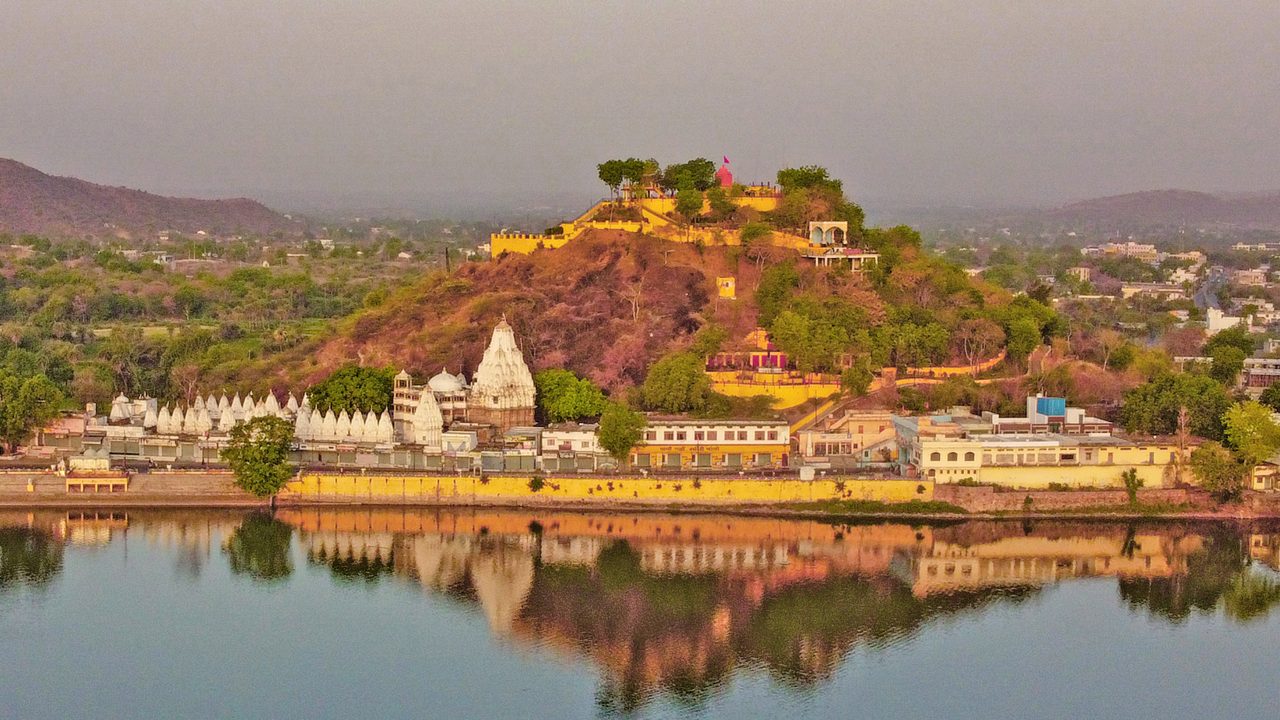
Dungarpur: Where Hills, Lakes and Royal Heritage Meet
Dungarpur is one of southern Rajasthan's most distinctive destinations, set among the foothills of the Aravalli Range. Known as the "City of Hills", the city combines rugged landscapes, fertile plains, lakes, rivers, ancient temples and beautifully carved royal residences.
Unlike the desert landscapes associated with much of Rajasthan, Dungarpur has a greener and more varied setting. The region is nourished by the Mahi and Som rivers, while the surrounding hills and water bodies create a scenic backdrop for its historic architecture.
Dungarpur's royal heritage is one of its biggest attractions. The city is known for remarkable structures such as Juna Mahal, Udai Bilas Palace and Badal Mahal, many of which showcase the distinctive use of local Pareva stone, ornate jharokhas, carved pillars, balconies and decorative interiors.
The region is also culturally important for its tribal traditions, religious sites and colourful festivals. From the sacred Beneshwar Fair to the temples around Gaib Sagar Lake and the historic shrine at Galiakot, Dungarpur offers a quieter and less crowded side of Rajasthan.
1. History
Dungarpur has a long history connected with the Rajput kingdoms of Mewar and the tribal communities of the region. The city was founded in the medieval period and later developed into the capital of the princely state of Dungarpur.
Foundation of Dungarpur
According to Rajasthan Tourism, Dungarpur was founded in 1258 AD by Rawal Veer Singh, the eldest son of Karan Singh, the ruler of Mewar. Veer Singh established his rule after defeating the local Bhil chieftain Dungariya, from whom the city is believed to have taken its name.
The Dungarpur State
Dungarpur subsequently developed as the capital of the princely state of the same name. Successive rulers contributed to the city's palaces, temples and other architectural landmarks.
Maharawal Shiv Singh
The period of Maharawal Shiv Singh, who ruled from 1730 to 1785, was particularly important for Dungarpur's architectural development. The distinctive style of royal residences featuring carved stone, jharokhas and decorative details became a defining feature of the city.
Juna Mahal
The historic Juna Mahal served as the old royal palace and capital residence. Its fortified construction reflects the defensive concerns of the period, while its interiors contain murals, miniature paintings and glass and mirror work.
British Period
During the colonial period, Dungarpur continued as a princely state under the British paramountcy system. The royal family retained control over the state until the political integration of princely India.
Modern Dungarpur
After independence, Dungarpur became part of Rajasthan. Today, the city is recognised for its royal heritage, temples, tribal culture, natural scenery and distinctive stone architecture.
2. Geography
Dungarpur is situated in southern Rajasthan in the foothills of the Aravalli Range. Its landscape differs noticeably from the dry desert regions farther west in the state.
Hills and Plains
The northeastern parts of the region have rugged and hilly terrain, while the southwestern areas contain fertile plains. This combination gives Dungarpur a varied landscape.
Mahi and Som Rivers
The Mahi and Som rivers are two important geographical features of the region. Their presence contributes to the area's relatively fertile landscape and supports agriculture.
Gaib Sagar Lake
Gaib Sagar Lake is one of Dungarpur's most recognizable natural landmarks. The lake is surrounded by temples and is also known for attracting birds, particularly during the winter months.
Green Marble
The hills around Dungarpur are known for deposits of distinctive green marble, which is quarried in the region and has been used in buildings and decorative work in India and abroad.
Vagad Region
Dungarpur forms part of the broader Vagad cultural region of southern Rajasthan, an area known for its tribal population, rivers, temples and distinctive traditions.
3. Culture and Traditions
Dungarpur has a rich cultural identity shaped by Rajput heritage, Bhil tribal traditions, religious practices and the wider Vagad culture.
Bhil Heritage
The Bhil community has a deep historical and cultural connection with the Dungarpur region. Tribal traditions, colourful clothing, folk music, dances and community celebrations remain important elements of local culture.
Rajput Heritage
The former royal family's influence can be seen in the city's palaces, temples and historic architecture. Juna Mahal and Udai Bilas Palace are particularly important examples of this heritage.
Tribal Traditions
Traditional tribal festivals and fairs are an important part of the cultural calendar. The Beneshwar Fair is particularly significant because large numbers of tribal devotees gather from Rajasthan, Gujarat and Madhya Pradesh.
Religious Diversity
Dungarpur's religious landscape includes Hindu temples, Jain shrines and Muslim pilgrimage sites. Galiakot, for example, is an important pilgrimage centre associated with the shrine of Syed Fakhruddin.
Traditional Crafts
Dungarpur is also known for skilled goldsmiths and silversmiths. Rajasthan Tourism additionally highlights local craftsmanship involving lacquer-painted toys and picture frames.
4. Architecture
Architecture is one of Dungarpur's strongest attractions. The city's historic buildings combine Rajput traditions with local stone craftsmanship and decorative techniques.
Pareva Stone
The distinctive bluish-grey Pareva stone is an important feature of Dungarpur's architecture. It has been used extensively in palaces and other historic structures.
Jharokhas
Decorative jharokhas, balconies, carved windows and projecting architectural elements are characteristic features of Dungarpur's royal buildings.
Udai Bilas Palace
Udai Bilas Palace showcases elaborate Rajput architecture through carved pillars, panels, arches, balconies, balustrades and marble decoration. The palace also contains the remarkable Ek Thambiya Mahal.
Juna Mahal
Juna Mahal combines the appearance of a fortified citadel with richly decorated interiors. Its murals, miniature paintings, glass and mirror work provide a strong contrast to its rugged exterior.
Temple Architecture
The region is home to several historic temples displaying different forms of Hindu and Jain architecture. Deo Somnath, Vijay Rajrajeshwer, Shrinathji and Nagfanji are among the most notable examples.
5. Famous Places
Udai Bilas Palace
Udai Bilas Palace is one of Dungarpur's most impressive royal buildings. Named after Maharawal Udai Singh II, the palace features detailed Rajput architecture, ornate balconies, arches and windows. A beautiful section built from local Pareva stone overlooks the lake. The palace currently functions as a heritage hotel.
Juna Mahal
Juna Mahal, or the Old Palace, is a seven-storeyed structure dating to the 13th century. Built from Pareva stone on a high platform, it resembles a fortified citadel from outside. Inside, visitors can see murals, miniature paintings and delicate glass and mirror work.
Gaib Sagar Lake
Gaib Sagar Lake is one of Dungarpur's most scenic landmarks. The lake is surrounded by temples, including the famous Shrinathji shrine and Vijay Rajrajeshwer Temple. Its calm surroundings also attract a variety of birds.
Badal Mahal
Badal Mahal stands on the banks of Gaib Sagar Lake and is built from Pareva stone. Its design combines Rajput and Mughal architectural influences and includes domes, carved details and a veranda.
Vijay Rajrajeshwer Temple
Located beside Gaib Sagar Lake, the Vijay Rajrajeshwer Temple is dedicated to Lord Shiva and Goddess Parvati. The temple was ordered by Maharawal Vijay Singh and completed in 1923 during the reign of Maharawal Lakshman Singh.
Shrinathji Temple
Shrinathji Temple was built in 1623 by Maharawal Punjraj. The temple complex contains shrines associated with Radhikaji, Goverdhan Nathji, Banke Bihariji and Ramchandraji.
Government Archaeological Museum
The Government Archaeological Museum houses sculptures and historical objects collected from the Vagad region. Its collection includes statues of deities, stone inscriptions, coins and paintings, with some objects dating back to the 6th century.
Beneshwar Temple
Beneshwar Temple is located at the confluence of the Som and Mahi rivers. The temple houses a highly revered Shiva Lingam believed to be Swayambhu, or self-created. The surrounding complex also includes temples dedicated to Vishnu, Lakshmi-Narayan and Brahma.
Bhuvaneshwar
Located around 9 kilometres from Dungarpur, Bhuvaneshwar is known for a Shiva temple situated on a mountaintop. The temple is built around a naturally formed Shivaling, and an ancient monastery can also be visited on the hill.
Surpur Temple
Surpur Temple is located approximately 3 kilometres from Dungarpur on the banks of the Gangdi River. The surrounding area includes attractions such as Bhulbhulaiya, Madhavrai Temple, Hathiyon Ki Agad and historic inscriptions.
Nagfanji
Nagfanji is known for its Jain shrines and attracts devotees as well as visitors. The temple complex includes images of Devi Padmawati, Nagfanji Parshwanatha and Dharnendra. A nearby Nagfanji Shivalaya is another attraction.
Galiakot
Approximately 58 kilometres from Dungarpur, Galiakot is located on the banks of the Mahi River. It is famous for the shrine of Syed Fakhruddin, a revered saint. The white-marble shrine attracts pilgrims from different parts of the country.
Deo Somnath
Deo Somnath is an impressive 12th-century Shiva temple on the banks of the Som River. Built from white stone, the temple features imposing towers, a high dome, a sabha mandap supported by eight pillars and historic inscriptions.
Fateh Garhi
Fateh Garhi is a viewpoint from where visitors can enjoy scenic views of Dungarpur and its surrounding landscape.
6. Famous Dishes
Dungarpur's cuisine reflects the food traditions of southern Rajasthan and the Vagad region. Traditional Rajasthani food is often prepared using simple ingredients and strong flavours.
Dal Baati Churma
Dal Baati Churma is one of Rajasthan's most recognizable traditional meals. Baked baati is served with dal and sweet churma, creating a combination of savoury and sweet flavours.
Gatte Ki Sabzi
Gatte ki sabzi is made from gram-flour dumplings cooked in a spiced yoghurt-based gravy. It is commonly enjoyed with roti or rice.
Ker Sangri
Ker Sangri is a traditional Rajasthani preparation made using dried berries and beans. It reflects the region's traditional methods of preserving food.
Bajra Roti
Bajra roti is a nutritious millet-based flatbread traditionally served with vegetables, lentils, chutney or ghee.
Tribal-Style Local Food
The Bhil communities of the Vagad region have their own traditional food practices based on locally available grains, vegetables and forest produce. Travellers exploring rural areas may encounter food traditions that differ from standard restaurant menus.
Rajasthani Sweets
Visitors can also try traditional sweets such as ghevar, jalebi, malpua and milk-based sweets at local sweet shops.
7. Famous Personalities
Rawal Veer Singh
Rawal Veer Singh was the eldest son of Karan Singh, ruler of Mewar, and is credited by Rajasthan Tourism with founding Dungarpur in 1258 AD after defeating the local Bhil chieftain Dungariya.
Maharawal Shiv Singh
Maharawal Shiv Singh, who ruled Dungarpur from 1730 to 1785, is closely associated with the architectural development of the city. The distinctive palace style associated with his period remains visible in Dungarpur's royal heritage.
Maharawal Vijay Singh
Maharawal Vijay Singh commissioned the Vijay Rajrajeshwer Temple beside Gaib Sagar Lake. The temple was completed in 1923 during the reign of Maharawal Lakshman Singh.
Mavji
Mavji was a highly revered saint of the region and is regarded by devotees as an incarnation of Lord Vishnu. The Beneshwar temple complex contains several structures associated with his spiritual tradition.
8. Festivals
Beneshwar Fair
The Beneshwar Fair is Dungarpur's most important traditional festival and one of the major tribal fairs of Rajasthan. It takes place around Magh Purnima in January or February at the confluence of the Mahi, Som and Jakham rivers.
Large numbers of tribal communities from Rajasthan, Gujarat and Madhya Pradesh gather here. Religious bathing, prayers, colourful traditional clothing, ornaments, folk music and dances form an important part of the celebration.
Vagad Festival
The Vagad Festival is organised around October–November by the Department of Tourism and the District Administration of Dungarpur. The festival celebrates the distinctive culture and traditions of the Vagad region.
Diwali
Diwali is celebrated throughout Dungarpur with illuminated homes, prayers, sweets and family gatherings.
Holi
Holi brings colourful celebrations and community gatherings across the city and surrounding villages.
Local Tribal Celebrations
Various local fairs and tribal celebrations take place across the Vagad region. These events provide an opportunity to experience folk music, dance, traditional clothing and community traditions.
9. Things to Do
Explore Royal Palaces
Visit Juna Mahal, Udai Bilas Palace and Badal Mahal to discover Dungarpur's distinctive royal architecture and decorative stone craftsmanship.
Walk Around Gaib Sagar Lake
Spend time around Gaib Sagar Lake, especially during the cooler hours of the day, and explore the temples located along its banks.
Visit Ancient Temples
Explore Deo Somnath, Beneshwar, Surpur, Bhuvaneshwar, Nagfanji and the other historic temples around Dungarpur.
Experience Tribal Culture
Visit during the Beneshwar Fair or other local celebrations to experience the traditions, clothing, music and dances of the region's tribal communities.
Explore the Archaeological Museum
The Government Archaeological Museum provides an opportunity to understand the history of the Vagad region through sculptures, inscriptions, coins and other historical objects.
Visit Galiakot
Make a pilgrimage or cultural excursion to Galiakot and visit the marble shrine of Syed Fakhruddin on the banks of the Mahi River.
Enjoy Scenic Views
Visit Fateh Garhi for panoramic views and explore the surrounding Aravalli landscapes.
Discover Local Crafts
Look for locally produced jewellery, lacquer-painted toys and decorative picture frames while exploring the city's markets and artisan traditions.
10. Where to Eat, Shop, and Stay
Where to Eat
Dungarpur has local restaurants and eateries serving traditional Rajasthani food as well as North Indian dishes. Visitors should try local preparations such as dal baati churma, gatte ki sabzi and bajra roti.
Where to Shop
Local markets are useful for discovering traditional jewellery, textiles, handicrafts, sweets and everyday products. Dungarpur's goldsmith and silversmith traditions also make jewellery an interesting local purchase.
What to Buy
- Traditional Rajasthani jewellery
- Silver ornaments
- Lacquer-painted toys
- Decorative picture frames
- Local handicrafts
- Traditional textiles
Where to Stay
Dungarpur offers hotels and guesthouses for different budgets. Visitors looking for a heritage experience can consider Udai Bilas Palace, which operates as a heritage hotel.
Stay Near the Lake
Staying close to the city centre and Gaib Sagar Lake makes it convenient to explore the palaces, temples and other major attractions.
11. What is Dungarpur Famous For?
Dungarpur is famous for its combination of royal architecture, Aravalli scenery, lakes, ancient temples and tribal culture.
- City of Hills: Dungarpur is located among the foothills of the Aravalli Range.
- Royal Palaces: Juna Mahal, Udai Bilas Palace and Badal Mahal showcase the city's architectural heritage.
- Gaib Sagar Lake: A scenic lake surrounded by historic temples.
- Green Marble: The region is known for its distinctive green marble.
- Beneshwar Fair: A major tribal fair held at the confluence of important rivers.
- Deo Somnath: A remarkable 12th-century white-stone Shiva temple.
- Vagad Culture: The city is an important centre of the distinctive Vagad cultural region.
- Bhil Heritage: Tribal traditions remain an important part of the region's identity.
- Traditional Crafts: Goldsmithing, silversmithing and lacquer-painted crafts are associated with the area.
12. Best Time to Visit
Dungarpur can be visited throughout much of the year, but the cooler months are particularly comfortable for sightseeing and exploring temples and heritage sites.
Winter – October to February
Winter is one of the best periods to visit Dungarpur. Temperatures are more comfortable for exploring palaces, temples and outdoor attractions.
Beneshwar Fair Season – January to February
If you want to experience the region's tribal culture at its most vibrant, plan a visit around the Beneshwar Fair, held around Magh Purnima.
Spring – March to April
Spring is suitable for sightseeing before the temperatures become increasingly warm.
Summer – May to June
Summer can become hot, particularly during the afternoon. Visitors should schedule outdoor sightseeing during the morning or evening and carry sufficient water.
Monsoon – July to September
The monsoon can bring greenery to the hills and surrounding landscape, making the region visually attractive. However, rainfall can affect travel plans.
Best overall period: October to February, with January–February especially attractive for travellers interested in the Beneshwar Fair.
13. How to Reach
By Air
Udaipur Airport is the nearest airport according to Rajasthan Tourism, located approximately 120 kilometres from Dungarpur. Ahmedabad Airport is another major option at approximately 175 kilometres.
By Train
Dungarpur Railway Station is approximately 3 kilometres from the city. An important rail connection runs along the Himmatnagar–Dungarpur–Udaipur route.
By Road
Dungarpur is connected by road with other parts of Rajasthan and neighbouring Gujarat. National Highway 8, now part of the modern national highway network, and the Sirohi–Ratlam highway corridor provide important road connections.
From Udaipur
Udaipur is one of the most convenient gateways to Dungarpur. Rajasthan Tourism lists Udaipur approximately 107 kilometres from Dungarpur.
Local Transportation
Auto-rickshaws, taxis and private vehicles can be used to explore the city. A hired vehicle is recommended when visiting attractions outside the city such as Beneshwar, Deo Somnath, Galiakot and Bhuvaneshwar.
14. Nearby Places
Udaipur
Located approximately 107 kilometres from Dungarpur, Udaipur is one of Rajasthan's most famous destinations, known for lakes, palaces, temples and Rajput heritage.
Chittorgarh
Chittorgarh, approximately 221 kilometres from Dungarpur according to Rajasthan Tourism, is famous for its enormous historic fort and Rajput history.
Banswara
Banswara lies in the wider Vagad region and is known for the Mahi River, tribal culture, temples and scenic landscapes.
Galiakot
Galiakot is an excellent nearby excursion for travellers interested in religious heritage. Its shrine of Syed Fakhruddin attracts devotees from across the region.
Deo Somnath
Deo Somnath is another important excursion for history and architecture enthusiasts. Its 12th-century temple is one of the region's most distinctive heritage monuments.
Beneshwar
Beneshwar is particularly worthwhile during the annual fair, when the region comes alive with tribal gatherings, religious ceremonies, folk traditions and cultural activities.
15. Best Duration for a Trip
1 Day
A one-day visit can cover Gaib Sagar Lake, Shrinathji Temple, Vijay Rajrajeshwer Temple, Badal Mahal and one of the city's other major attractions.
2 Days
Two days provide enough time to explore Dungarpur's principal palaces, temples, museum and lake while also visiting one nearby attraction.
3 Days
A three-day itinerary allows travellers to explore the main city attractions and make excursions to places such as Beneshwar, Deo Somnath, Bhuvaneshwar or Galiakot.
4–5 Days
A longer stay is ideal for travellers who want to experience Dungarpur slowly and combine it with Udaipur, Banswara or Chittorgarh.
Recommended duration: 2–3 days for a balanced Dungarpur trip, or 4–5 days if nearby destinations are included.
16. Travel Tips
- Winter is generally the most comfortable season for exploring Dungarpur.
- Carry comfortable footwear because several temples and heritage sites involve walking.
- Carry water and sun protection when visiting outdoor attractions during warmer months.
- Start early when planning excursions to Beneshwar, Galiakot or Deo Somnath.
- Respect local customs when visiting temples, gurudwaras and religious shrines.
- Dress modestly when entering religious places.
- Ask permission before photographing people during tribal ceremonies or religious events.
- Keep the surroundings clean, especially around lakes, rivers and temple complexes.
- If visiting during the Beneshwar Fair, book accommodation and transport well in advance.
- Try local Rajasthani food and explore traditional handicrafts and jewellery.
- Consider hiring a local vehicle or taxi for attractions outside Dungarpur city.
- Check local conditions before travelling to remote rural and riverbank locations.
17. Why Visit Dungarpur?
Dungarpur is an excellent choice for travellers looking for a quieter and more culturally diverse side of Rajasthan. Its landscape is different from the state's famous desert destinations, with Aravalli hills, rivers, lakes and fertile plains creating a distinctive setting.
The city's royal heritage is equally impressive. The combination of Juna Mahal, Udai Bilas Palace, Badal Mahal and Gaib Sagar Lake creates a travel experience centred around architecture, history and scenic beauty.
Dungarpur also offers an opportunity to experience the cultural traditions of the Vagad region and Bhil communities. The Beneshwar Fair is particularly special for travellers interested in tribal culture, folk traditions and religious celebrations.
For architecture lovers, the city's use of Pareva stone, elaborate jharokhas, carved pillars and decorative interiors makes it one of southern Rajasthan's more interesting heritage destinations.
Dungarpur is therefore ideal for travellers who want to explore royal history, tribal culture, ancient temples and natural landscapes without the crowds associated with some of Rajasthan's larger tourist cities.
18. Conclusion
Dungarpur is a destination where Rajasthan's royal heritage meets the natural beauty of the Aravalli hills. Its lakes, rivers, palaces, temples and tribal traditions give the city a character that is distinctly different from the desert cities of the state.
From the seven-storeyed Juna Mahal and intricately decorated Udai Bilas Palace to the peaceful waters of Gaib Sagar Lake, the city offers a remarkable collection of architecture and scenery.
Beyond the city, places such as Beneshwar, Deo Somnath, Galiakot, Bhuvaneshwar and Surpur reveal the deeper religious, historical and cultural character of the region.
For first-time visitors, a 2–3 day trip is ideal for experiencing Dungarpur's main attractions. Travellers visiting during January or February can also plan around the Beneshwar Fair for a more immersive experience of the region's tribal culture.
Dungarpur is more than a historic royal city. It is a place where hills, rivers, temples, palaces, craftsmanship and living traditions come together to create one of Rajasthan's most distinctive destinations.
"Travel is the only thing you buy that makes you richer."