Rajsamand – Where Lakes, Marble and Mewar Heritage Meet
Rajsamand is a historic city in Rajasthan and the headquarters of Rajsamand district. Named after the magnificent Rajsamand Lake, the city offers a fascinating combination of Mewar history, religious traditions, marble craftsmanship, scenic landscapes and historic architecture.
The city is surrounded by some of Rajasthan's most remarkable attractions, including Kumbhalgarh Fort, Haldighati, Nathdwara, Charbhuja and Kankroli's Dwarkadhish Temple. From the peaceful waters of Rajsamand Lake to the historic hills of the Aravallis, Rajsamand provides a varied travel experience.
Quick Facts About Rajsamand
| Category | Details |
|---|---|
| State | Rajasthan |
| Region | Mewar / Southern Rajasthan |
| District | Rajsamand |
| District Headquarters | Rajsamand |
| Known For | Rajsamand Lake, marble, Mewar heritage and religious tourism |
| Major Lake | Rajsamand Lake / Rajsamudra |
| Major Heritage Sites | Kumbhalgarh, Haldighati and historic temples |
| Nearest Major City | Udaipur |
| Best Time to Visit | October to March |
History of Rajsamand
The history of Rajsamand is closely connected with the Mewar kingdom and Maharana Raj Singh I. The city and district take their name from Rajsamand Lake, an artificial lake created during the 17th century.
Construction of the lake and dam began under Maharana Raj Singh I between 1662 and 1676. The project was undertaken during a period of drought and famine and was intended to provide employment and improve irrigation for local agriculture.
The lake became an important public work of Mewar and eventually gave the surrounding region its present name. Rajsamand's historic identity also developed around nearby centres such as Kankroli, Nathdwara, Kumbhalgarh and Haldighati.
The wider Rajsamand region contains several important chapters of Mewar history. Kumbhalgarh is associated with Rana Kumbha and is traditionally recognised as the birthplace of Maharana Pratap, while Haldighati is remembered as the site of the 1576 battle involving Maharana Pratap and the Mughal forces under Raja Man Singh of Amber.
Geography of Rajsamand
Rajsamand lies in southern Rajasthan, approximately 67 km north of Udaipur. The region forms part of the Aravalli landscape and contains hills, plains, lakes and semi-arid terrain.
The most important geographical feature associated with the city is Rajsamand Lake, located between Rajnagar and Kankroli. The lake was created by damming the Gomati, Kelwa and Tali rivers.
The wider district covers approximately 4,655 square kilometres and includes a mixture of agricultural areas, hills, forests, mineral-rich zones and historic settlements.
| Geographical Feature | Details |
|---|---|
| Location | Southern Rajasthan |
| Distance from Udaipur | Approximately 67 km |
| Landscape | Aravalli hills, plains, lakes and semi-arid terrain |
| Major Water Body | Rajsamand Lake |
| District Area | Approximately 4,655 sq. km |
Culture and Traditions of Rajsamand
Rajsamand reflects the cultural traditions of Mewar and Rajasthan. Folk music, traditional clothing, devotional practices, fairs, temple traditions and colourful festivals form an important part of local life.
The region is also associated with traditional Rajasthani folk arts and crafts. The nearby Deogarh area is particularly known for its distinctive style of Rajasthani miniature painting.
Traditional Music and Dance
Rajasthani folk performances, devotional music and dances such as Ghoomar are part of the region's cultural landscape. Festivals and fairs provide opportunities to experience traditional music, costumes and community celebrations.
Religious Traditions
Rajsamand has a strong religious character, with important Vaishnav and Hindu pilgrimage centres including Dwarkadhish Ji, Charbhuja Nath and nearby Shrinathji at Nathdwara.
Local Art and Craft
The wider region is known for marble craftsmanship, stonework, miniature painting and Molela terracotta traditions. These artistic traditions add another dimension to Rajsamand's cultural identity.
Architecture of Rajsamand
Rajsamand's architecture reflects the artistic traditions of Mewar and Rajasthan. Marble, carved stone, temple architecture, ghats, cenotaphs and traditional decorative elements can be seen around the lake and historic religious sites.
Nau-Chauki
Nau-Chauki is the celebrated marble and stone embankment on the southern side of Rajsamand Lake. The ghats, terraces, pillars and cenotaphs create one of the most distinctive architectural views around the lake.
Dwarkadhish Temple
The Dwarkadhish Ji Temple at Kankroli is an important Vaishnav pilgrimage site. The temple stands near Rajsamand Lake and forms an important part of the religious and architectural heritage of the area.
Historic Ghats and Cenotaphs
The marble ghats and memorial structures around Rajsamand Lake demonstrate the importance given to stone craftsmanship and monumental architecture during the Mewar period.
Kumbhalgarh Fort
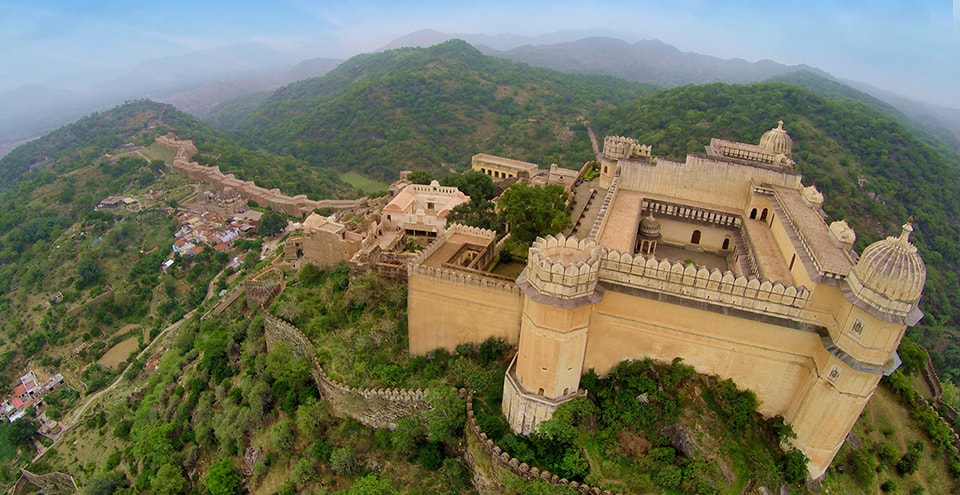
The magnificent Kumbhalgarh Fort is located in Rajsamand district. Built during the 15th century under Rana Kumbha, the fort is famous for its massive defensive walls, hilltop setting, temples and association with Maharana Pratap.
Famous Places in Rajsamand
1. Rajsamand Lake
Rajsamand Lake, also known as Rajsamudra, is the defining attraction of the city. It was created by Maharana Raj Singh I between 1662 and 1676 and is surrounded by marble ghats, historic structures and scenic Aravalli landscapes.
2. Nau-Chauki
Nau-Chauki is a beautiful marble embankment at the Kankroli end of the lake. Its ghats, terraces and decorative structures make it one of the best places around Rajsamand for architecture, history and photography.
3. Dwarkadhish Ji Temple
Located at Kankroli, the Dwarkadhish Ji Temple is an important centre of the Pushtimarg Vaishnav tradition. The temple's location beside Rajsamand Lake makes a visit especially scenic.
4. Kumbhalgarh Fort
Kumbhalgarh Fort is one of the most important heritage attractions in Rajsamand district. Built by Rana Kumbha in the 15th century, it stands high in the Aravallis and is associated with the birth of Maharana Pratap.
5. Haldighati
Haldighati is a historic mountain pass associated with the Battle of Haldighati in 1576. Its yellow-coloured soil gives the pass its name, and the area is also known for Maharana Pratap memorial sites and traditional rose products.
6. Nathdwara
Nathdwara is one of the most important pilgrimage towns in the region and is famous for the Shrinathji Temple. The town developed around the shrine after the deity was moved to Mewar in the 17th century.
7. Charbhuja Temple
The historic Charbhuja Nath Temple is located about 38 km north of Rajsamand. The temple is dedicated to Vishnu and was built in 1444 AD. A major fair is held here on Bhadrapad Ekadashi.
8. Kumbhalgarh Wildlife Sanctuary
The Kumbhalgarh Wildlife Sanctuary covers a large area of the Aravalli landscape and provides opportunities to experience Rajasthan's wildlife and natural surroundings. The sanctuary is home to a variety of animals and birds.
9. Deogarh
Deogarh is known for its heritage atmosphere and distinctive Rajasthani miniature painting tradition. Its historic buildings and artistic heritage make it an interesting addition to a Rajsamand itinerary.
Famous Dishes of Rajsamand
Rajsamand's food reflects the wider Mewari and Rajasthani culinary tradition. Traditional dishes make extensive use of ingredients suited to Rajasthan's dry climate.
Dal Baati Churma
Dal Baati Churma is one of Rajasthan's best-known traditional meals. Baked baati is served with dal and sweet churma, often accompanied by ghee and other local accompaniments.
Gatte Ki Sabzi
Gatte Ki Sabzi is prepared using gram-flour dumplings cooked in a spiced gravy. It is a popular part of traditional Rajasthani and Mewari meals.
Ker Sangri
Ker Sangri combines locally available desert beans and berries with spices. It is a distinctive traditional Rajasthani preparation.
Pyaaz Kachori
Pyaaz Kachori is a crisp, spicy snack filled with seasoned onion. It is commonly enjoyed with chutneys and is a popular choice in Rajasthan's markets and food shops.
Mirchi Bada
Mirchi Bada consists of large chillies coated in gram-flour batter and fried. It is a popular Rajasthani snack often served with chutneys.
Ghevar
Ghevar is a traditional Rajasthani sweet with a distinctive porous texture. It is particularly associated with festive occasions and celebrations.
Famous Personalities Connected with Rajsamand
Maharana Raj Singh I
Maharana Raj Singh I of Mewar is closely connected with Rajsamand because the city and district take their name from the lake he commissioned. The construction of Rajsamand Lake was an important public-utility project during his reign.
Rana Kumbha
Rana Kumbha is strongly connected with the heritage of Rajsamand district through Kumbhalgarh Fort. The fort was constructed during his reign in the 15th century and remains one of the region's most important historic landmarks.
Maharana Pratap
Maharana Pratap is connected with the region through Kumbhalgarh, which is recognised as his birthplace, and Haldighati, the historic battlefield associated with his conflict with Mughal forces in 1576.
Festivals of Rajsamand
Gangaur
Gangaur is one of Rajasthan's major traditional festivals and has a special place in Rajsamand's cultural calendar. The district administration describes a three-day Gangaur fair in Rajsamand, with traditional celebrations and Ghoomar performances.
Kumbhalgarh Festival
The Kumbhalgarh Festival is a three-day cultural event held at Kumbhalgarh Fort. It showcases Rajasthani folk music, dance, traditional arts and cultural performances in the historic fort setting.
Charbhuja Fair
The annual Charbhuja Fair is held around Bhadrapad Ekadashi at Charbhuja Nath Temple. Devotees gather for religious ceremonies and traditional festivities.
Karnimata Fair
The Karnimata Fair is held near the Karnimata Temple in Deogarh. The district administration describes it as a nine-day fair that includes cattle-related activities and large Dussehra celebrations.
Holi and Diwali
Holi and Diwali are widely celebrated across Rajsamand with traditional family gatherings, religious rituals, colourful decorations, sweets and community celebrations.
Things to Do in Rajsamand
- Watch the sunrise or sunset beside Rajsamand Lake.
- Explore the marble ghats and architecture of Nau-Chauki.
- Visit Dwarkadhish Ji Temple at Kankroli.
- Explore the historic Kumbhalgarh Fort.
- Visit the historic battlefield landscape of Haldighati.
- Explore the pilgrimage town of Nathdwara.
- Visit Charbhuja Nath Temple.
- Experience the natural surroundings of Kumbhalgarh Wildlife Sanctuary.
- Explore local marble and stone craftsmanship.
- Try traditional Mewari and Rajasthani food.
- Shop for handicrafts, traditional products and regional artwork.
- Visit during a cultural festival for folk music and traditional performances.
Where to Eat, Shop, and Stay in Rajsamand
Where to Eat
The main market and commercial areas around Rajsamand and Kankroli are convenient for trying traditional snacks, sweets and Rajasthani meals.
Visitors can look for kachori, mirchi bada, dal baati churma, gatte ki sabzi and traditional sweets.
Where to Shop
Rajsamand is particularly known for its marble industry and stone products. Local markets also offer traditional clothing, handicrafts, religious items, sweets and regional decorative products.
Where to Stay
| Stay Type | Suitable For |
|---|---|
| Budget Hotels | Short visits and economical travel |
| Mid-Range Hotels | Families and comfortable sightseeing trips |
| Heritage Hotels | Travellers looking for a traditional Rajasthan experience |
| Resorts near Kumbhalgarh | Nature, heritage and leisure stays |
Travellers who want more accommodation choices can also consider Nathdwara, Kumbhalgarh or Udaipur depending on their itinerary.
What is Rajsamand Famous For?
Rajsamand is particularly famous for:
- Rajsamand Lake
- Nau-Chauki and its marble architecture
- Marble production and stone craftsmanship
- Dwarkadhish Ji Temple
- Kumbhalgarh Fort
- Haldighati
- Nathdwara and Shrinathji
- Charbhuja Nath Temple
- Mewar history and culture
- Kumbhalgarh Festival
- Traditional Rajasthani and Mewari cuisine
Best Time to Visit Rajsamand
The most comfortable period for exploring Rajsamand and its surrounding attractions is generally October to March. The cooler weather is suitable for visiting lakes, forts, temples and outdoor heritage sites.
| Season | Travel Experience |
|---|---|
| October–November | Comfortable for sightseeing and outdoor exploration |
| December–February | Cool weather; excellent for forts, temples and heritage visits |
| March | Warmer weather with cultural and religious festivities |
| April–June | Hot summer; outdoor sightseeing can be tiring |
| July–September | Monsoon brings greener landscapes around the hills and water bodies |
How to Reach Rajsamand
By Air
Maharana Pratap Airport, Udaipur is the nearest major airport, approximately 75 km from Rajsamand according to Rajasthan Tourism. From the airport, visitors can continue by taxi or road transport.
By Train
Udaipur City Railway Station is approximately 68 km away via NH 8 according to Rajasthan Tourism. Rail travellers can reach Udaipur and continue to Rajsamand by road.
By Road
Rajsamand has good road connectivity with major cities of Rajasthan and neighbouring states. Rajasthan Tourism lists road connections towards destinations including Udaipur, Jaipur, Jodhpur, Delhi, Ahmedabad and Mumbai.
| Mode | Option |
|---|---|
| Air | Udaipur Airport – approximately 75 km |
| Train | Udaipur City Railway Station – approximately 68 km |
| Road | Bus, taxi or private vehicle |
Nearby Places to Visit from Rajsamand
Nathdwara
Located nearby, Nathdwara is famous for the Shrinathji Temple and its strong Vaishnav religious traditions. It is also known for its distinctive Pichwai art tradition.
Kumbhalgarh
Kumbhalgarh is famous for its magnificent hill fort, massive defensive walls, temples and association with Maharana Pratap. It is one of the most important heritage destinations in Rajsamand district.
Haldighati
Haldighati is a historic Aravalli pass associated with the 1576 Battle of Haldighati. The surrounding area also offers memorials and traditional rose products.
Charbhuja
Charbhuja is an important pilgrimage destination featuring the historic Charbhuja Nath Temple. The temple is approximately 38 km north of Rajsamand.
Deogarh
Deogarh offers heritage architecture, traditional art and a quieter experience of Rajasthan's cultural landscape.
Udaipur
Located approximately 67 km south of Rajsamand, Udaipur is famous for its lakes, palaces, City Palace complex and Mewar heritage.
Ranakpur
Ranakpur is known for its spectacular Jain temple architecture and detailed marble carvings. It can be included in a wider Mewar and Aravalli road itinerary.
Best Duration for a Rajsamand Trip
| Duration | Suggested Plan |
|---|---|
| 1 Day | Rajsamand Lake, Nau-Chauki, Dwarkadhish Ji Temple and local markets |
| 2 Days | Rajsamand + Nathdwara + Haldighati |
| 3 Days | Rajsamand + Nathdwara + Haldighati + Kumbhalgarh |
| 4 Days | Rajsamand + Kumbhalgarh + Nathdwara + Haldighati + nearby heritage sites |
Recommended: 2 to 3 days are suitable for travellers who want to experience Rajsamand and some of the major heritage and religious attractions around it.
Travel Tips for Rajsamand
- Visit during the cooler months for comfortable sightseeing.
- Carry water, sunscreen, sunglasses and comfortable footwear.
- Allow extra time for temple visits during major festivals and fairs.
- Dress respectfully when visiting religious places.
- Start outdoor sightseeing early during warmer months.
- Keep some cash for small shops, local markets and transport.
- Check temple timings before planning religious visits.
- Wear comfortable shoes when exploring forts and hill areas.
- Keep your camera ready for Rajsamand Lake, Nau-Chauki and Mewar architecture.
- If visiting Kumbhalgarh and Haldighati, plan the road route in advance.
- Buy marble or stone products only from reliable sellers and confirm transport arrangements for larger items.
Why Visit Rajsamand?
Rajsamand offers an opportunity to experience several sides of Rajasthan in one region. Its identity combines a historic artificial lake, Mewar heritage, religious traditions, marble craftsmanship, Aravalli landscapes and important historical sites.
The city is particularly useful for travellers who want to explore beyond the major tourist centres while still being close to attractions such as Kumbhalgarh, Haldighati, Nathdwara and Charbhuja.
For photographers, history enthusiasts, architecture lovers, pilgrims and travellers interested in Rajasthan's traditional culture, Rajsamand provides a varied itinerary of lakes, temples, forts, hills and local experiences.
Conclusion
Rajsamand is a fascinating destination where the heritage of Mewar meets the beauty of lakes, hills and traditional Rajasthan. The magnificent Rajsamand Lake and its marble ghats form the heart of the city, while nearby Kumbhalgarh, Haldighati, Nathdwara and Charbhuja add history and spirituality to the journey.
From exploring historic architecture and temples to experiencing local food, marble craftsmanship and colourful festivals, Rajsamand offers travellers a memorable introduction to the cultural and historical richness of southern Rajasthan.
"Travel is the only thing you buy that makes you richer."