Sawai Madhopur, Rajasthan: The Gateway to Ranthambore, Wildlife and Royal Heritage
Sawai Madhopur is one of Rajasthan's most distinctive destinations, where medieval history meets wilderness. Best known as the Gateway to Ranthambore, the city provides access to the famous Ranthambore National Park and Tiger Reserve, the historic Ranthambore Fort, ancient temples and a landscape shaped by the Aravalli and Vindhya ranges.
Beyond wildlife safaris, Sawai Madhopur offers a fascinating combination of Chauhan history, royal heritage, religious traditions, handicrafts and rural culture. The nearby Trinetra Ganesh Temple, Shilpgram and historic monuments add cultural depth to a destination that is often associated primarily with tigers.
A City Born from Royal Planning and Ranthambore's Historic Legacy
The history of Sawai Madhopur is closely connected with the much older Ranthambore region. The area was ruled by several Rajput rulers and later came under the influence of major medieval powers.
The historic Ranthambore region is particularly associated with the Chauhan rulers and the legendary ruler Rao Hammir. Ranthambore Fort witnessed several battles and sieges and became one of the important strongholds of medieval Rajasthan.
The modern city of Sawai Madhopur was established in the 18th century during the rule of Maharaja Sawai Madho Singh I. Rajasthan Tourism associates the present city plan with him and dates the development of the city to around 1765 AD.
During the British period, a railway connection between Jaipur and Sawai Madhopur further strengthened the city's importance as a transport centre.
Geography of Sawai Madhopur
Sawai Madhopur occupies an interesting geographical position where the Aravalli and Vindhya ranges meet. The landscape includes plains, rugged hills, dry deciduous forests, valleys, lakes and rocky terrain.
The southern and south-eastern parts of the district contain more rugged terrain and form part of the landscape around the Chambal River. This varied geography is one of the reasons the region supports diverse wildlife and vegetation.
- Region: Eastern Rajasthan
- Landscape: Plains, hills, forests and rocky terrain
- Major Mountain Systems: Aravallis and Vindhyas
- Major River Region: Chambal basin
- Nearby Protected Area: Ranthambore National Park and Tiger Reserve
Culture and Traditions
Sawai Madhopur's cultural identity is shaped by its Rajput heritage, religious traditions, wildlife tourism and Rajasthani folk culture.
Ranthambore's temples and annual religious gatherings attract devotees alongside wildlife travellers. The Trinetra Ganesh Temple is particularly significant, with devotees traditionally sending invitations and letters addressed to Lord Ganesha at the temple.
The region also maintains traditional crafts and rural cultural practices, which are showcased at Shilpgram near Ramsinghpura.
- Rajput historical traditions
- Rajasthani folk culture
- Temple and pilgrimage traditions
- Traditional handicrafts
- Wildlife and nature-based tourism
- Local fairs and religious celebrations
Architecture of Sawai Madhopur
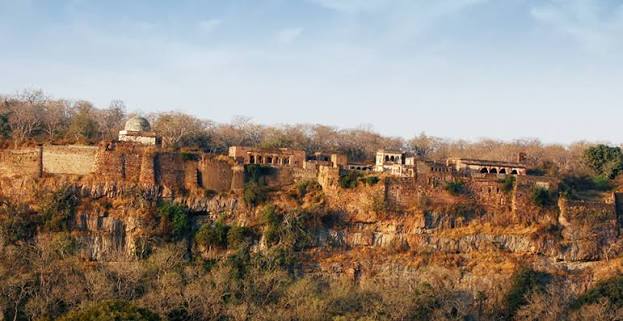
The architecture around Sawai Madhopur reflects several centuries of Rajput history. The most spectacular example is Ranthambore Fort, with massive defensive walls, gates, temples, tanks and historic structures spread across a hill.
The fort's architecture demonstrates how military strategy and religious life existed together within a medieval fortified settlement. The presence of both temples and a mosque within the fort complex also reflects the layered history of the site.
Other historic structures, temples and traditional buildings around the region add to Sawai Madhopur's architectural character.
Famous Places to Visit in Sawai Madhopur
Ranthambore National Park and Tiger Reserve
Ranthambore National Park is the region's biggest attraction and lies approximately 14 km from Sawai Madhopur. Its dry-deciduous forests, lakes, rocky hills and open meadows provide habitat for Bengal tigers and numerous other species.
Visitors can encounter animals such as leopard, sloth bear, sambar, chital, nilgai, wild boar, jackal and hyena, along with a wide range of birds.
Ranthambore Fort
The magnificent Ranthambore Fort was built by the Chauhan rulers and is generally dated to the 10th century. Rajasthan Tourism identifies 944 AD with the fort's construction history. Its massive walls, gateways, temples, tanks and historic structures dominate the landscape.
The fort was added to the UNESCO World Heritage List as part of the serial property Hill Forts of Rajasthan.
Trinetra Ganesh Temple
The Trinetra Ganesh Temple is located within Ranthambore Fort and is one of the region's most important pilgrimage sites. Rajasthan Tourism notes that the temple is around 15 km from the district headquarters and attracts large numbers of devotees and visitors.
Shilpgram
Shilpgram, near Ramsinghpura village, is approximately 9 km from Sawai Madhopur. Rather than being only a conventional museum, it functions as a craft village showcasing the arts, crafts and cultural traditions of Rajasthan and other parts of India.
Amreshwar Mahadev Temple
Amreshwar Mahadev Temple is located among the hills on the way to Ranthambore National Park. The temple is associated with Lord Shiva and features representations of the twelve Jyotirlingas along with a prominent Shiva lingam.
Chauth Mata Temple
Chauth Mata Temple at Chauth Ka Barwada is an ancient hilltop temple located about 25 km from Sawai Madhopur. A major local fair is held here and attracts devotees from surrounding areas.
Ghushmeshwar Mahadev Temple
The Ghushmeshwar Mahadev Temple at Siwar is associated with one of the twelve Jyotirlinga traditions of Lord Shiva. The temple is an important pilgrimage destination and hosts a large celebration during Shivratri.
Khandar Fort
Khandar Fort lies approximately 45 km from Sawai Madhopur. The historic fort was ruled by the Sisodia rulers of Mewar before coming under Mughal control and offers an additional heritage excursion from the city.
National Chambal Gharial Sanctuary
The wider district provides access to the National Chambal Gharial Sanctuary, where visitors can experience the Chambal river landscape and wildlife through river-based activities and boat safaris.
Famous Food of Sawai Madhopur
The local food culture combines traditional Rajasthani cuisine with North Indian influences. After a safari or heritage visit, travellers can explore local restaurants and eateries for hearty regional meals and snacks.
Dal Baati Churma
The iconic Rajasthani combination of dal, baked baati and sweet churma is one of the dishes visitors should try while exploring the region.
Gatte Ki Sabzi
Gram-flour dumplings cooked in a spiced gravy are a classic Rajasthani preparation and a common vegetarian choice.
Ker Sangri
Ker Sangri combines traditional desert berries and dried beans with spices and is one of Rajasthan's distinctive regional dishes.
Bajra Roti
Traditional bajra roti is commonly enjoyed with vegetables, dal, garlic chutney and other Rajasthani accompaniments.
Rajasthani Snacks and Sweets
Local markets and restaurants also offer snacks and sweets such as kachori, mirchi vada, ghewar and jalebi.
Famous Personalities and Historical Figures
Rao Hammir Singh
Rao Hammir Singh, also known as Hammir Dev, was the last Chauhan ruler of Ranthambore and is one of the most important historical figures associated with the fort. His reign is closely connected with the fort's resistance against Alauddin Khilji.
Maharaja Sawai Madho Singh I
Sawai Madho Singh I, ruler of Jaipur State, is associated with the foundation and planned development of modern Sawai Madhopur around 1765 AD. The city takes its name from him.
Rana Kumbha
Rana Kumbha of Mewar is among the rulers historically associated with the wider Ranthambore region. His period forms part of the fort's long and complex political history.
Festivals and Local Celebrations
Ganesh Chaturthi Fair
The Ganesh Chaturthi Fair at Trinetra Ganesh Temple is one of Sawai Madhopur's most important religious gatherings. The celebration takes place around Bhadrapad Sudi Chaturthi and attracts thousands of devotees.
Shivratri Fair
A major Shivratri Fair is held at Ghushmeshwar Mahadev Temple in Siwar. Rajasthan Tourism notes that traditional rituals associated with the event have continued for centuries.
Chauth Mata Temple Fair
The annual fair at Chauth Mata Temple near Chauth Ka Barwada brings devotees to the hilltop shrine and forms an important part of the local religious calendar.
Shri Mahavirji Fair
The Shri Mahavirji Fair is held in memory of Lord Mahavira and is an important Jain religious gathering in the wider region.
Kaila Devi Fair
The nearby Kaila Devi Fair is associated with the Karauli region and attracts large numbers of devotees during the traditional festival period.
Things to Do in Sawai Madhopur
- Go on a Ranthambore wildlife safari.
- Explore the historic Ranthambore Fort.
- Visit the Trinetra Ganesh Temple.
- Explore the crafts and cultural displays at Shilpgram.
- Visit Amreshwar Mahadev Temple.
- Plan a heritage excursion to Khandar Fort.
- Visit Chauth Mata Temple.
- Explore the region's traditional markets and handicrafts.
- Try authentic Rajasthani food.
- Take a river-based excursion at the National Chambal Gharial Sanctuary.
- Enjoy birdwatching around the forest and wetland landscapes.
- Plan your visit around a major local religious fair.
Where to Eat, Shop and Stay
Where to Eat
Sawai Madhopur has restaurants and local eateries serving Rajasthani, North Indian and other Indian cuisines. Visitors can try traditional dishes before or after their wildlife and heritage excursions.
Where to Shop
Local markets and craft centres offer Rajasthani textiles, handicrafts, decorative items, souvenirs and traditional products. Shilpgram is particularly useful for travellers interested in crafts and regional artistic traditions.
Where to Stay
Sawai Madhopur has a broad range of accommodation, from practical hotels and guesthouses to safari lodges and resorts around the Ranthambore area. Staying for at least two nights is useful for travellers planning multiple safari drives.
What is Sawai Madhopur Famous For?
- Ranthambore National Park and Tiger Reserve
- Ranthambore Fort
- Trinetra Ganesh Temple
- Rao Hammir and Chauhan history
- Wildlife safaris
- Aravalli and Vindhya landscapes
- Shilpgram
- Amreshwar Mahadev Temple
- Chauth Mata Temple
- Khandar Fort
- Rajasthani handicrafts and cultural traditions
Best Time to Visit Sawai Madhopur
The best period for a wildlife-focused trip is generally the cooler and drier season. Rajasthan Tourism states that Ranthambore National Park is open from October to June. Wildlife sightings can vary with season, weather and animal movement.
| Season | Travel Experience |
|---|---|
| October–November | Comfortable weather and good conditions for safaris and sightseeing |
| December–February | Cooler weather; mornings can be cold during safari drives |
| March–April | Warmer days and increasingly dry forests; suitable for wildlife trips |
| May–June | Hot weather; forest conditions can be dry, while safari temperatures are high |
| July–September | Monsoon period; Ranthambore's regular tourism season is closed |
How to Reach Sawai Madhopur
By Air
The nearest major airport commonly used for reaching Sawai Madhopur is Jaipur International Airport. From Jaipur, travellers can continue to Sawai Madhopur by road or train.
By Train
Sawai Madhopur Junction is an important railway station and one of the most convenient ways to reach the city. Rajasthan Tourism notes that the city is accessible by rail from major directions including Delhi, Mumbai and Jaipur.
By Road
Sawai Madhopur is connected by road with Jaipur, Delhi, Kota and other Rajasthan destinations. Taxis, buses and private vehicles can be used to reach Ranthambore and nearby attractions.
Nearby Places to Explore
| Destination | Approximate Distance / Connection | Why Visit |
|---|---|---|
| Ranthambore | About 14 km | National Park, Tiger Reserve and Fort |
| Shilpgram | About 9 km | Crafts, folk culture and traditional arts |
| Khandar Fort | About 45 km | Historic hill fort and heritage |
| Chauth Ka Barwada | About 25 km | Chauth Mata Temple and local fair |
| National Chambal Gharial Sanctuary | About 35 km regionally | River landscape, gharials and boat safari experiences |
| Karauli | Regional excursion | Palaces, temples and Kaila Devi traditions |
Best Duration for Sawai Madhopur
A minimum of 2 days is recommended for travellers who want to combine a Ranthambore safari with the fort and major cultural attractions.
| Duration | Suggested Experience |
|---|---|
| 1 Day | One safari + Ranthambore Fort or Trinetra Ganesh Temple |
| 2 Days | Safari experiences + Fort + Trinetra Ganesh Temple + local sightseeing |
| 3 Days | Multiple safari opportunities + heritage + Shilpgram + temples |
| 4 Days+ | Sawai Madhopur + Ranthambore + Chambal or nearby heritage destinations |
Travel Tips for Sawai Madhopur
- Book Ranthambore safari permits in advance during busy travel periods.
- Carry binoculars and a camera for wildlife and birdwatching.
- Wear neutral, comfortable clothing for safari drives.
- Carry a warm layer during winter morning safaris.
- Use sun protection and carry sufficient drinking water.
- Follow all wildlife-zone rules and maintain a safe distance from animals.
- Do not feed or attempt to attract wildlife.
- Keep extra time for railway and road transfers during peak tourist periods.
- Dress respectfully when visiting temples and religious sites.
- Check the current national park operating schedule before finalising your itinerary.
Why Visit Sawai Madhopur?
Sawai Madhopur brings together three powerful travel experiences: wildlife, history and spirituality. Few destinations in Rajasthan allow travellers to move from a tiger safari to a medieval hill fort and then to an ancient temple within the same itinerary.
The city is particularly suitable for travellers interested in wildlife photography, nature, history, architecture, temples and adventure travel.
- Experience Ranthambore's famous wildlife landscape.
- Explore a UNESCO World Heritage fort.
- Discover the legacy of Rao Hammir and the Chauhan rulers.
- Visit the unique Trinetra Ganesh Temple.
- Experience traditional Rajasthani crafts at Shilpgram.
- Explore the Aravalli–Vindhya landscape.
- Combine wildlife travel with cultural and heritage experiences.
Conclusion
Sawai Madhopur is much more than a gateway to a wildlife park. It is a destination where the history of medieval Rajasthan, the spiritual importance of ancient temples and the raw beauty of the Ranthambore forests come together.
From the imposing Ranthambore Fort and the revered Trinetra Ganesh Temple to wildlife safaris, Shilpgram and the surrounding hills, Sawai Madhopur offers a diverse Rajasthan experience.
For travellers looking for a combination of wildlife, heritage, adventure and culture, Sawai Madhopur provides an excellent base for exploring one of eastern Rajasthan's most distinctive regions.
"Travel is the only thing you buy that makes you richer."