East Champaran, Bihar: The Complete Travel and Culture Guide (2026)
Few districts in India carry the historical weight that East Champaran does. This is the land where Mahatma Gandhi launched his first act of civil disobedience on Indian soil — the Champaran Satyagraha of 1917 — a movement that would go on to shape the course of India's freedom struggle. Beyond its Gandhian legacy, East Champaran, with its headquarters at Motihari, is also home to ancient Buddhist stupas, scenic riverside landscapes near the Nepal border, and a rich blend of Bhojpuri and Maithili culture. In this guide, brought to you by AoneGo, we take you through everything worth knowing about East Champaran — its history, top attractions, culture, food, best time to visit, and practical travel tips.
Where Is East Champaran Located?
East Champaran is a district in northern Bihar, with Motihari as its administrative headquarters. It shares an international border with Nepal to the north, making it a strategic and culturally significant frontier district. To its south and east lie other Bihar districts, while the Gandak and other rivers flow through parts of the region, feeding its fertile agricultural land.
Its location — close to the Himalayan foothills and the Indo-Nepal border — gives East Champaran a distinct geography compared to central and southern Bihar, with lush greenery, sugarcane fields, and a cooler climate influence from the nearby hills.
A Brief History of East Champaran
East Champaran's most defining historical moment came in 1917, when Mahatma Gandhi arrived in Champaran (then a single undivided district, later split into East and West Champaran) at the invitation of local farmer Raj Kumar Shukla. Gandhi came to investigate the plight of indigo farmers who were being forced under the exploitative Tinkathia system to grow indigo on a portion of their land for British planters, often at devastating cost to their own food crops and livelihoods.
Gandhi's investigation, defiance of British orders to leave the district, and subsequent mobilization of local farmers and lawyers marked the Champaran Satyagraha — widely regarded as Gandhi's first major experiment with Satyagraha (non-violent resistance) in India, years before the more famous movements like the Salt March. The success of this movement not only brought relief to Champaran's farmers but also established Gandhi as a national leader and set the template for the freedom struggle that followed.
Beyond this pivotal chapter, the region's history stretches back much further. Areas around East Champaran, including sites near Kesariya, hold significant Buddhist heritage, with archaeological evidence suggesting the presence of ancient monastic centers dating back over a thousand years, reflecting the district's deep and layered past.
Top Places to Visit in East Champaran
East Champaran offers a compelling combination of freedom-struggle heritage, ancient Buddhist monuments, and natural beauty.
1. Gandhi Museum, Motihari
Located in the district headquarters, this museum documents the story of the Champaran Satyagraha through photographs, documents, and exhibits. It's an essential stop for anyone interested in understanding the movement's origins and impact firsthand.
2. Kesariya Stupa
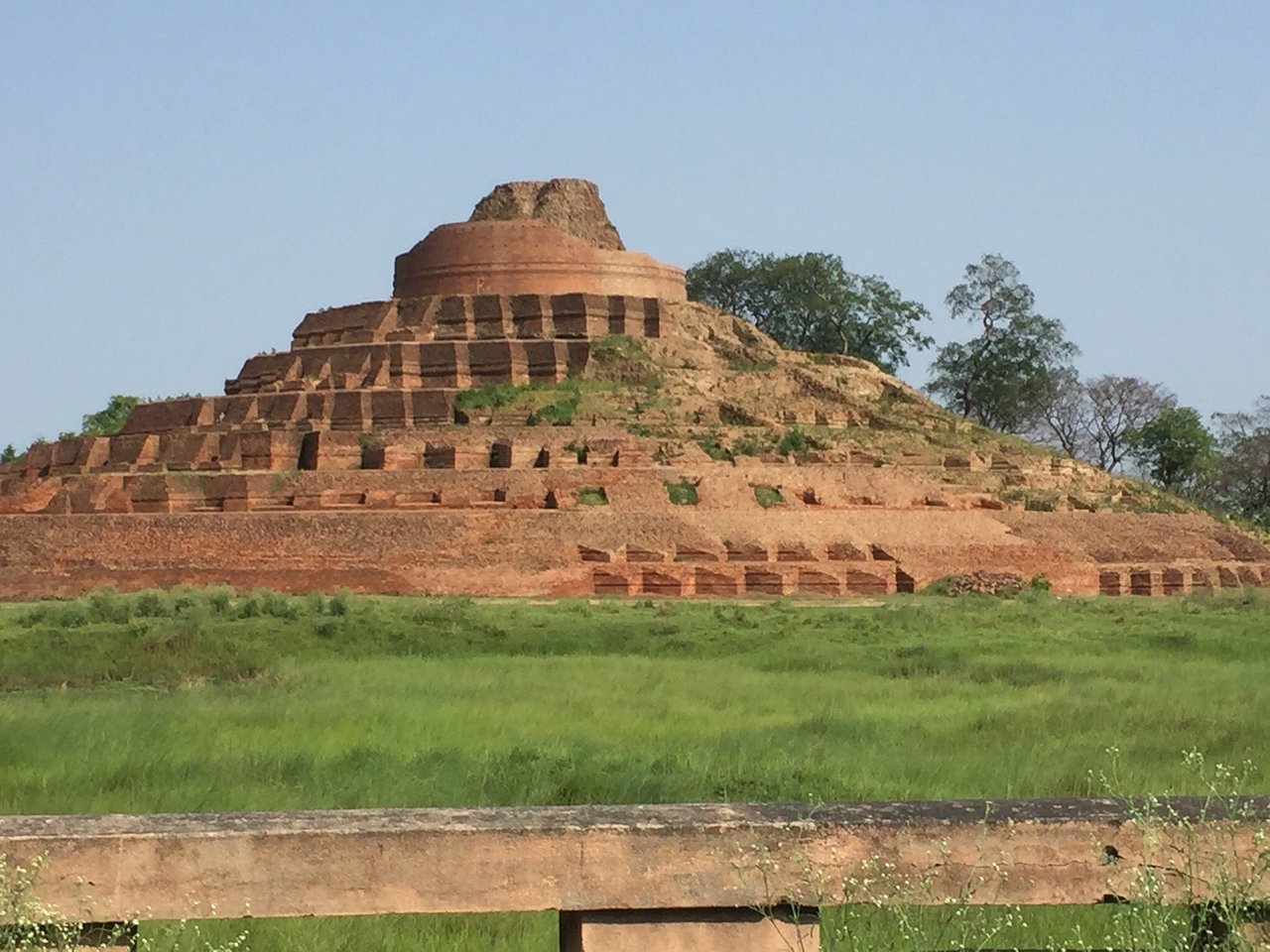
One of the most remarkable and lesser-known Buddhist monuments in India, the Kesariya Stupa is believed by many historians and archaeologists to be among the tallest Buddhist stupas in the world, even surpassing the height of the more famous Borobudur in Indonesia by some estimates. Dating back to ancient times, this site offers a fascinating counterpoint to the district's Gandhian legacy, showing East Champaran's much older spiritual significance.
3. Bhitiharwa Ashram
Established by Gandhi during the Satyagraha movement, this ashram served as a base for his associates and a school for local children. It remains a place of quiet historical importance, offering visitors insight into the grassroots work that accompanied Gandhi's political mobilization.
4. Ramgarhwa and Indigo Plantation Sites
Remnants and stories connected to the old indigo plantations — the very system that sparked the Satyagraha — can still be traced in parts of the district, offering a tangible link to the agrarian struggles of the early 20th century.
5. Someshwar Hills
Located on the district's northern edge near the Nepal border, these hills offer a rare touch of elevation and greenery in the Bihar landscape, popular among locals for short nature outings and scenic views.
6. Local Temples and Religious Sites
East Champaran is home to several temples of regional importance, drawing local worshippers throughout the year and reflecting the everyday religious life that continues alongside the district's historical landmarks.
7. Valmiki Nagar and Tiger Reserve (Nearby)
While technically in the neighboring West Champaran district, the Valmiki Tiger Reserve is close enough to be included in many East Champaran itineraries, offering forest trails, wildlife spotting opportunities, and a scenic detour for nature lovers exploring the wider Champaran region.
Culture and Local Life in East Champaran
East Champaran's culture reflects a blend of Bhojpuri and Maithili influences, shaped by its location at the meeting point of these two major North Bihar cultural zones.
Festivals here are celebrated with deep community involvement. Chhath Puja holds enormous significance, with rituals performed along riverbanks and ponds across the district. Ram Navami, Holi, and Durga Puja are also widely observed, alongside smaller local fairs and melas that reflect the district's agrarian calendar.
Language spoken across East Champaran includes Hindi, Bhojpuri, and Maithili, with local dialects varying somewhat between the northern and southern parts of the district. Folk traditions, including local songs and oral storytelling, remain an important part of rural life here.
Everyday life in East Champaran continues to be closely tied to agriculture, particularly sugarcane, paddy, and other cash crops — a legacy, in some ways, of the very agrarian economy that shaped the district's colonial-era struggles. Motihari town itself has grown into a modest urban center with educational institutions, local markets, and government offices, while much of the surrounding district remains rural and farming-focused.
What to Eat in East Champaran
The cuisine of East Champaran draws from both Bhojpuri and Maithili culinary traditions, offering simple, flavorful, and largely vegetarian-friendly options alongside regional non-vegetarian specialties.
- Litti Chokha – As across most of Bihar, this remains a beloved staple — roasted sattu-stuffed wheat balls paired with smoky mashed vegetables.
- Sattu Drinks and Parathas – Popular especially during the warmer months for their cooling and filling properties.
- Thekua – A traditional sweet made from wheat flour and jaggery, closely associated with Chhath Puja celebrations.
- Dal Pitha – A steamed dumpling filled with lentils, a comfort food common across North Bihar households.
- Local Sugarcane Products – Given the district's strong sugarcane cultivation, jaggery (gur) and sugarcane juice are widely available and locally significant.
The markets around Motihari and smaller towns across the district are good places to sample these dishes fresh and at reasonable prices.
Best Time to Visit East Champaran
The most favorable time to visit East Champaran is between October and March, when temperatures are mild and comfortable for sightseeing across the district's historical and natural sites.
- Summers (April–June) can get quite hot, with temperatures often climbing above 35°C, making midday travel uncomfortable.
- Monsoon (July–September) brings substantial rainfall, greening the landscape beautifully but also increasing the risk of waterlogging in low-lying areas given the district's river network.
- Winter and festival season (October to February) is ideal not just for pleasant weather but also for witnessing local festivals like Chhath Puja, which brings the district's riverbanks and ponds to life with rituals and community gatherings.
How to Reach East Champaran
By Air: The nearest major airport is in Patna (Jay Prakash Narayan Airport), from where East Champaran is accessible by road or rail. Some travelers also connect via Gorakhpur airport in neighboring Uttar Pradesh, depending on their starting point.
By Rail: Motihari Junction is well connected to major cities including Patna, making train travel a convenient option for reaching the district headquarters and onward exploration.
By Road: East Champaran is connected via National Highways to Patna, Muzaffarpur, and other major towns in North Bihar, as well as routes leading toward the Nepal border. The district is accessible by both private vehicles and state/interstate bus services.
Travel Tips for Visiting East Champaran
- Start with the Gandhi Museum in Motihari to build historical context before visiting other Satyagraha-related sites like Bhitiharwa Ashram.
- Don't skip Kesariya Stupa — it's one of India's most underrated ancient monuments and easily combinable with a Motihari-based itinerary.
- Plan around Chhath Puja if you want to experience the district's community and religious life at its most vibrant.
- Carry cash for rural areas and local markets, as digital payment acceptance can be inconsistent outside the main town.
- Consider combining with nearby districts like West Champaran (for the Valmiki Tiger Reserve) for a fuller North Bihar itinerary.
- Dress modestly and respectfully when visiting religious and heritage sites, particularly ashrams and temples.
Why East Champaran Deserves More Attention
East Champaran occupies a unique place in India's story — a district where the roots of India's freedom movement were planted through Gandhi's first Satyagraha, and where, centuries earlier, one of the tallest Buddhist stupas ever built quietly rose from the same soil. It's a place where colonial-era agrarian struggle, ancient spiritual heritage, and everyday rural Bihari life all coexist within a single, often-overlooked district.
For travelers drawn to history, especially the story of India's independence movement, or those curious about lesser-known Buddhist heritage sites, East Champaran offers a rewarding and meaningful journey — one that goes far beyond the usual Bihar tourist trail.
"Travel is the only thing you buy that makes you richer."