Vaishali, Bihar – Where Ancient India, Buddhism and Jain Heritage Come Alive
Vaishali is one of the most historically significant destinations in Bihar and a fascinating place for travelers interested in ancient India, Buddhism, Jainism, archaeology, and spirituality. Known as an important centre of the ancient Vajji confederacy, Vaishali has a remarkable connection with both Lord Buddha and Lord Mahavira.
Today, the region attracts visitors with its ancient archaeological remains, Ashokan heritage, stupas, temples, museums, and peaceful surroundings. A trip to Vaishali offers more than sightseeing—it provides an opportunity to explore a place that played an important role in the religious and political history of ancient India.
History of Vaishali
Vaishali has an exceptionally rich ancient history. It was the capital of the Vajji Confederacy, a powerful republican-style political system that existed in northern India during the ancient period. The Licchavis were among the prominent clans associated with this confederacy.
The city was already an important settlement during the time of the Buddha. According to Buddhist traditions, Lord Buddha visited Vaishali several times and delivered important teachings here. The city is also associated with the famous Second Buddhist Council, which is traditionally believed to have been held at Vaishali.
Vaishali has an equally important place in Jain history. Lord Mahavira, the 24th Tirthankara of Jainism, was born at Kundagrama in the Vaishali region. This makes the area an important pilgrimage destination for Jain devotees.
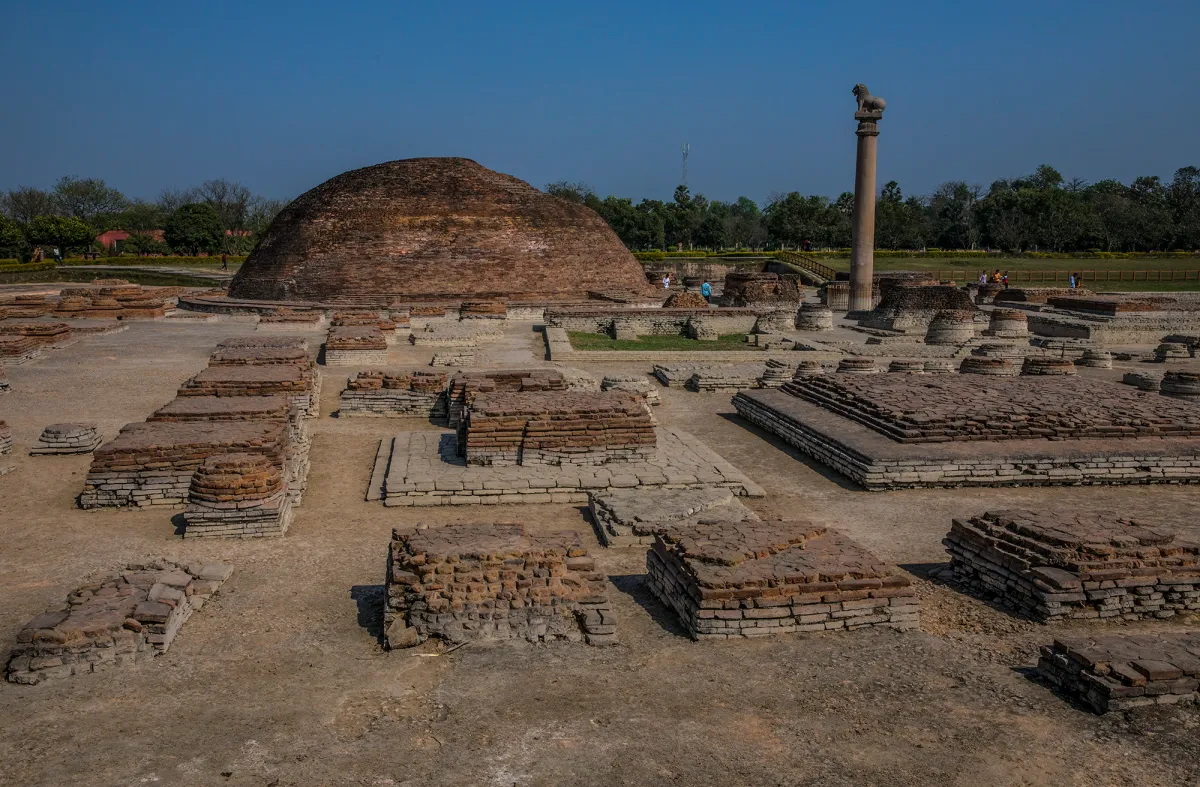
The Mauryan period also left its mark on Vaishali. Emperor Ashoka is believed to have erected an impressive stone pillar here, which remains one of the most recognizable ancient monuments in the region.
Over centuries, Vaishali declined as a major urban centre, but its historical importance remained. Archaeological discoveries have helped reveal the scale and significance of the ancient settlement.
Geography of Vaishali
Vaishali is located in the fertile plains of northern Bihar. The district is situated north of the Ganga River and forms part of the broader landscape of the North Bihar plains.
The region is predominantly flat and agricultural, with fertile soil supporting crops, fruit cultivation, and rural settlements. The landscape around Vaishali combines open fields, villages, roads, ponds, and archaeological sites.
The climate is generally characterized by hot summers, a rainy monsoon season, and relatively cool winters. Winter is particularly comfortable for visitors who want to explore the archaeological sites and temples.
Culture and Traditions of Vaishali
Vaishali's culture is deeply influenced by its ancient Buddhist, Jain, and Hindu heritage. Religious traditions remain an important part of local life, while agriculture and village communities continue to shape the everyday character of the region.
Hindi is widely spoken, along with local dialects used in daily communication. Festivals, religious gatherings, fairs, and traditional ceremonies are celebrated with enthusiasm.
Because of its connection with Buddhism and Jainism, Vaishali also attracts pilgrims and visitors from different parts of India and abroad. The presence of ancient monuments and religious sites gives the region a distinctive spiritual atmosphere.
Architecture of Vaishali
Vaishali is particularly famous for its ancient archaeological architecture. The remains found across the region provide evidence of its importance as an ancient settlement.
Ashokan Pillar
The Ashokan Pillar at Vaishali is one of the most important monuments in the region. Made from polished sandstone, the pillar is traditionally associated with Emperor Ashoka. Its simple yet impressive design reflects the architectural and artistic achievements of the Mauryan period.
Kutagarasala Vihara
Kutagarasala Vihara is associated with Buddhist history and is traditionally linked with the Buddha's stays in Vaishali. The archaeological remains help visitors understand the region's importance as an ancient Buddhist centre.
Ancient Stupa Remains
Vaishali contains archaeological remains of stupas and other structures connected with its Buddhist past. These sites provide an insight into the religious architecture and traditions of ancient India.
Famous Places to Visit in Vaishali
Ashokan Pillar
The Ashokan Pillar is one of Vaishali's most famous attractions. The polished stone column stands as a reminder of the Mauryan period and is an essential stop for visitors interested in ancient Indian history.
Buddha Stupa
The Buddha Stupa is an important Buddhist archaeological site associated with Vaishali's religious history. Visitors can explore the remains and learn about the area's connection with early Buddhist traditions.
Kutagarasala Vihara
Kutagarasala Vihara is associated with the Buddha's visits to Vaishali. The site is important for Buddhist pilgrims as well as travelers interested in archaeology.
Abhishek Pushkarini
Abhishek Pushkarini, also known as the Coronation Tank, is traditionally associated with the ancient Licchavi rulers. The historic water body adds another dimension to Vaishali's ancient political heritage.
Vishwa Shanti Stupa
The Vishwa Shanti Stupa, also known as the World Peace Pagoda, is a striking modern Buddhist monument. Its peaceful setting and white structure make it a popular place for visitors seeking a spiritual and quiet experience.
Vaishali Museum
The Vaishali Museum houses archaeological objects discovered from the region. Sculptures, coins, pottery, and other artifacts help visitors understand the area's long history.
Kundalpur
Kundalpur is an important Jain pilgrimage location associated with the birth of Lord Mahavira. Jain devotees visit the area as part of their religious journeys.
Famous Dishes of Vaishali
Litti Chokha
Litti Chokha is one of Bihar's most famous traditional dishes. Litti is prepared from wheat flour and filled with sattu, while chokha is generally made from roasted vegetables such as potato, tomato, and brinjal.
Sattu Sharbat
Sattu Sharbat is a traditional Bihar beverage prepared using roasted gram flour. It is refreshing, filling, and particularly popular during hot weather.
Thekua
Thekua is a traditional sweet made with wheat flour, jaggery, and ghee. It has a strong connection with Chhath Puja and is widely enjoyed across Bihar.
Khaja
Khaja is a crisp, layered sweet that is popular in Bihar. Its light texture and sweetness make it a common choice during festivals and celebrations.
Chura-Dahi
Chura-Dahi combines flattened rice with curd and is a simple traditional food enjoyed in Bihar. It is particularly associated with everyday regional food culture and is often served as a light meal.
Famous Personalities Connected with Vaishali
Lord Mahavira
Lord Mahavira, the 24th Tirthankara of Jainism, was born in the Vaishali region. His connection with the area makes Vaishali one of the important Jain pilgrimage destinations in India.
Gautama Buddha
Gautama Buddha had a significant connection with Vaishali. Buddhist traditions record several visits by the Buddha to the city, making the region an important part of Buddhist history.
Emperor Ashoka
Emperor Ashoka is connected with Vaishali through the famous Ashokan Pillar. The monument reflects the spread of Buddhist ideas and Mauryan influence across the Indian subcontinent.
Festivals Celebrated in Vaishali
Buddha Purnima
Buddha Purnima is especially meaningful in Vaishali because of the region's strong association with Gautama Buddha. Buddhist devotees gather at important sites for prayers, meditation, religious programs, and spiritual activities.
Mahavir Jayanti
Mahavir Jayanti is an important festival for Jain communities. Because of Vaishali's connection with Lord Mahavira, religious celebrations and pilgrimages make the occasion particularly significant here.
Chhath Puja
Chhath Puja is widely celebrated across Bihar, including Vaishali. Devotees worship the Sun God and perform rituals near water bodies, creating a deeply spiritual atmosphere.
Holi
Holi is celebrated with colours, traditional food, music, and gatherings among families and communities. The festival brings a lively atmosphere to villages and towns across the district.
Diwali
Diwali is celebrated with lamps, prayers, sweets, decorations, and family gatherings. Local markets become busy as residents prepare for the festival.
Things to Do in Vaishali
Explore Ancient Archaeological Sites
History lovers can spend time exploring the Ashokan Pillar, stupas, archaeological remains, and other historic locations across Vaishali.
Visit Buddhist Heritage Sites
Visitors interested in Buddhism can explore the places associated with the Buddha and experience the peaceful atmosphere around the region's Buddhist monuments.
Discover Jain Heritage
Kundalpur and other Jain-related locations provide an opportunity to learn about Vaishali's connection with Lord Mahavira and Jain traditions.
Visit the Vaishali Museum
The museum is useful for understanding the archaeological discoveries made in the region. It provides additional context before or after visiting the monuments.
Spend Time at Vishwa Shanti Stupa
The World Peace Pagoda is a peaceful place to sit, reflect, photograph the surroundings, and experience the spiritual atmosphere of Vaishali.
Explore Local Life
Travelers can also spend time exploring local markets and villages to experience the everyday culture, food, and lifestyle of the region.
Where to Eat, Shop, and Stay in Vaishali
Where to Eat
Visitors can find traditional Bihar food at local restaurants and eateries. Litti chokha, sattu-based dishes, sweets, snacks, and seasonal foods are worth trying during a visit.
Where to Shop
Local markets are suitable for buying everyday items, traditional products, religious souvenirs, handicrafts, and locally available food products.
Travelers visiting religious sites may also find small shops selling devotional items and souvenirs.
Where to Stay
Budget: Guesthouses, simple hotels, and affordable accommodation are suitable for short visits.
Mid-Range: Comfortable hotels and lodging options can be found for travelers who want better facilities.
Premium: Visitors looking for higher-end accommodation can also consider staying in nearby larger urban areas and making Vaishali a day trip.
What is Vaishali Famous For?
Vaishali is famous for its ancient Buddhist and Jain heritage, Ashokan Pillar, archaeological remains, connection with Gautama Buddha and Lord Mahavira, Vishwa Shanti Stupa, and history of the Vajji Confederacy.
The region is particularly important because both Buddhism and Jainism have deep historical connections with Vaishali.
Best Time to Visit Vaishali
October to February
Winter is the best period for sightseeing in Vaishali. The weather is generally more comfortable for visiting archaeological sites, temples, museums, and outdoor monuments.
March to June
Summer can become quite hot, especially during the afternoon. Visitors planning a trip during this period should schedule outdoor sightseeing during the morning or evening.
July to September
The monsoon brings rainfall and greener surroundings. While the landscape can look attractive, rain may make outdoor sightseeing less convenient.
Festival Season
Visitors interested in Buddhist or Jain traditions can consider planning their trip around Buddha Purnima or Mahavir Jayanti to experience special religious activities.
How to Reach Vaishali
By Air
The nearest major airport is Jay Prakash Narayan International Airport in Patna. From the airport, visitors can continue to Vaishali by road.
By Train
Vaishali does not have the same level of railway connectivity as Bihar's major railway hubs. Travelers can use nearby railway stations and continue the journey by road.
By Road
Road travel is one of the most convenient ways to reach Vaishali. Buses, taxis, and private vehicles connect the area with nearby towns and major parts of Bihar.
Nearby Places to Visit from Vaishali
Vaishali can be combined with a few other destinations when planning a wider Bihar itinerary. Muzaffarpur, Patna, and Darbhanga are useful additions for travelers who want to explore more of the state's history and culture.
Muzaffarpur
Muzaffarpur is known for its famous Shahi Litchi, temples, local markets, and North Bihar's cultural traditions. Its proximity makes it a practical addition to a Vaishali trip.
Patna
Patna, the capital of Bihar, offers museums, historic landmarks, religious sites, markets, and attractions along the Ganga. It is a good choice for travelers interested in the wider history of Bihar.
Darbhanga
Darbhanga is known for its Mithila culture, heritage, traditional customs, and historic attractions. It offers a different perspective on the cultural diversity of northern Bihar.
Best Duration for a Trip to Vaishali
1 Day
One full day is enough for most visitors to explore the major archaeological and religious attractions of Vaishali.
2 Days
Two days allow travelers to explore the main heritage sites at a relaxed pace, visit the museum, and spend more time experiencing the local surroundings.
3 Days
Three days are suitable for travelers who want to combine Vaishali with nearby destinations and create a broader Bihar heritage itinerary.
Travel Tips for Vaishali
- Winter is generally the most comfortable time for sightseeing.
- Start outdoor sightseeing early during summer.
- Carry water while visiting archaeological sites.
- Wear comfortable footwear because some attractions involve walking.
- Dress respectfully at religious sites.
- Follow photography rules at museums and monuments.
- Keep some cash for local shops and small vendors.
- Book accommodation in advance during major religious festivals.
- Plan transportation before visiting multiple sites because attractions are spread across the region.
- Keep the surroundings clean and avoid disturbing archaeological structures.
Why Visit Vaishali?
Vaishali is different from many other destinations because its importance comes from several layers of ancient Indian history. It was an important political centre, a major Buddhist location, and a significant Jain heritage destination.
For history lovers, Vaishali offers archaeological remains and monuments. For spiritual travelers, its Buddhist and Jain connections provide a meaningful experience. For general tourists, the peaceful surroundings and ancient atmosphere make it an interesting destination away from busy urban centres.
A visit to Vaishali is also an opportunity to understand how religion, politics, culture, and society developed in ancient India.
Conclusion
Vaishali is a remarkable destination where ancient history and living religious traditions come together. Its Ashokan Pillar, Buddhist sites, Jain heritage, ancient archaeological remains, Vishwa Shanti Stupa, and museum make it one of Bihar's most important heritage destinations.
Whether you are interested in Buddhism, Jainism, archaeology, ancient politics, spirituality, or simply want to explore a historically important part of Bihar, Vaishali offers a memorable journey into India's past.
For travelers exploring Bihar, Vaishali is a destination that deserves a place on the itinerary—not only for what remains of its ancient city, but also for the remarkable stories that continue to define it.
"Travel is the only thing you buy that makes you richer."