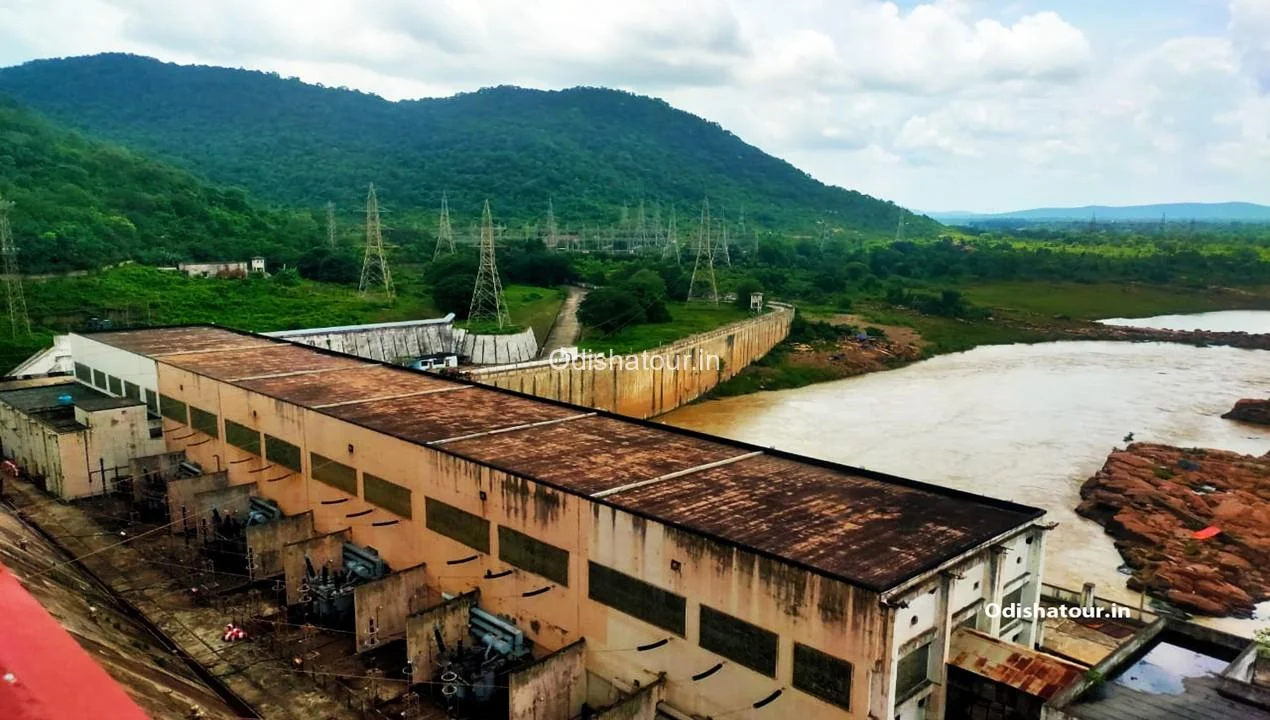
Angul — Odisha's Aluminium City with a Hilltop Soul
Introduction
Most travelers know Angul, if at all, as an industrial name on Odisha's map — home to Asia's largest aluminium plant and some of the state's biggest coalfields. But climb Sunasagad Hill in the middle of town, and a completely different Angul reveals itself: a Jagannath temple blending Kalinga and Dravidian architecture, tribal goddess worship carved into black granite, and a gateway position to one of Odisha's wildest river gorges. Angul is proof that an industrial town can still hold onto genuine spiritual depth and old-world folklore, if you know where to look.
History
Angul's name carries its own small legend. Before the industrial era transformed its landscape, the region was home to different tribes who once commanded small citadels across the land. According to popular folklore, the name Angul traces back to a local chieftain named Anu, who led a rebellion against a king. Locals referred to this period as Anugol — "Anu's war" — and over time, the name stuck and evolved into "Angul" as it's known today.
For much of its history, Angul remained a quiet, tribal-influenced region serving as an important junction connecting Central and Western Odisha. Its transformation began with the arrival of NALCO (National Aluminium Company Limited), which established Asia's largest aluminium plant here, forever changing the town's character from a sleepy administrative outpost into a major industrial center. Angul officially became a separate district in March 1993, and it continues to carry landmarks of Odisha's freedom struggle alongside its industrial identity, in addition to being a gateway to the region's pristine wilderness.
Geography
Angul is located in central Odisha, sitting near the banks of the Brahmani River and serving as a strategic gateway to Central and Western parts of the state. The district's nearest major cities include Cuttack, Sambalpur, Bhubaneswar, and Talcher, connecting it well within Odisha's broader transport network.
The town's most distinctive geographical feature is Sunasagad Hill, situated right in the middle of Angul, which hosts both a revered temple and centuries-old tribal worship traditions. The wider district is also known for the Satkosia Gorge, a scenic stretch on the Mahanadi River located nearby, part of the Satkosia Tiger Reserve. Angul's climate features hot, sometimes humid summers with average temperatures around 30°C, and comfortably cool winters averaging around 10°C, following a typical Odisha weather pattern with a defined monsoon season.
Culture and Traditions
Angul's culture reflects a genuine blend of tribal heritage and mainstream Odia tradition. Odia is the official language, though locals are also generally conversant in Hindi and a bit of English, making the town reasonably easy to navigate for visitors from other parts of India.
The district's tribal roots remain visible through customs like the Budha-Budhi worship system, a form of pillar-deity worship practiced in villages like Ogi, Para, and Bagedia, where Budha Thakur and Budhi Thakurani are revered — a tradition also echoed in parts of Cuttack. Since the arrival of NALCO, Angul has also developed a more cosmopolitan, planned-township character, particularly visible in areas like Nalco Nagar, blending traditional Odia rural life with organized modern infrastructure.
Architecture
Angul's architecture spans tribal shrine traditions, temple construction blending multiple regional styles, and modern industrial-era planning. The most celebrated example is the Jagannath Temple, known locally as Saila Srikhetra, positioned atop Sunasagad Hill. This temple complex showcases a striking fusion of Kalinga and Dravidian architectural styles, reflecting the cross-regional influences that have shaped Odisha's temple-building traditions over centuries.
In contrast, the Budhi Thakurani Temple, also on Sunasagad Hill, represents a much older and more indigenous architectural tradition — its deity carved as a simple black granite pillar, a form of worship tied directly to the region's tribal past. Modern architecture is represented by the Black Diamond Museum & Library, a purpose-built cultural institution covering roughly 3.5 acres, and the well-planned township of Nalco Nagar, both reflecting Angul's contemporary industrial identity.
Famous Places
Saila Srikhetra (Jagannath Temple)
Positioned atop Sunasagad Hill, this is one of the most revered temple complexes in Angul, dedicated to Lord Jagannath, Lord Balabhadra, and Devi Subhadra. Its architecture beautifully fuses Kalinga and Dravidian styles, and the complex also houses a museum exhibiting artefacts tied to Odisha's culture and history.
A Fusion of Architectural Styles
The temple's blend of Kalinga and Dravidian design elements makes it a genuinely distinctive structure within Odisha's broader temple architecture landscape.
Best Time to Visit
Early mornings offer the most peaceful darshan experience, with the hilltop location also providing pleasant views over the town below.
Quick Tip
The temple is open from 6:00 a.m. to 8:00 p.m., so plan your visit within these hours and combine it with the nearby Budhi Thakurani Temple on the same hill.
Budhi Thakurani Temple
Located on one side of Sunasagad Hill, this temple houses a black granite pillar representing the goddess, reflecting the region's tribal Budha-Budhi worship tradition. Local legend holds that a Kandha chieftain named Sunas once used this hill as his fort, giving the hill its name.
Black Diamond Museum & Library
A modern cultural institution established in 2024, spread across roughly 3.5 acres, showcasing Angul's industrial heritage, tribal culture, and regional history — a compelling stop for visitors wanting context on the district's coal-mining identity.
Bhimkhand
Located about 85 km from Angul, this site features a rock art sleeping image of Lord Vishnu on the banks of the Brahmani River, now situated near a major NTPC thermal power plant complex — a striking blend of ancient art and modern industry.
Hingula Temple
A prominent shrine dedicated to Goddess Hingula, situated on the banks of the river Simhada, drawing large numbers of devotees especially during the annual Hingula Yatra.
Satkosia Gorge
A scenic gorge on the Mahanadi River near Angul, part of the Satkosia Tiger Reserve, offering visitors a genuine wilderness escape and one of the district's most naturally spectacular attractions.
Famous Dishes
Chhena Poda
Locals proudly claim this smoky, caramelized dessert originated right here in Angul before spreading across Odisha. Made from baked cottage cheese mixed with sugar and cardamom, wrapped in banana leaves and baked to a perfect brown crust, it sits somewhere between a cheesecake and a halwa — and remains an absolute must-try.
Pakhala
A fermented rice dish eaten with boiled potatoes, curd, green chili, and onions, Pakhala is more than just food in Angul — it's a way of life, especially prized for its cooling effect during Odisha's intense summer heat.
Dalma
A hearty lentil and vegetable stew, Dalma is a Odia comfort food staple often paired with rice, reflecting the broader culinary traditions found throughout the region.
Chakuli Pitha
A savory rice-and-lentil pancake typically eaten for breakfast, often served alongside Santula or Dalma, representing the everyday food culture of Angul's surrounding villages.
Famous Personalities
Subhendra Mohan Srichandan Singh
Born on 6th August 1933 in Papsara village, Kishore Nagar block, Angul district, Subhendra Mohan Srichandan Singh was a distinguished Odia writer, critic, and linguist. He was conferred the prestigious Bal Sahitya Puraskar by the Sahitya Akademi for his contribution to children's literature and was also honored by the Odisha Sahitya Akademi in 2010 for his book Tikipari.
A Lifetime Devoted to Odia Literature
Singh authored numerous books during his career while working for years with the Board of Secondary Education, Odisha, leaving a lasting literary legacy for young Odia readers.
Connection to Angul
His birthplace in Papsara village remains a proud part of Angul district's literary heritage, tying the district to one of Odisha's respected voices in children's literature.
Fast Fact
He passed away in November 2023, having spent decades shaping Odia children's literature through his writing and academic work.
Rajanikant Singh
The current MLA representing the Angul constituency, Rajanikant Singh has held the seat since 2004, winning re-election in 2009 and 2014, and was elected unopposed as Deputy Speaker of the Odisha Legislative Assembly, continuing a political legacy in the district first established by his father.
Festivals
Hingula Yatra
An annual festival held at the Hingula Temple, drawing large numbers of devotees to honor Goddess Hingula in one of the district's most significant religious celebrations.
Dola Purnima (Agara Jatra)
Celebrated prominently in villages like Ogi within Angul district, this Phalguna Yatra remains one of the region's most locally beloved festival traditions.
Dusshera and Kartik Poornima
Widely celebrated across Angul district's villages, these major festivals bring community gatherings, traditional rituals, and festive energy to the region throughout the year.
Things to Do
- Climb Sunasagad Hill to visit both Saila Srikhetra and Budhi Thakurani Temple in one outing.
- Explore the Black Diamond Museum & Library for insight into Angul's industrial and tribal heritage.
- Visit Bhimkhand to see the ancient rock art image of Lord Vishnu near the Brahmani River.
- Attend the Hingula Yatra, if your visit timing allows.
- Take a day trip to Satkosia Gorge for a genuine wilderness experience on the Mahanadi River.
- Walk through Nalco Nagar, Angul's well-planned modern township.
- Sample Chhena Poda at its place of origin, according to local claim.
Where to Eat, Shop, and Stay
Eat: Beyond the town's restaurants and hotels, dhabas on Angul's outskirts serve sumptuous, affordable food, while local sweet shops are the place to try authentic Chhena Poda.
Shop: Angul's local markets offer everyday goods and regional produce, giving visitors a genuine taste of the district's small-town commerce.
Stay:
- Budget: Simple guesthouses and small hotels cover most short-stay needs for travelers passing through.
- Mid-range: A handful of comfortable hotels near the city center offer better amenities.
- Luxury: For upscale stays, travelers often base themselves in nearby Bhubaneswar, well connected to Angul by road and rail.
What is Angul Famous For?
Angul is best known as the "Aluminium City of Odisha," home to NALCO's massive aluminium plant and major coalfields at Talcher. It's also recognized for the Jagannath Temple atop Sunasagad Hill, its blend of tribal and mainstream Odia traditions, and its role as a gateway to the Satkosia Gorge and Tiger Reserve.
Best Time to Visit
October to March is the ideal window to visit Angul, offering pleasant, dry weather perfect for temple visits and outdoor sightseeing. Summers can get hot and occasionally humid, so carrying a cap, sunscreen, and light clothing is advisable if traveling during warmer months; winters call for jackets and woolens given the cooler evening temperatures.
How to Reach
By Air: The nearest major airport is in Bhubaneswar, well connected to Angul by road.
By Rail: Angul has its own railway station, with good connectivity to Cuttack, Sambalpur, and other major Odisha cities.
By Road: Angul is well connected by road to Cuttack, Sambalpur, Debagarh, Bhubaneswar, and Talcher, making it an accessible stop for travelers exploring central and western Odisha.
Nearby Places
Talcher
A major coal-mining hub near Angul, offering visitors a glimpse into the region's significant industrial landscape through its coalfields.
Why It Complements an Angul Trip
Given Angul's own NALCO-driven industrial identity, Talcher deepens the same narrative of Odisha's mining and energy economy.
Getting There
Talcher is well connected to Angul by road, making a same-day visit easy.
Quick Tip
Combine an Angul morning at Sunasagad Hill with a Talcher afternoon exploring the coalfields for a well-rounded industrial heritage trip.
Satkosia Tiger Reserve
Home to the scenic Satkosia Gorge on the Mahanadi River, this reserve offers a genuine wilderness escape and a striking contrast to Angul's industrial character.
Bhubaneswar
Bhubaneswar, Odisha's capital city, offers iconic temples, museums, and a much larger urban experience, making it a natural extension for travelers exploring beyond Angul.
Best Duration for a Trip
1 to 2 days is generally sufficient to comfortably explore Angul's temples, museum, and local markets. Travelers wanting to include Satkosia Gorge or Talcher can extend this into a fuller 3-day regional trip.
Travel Tips
- Visit between October and March for the most comfortable sightseeing weather.
- Carry a jacket and woolens in winter, given the cooler evening and morning temperatures.
- Carry a cap, sunscreen, and light clothing if traveling during the hot, humid summer months.
- Greeting locals with a Namaste works well, since people are generally friendly and helpful.
- Dress modestly and respect local customs when visiting temples and religious sites.
- Hire a local taxi for easier movement between Angul's scattered attractions, especially Satkosia Gorge.
Why Visit Angul?
Angul offers a genuinely unexpected mix — the industrial scale of Asia's largest aluminium plant paired with hilltop temples, tribal goddess worship, and a gateway to some of Odisha's finest river wilderness. It rewards travelers looking for an off-the-beaten-path destination that blends natural beauty, cultural heritage, and religious significance in equal measure.
Conclusion
Angul may be best known industrially as Odisha's Aluminium City, but it holds a genuinely rich blend of tribal tradition, temple architecture, and natural beauty beneath that reputation. From the fused Kalinga-Dravidian design of Saila Srikhetra to the ancient pillar-worship at Budhi Thakurani Temple, and from its Chhena Poda origins to its gateway role for Satkosia Gorge, this quiet Odisha town rewards travelers willing to look beyond its industrial label. A short visit here, paired with a plate of fresh Chhena Poda and a walk up Sunasagad Hill, offers a genuinely soulful glimpse into one of Odisha's most underrated corners.
"Travel is the only thing you buy that makes you richer."