Cuttack — The Millennium City Where Netaji Was Born
Introduction
Cuttack doesn't need to compete with Odisha's newer capital, Bhubaneswar, for attention — it simply carries a thousand years of history that speaks for itself. Founded in 989 CE as a military cantonment, Cuttack served as Odisha's capital for centuries, and its name — Kataka, meaning "the fort" — still echoes through its ancient Barabati citadel. This is also the birthplace of Netaji Subhas Chandra Bose, one of India's most legendary freedom fighters, and a city so renowned for its delicate silver filigree craftsmanship that it's simply known across India as the "Silver City."
History
Cuttack's story begins in 989 CE, when King Nrupa Kesari (also recorded as Markat Keshari of the Somavanshi dynasty) built the original fort around which the city grew, earning it the enduring title "Millennium City." The very name Cuttack derives from the Odia and Sanskrit word Kataka, literally meaning "the fort" — a direct reference to the fortifications that shaped the city's earliest identity.
Cuttack rose to true political prominence in the 12th century, when King Anangabhima Deva III of the Eastern Ganga dynasty relocated his capital here and fortified Barabati Fort, transforming the city into an impregnable citadel that drew artisans and traders from across the region. After the death of Mukunda Deva I, the last Gajapati king of independent Odisha, in 1568 AD, Cuttack passed through Mughal, then Maratha rule from 1750, before the British finally captured the city in 1803. Remarkably, Cuttack continued to serve as the administrative and military headquarters of the region until 1949, remaining Odisha's capital for a thousand years before the seat of government finally shifted to Bhubaneswar, just 35 km south.
Geography
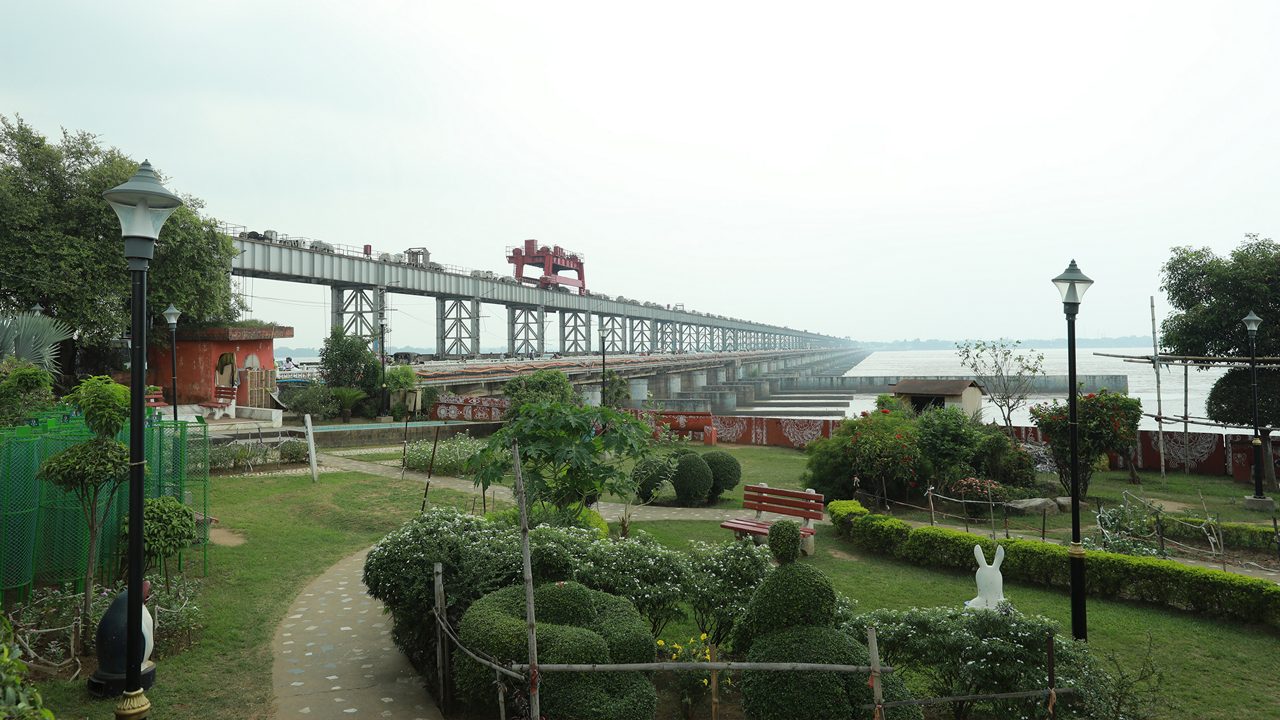
Cuttack sits at the junction of the Mahanadi River and its distributary, the Kathjodi River, a strategic riverine location that shaped both its ancient defenses and its role as the center of Odisha's canal system for transport and irrigation. The wider region also lies near the deltas of the Mahanadi and Brahmani rivers, with the Baitarani River traversing the district further inland, where the terrain turns notably hilly.
An extraordinary feat of ancient engineering survives here in the form of an 11th-century stone revetment on the Kathajodi River, built to protect the city from seasonal flooding — a remarkable example of Odisha's early technological skill that still functions today. Cuttack's climate follows a typical Odisha pattern, with hot, humid summers, a substantial monsoon season, and comfortably cool, dry winters that make October through April the most pleasant stretch for travel.
Culture and Traditions
Cuttack carries the identity of both Odisha's judicial capital, home to the Orissa High Court, and its commercial capital, hosting major trading and business houses across the city. Odia is the primary language, and the city's traditional values and rich cultural heritage remain deeply intact even amid modern commercial growth.
The city's layout itself reflects its organic, centuries-old growth — an unplanned maze of streets and lanes that has earned Cuttack the affectionate local nickname of a city with "Baban Bazaar, Tepan Galee" (52 markets and 53 streets). Cuttack and Bhubaneswar together form the "Twin Cities of Odisha," and Cuttack's cultural identity remains anchored by its legendary Durga Puja celebrations, where the city's famed silver filigree work is showcased in elaborate tableaux honoring the goddess.
Architecture
Cuttack's architecture is defined above all by Barabati Fort, whose precise origins remain debated between an initial 12th-century construction under King Anangabhima II and later fortification between 1229 and 1238 AD. Positioned at the meeting point of the Mahanadi and Kathjodi rivers, the fort's surviving ruins — its moat, gate, and the earthen mound of a former nine-storied palace — stand at a height of roughly 48 feet, a solemn reminder of what was once the pinnacle of Odia military architecture.
Religious architecture is represented by the Cuttack Chandi Temple and Kadam Rasool, an 18th-century shrine at the center of the city revered by both Hindus and Muslims, said to house a footprint of the Prophet Mohammed. Colonial and modern architecture is visible in institutions like Ravenshaw College and the Odisha State Maritime Museum, a renovated waterways and boat-building workshop originally established during the devastating famine of 1866.
Famous Places
Barabati Fort
The city's defining historical landmark, this fort was originally built in 989 CE by Marakata Keshari and later fortified by King Anangabhima Deva III in the 13th century. Once the seat of power for both Ganga and Suryavanshi rulers, its atmospheric ruins — now beside the modern Barabati Stadium — remain a powerful symbol of Odia military and architectural heritage.
A Seat of Power for Centuries
The fort served as the administrative and military headquarters of the region for centuries, hosting rulers from the Ganga dynasty through Muslim and Maratha rule.
Best Time to Visit
Cooler months between October and April offer the most comfortable conditions for exploring the fort's overgrown ruins and surrounding grounds.
Quick Tip
Visit during Bali Jatra in November, when the fort grounds transform into a bustling marketplace celebrating Odisha's ancient maritime trading legacy.
Kadam Rasool
An 18th-century shrine located in the heart of the city, revered by both Hindu and Muslim communities and believed to house a sacred footprint of the Prophet Mohammed, reflecting Cuttack's tradition of shared religious devotion.
Cuttack Chandi Temple
A significant temple dedicated to the goddess Chandi, forming an important part of the city's religious landscape and its grand Durga Puja celebrations.
Odisha State Maritime Museum
Housed in a renovated 19th-century waterways and boat-building workshop, this museum opened to the public in 2013, showcasing Cuttack's historic role as a hub of inland waterway transport and Odisha's broader maritime heritage.
11th-Century Kathjodi Revetment
An ancient stone flood-protection structure on the banks of the Kathjodi River, standing as a remarkable testament to Odisha's early engineering skill, still guarding the city against seasonal flooding after nearly a thousand years.
Nayasadak Silver Filigree Markets
The heart of Cuttack's world-famous Tarkasi silver filigree craft, where master craftsmen continue a centuries-old tradition of intricate metalwork, best experienced by watching artisans at work in their small workshops.
Famous Dishes
Dahibara Aloo Dum
One of Cuttack's most iconic street foods, this dish pairs soft, curd-soaked lentil dumplings with a spicy potato curry, and is considered a defining culinary experience unique to the city.
Chandi Chowk Street Food
The area around Chandi Chowk is Cuttack's beloved street food hub, drawing locals and visitors alike for a wide range of quick, flavorful Odia snacks.
Machha Ghanta
A traditional fish-based curry reflecting Cuttack's riverine location and the region's strong culinary connection to freshwater fish.
Rasagola and Chhena Poda
Milk-based Odia sweets remain a citywide specialty, with Cuttack's traditional sweet shops offering some of the finest versions of these beloved regional desserts.
Famous Personalities
Netaji Subhas Chandra Bose
Born on 23rd January 1897 in the Oriya Bazar area of Cuttack, Subhas Chandra Bose grew up to become one of India's most legendary freedom fighters, founding the Indian National Army and the Azad Hind government in his relentless pursuit of independence from British rule. His father, Janakinath Bose, was a respected lawyer who served as chairman of the Cuttack Municipality.
A Childhood Shaped by Cuttack
Bose attended Protestant European School (now Stewart High School) and later Ravenshaw Collegiate School in Cuttack, matriculating from the city in 1913 before moving on to Presidency College in Calcutta.
Connection to Cuttack
His family's deep roots in the city, including his father's prominent legal and civic career, tie one of India's most iconic independence leaders directly to Cuttack's early 20th-century history.
Fast Fact
Bose was the ninth of fourteen children, and his rebellious, patriotic spirit was already evident during his schooling years in Cuttack, long before he became known globally as Netaji.
Sarat Chandra Bose
Born on 6th September 1889 in Cuttack, Sarat Chandra Bose, elder brother of Subhas Chandra Bose, was himself a respected barrister and independence activist, serving as President of the West Bengal Pradesh Congress Committee and playing his own significant role in India's freedom struggle.
Festivals
Bali Jatra
A week-long festival held on Kartika Purnima honoring Odisha's ancient seafaring legacy, during which Barabati Fort transforms into a bustling marketplace and families release miniature boats into the Mahanadi River, commemorating the historic "Sadhabas" who once sailed to Southeast Asia.
Durga Puja
Cuttack's grandest festival, celebrated with elaborate pandals showcasing the city's legendary silver filigree work in stunning tableaux honoring Goddess Durga, drawing massive crowds each year.
Rath Yatra
Celebrated with genuine community fervor across the city, this chariot festival brings devotees together in a tradition shared with much of coastal Odisha's temple towns.
Things to Do
- Explore the ruins of Barabati Fort, tracing a thousand years of Odia political history.
- Visit Kadam Rasool, a shrine revered across Hindu and Muslim communities alike.
- Watch silver filigree artisans at work in the workshops around Nayasadak.
- Tour the Odisha State Maritime Museum, learning about the region's waterway heritage.
- Attend Bali Jatra, if your visit timing allows, for a genuine maritime-history festival experience.
- Sample Dahibara Aloo Dum at Chandi Chowk, Cuttack's signature street food hub.
- Visit Cuttack Chandi Temple, especially vibrant during Durga Puja.
Where to Eat, Shop, and Stay
Eat: Chandi Chowk remains Cuttack's beloved street food destination, especially for Dahibara Aloo Dum, while the city's traditional sweet shops are the place to try authentic Rasagola and Chhena Poda.
Shop: Cuttack is world-famous for its silver filigree jewelry, with the workshops around Nayasadak offering genuine, handcrafted Tarkasi pieces alongside the city's traditional silk, cotton textiles, and horn and brassware.
Stay:
- Budget: Simple guesthouses and small hotels across the city cover most short-stay needs for travelers passing through.
- Mid-range: A range of comfortable hotels near the city center offer better amenities for a more relaxed stay.
- Luxury: For upscale stays, travelers often base themselves in nearby Bhubaneswar, just 35 km away and well connected to Cuttack by road and rail.
What is Cuttack Famous For?
Cuttack is best known as the "Millennium City" and "Silver City" of Odisha, celebrated for its thousand-year history, the ruins of Barabati Fort, and its world-renowned silver filigree craftsmanship. It's also recognized as the birthplace of Netaji Subhas Chandra Bose and as Odisha's judicial and commercial capital.
Best Time to Visit
October to April is the ideal window to visit Cuttack, offering comfortable, dry weather perfect for exploring the fort, markets, and temples. Summers turn hot and humid, and the monsoon brings heavy rainfall, both best avoided for outdoor sightseeing.
How to Reach
By Air: The nearest airport is Biju Patnaik International Airport in Bhubaneswar, roughly 29 km away.
By Rail: Cuttack Railway Station offers excellent connectivity to major cities across India, sitting on a key rail corridor.
By Road: Cuttack is well connected by road to Bhubaneswar and other major Odisha cities, making it an easy addition to any Odisha itinerary.
Nearby Places
Bhubaneswar
Just 35 km away, Bhubaneswar is Odisha's current capital, offering iconic temples, museums, and a much larger urban experience, forming the other half of the famous Twin Cities of Odisha alongside Cuttack.
Why It Complements a Cuttack Trip
Given the two cities' shared "Twin Cities" identity, combining ancient Cuttack with modern Bhubaneswar offers a genuinely well-rounded picture of Odisha's past and present.
Getting There
Bhubaneswar is easily reached from Cuttack by road or rail in well under an hour.
Quick Tip
Combine a Cuttack morning at Barabati Fort with a Bhubaneswar afternoon at its famous temple circuit for a well-rounded day trip.
Bhadrak
Bhadrak is a neighboring coastal district known for the Akhandalamani and Bhadrakali temples, offering a natural extension to a Cuttack-based Odisha heritage trip.
Balasore
Further north along the coast, Balasore offers Chandipur Beach's famous receding-sea phenomenon, extending a Cuttack-based itinerary toward Odisha's northern coastline.
Best Duration for a Trip
1 to 2 days is generally sufficient to comfortably explore Cuttack's fort, markets, and temples. Travelers combining it with Bhubaneswar can easily extend this into a fuller 3-day Twin Cities trip.
Travel Tips
- Visit between October and April for the most comfortable sightseeing weather.
- Dress modestly and respect local customs when visiting temples and shrines like Kadam Rasool.
- Carry cash, as smaller markets and eateries may not accept digital payments.
- Set aside proper time and budget for silver filigree shopping, since authentic Tarkasi work can take time to select.
- Navigate the old city's maze-like lanes with a local guide or map, given Cuttack's famously unplanned street layout.
- Time your visit around Bali Jatra or Durga Puja for a richer cultural experience.
Why Visit Cuttack?
Cuttack offers a genuinely rare thousand-year continuity — a city that has been a fort, a capital, a freedom fighter's birthplace, and a craft capital, all without losing its essential character. It rewards travelers looking for substantial history within easy reach of Bhubaneswar, wrapped in a living tradition of silver craftsmanship found nowhere else in India quite the same way.
Conclusion
Cuttack may have handed over the title of Odisha's capital to Bhubaneswar decades ago, but it remains the state's beating historical heart. From the ancient ramparts of Barabati Fort to the delicate silverwork of Nayasadak, and from Netaji's childhood classrooms to the city's legendary Dahibara Aloo Dum, this Millennium City rewards travelers willing to wander its maze of fifty-two markets and fifty-three streets. A short visit here, paired with a plate of fresh street food and a walk along the Kathjodi River, offers a genuinely soulful glimpse into one of Odisha's oldest and most storied cities.
"Travel is the only thing you buy that makes you richer."