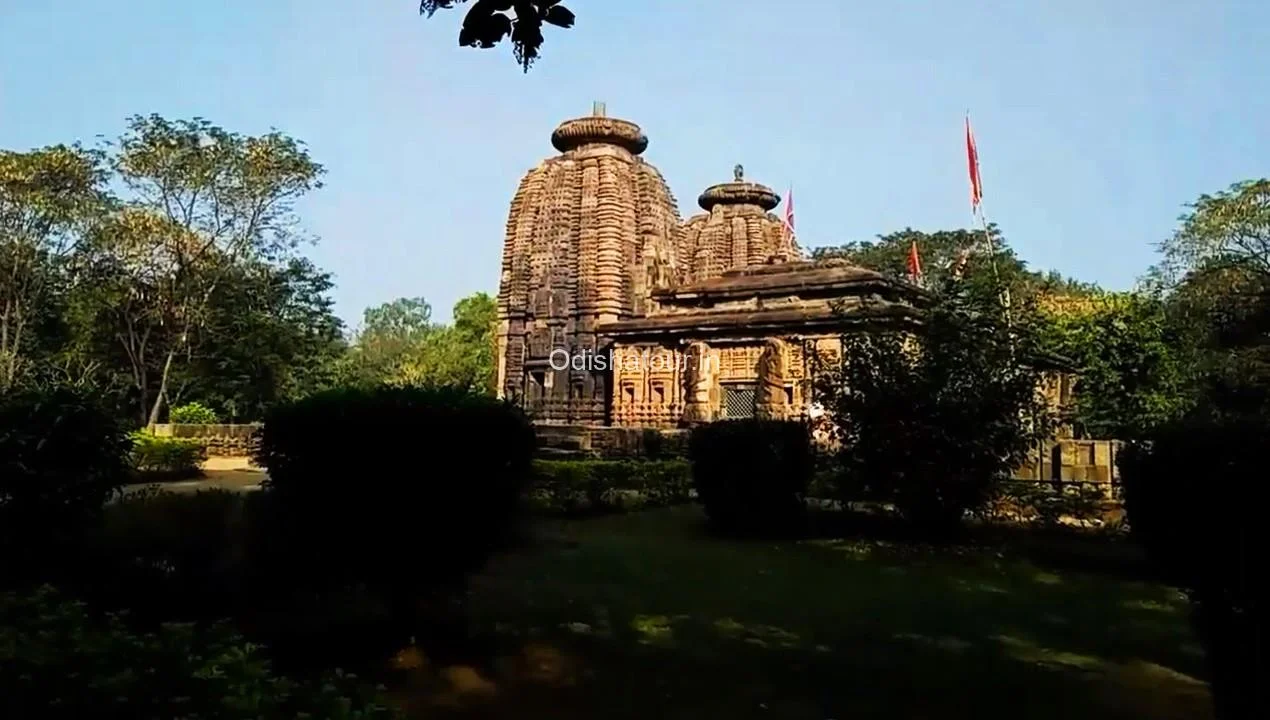
Boudh — The Town Buddha Named, Where Twin Temples Guard the Mahanadi
Introduction
Few Indian towns carry their namesake as literally as Boudh. Named directly after Gautam Buddha, this small Odisha district on the banks of the Mahanadi River is home to a rare trio of towering Buddha statues carved in stone and sandstone — a genuine clue that this quiet corner of Odisha was once a thriving center of Buddhist culture. Layer on twin 9th-century temples built by Bhanja kings, a riverside royal palace, and an ancient "fort of demons" waiting to be excavated, and Boudh reveals itself as one of Odisha's most historically underrated small towns.
History
Boudh's early history remains genuinely obscure, but the discovery of remarkable Buddhist statues across the district has led scholars to believe this region was once an important Buddhist centre of ancient Orissa. Epigraphic records confirm that by the middle of the 8th century AD, the Boudh region came under the rule of the Bhanja dynasty, forming part of what was then known as Khinjali Mandala.
According to historical records, the earliest known ruler of this Bhanja family, Nettabhanja, initially ruled the Dhenkanal region independently before his successors migrated toward the Boudh-Sonepur area and established Khinjali Mandala, governing as feudatories of the Bhauma Karas of Tosali. The Sonepur copper plate inscription of Satrubhanja Dev, son of Silabhanja, mentions Khinjali Mandala by name for the first time, leading historians to credit Silabhanja Dev as the mandala's founder. Centuries later, under princely-state rule, Raja Jogindra Dev governed Boudh as a benevolent and generous ruler, commissioning the town's landmark riverside palace during his reign.
Geography
Boudh sits in the central part of Odisha, with the mighty Mahanadi River flowing along its southern side, also forming the district's northern and western boundary. Directly across the river lies Balangir district, while Subarnapur borders Boudh to the northwest and Angul to the northeast, with Nayagarh to the southeast and Kalahandi to the southwest — placing Boudh at a genuine crossroads of Western and Central Odisha.
The district's terrain includes notable natural features like the curved, 70-foot Dambarugada mountain, down which the Mahanadi flows in a visually striking descent, and the Nayakpada Cave, located about 12 km from town. Waterfalls like Latajharan and Sargipali add further scenic variety to the district's landscape. Boudh's climate follows a typical Odisha pattern, with hot summers, a defined monsoon, and comfortably cool winters.
Culture and Traditions
Boudh's culture reflects a genuine confluence of Saivism, Vaishnavism, and Buddhist heritage, a rare religious layering for a district of its size. Odia is the primary language spoken, and daily life remains closely tied to the Mahanadi River, which has shaped both the district's agriculture and its historical settlement patterns.
The presence of ancient Buddha statues alongside Shiva and Vishnu temples reflects centuries of religious coexistence in the region, a legacy still visible in local worship practices today. Boudh's royal history under rulers like Raja Jogindra Dev also left a lasting civic imprint, with the town's palace and surrounding institutions continuing to shape local identity and civic pride.
Architecture
Boudh's architecture is genuinely distinctive for a town its size, blending ancient Buddhist sculpture, 9th-century Bhanja-era temple construction, and royal palace design. The town is home to a trio of tall Buddha idols and flying Gandharvas, chiselled in stone and sandstone, with one statue located in the town itself and two others at Shyamsundarpur and Pragalpur — a rare and striking indicator of the region's Buddhist past.
The Chari Sambhu Temple (also called Gandharadi Temple), located at Gandharadi village on the banks of the Mahanadi, showcases twin temples of Nilamadhava and Siddheswar, built on a single platform under the patronage of Bhanja rulers in the 9th century AD — a rare architectural pairing where Vishnu and Shiva are worshipped separately within the same temple premises. The Rameswar Temple, built in the 9th century by Boudh king Rana Bhanjadev, resembles the famous Mukteswar Temple of Bhubaneswar, its star-shaped design and triple-temple arrangement showcasing exceptional stone carving. The Jogindra Villa Palace, built during the reign of Raja Jogindra Dev, rounds out the town's architectural heritage with its commanding riverside views.
Famous Places
Rameswar Temple
Built in the 9th century by Boudh king Rana Bhanjadev, this striking star-shaped temple houses Lord Dhabaleswara Siba, Swapnesvara, Paschima Somonatha, and Lord Bhubaneswar as its presiding deities. Its exceptional stone carvings and triple-temple arrangement, similar to Bhubaneswar's Mukteswar Temple, draw thousands of devotees and visitors each year.
An Architectural Cousin of Mukteswar
The temple's design closely echoes the celebrated Mukteswar Temple in Bhubaneswar, making it a compelling stop for anyone interested in Kalinga-era temple architecture.
Best Time to Visit
Early mornings offer the most peaceful viewing of the temple's intricate carvings, before the site sees its larger daily crowds of devotees.
Quick Tip
Combine your visit here with a walk along the nearby Mahanadi riverbank for a fuller sense of the town's setting.
Chari Sambhu Temple (Gandharadi Temple)
Located about 15-16 km from Boudh at Gandharadi village, this 9th-century twin temple complex houses Nilamadhava and Siddheswar on a single platform, built under the patronage of Bhanja rulers. A statue of Madhab tops one temple while a Shiva Linga crowns the other — a rare and specific architectural detail found in few other Odisha temples.
Jogindra Villa Palace (Boudh Rajbati)
The palace of Boudh's former ruler, built during the reign of the benevolent Raja Jogindra Dev, this picturesque riverside structure commands a fine view of the Mahanadi and remains one of the oldest royal palaces in Odisha still standing today.
Boudh Buddha Statues
A trio of tall Buddha idols and flying Gandharvas chiselled in stone and sandstone, with one located in Boudh town itself and two others at nearby Shyamsundarpur and Pragalpur, offering rare physical evidence of the region's ancient Buddhist heritage.
Dambarugada Mountain
A curved, 70-foot mountain located about 20 km from Boudh town on the Boudh-Balangir road, offering a visually striking sight as the Mahanadi River flows down its slopes.
Asurgarh
An ancient archaeological site near Manamunda in Boudh district, whose name literally means "fort of demons." Excavations here have begun shedding light on ancient civilizations that once existed in this part of Western Odisha.
Famous Dishes
Pakhala
A fermented rice dish eaten with vegetables and curd, cherished across Boudh and the wider Odisha region for its cooling effect during the district's hot summer months.
Dalma
A hearty lentil and vegetable stew, forming a comforting staple of everyday Odia meals found throughout Boudh's local eateries.
Chakuli Pitha
A savory rice-and-lentil pancake typically eaten for breakfast, representing the everyday food culture of Boudh's surrounding villages.
Local Riverside Fish Preparations
Given Boudh's location along the Mahanadi River, freshwater fish dishes remain a genuine local specialty, best enjoyed at eateries close to the riverbank.
Famous Personalities
Raja Jogindra Dev
A former ruler of the princely state of Boudh, Raja Jogindra Dev is remembered as a benevolent and generous king who commissioned the construction of the Jogindra Villa Palace, one of the district's most significant architectural landmarks, offering a commanding view of the Mahanadi River.
A Ruler Remembered for Generosity
Local accounts consistently describe Jogindra Dev as a kind and giving ruler, a reputation that has endured in Boudh's civic memory long after princely rule ended.
Connection to Boudh
His legacy remains physically present in the town today through the palace that bears his name, a structure that continues to anchor Boudh's identity as a former princely capital.
Fast Fact
The palace he built remains one of the oldest surviving royal palaces in Odisha, a rare architectural survivor from the state's princely era.
Silabhanja Dev
Credited by historians as the founder of Khinjali Mandala, the medieval administrative division that included the Boudh region, Silabhanja Dev's legacy is documented through the Sonepur copper plate inscription of his son, Satrubhanja Dev, marking him as a foundational figure in the district's early recorded history.
Festivals
Durga Puja and Kali Puja
Major festivals celebrated with genuine devotion across Boudh district, particularly significant at sites like the Bhairabi Peetha, where both festivals form the central religious calendar of the temple.
Rath Yatra
Celebrated with community enthusiasm across Boudh, this chariot festival brings devotees together in a tradition shared across much of Odisha's temple towns.
Nuakhai
An important harvest festival celebrated across Boudh district, marking the arrival of the new rice crop with community feasting and traditional rituals tied to the region's agricultural identity.
Things to Do
- Visit the Rameswar Temple, admiring its star-shaped 9th-century architecture.
- Explore Chari Sambhu Temple at Gandharadi, tracing its rare twin-temple design.
- Tour Jogindra Villa Palace, taking in its riverside views and royal history.
- See the ancient Buddha statues, both in Boudh town and at nearby Shyamsundarpur.
- Visit Dambarugada Mountain, watching the Mahanadi flow down its curved slopes.
- Explore the Asurgarh archaeological site, tracing Western Odisha's ancient past.
- Take a day trip to Latajharan or Sargipali Waterfalls, for a scenic natural escape.
Where to Eat, Shop, and Stay
Eat: Local eateries across Boudh serve authentic Odia staples like Dalma and Pakhala, alongside fresh riverside fish preparations reflecting the town's location on the Mahanadi.
Shop: Boudh's local markets offer everyday goods and regional produce, giving visitors a genuine taste of the district's small-town commerce.
Stay:
- Budget: Simple guesthouses and small hotels cover most short-stay needs for travelers passing through.
- Mid-range: A handful of comfortable hotels near the town center offer better amenities for a more relaxed stay.
- Luxury: For upscale stays, travelers often base themselves in nearby Bhubaneswar or Sambalpur, both reachable from Boudh by road.
What is Boudh Famous For?
Boudh is best known for its rare ancient Buddha statues, its 9th-century twin temples at Gandharadi, and its riverside royal palace built by Raja Jogindra Dev. It's also recognized for its confluence of Saivism, Vaishnavism, and Buddhist heritage, and its dramatic Mahanadi riverside setting.
Best Time to Visit
October to March is the ideal window to visit Boudh, offering pleasant, comfortable weather perfect for temple visits and outdoor exploration. Summers can turn quite hot, and the monsoon season brings heavy rainfall, both best avoided for outdoor sightseeing.
How to Reach
By Air: The nearest airport is in Bhubaneswar, roughly 169 to 240 km away depending on the route taken.
By Rail: The nearest railway station is Rairakhol, about 30 km from Boudh town.
By Road: Boudh is well connected by road to Bhubaneswar via Nayagarh or Angul, with regular bus services available.
Nearby Places
Sonepur
A neighboring district known for its own temple heritage and cultural traditions, offering a natural extension to a Boudh-based Western Odisha trip.
Why It Complements a Boudh Trip
Given both districts' shared Mahanadi riverside geography and temple heritage, visiting Sonepur deepens the same regional cultural narrative that Boudh begins.
Getting There
Sonepur is well connected to Boudh by road, making a same-day visit easy.
Quick Tip
Combine a Boudh morning at Rameswar Temple with a Sonepur afternoon exploring its own temple circuit for a well-rounded regional day trip.
Balangir
Located directly across the Mahanadi River from Boudh, Balangir offers its own royal heritage and Sambalpuri saree tradition, extending Boudh's own riverside historical narrative.
Angul
Angul is a neighboring district known for its Jagannath Temple atop Sunasagad Hill and its industrial identity, adding further depth to a Central Odisha heritage circuit.
Best Duration for a Trip
1 to 2 days is generally sufficient to comfortably explore Boudh's temples, palace, and Buddha statues. Travelers wanting to include Gandharadi's twin temples or nearby waterfalls can extend this into a fuller 3-day regional trip.
Travel Tips
- Visit between October and March for the most comfortable sightseeing weather.
- Dress modestly and respect local customs when visiting temples and religious sites.
- Carry cash, as smaller markets and eateries may not accept digital payments.
- Hire a local taxi for easier movement between Boudh's scattered temples and natural sites.
- Set aside proper time for Gandharadi, given the historical density of its twin temples.
- Carry water and sun protection if visiting outdoor sites like Dambarugada Mountain or Asurgarh.
Why Visit Boudh?
Boudh offers a genuinely rare combination — a town literally named after Buddha, home to ancient stone statues that hint at a forgotten Buddhist past, paired with 9th-century Bhanja-era temples and a riverside royal palace. It rewards travelers looking for authentic, uncrowded heritage exploration along one of Odisha's most scenic stretches of the Mahanadi.
Conclusion
Boudh may be one of Odisha's smallest districts, but it holds a genuinely rich concentration of history, architecture, and riverside beauty. From its ancient Buddha statues to the twin temples of Gandharadi, and from Jogindra Villa Palace's riverside views to the curved slopes of Dambarugada Mountain, this quiet Mahanadi town rewards travelers willing to look beyond Odisha's more famous heritage circuits. A short visit here, paired with a plate of warm Dalma and a walk along the riverbank, offers a genuinely soulful glimpse into one of Odisha's most underrated corners.
"Travel is the only thing you buy that makes you richer."