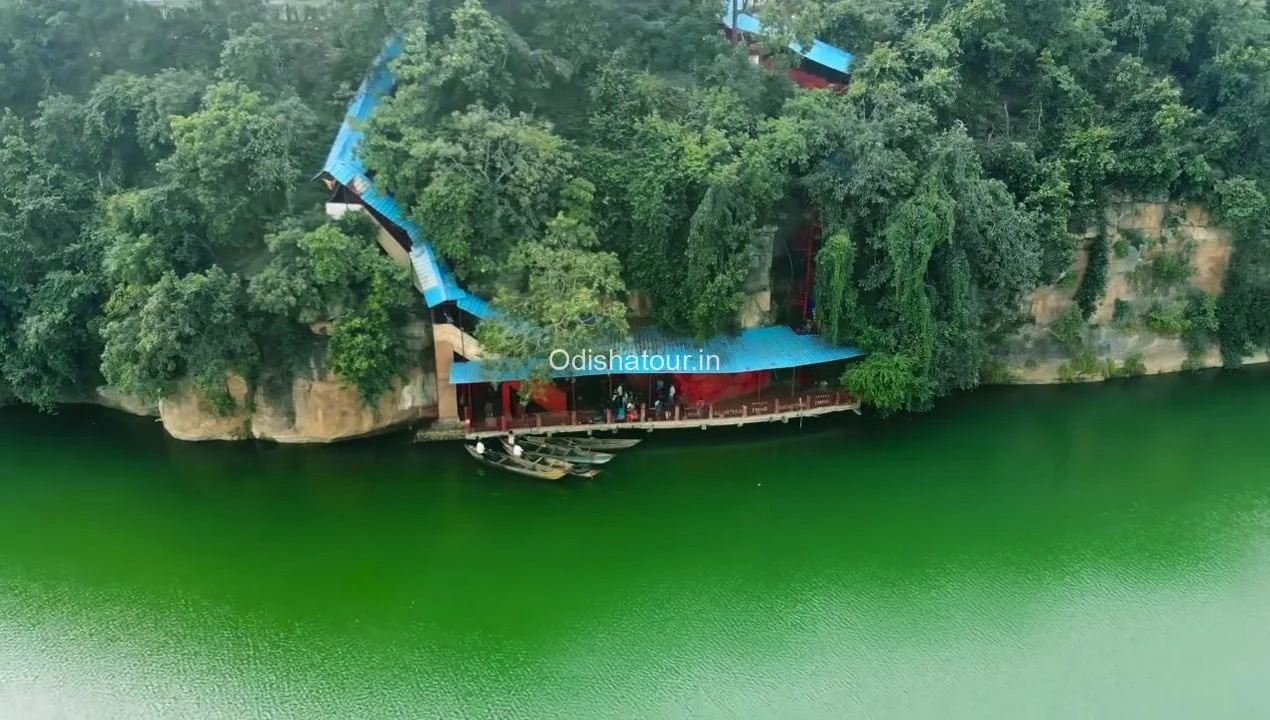
Jharsuguda — Odisha's Powerhouse, Where Ancient Rock Art Meets Modern Industry
Introduction
Jharsuguda wears the nickname "Power House of Orissa" with genuine pride — this is a district of thermal power plants, steel, and cement, humming with the energy of modern industrial Odisha. But step past the factories and something unexpected unfolds: rock paintings and lithography dating back to prehistoric times at Bikramkhol, the ruined hill fort of Ulapgarh, a cave-shrine to a fierce Shakti goddess, and cascading waterfalls tucked into the Western Odisha countryside. Jharsuguda is proof that even the most industrially defined districts can hold surprisingly deep layers of natural beauty and ancient history, if you know where to look.
History
Jharsuguda was originally known as "Jharguda," a name that gradually evolved into its present form over time. The town's most storied historical connection is to the freedom struggle — Surendra Sai, born in nearby Khinda village on the road to Jharsuguda in 1809 and remembered as the "Sivaji of Odisha," led a fierce revolution against British rule from this region, assembling thousands of protesters before his eventual capture and imprisonment.
Jharsuguda's more recent past was shaped by feudal-era zamindari estates — the district itself was formally created on 1st January 1994, carved out of Sambalpur district through the amalgamation of the erstwhile zamindaris of Rampur, Kolabira, Padampur, and Kudabaga. The Jagannath Temple of Kukurjanga, just 5 km from Jharsuguda town, offers a tangible link to this earlier era — constructed in 1570 by Madhusudan Singh, the Gauntia of Kukurjanga, during the reign of Chhatra Sai Dev, the 7th King of Sambalpur State, and later rebuilt in 1813. As mineral-rich land rich in coal reserves, Jharsuguda gradually transformed into one of Odisha's most industrially developed districts over the 20th century.
Geography
Jharsuguda sits in Western Odisha, bordering Chhattisgarh, positioned along a major railway junction that connects it to all parts of India. The district's terrain includes scenic hill country and forested stretches, with the Ib and Brahmani rivers and their tributaries shaping the local landscape and contributing to the district's rich mineral deposits.
The wider district is known for the striking Koilighugar Waterfall in Lakhanpur block, one of the most spectacular natural sights in the region, alongside the Adyaswambhu picnic spot. Historical sites like the hill fort ruins of Ulapgarh, the ancient rock shelters at Bikramkhol, and Ushakothi cave add further geographical and archaeological depth. Jharsuguda enjoys a pleasant climate from October to March, making this the ideal season to explore its misty cascades, sacred shrines, and peaceful countryside.
Culture and Traditions
Jharsuguda is described as "a beautiful diaspora of different origins of people from across India," a genuine cultural mix that makes the district unique compared to many of its Odisha neighbors. Sambalpuri is the mother tongue of the district, tying its everyday culture closely to the wider Western Odisha linguistic and folk tradition.
The district is rich in cultural heritage, celebrating both the common fairs and festivals found across the state alongside distinct local traditions like the Ranjta Festival and the unique Sabita Rathjatra of Kukurjanga. Industrial development has also shaped local culture significantly, with generations of families connected to the district's mining, power, and manufacturing economy, blending traditional Western Odisha customs with the rhythms of modern industrial life.
Architecture
Jharsuguda's architecture spans prehistoric rock art, medieval temple construction, and hill fort ruins. The rock paintings and lithography at Bikramkhol represent the district's oldest artistic heritage, offering rare physical evidence of prehistoric human settlement in this part of Western Odisha.
The Jagannath Temple of Kukurjanga, built in 1570 using brick construction typical of the Sambalpur region, stands 45 feet tall with a rectangular base, accompanied by a 32-foot Aruna Stambha and 6-foot Garuda Stambha in front — one of the district's most architecturally significant religious structures. The Ramchandi Temple, an ancient Shaktipitha carved into a cave near Rampur, reflects an entirely different architectural tradition, while the ruined hill fortifications of Ulapgarh and Kolabira Fort speak to the district's earlier era of local zamindari rule.
Famous Places
Koilighugar Waterfall
Located in Lakhanpur block, this is widely regarded as one of the most spectacular natural sights in the Jharsuguda region, drawing large numbers of picnickers and nature lovers throughout the cooler months.
A Seasonal Natural Spectacle
The waterfall's flow and scenic surroundings are at their most striking during and shortly after the monsoon, offering visitors a lush, cascading centerpiece to the district's countryside.
Best Time to Visit
The pleasant climate from October to March makes this the ideal window for a comfortable visit, avoiding both the district's hot summers and the heavy monsoon rains.
Quick Tip
Combine your visit here with the nearby Adyaswambhu picnic spot for a fuller day of nature exploration in Lakhanpur block.
Ramchandi Temple (Rampur Cave Shrine)
Located about 10 km from Jharsuguda town, this important Shaktipitha is set inside a cave, where Devi Ramchandi has been worshipped as the presiding deity of the Rampur region since time immemorial. The shrine's fame extends well beyond Rampur, drawing pilgrims from across Western Odisha.
Jhadeswar Temple
Famous for its self-appeared Shivalingam, located near the Jharsuguda railway station, this temple was historically worshipped during the reign of Zamindar Govind Singh. Since 1916, it has hosted an annual Shivratri fair drawing thousands of devotees each year.
Shree Pahadeswar Temple
Situated atop a small hill on the eastern side of Jharsuguda, this temple was constructed in 1921 by a Gujarati contractor and offers a bird's-eye view of the town from its hilltop location, alongside a natural surrounding garden and ashram.
Bikramkhol Rock Shelters
An archaeologically significant site featuring ancient rock paintings and lithography, offering history enthusiasts a rare glimpse into the prehistoric human presence in this part of Western Odisha.
Ulapgarh and Kolabira Fort Ruins
The remains of hill forts tied to the district's earlier zamindari-era history, offering visitors a tangible connection to Jharsuguda's feudal past before its formation as a modern industrial district.
Famous Dishes
Pakhala
A fermented rice dish eaten with vegetables and curd, cherished across Jharsuguda and the wider Odisha region for its cooling effect during the district's hot summer months.
Dalma
A hearty lentil and vegetable stew, forming a comforting staple of everyday Odia meals found throughout Jharsuguda's local eateries.
Chakuli Pitha
A savory rice-and-lentil pancake typically eaten for breakfast, representing the everyday food culture of Jharsuguda's surrounding villages.
Sambalpuri-Style Local Specialties
Given Jharsuguda's Sambalpuri linguistic and cultural identity, dishes reflecting the wider Western Odisha culinary tradition remain a genuine highlight of the district's everyday food scene.
Famous Personalities
Laxminarayan Mishra
Born on 11th April 1904 in Nandapada, Sambalpur, Pandit Laxminarayan Mishra was a prominent Indian freedom fighter, politician, educationist, and writer, deeply involved in the Indian Independence Movement, Quit India Movement, and Non-Cooperation Movement. He was tragically assassinated in Jharsuguda on 30th May 1961, and a statue in his memory stands today at Laxminarayan College, Jharsuguda.
A Life Devoted to Independence and Education
Mishra's decades of activism spanned from 1919 to 1961, reflecting a lifelong commitment to both India's freedom struggle and the educational advancement of his region.
Connection to Jharsuguda
Though born in Sambalpur, Mishra's tragic death in Jharsuguda ties him permanently to the district, commemorated today through the college that bears his name and his memorial statue on its campus.
Fast Fact
Laxminarayan College in Jharsuguda continues to stand as a living tribute to his legacy, educating generations of students in the very district where he lost his life.
Jagadish Mohanty
A renowned Odia writer considered a trendsetter in modern Odia fiction, Jagadish Mohanty lived and passed away on 29th December 2013 in Belpahar, part of Jharsuguda district. He received the prestigious Sarala Award in 2003 and the Odisha Sahitya Akademi Award in 1990 for his novel Kaniska Kaniska, alongside the Dharitri Award and other honors for his celebrated works including Suna Ilisi.
Festivals
Sabita Rathjatra
A unique festival organized annually on Makar Sankranti by the Jagannath Temple committee of Gumadera, Belpahar, 22 km from Jharsuguda town. The chariot of Lord Jagannath, named the "Sun Chariot," carries the deities to their Mausimaa's house, with thousands of pilgrims gathering to witness the ceremonial "Harihara Bheta," the meeting of the Gods, later in the day.
Shivratri Mela at Jhadeswar Temple
Held annually since 1916 at the Jhadeswar Temple near Jharsuguda railway station, this fair draws thousands of devotees each day for peaceful worship of the temple's self-appeared Shivalingam.
Ranjta Festival
A distinct local festival celebrated in Jharsuguda district, reflecting the region's unique blend of cultural and religious traditions beyond the common festivals shared across Odisha.
Things to Do
- Visit Koilighugar Waterfall, one of the region's most spectacular natural sights.
- Explore the Ramchandi cave shrine, an important Shaktipitha near Rampur.
- Visit Jhadeswar Temple, especially during its annual Shivratri fair.
- Climb to Shree Pahadeswar Temple, for panoramic views over Jharsuguda town.
- Discover the Bikramkhol rock shelters, tracing prehistoric human history.
- Explore the ruins of Ulapgarh and Kolabira Fort, tied to the district's zamindari past.
- Attend Sabita Rathjatra at Gumadera, if your visit timing allows.
Where to Eat, Shop, and Stay
Eat: Local eateries across Jharsuguda serve authentic Odia staples like Dalma and Pakhala, alongside Sambalpuri-style dishes reflecting the district's Western Odisha food culture.
Shop: Shopping in Jharsuguda offers a genuine glimpse into the lifestyle of Western Odisha, blending traditional local produce and crafts with the everyday commerce of an industrial town.
Stay:
- Budget: Simple guesthouses and small hotels cover most short-stay needs for travelers passing through.
- Mid-range: A handful of comfortable hotels near the town center and railway junction offer better amenities for a more relaxed stay.
- Luxury: For upscale stays, travelers often base themselves in nearby Sambalpur or Rourkela, both well connected to Jharsuguda by road and rail.
What is Jharsuguda Famous For?
Jharsuguda is best known as the "Power House of Orissa" for its thermal power plants and mineral wealth, alongside natural attractions like Koilighugar Waterfall and the ancient rock art of Bikramkhol. It's also recognized for its connection to freedom fighter Surendra Sai and its role as a major railway junction well connected to all of India.
Best Time to Visit
October to March is the ideal window to visit Jharsuguda, offering a pleasant climate perfect for exploring waterfalls, temples, and historical sites. Summers can turn quite hot, and the monsoon brings substantial rainfall, both best avoided for outdoor sightseeing.
How to Reach
By Air: Jharsuguda has its own airport, Veer Surendra Sai Airport, connecting the district to major Indian cities.
By Rail: Jharsuguda is a major railway junction, exceptionally well connected by train to all parts of India, making rail travel a popular and practical choice for visitors.
By Road: Jharsuguda has a robust network of roads, with regular bus services linking it to nearby towns and districts across Odisha.
Nearby Places
Sambalpur
A neighboring district known for its own collection of temples, the Samaleswari Temple, and Sambalpuri handloom heritage, making it a natural extension to a Jharsuguda-based Western Odisha trip.
Why It Complements a Jharsuguda Trip
Given both districts' shared Sambalpuri cultural and linguistic heritage, visiting Sambalpur deepens the same regional narrative that Jharsuguda begins.
Getting There
Sambalpur is well connected to Jharsuguda by road and rail, making a same-day visit easy.
Quick Tip
Combine a Jharsuguda morning at Koilighugar Waterfall with a Sambalpur afternoon exploring its own temple circuit for a well-rounded regional day trip.
Rourkela
Known for its massive steel plant, Rourkela also attracts visitors with the serene Hanuman Vatika garden complex and the scenic Vedvyas Temple at the confluence of three rivers, offering a unique mix of industrial scale and natural beauty.
Raigarh (Chhattisgarh)
Just across the state border, Raigarh offers exquisite Kosa silk and Dhokra metal crafts, along with a reputation as a hub for classical music and dance, making it a rewarding cross-state extension for travelers interested in Central India's tribal art forms.
Cuttack
Odisha's historic "Millennium City," Cuttack is home to the ruins of Barabati Fort and world-famous silver filigree markets. It lies well to the east, roughly 300 km from Jharsuguda, so it's best treated as a separate leg of a longer Odisha itinerary rather than a short side trip.
Best Duration for a Trip
1 to 2 days is generally sufficient to comfortably explore Jharsuguda's waterfalls, temples, and historical sites. Travelers wanting to include Sambalpur or Rourkela can extend this into a fuller 3-day regional trip.
Travel Tips
- Visit between October and March for the most comfortable sightseeing weather.
- Dress modestly and respect local customs when visiting temples and cave shrines.
- Carry cash, as smaller markets and eateries may not accept digital payments.
- Hire a local taxi for easier movement between Jharsuguda's scattered waterfalls and historical sites.
- Time your visit around Sabita Rathjatra or the Shivratri Mela for a richer cultural experience.
- Carry sturdy footwear if visiting the hilltop Pahadeswar Temple or the Bikramkhol rock shelters.
Why Visit Jharsuguda?
Jharsuguda offers a genuinely unexpected contrast — an industrial powerhouse of modern Odisha that still holds prehistoric rock art, ruined hill forts, cave shrines, and cascading waterfalls within easy reach of its factories and railway junction. It rewards travelers looking for authentic, uncrowded natural and historical exploration in a district most visitors overlook entirely.
Conclusion
Jharsuguda may be best known as Odisha's industrial powerhouse, but it holds a genuinely rich blend of prehistoric art, temple heritage, and natural beauty beneath that reputation. From the ancient rock paintings of Bikramkhol to the cascading waters of Koilighugar, and from its connection to freedom fighter Surendra Sai to the sacred cave shrine of Ramchandi, this Western Odisha district rewards travelers willing to look beyond its industrial label. A short visit here, paired with a plate of warm Dalma and a walk through its old fort ruins, offers a genuinely soulful glimpse into one of Odisha's most surprising and underrated corners.
"Travel is the only thing you buy that makes you richer."