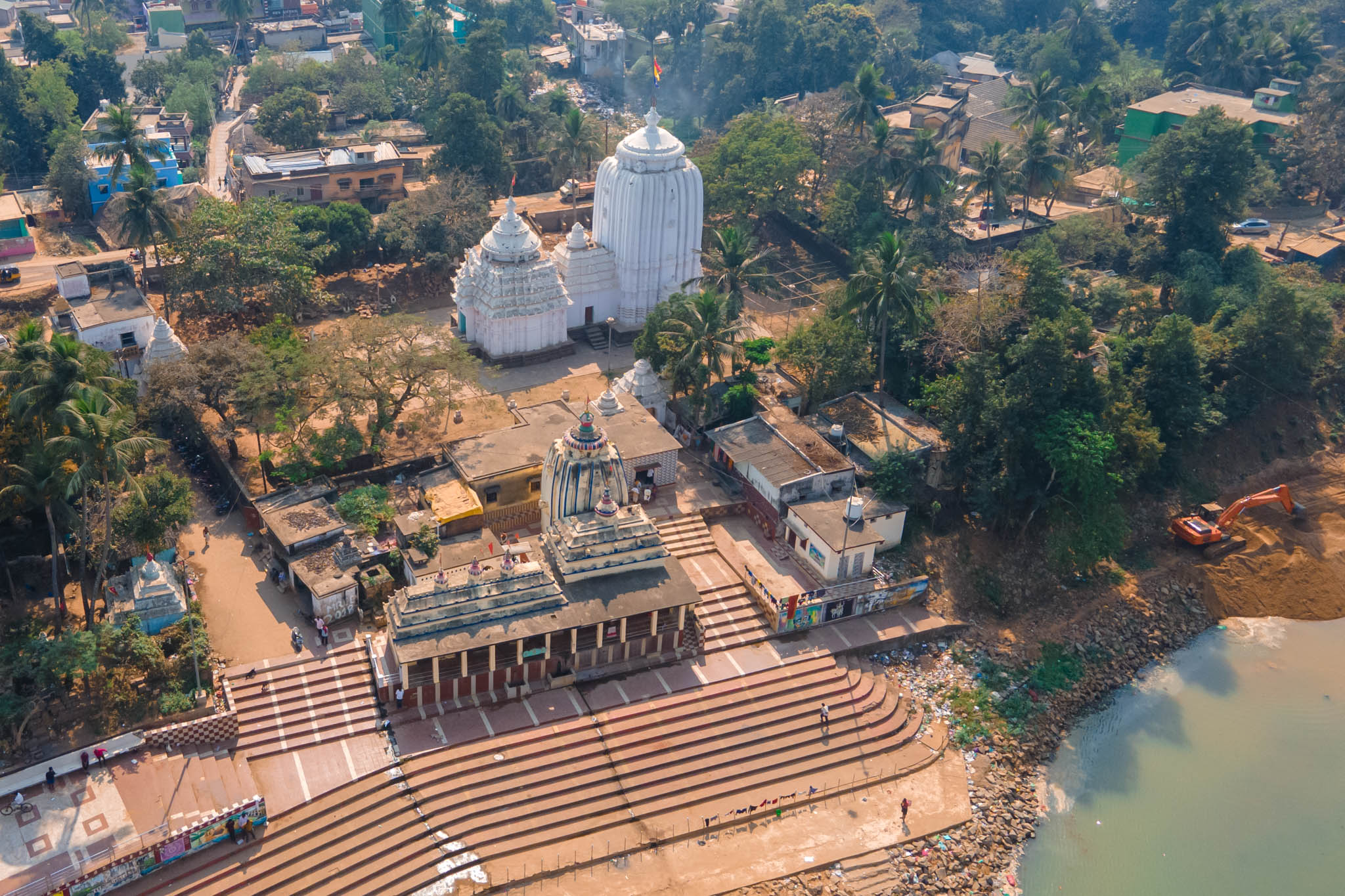
Jajpur — Biraja Kshetra, the Ancient Capital Where Sati's Navel Fell
Introduction
Jajpur carries a weight few Odisha towns can match — this was once the ancient capital of Odisha itself, and today it remains one of the holiest of the 51 Shakti Peethas, the sacred sites where, according to legend, parts of the goddess Sati's body fell to earth. Here, it was her navel. Wrapped in a half-circle by the Baitarani River, this compact town has earned the nickname Navigaya, drawing pilgrims for ancestral rites from across Odisha and beyond. But Jajpur's story doesn't stop at Hindu devotion — the district also holds a third of Odisha's celebrated Buddhist Diamond Triangle, making it one of the rare places in India where Shaktism, Vaishnavism, Shaivism, and Buddhism have coexisted for over a thousand years.
History
Jajpur's name traces back to King Jajati Keshari, whose name gradually evolved into "Jajpur" over the centuries. The town once served as the capital of ancient Odisha, making it one of the state's most historically significant urban centers long before Cuttack or Bhubaneswar rose to prominence.
Declared a heritage district, Jajpur's identity as Biraja Khetra — one of Odisha's most ancient cities, rich in archaeological remains — reflects its long-standing reputation as an important Tantra Kshetra within the state. The district also played a genuine role in modern Indian history: freedom fighter and statesman Braja Sundar Das, born in Kantabania near Jajpur, lobbied tirelessly for the unification of Odia-speaking areas, a struggle that culminated in the creation of Odisha as a separate state on 1st April 1936, celebrated today as Utkal Dibasa. Long before that, between the 5th and 13th centuries CE, the region flourished as one of India's most important Buddhist learning centers, with sites like Ratnagiri drawing scholars and monks from across the Mahayana and Vajrayana traditions.
Geography
Jajpur town sits roughly 92 km from Cuttack, 72 km further to Bhubaneswar, and about 337 km from Kolkata, positioned on the banks of the Baitarani River, which wraps the town in a half-circle, with a high-level canal completing the other half. This distinctive river-and-canal geography gives Jajpur a genuinely defined, almost island-like urban layout.
The wider district's terrain includes notable natural features like the Langudi Hills, an ancient Buddhist monastery site, and forested areas around Sukinda Block, home to the scenic Ashokjhar Waterfall, a popular trekking destination surrounded by dense forest and hills. The district's climate follows a typical Odisha pattern, with hot summers, a substantial monsoon, and comfortably cool winters best suited for temple visits and archaeological exploration.
Culture and Traditions
Jajpur's culture is deeply anchored in its identity as Biraja Kshetra, drawing devotees from across Odisha and neighboring states who come specifically to perform Shraddha rituals on the banks of the Baitarani River — a practice that has earned the town its alternate name, Navigaya, evoking Bihar's sacred Gaya as a place for ancestral rites. Odia is the primary language spoken throughout the district.
Religious coexistence defines Jajpur's cultural fabric more than perhaps any other Odisha district — different branches of Hinduism, including Vaishnavism, Shaivism, and Shaktism, have flourished here side by side, while the roots of both Jainism and Buddhism remain firmly entrenched in the district's soil. This genuine religious plurality is reflected annually in the Jajpur Mahotsav, a cultural festival featuring local performances, celebrity acts, and community fairs that bring the district's diverse heritage to life.
Architecture
Jajpur's architecture spans some of Odisha's oldest surviving religious structures. The Biraja Temple, built in the 13th century and dedicated to Goddess Biraja (also called Girija Devi), stands as the town's architectural and spiritual centerpiece — one of the 51 Shakti Peethas, marking the spot where Sati's navel is believed to have fallen.
The district's Buddhist architectural heritage is equally significant, comprising the Diamond Triangle of Ratnagiri, Udayagiri, and Lalitgiri — archaeological sites featuring grand monastery complexes, central stupas surrounded by hundreds of votive stupas, and finely carved sculptures of the Buddha and Bodhisattvas, believed to have been built for the Mahayana sect during the Gupta Dynasty. Further architectural variety appears at Chhatia Bata, a Jagannath shrine considered the second Shree Kshetra of Odisha, and Dasaswamedh Ghat, a major temple complex on the Baitarani River built during the time of King Jajati Keshari.
Famous Places
Biraja Temple
Dedicated to Goddess Biraja, this 13th-century temple is one of the 51 Shakti Peethas of Hindu tradition and considered the most sacred site in Jajpur. The main deity, mounted on a lion, carries a spear in one hand and holds the tail of Mahishasur in the other, drawing devotees for Durga Puja and Kali Puja celebrations throughout the year.
The Mother of All Temples
Locally described as "the Mother of All Temples," Biraja Temple's spiritual significance extends well beyond Jajpur district, drawing pilgrims from across Odisha and neighboring states.
Best Time to Visit
The temple can be visited throughout the year, though Durga Puja and Kali Puja see the largest gatherings of devotees and the most elaborate celebrations.
Quick Tip
Combine your visit here with nearby Dasaswamedh Ghat on the Baitarani River, where many pilgrims perform their ancestral Shraddha rituals.
Ratnagiri, Udayagiri, and Lalitgiri (Diamond Triangle)
Together forming Odisha's celebrated Buddhist Diamond Triangle, these three archaeological sites showcase monastery complexes, stupas, and sculptures dating from the 5th to 13th centuries CE. Ratnagiri, meaning "Hill of Jewels," was a major hub of Mahayana and Vajrayana Buddhist learning and remains the most significant of the three.
Chhatia Bata
Considered the second Shree Kshetra of Odisha, this Jagannath temple is steeped in local folklore holding that Lord Jagannath of Puri will appear here in his Kalki avatar during the Kali Yuga, making it a genuinely significant Vaishnav pilgrimage site.
Langudi Hills
An ancient Buddhist monastery site holding remains of sculptors, figurines, rock-cut stupas, and inscriptions, offering history enthusiasts a rewarding, lesser-visited stop within the district's Buddhist heritage circuit.
Ashokjhar Waterfall
Located in Sukinda Block, this scenic waterfall offers a beautiful trekking destination surrounded by dense forest and hills, providing a refreshing natural counterpoint to Jajpur's temple-and-archaeology-heavy sightseeing circuit.
Famous Dishes
Kakra Pitha
A signature Odia snack strongly associated with Jajpur, this dish remains a must-try specialty for visitors exploring the district's local food scene.
Pakhala
A fermented rice dish eaten with vegetables and curd, cherished across Jajpur and the wider Odisha region for its cooling effect during the district's hot summer months.
Dalma
A hearty lentil and vegetable stew, forming a comforting staple of everyday Odia meals found throughout Jajpur's local eateries.
Local Sweets and Snacks
Jajpur's local markets and sweet shops offer a range of traditional Odia snacks and desserts, best sampled fresh while exploring the town's temple lanes.
Famous Personalities
Braja Sundar Das
Born on 2nd July 1880 in Kantabania, Harekrushnapur, near Jajpur, Braja Sundar Das was an Indian statesman, freedom fighter, politician, poet, and social reformer who played a pivotal role in shaping Odisha's socio-political and cultural landscape. He lobbied tirelessly for the unification of Odia-speaking areas, a struggle that ultimately led to the creation of Odisha as a separate state on 1st April 1936.
A Founding Voice for Odisha Statehood
Das's decades-long advocacy for linguistic unification placed him among the key figures responsible for Odisha's very existence as an independent state within India.
Connection to Jajpur
His birthplace near Jajpur ties one of Odisha's most consequential statesmen directly to the district, reinforcing Jajpur's broader historical significance beyond its religious heritage.
Fast Fact
The day Odisha became a separate state, 1st April 1936, is celebrated annually as Utkal Dibasa, a direct legacy of the movement Das helped lead.
Gobind Das
Born on 30th June 1929 in Kalyanpur village, Jajpur district, Gobind Chandra Das was a respected Indian lawyer and writer who served as Advocate General of Odisha and later as President of the Odisha Bar Association. He also authored numerous acclaimed Odia novels, including Amabasya Ra Chandra, which was translated into multiple languages including Hindi.
Festivals
Durga Puja and Kali Puja
Celebrated with particular grandeur at Biraja Temple, these major festivals draw large numbers of devotees to Jajpur, with the temple's rituals forming the central religious calendar of the town.
Jajpur Mahotsav
An annual cultural festival featuring local performances, celebrity acts, and community fairs, showcasing Jajpur's rich cultural diversity and drawing visitors from across the state.
Pitru Paksha Observances
Given Jajpur's identity as Navigaya, the district sees a significant rise in pilgrim visitors during Pitru Paksha, when devotees perform Shraddha, pind daan, and Narayana Bali rituals believed to relieve Pitru dosha and bring peace to departed souls.
Things to Do
- Visit Biraja Temple, one of the 51 Shakti Peethas and Jajpur's spiritual heart.
- Explore the Buddhist Diamond Triangle at Ratnagiri, Udayagiri, and Lalitgiri.
- Perform or witness Shraddha rituals at Dasaswamedh Ghat on the Baitarani River.
- Visit Chhatia Bata, Odisha's second Shree Kshetra.
- Trek to Ashokjhar Waterfall, a scenic forested escape in Sukinda Block.
- Explore Langudi Hills, a lesser-visited ancient Buddhist monastery site.
- Attend Jajpur Mahotsav, if your visit timing allows, for the district's flagship cultural festival.
Where to Eat, Shop, and Stay
Eat: Local eateries across Jajpur serve authentic Odia dishes like Kakra Pitha, Dalma, and Pakhala, with fresh options widely available near the town's temple areas.
Shop: Jajpur is home to the GI-tagged Gopalpur Tussar Silk Fabric, a genuine regional specialty, alongside local handicrafts found in the district's traditional markets.
Stay:
- Budget: Simple guesthouses and small hotels near the temple areas cover most short-stay needs for pilgrims and travelers alike.
- Mid-range: Jajpur Road, near the town, has seen considerable recent development, with shopping malls, restaurants, and hotels offering better amenities.
- Luxury: For upscale stays, travelers often base themselves in nearby Cuttack or Bhubaneswar, both well connected to Jajpur by road and rail.
What is Jajpur Famous For?
Jajpur is best known as Biraja Kshetra, home to one of the 51 Shakti Peethas, and as the ancient capital of Odisha. It's also recognized as part of the Buddhist Diamond Triangle alongside Ratnagiri, Udayagiri, and Lalitgiri, its identity as Navigaya for ancestral Shraddha rituals, and its GI-tagged Gopalpur Tussar Silk.
Best Time to Visit
October to March is the ideal window to visit Jajpur, offering comfortable, pleasant weather perfect for temple visits and exploring the district's archaeological sites. Summers can turn hot and humid, and the monsoon brings substantial rainfall, both best avoided for outdoor sightseeing.
How to Reach
By Air: The nearest airport is Biju Patnaik International Airport in Bhubaneswar, roughly 100 km away.
By Rail: Jajpur Road, near Jajpur town, is well connected via the Jajpur-Keonjhar railway line to major Odisha cities.
By Road: Jajpur is 92 km from Cuttack and around 100 km from Bhubaneswar, with regular bus services connecting the town to both cities.
Nearby Places
Cuttack
About 92 km away, Cuttack offers the historic Barabati Fort, world-famous silver filigree markets, and a lively riverfront, making it a natural extension to a Jajpur-based heritage trip.
Why It Complements a Jajpur Trip
Given both towns' shared Baitarani-Mahanadi river-basin heritage, visiting Cuttack deepens the same regional historical narrative that Jajpur begins.
Getting There
Cuttack is well connected to Jajpur by road and rail, making a same-day or short extension trip easy.
Quick Tip
Combine a Jajpur morning at Biraja Temple with a Cuttack afternoon at Barabati Fort for a well-rounded regional day trip.
Bhubaneswar
Odisha's capital city, offering iconic temples, museums, and a much larger urban experience, making it a natural extension for travelers exploring beyond Jajpur.
Bhadrak
Bhadrak is a neighboring coastal district known for the Akhandalamani and Bhadrakali temples, offering a natural extension to a Jajpur-based Odisha heritage trip.
Best Duration for a Trip
1 to 2 days is generally sufficient to comfortably explore Jajpur's Biraja Temple, the Buddhist Diamond Triangle, and local markets. Travelers wanting a deeper archaeological experience across all three Diamond Triangle sites can extend this into a fuller 3-day trip.
Travel Tips
- Visit between October and March for the most comfortable sightseeing weather.
- Dress modestly and respect local customs when visiting Biraja Temple and other religious sites.
- Carry cash, as smaller markets and eateries may not accept digital payments.
- Hire a local taxi for easier movement between Jajpur town and the scattered Diamond Triangle sites.
- Plan Pitru Paksha visits well in advance if intending to perform Shraddha rituals, given the seasonal rise in pilgrim crowds.
- Set aside a full day for the Diamond Triangle, given the historical density spread across Ratnagiri, Udayagiri, and Lalitgiri.
Why Visit Jajpur?
Jajpur offers a genuinely rare religious and historical density — a town that was once Odisha's capital, remains one of Hinduism's 51 Shakti Peethas, and sits at the heart of one of India's most important ancient Buddhist regions, all within a single, compact district. It rewards travelers looking for spiritual depth and archaeological substance well beyond Odisha's more heavily visited temple circuits.
Conclusion
Jajpur may be a modest town by size, but it holds an extraordinary concentration of Odisha's sacred and historical identity. From the ancient sanctity of Biraja Temple to the Buddhist stupas of Ratnagiri, and from its role as Odisha's original capital to its connection with statesman Braja Sundar Das, this river-bound town rewards travelers willing to look beyond the state's more famous destinations. A short visit here, paired with a plate of Kakra Pitha and a walk along the Baitarani's ghats, offers a genuinely profound glimpse into the ancient, sacred heart of Odisha.
"Travel is the only thing you buy that makes you richer."