Koraput — Where Odisha's Highest Peak Meets Coffee Grown in the Clouds
Introduction
At nearly 3,000 feet, in a corner of Odisha most travelers never think to visit, mist rolls over pine-scented hills and the scent of freshly brewed local coffee drifts through the morning air. This is Koraput — home to Deomali, Odisha's highest peak, and Duduma, a thundering 175-metre waterfall so powerful locals call it the "Niagara of Odisha." But Koraput's real distinction lies in its people — this is one of India's most tribal-dense districts, home to the Bonda, Gadaba, Paraja, and Kandha communities, whose cultures have remained remarkably intact through centuries of shifting dynasties. Between ancient cave temples, colonial-era battle sites, and a freedom fighter's ultimate sacrifice, Koraput offers a side of Odisha defined by the Eastern Ghats rather than the coast.
History
Koraput's recorded history stretches back through a succession of ruling dynasties — the Satavahanas, Ikshvakus, Nalas, Ganga kings, and rulers of the Surya Vansha all held sway over the region at different points. In ancient times, the Nala dynasty governed from Pushkari, near present-day Umarkote, before the medieval period saw Nandapur rise as the capital under the Silavamsi kings and their successors from the solar dynasty.
Around the middle of the 17th century, Viravikrama Deo of the solar dynasty shifted his capital to Jeypore, which flourished into a prosperous town that remains one of Koraput's most important settlements today. The wider Deomali region itself was conquered by successive powers including the Chalukya, Chola, and Gajapati dynasties, each contributing temples and palaces, with references to the peak even appearing in the writings of the 7th-century Chinese traveler Hiuen Tsang. In more recent history, Koraput became a district of Odisha state on 1st April 1936, having previously been part of the Madras Presidency, and later, in October 1992, the erstwhile Koraput district was divided to create Malkangiri, Rayagada, and Nabarangpur districts alongside the present-day Koraput.
Geography
Koraput sits deep in southern Odisha, covering a substantial 8,807 sq km within the folds of the Eastern Ghats. The district's crown geographical feature is Deomali, Odisha's highest peak at 1,672 metres above sea level, roughly 70 km from Koraput town, its slopes rich in bauxite, limestone, and gemstone deposits and home to tribes including the Kandhas, Parajas, Bhumia, Malis, and Bhotias.
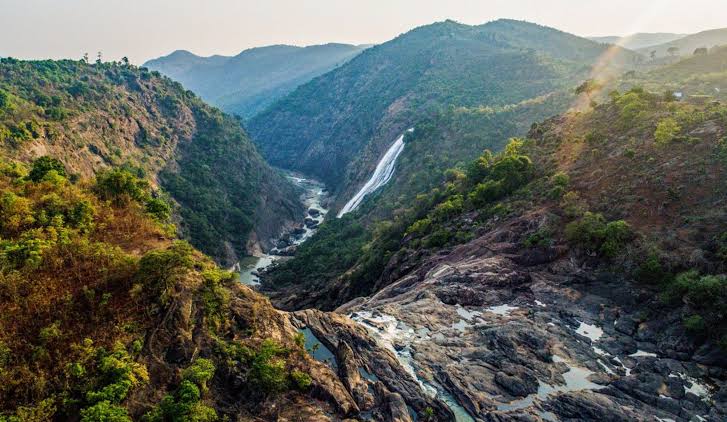
The district's dramatic terrain also produces Duduma Waterfall, a 175-metre cascade formed by the Machkund River straddling the Odisha-Andhra Pradesh border, nicknamed the "Twin Falls" for its water plunging into two separate pools. Further water features include the Kolab Dam and Jalaput Dam, alongside the scenic Maliguda Tunnel Bridge. Koraput's climate follows the Köppen Aw classification, with average summer temperatures reaching 38°C and winters cooling to a comfortable 12°C, and substantial annual rainfall of over 1,522 mm.
Culture and Traditions
Koraput sits at the heart of South Odisha's tribal belt, with Odia as the official language alongside significant local languages including Kui, Kuvi, Desia, Bodo Parja, and Gutob — a genuine reflection of the district's remarkable ethnic diversity. The tribal population here remains among the most culturally intact in all of India.
The Bonda, Gadaba, and Paraja communities, in particular, live near sites like Duduma Waterfall and maintain distinct customs, dress, dance, and craft traditions that have drawn anthropologists and travelers alike for generations. Weekly tribal markets, most famously the Onkadelli market held every Thursday, offer visitors a genuine, unfiltered window into this living culture. Koraput's more recent identity as a source of high-altitude, mist-grown coffee has also added a new agricultural thread to the district's cultural fabric.
Architecture
Koraput's architecture reflects both ancient temple construction and the district's tribal-centered heritage. The Jagannath Temple in Koraput town, known as Sabara Srikhetra, stands just a kilometer from the district headquarters and remains one of the most popular Jagannath temples in all of Odisha.
The Gupteswar Cave Temple, located on the banks of the Kolab River roughly 80 km from Koraput, houses a sacred Swayambhu Shivling within a limestone cave — its name literally meaning "the Hidden God," reflecting a genuinely striking natural-meets-religious architectural setting. The district's Tribal Museum, founded in 1992, offers a dedicated institutional space showcasing authentic tribal culture and craft, while structures like the Maliguda Tunnel Bridge and colonial-era sites near Jeypore add engineering and historical layers to the district's built heritage.
Famous Places
Deomali Hills
Odisha's highest peak at 1,672 metres, roughly 70 km from Koraput town, offering trekking, hang gliding, and mountaineering amid deep green forest rich in flora and fauna. Government-built eco-cottages near the summit allow visitors to stay overnight for the legendary Deomali sunrise, when the sun appears to rise from a sea of clouds.
A History Written in Stone and Cloud
References to Deomali appear in the writings of 7th-century Chinese traveler Hiuen Tsang, and the peak later became a site of battles between British forces and Indian freedom fighters, layering centuries of history onto its natural grandeur.
Best Time to Visit
Winter mornings offer the clearest skies and the best chance of witnessing Deomali's famous cloud-sea sunrise, while the surrounding trekking trails remain accessible year-round in cooler months.
Quick Tip
Book one of the hilltop eco-cottages in advance, since staying overnight is essential for experiencing the sunrise, and the on-site dining hall serves local millets and fresh Koraput coffee.
Duduma Waterfall
Known as the "Niagara of Odisha," this 175-metre waterfall on the Machkund River straddles the Odisha-Andhra Pradesh border, roughly 70 km south of Jeypore. Its thunderous roar and fine mist create an immersive natural spectacle, with the Bonda, Gadaba, and Paraja tribes living in villages near its banks.
Gupteswar Cave Temple
A sacred cave shrine on the banks of the Kolab River, roughly 80 km from Koraput, housing a Swayambhu Shivling within a limestone hill setting of genuine scenic beauty, drawing pilgrims and nature lovers in equal measure.
Onkadelli Tribal Market
Held every Thursday, this weekly market offers travelers a genuine, unfiltered glimpse into the daily life, trade, and culture of Koraput's Bonda, Gadaba, and Paraja tribal communities.
Kolab Dam and Jalaput Dam
Two of the district's major reservoirs, both offering scenic picnic spots and reflecting the substantial hydroelectric infrastructure that has shaped Koraput's modern economy alongside its agricultural base.
Tribal Museum, Koraput
Founded in 1992, this museum houses an authentic display of Odisha's tribal culture, offering visitors genuine historical and anthropological context before venturing into the district's tribal villages and markets.
Famous Dishes
Koraput Coffee
Grown in the misty, high-altitude gardens surrounding Koraput town, this locally cultivated coffee has become a genuine point of regional pride, best enjoyed fresh on a cool mountain morning.
Pakhala
A fermented rice dish eaten with vegetables and curd, cherished across Koraput and the wider Odisha region for its cooling effect during the district's warmer months.
Dalma
A hearty lentil and vegetable stew, forming a comforting staple of everyday Odia meals found throughout Koraput's local eateries.
Tribal Forest Specialties
Given Koraput's remarkable tribal diversity, indigenous forest-based ingredients and traditional preparations from the Bonda, Gadaba, and Paraja communities offer visitors a genuinely distinct culinary experience.
Famous Personalities
Laxman Nayak
Born on 22nd November 1899 in Tentuligumma, now part of Koraput district's Boipariguda Block, Laxman Nayak was a tribal leader and freedom fighter from the Bhumia community who played a pivotal role in mobilizing tribal populations across Koraput during India's independence movement. Influenced by Mahatma Gandhi's teachings, he organized a procession of tribal protesters to the Mathili police station during the 1942 Quit India Movement, an act of defiance that led to his arrest.
A Martyr for Tribal Awakening
Nayak's grassroots efforts gradually spread nationalist ideas among tribal communities in southern Odisha, significantly increasing tribal participation in the wider freedom struggle against British colonial rule.
Connection to Koraput
Born and active entirely within Koraput district, Nayak's leadership and eventual execution remain a defining, deeply local chapter in the district's contribution to India's independence movement.
Fast Fact
He was tried by a colonial court and executed by hanging on 29th March 1943 at Brahmapur Jail, becoming one of the tribal freedom movement's most significant martyrs.
T. Sanganna
An Indian politician, tribal welfare activist, and writer, Toyaka Sanganna represented Koraput in the Lok Sabha from 1957 to 1962, later serving on the Scheduled Areas and Scheduled Tribes Commission and authoring numerous published articles on tribal culture and preservation in Odisha.
Festivals
Onkadelli Weekly Market Gatherings
While not a festival in the traditional sense, the Thursday tribal market at Onkadelli functions as a genuine weekly cultural gathering, showcasing the trade, dress, and community life of Koraput's Bonda, Gadaba, and Paraja tribes.
Nuakhai
An important harvest festival celebrated across Koraput district, marking the arrival of the new rice crop with community feasting and traditional rituals tied to the region's agricultural identity.
Tribal Community Festivals
Given Koraput's remarkable ethnic diversity, indigenous festivals rooted in nature worship and community tradition add a genuinely distinct cultural layer to the district's festival calendar throughout the year.
Things to Do
- Trek to Deomali, Odisha's highest peak, and stay overnight for its famous sunrise.
- Visit Duduma Waterfall, the thundering "Niagara of Odisha."
- Explore Gupteswar Cave Temple, a sacred limestone shrine on the Kolab River.
- Attend the Onkadelli tribal market, held every Thursday.
- Visit the Tribal Museum, for authentic context on Koraput's indigenous cultures.
- Sample fresh Koraput coffee, grown in the district's misty highland gardens.
- Explore Kolab and Jalaput Dams, both scenic picnic destinations.
Where to Eat, Shop, and Stay
Eat: Local eateries across Koraput town and Jeypore serve authentic Odia staples like Dalma and Pakhala, alongside fresh, locally grown Koraput coffee and distinct tribal forest specialties.
Shop: Koraput's tribal markets, especially the Thursday Onkadelli market, offer genuine handicrafts and produce directly from the district's indigenous communities.
Stay:
- Budget: Simple guesthouses and small hotels in Koraput town and Jeypore cover most short-stay needs for travelers passing through.
- Mid-range: A handful of comfortable hotels near the district headquarters offer better amenities for a more relaxed stay.
- Luxury: For a genuinely memorable stay, the government-built eco-cottages atop Deomali offer overnight accommodation with dining and stunning sunrise views.
What is Koraput Famous For?
Koraput is best known for Deomali, Odisha's highest peak, and Duduma Waterfall, one of the state's most powerful cascades. It's also recognized for its remarkable tribal diversity, including the Bonda, Gadaba, and Paraja communities, its locally grown highland coffee, and its history of tribal resistance during India's freedom struggle.
Best Time to Visit
October to February is the ideal window to visit Koraput, offering pleasant, comfortable weather perfect for trekking Deomali, exploring waterfalls, and visiting tribal markets. Summers can turn hot, and the monsoon brings substantial rainfall, both best avoided for outdoor sightseeing, though waterfalls run at their fullest shortly after the rains.
How to Reach
By Air: The nearest airport is Visakhapatnam, connected to Koraput by road, with Bhubaneswar also accessible for travelers coming from further afield.
By Rail: Koraput has its own railway station, well connected to Visakhapatnam and other regional cities.
By Road: Koraput is well connected by a 157 km national highway network linking it to other districts of Odisha, with regular buses and taxis serving Jeypore and the wider district.
Nearby Places
Jeypore
The former capital of the solar dynasty under Viravikrama Deo, Jeypore remains one of Koraput district's most important towns, offering additional heritage sites, markets, and connectivity for travelers.
Why It Complements a Koraput Trip
Given Jeypore's own royal history and its proximity to Duduma Waterfall, visiting the town deepens the same historical and natural narrative that Koraput town begins.
Getting There
Jeypore is well connected to Koraput town by road, making a same-day visit easy.
Quick Tip
Combine a Koraput morning at Gupteswar Cave Temple with a Jeypore afternoon exploring its own heritage sites for a well-rounded regional day trip.
Araku Valley (Andhra Pradesh)
Just across the state border, Araku Valley offers its own coffee plantations, scenic hills, and tribal heritage, making it a natural cross-state extension for travelers interested in the wider Eastern Ghats region.
Rayagada
A neighboring district carved from the erstwhile Koraput district, Rayagada shares close tribal and geographical ties, offering a natural extension for travelers interested in the region's shared Eastern Ghats heritage.
Puri
Home to the iconic Jagannath Temple and its own famous beach, Puri lies far to the north on Odisha's central coast, roughly 400 km from Koraput, so it's best treated as a separate leg of a longer Odisha itinerary rather than a short side trip.
Best Duration for a Trip
2 to 3 days is generally sufficient to comfortably explore Koraput town, Deomali, and Duduma Waterfall. Travelers wanting to include the Onkadelli tribal market and deeper tribal village visits can extend this into a fuller 4-day trip.
Travel Tips
- Visit between October and February for the most comfortable sightseeing weather.
- Plan your visit around Thursday if you want to experience the Onkadelli tribal market.
- Carry warm clothing for early mornings at Deomali, given the cooler high-altitude climate.
- Respect tribal communities and their customs when visiting villages and markets.
- Carry cash, as smaller markets and eateries may not accept digital payments.
- Hire a local taxi or guide for reaching remote sites like Duduma Waterfall and Gupteswar Cave Temple.
Why Visit Koraput?
Koraput offers a genuinely rare combination within Odisha — the state's highest peak, one of its most powerful waterfalls, and one of India's most ethnically diverse tribal belts, all within a single, uncrowded southern district. It rewards travelers looking for authentic wilderness and living tribal culture, far removed from Odisha's more mainstream coastal and temple circuits.
Conclusion
Koraput may be one of Odisha's most remote districts, but it holds a genuinely rich blend of natural grandeur, tribal heritage, and quiet historical significance. From the cloud-wrapped summit of Deomali to the thundering drop of Duduma, and from its Bonda and Gadaba tribal markets to the sacrifice of freedom fighter Laxman Nayak, this Eastern Ghats district rewards travelers willing to venture deep into southern Odisha. A short visit here, paired with a cup of fresh Koraput coffee and a walk through its misty highland trails, offers a genuinely unforgettable glimpse into one of India's most culturally rich and naturally spectacular corners.
"Travel is the only thing you buy that makes you richer."